Steve September Update
Sep 9, 2026

Expanding What’s Possible with AI-Powered App Building
August was focused on expanding Steve’s capabilities while making Vibe Studio more collaborative, reliable, and ready for richer AI-powered development workflows. From introducing project collaboration and multimodal image and video generation to improving mobile build experiences, several major enhancements moved into production this month.
Alongside these new capabilities, the team continued refining the development experience with cleaner previews, better build visibility, stronger error handling, and smarter automation. Together, these improvements make it easier to build, test, share, and ship applications through Vibe Studio.
A More Collaborative Building Experience
Building applications is often a team effort, and August introduced new capabilities that make it easier for teams to work together directly within Vibe Studio.
Collaboration Comes to Vibe Studio
Vibe Studio now supports project collaboration, allowing users to invite others to their projects, assign roles, and manage access directly from the application.
A new collaboration interface makes it possible to invite team members by email and control what they can do within a project. Viewers can continue accessing essential project features such as the simulator, device picker, and branch tabs, while editing and management capabilities remain restricted according to their assigned permissions.
A new invitation inbox also makes it easier to keep track of collaboration requests and responses, both within Vibe Studio and the broader Steve experience.
These improvements make Vibe Studio better suited for teams, enabling people to share projects and collaborate without compromising control over project access.
Bringing Multimodal AI to App Building
August also saw significant progress in expanding Steve beyond text-based application creation, with image and video generation capabilities becoming part of the App Builder experience.
Smarter Image Generation
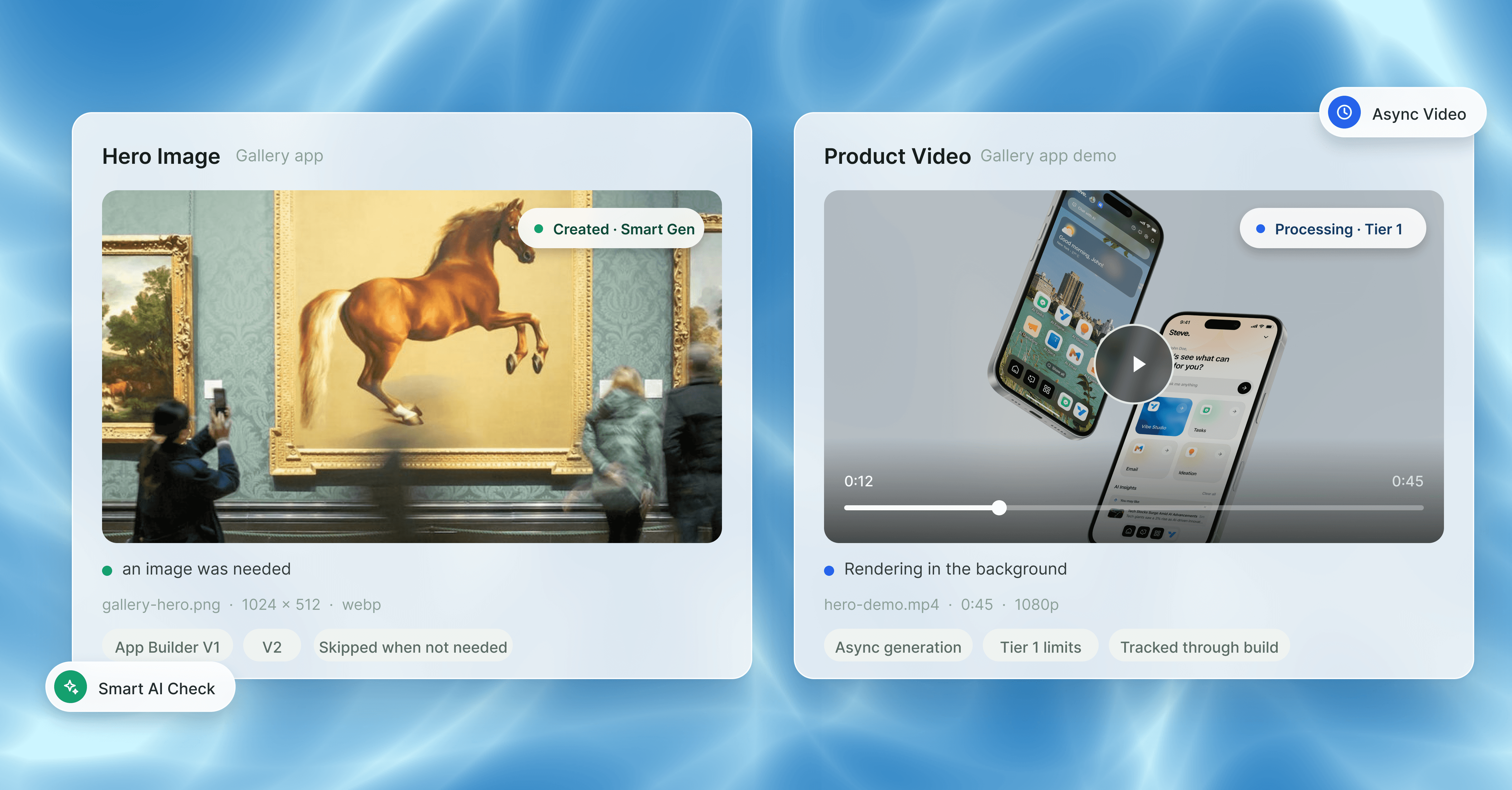
Image generation capabilities are now available across both App Builder V1 and V2, with Steve intelligently determining when an image is actually needed rather than generating one for every request.
The system uses lightweight AI checks to avoid unnecessary image generation, helping reduce processing and costs while still providing richer visual results when they are required. Image generation is also tailored to different subscription tiers, ensuring that users receive models and capabilities appropriate to their plans.
Generated images, icons, and thumbnails now follow the same intelligent model-selection approach, while generated assets are also stored more efficiently to reduce their size.
Together, these improvements make visual generation a more integrated and efficient part of the app-building process.
Video Generation Expands Multimodal Capabilities
Building on image generation, work also progressed on video generation for App Builder.
Steve can now generate video content asynchronously, allowing applications to incorporate richer visual experiences while the system handles generation in the background. Video generation is governed by usage limits and subscription tiers, with access and model quality adjusted according to the user's plan.
The underlying workflow was also refined to ensure generated video files are correctly tracked and preserved during the building process.
With both image and video generation becoming increasingly integrated into App Builder, Steve is moving toward a more multimodal approach to application creation.
Better Visibility From Build to Release
As applications become more sophisticated, knowing exactly what is happening during a build becomes increasingly important. August introduced several improvements that give builders clearer feedback while making mobile application delivery easier.
Real-Time APK Build Progress
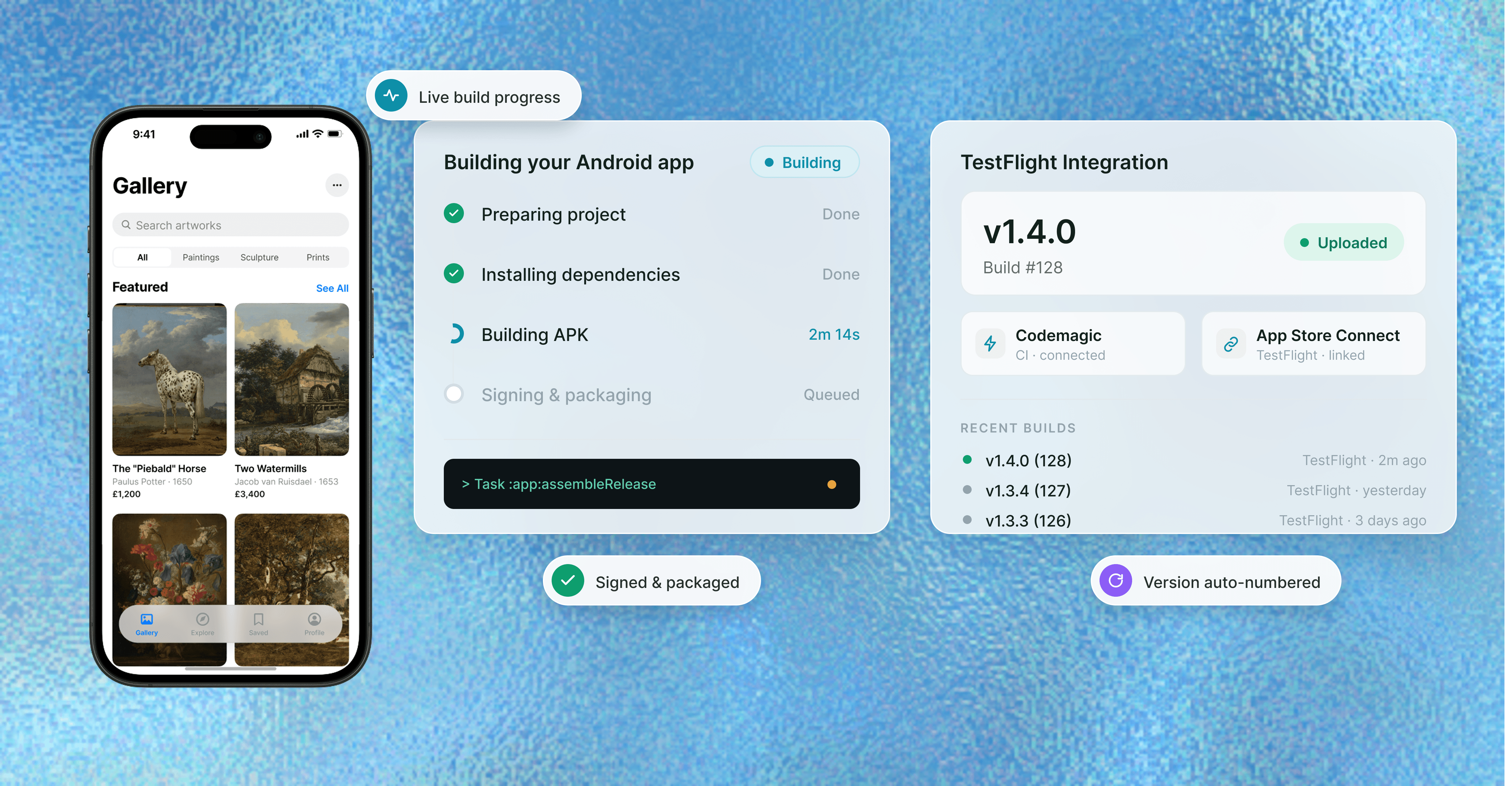
Vibe Studio now provides real-time visibility into APK builds through a step-by-step progress timeline, including elapsed build time and clear terminal states.
Instead of waiting without knowing what is happening, builders can now see where their Android build is in the process and when it has completed or encountered an issue.
This provides a more transparent build experience and makes mobile application development feel more responsive and predictable.
A Smoother iOS Build Experience
iOS build workflows also received several improvements during August.
Steve now integrates IPA builds with Codemagic and App Store Connect, helping streamline the process of building and preparing iOS applications for distribution.
Build progress also now displays the relevant TestFlight version and build number. Behind the scenes, Steve intelligently manages version and build numbering, reducing the need for manual intervention and making successive iOS builds easier to manage.
These changes bring the Android and iOS build experiences closer to a smoother, more transparent release workflow.
Making Development More Reliable
Alongside new features, August included a series of refinements aimed at reducing friction during development and making the platform more dependable.

Cleaner and More Reliable Previews
Vibe Studio previews now use cleaner, more recognizable URLs based on the project and branch, replacing the previous random preview addresses.
This makes previews easier to identify and share while also improving the reliability of authentication when working with preview environments.
Several additional improvements were made to the preview and branch experience, including preventing duplicate preview loads, keeping comparison tabs accessible when branch names are long, and handling inaccessible projects more gracefully.
These changes make moving between branches, previews, and projects a more seamless part of the development workflow.
Smarter Error Handling and Build Feedback
The team also continued improving reliability across the platform by addressing issues that could cause build status streams or application startup processes to fail unexpectedly.
Error handling has been strengthened so that failures occurring early in the application lifecycle are surfaced more reliably instead of being hidden by secondary errors. Build status monitoring can also recover from certain failures rather than terminating permanently.
These behind-the-scenes improvements help ensure that when something does go wrong, builders receive clearer feedback and the platform has a better chance of recovering automatically.
Improving AI-Assisted Development
August also brought improvements to the systems that help Steve reason about and review application code.
More Flexible Automated Code Reviews
The automated pull request review workflow received several refinements, including a centralized system for managing the prompts used during code reviews.
Administrators can now view, edit, publish, and preview the prompts used by the automated review system, making it easier to continuously refine how AI-assisted reviews operate.
The review process was also tuned to better distinguish between genuine security issues and expected values generated by development tooling, reducing unnecessary interruptions during the development workflow.
These improvements make AI-assisted development more configurable while helping automated reviews remain useful and focused.
Looking Ahead
September will build on August’s progress with continued improvements to multimodal AI, mobile application development, collaboration, and the overall Vibe Studio experience.
As Steve becomes capable of handling more of the application-building lifecycle, from creating visual assets and generating mobile builds to collaborating with teammates and reviewing code, the focus will continue to be on making that process faster, smarter, and easier to manage.
Expanding What’s Possible with AI-Powered App Building
August was focused on expanding Steve’s capabilities while making Vibe Studio more collaborative, reliable, and ready for richer AI-powered development workflows. From introducing project collaboration and multimodal image and video generation to improving mobile build experiences, several major enhancements moved into production this month.
Alongside these new capabilities, the team continued refining the development experience with cleaner previews, better build visibility, stronger error handling, and smarter automation. Together, these improvements make it easier to build, test, share, and ship applications through Vibe Studio.
A More Collaborative Building Experience
Building applications is often a team effort, and August introduced new capabilities that make it easier for teams to work together directly within Vibe Studio.
Collaboration Comes to Vibe Studio
Vibe Studio now supports project collaboration, allowing users to invite others to their projects, assign roles, and manage access directly from the application.
A new collaboration interface makes it possible to invite team members by email and control what they can do within a project. Viewers can continue accessing essential project features such as the simulator, device picker, and branch tabs, while editing and management capabilities remain restricted according to their assigned permissions.
A new invitation inbox also makes it easier to keep track of collaboration requests and responses, both within Vibe Studio and the broader Steve experience.
These improvements make Vibe Studio better suited for teams, enabling people to share projects and collaborate without compromising control over project access.
Bringing Multimodal AI to App Building
August also saw significant progress in expanding Steve beyond text-based application creation, with image and video generation capabilities becoming part of the App Builder experience.
Smarter Image Generation
Image generation capabilities are now available across both App Builder V1 and V2, with Steve intelligently determining when an image is actually needed rather than generating one for every request.
The system uses lightweight AI checks to avoid unnecessary image generation, helping reduce processing and costs while still providing richer visual results when they are required. Image generation is also tailored to different subscription tiers, ensuring that users receive models and capabilities appropriate to their plans.
Generated images, icons, and thumbnails now follow the same intelligent model-selection approach, while generated assets are also stored more efficiently to reduce their size.
Together, these improvements make visual generation a more integrated and efficient part of the app-building process.
Video Generation Expands Multimodal Capabilities
Building on image generation, work also progressed on video generation for App Builder.
Steve can now generate video content asynchronously, allowing applications to incorporate richer visual experiences while the system handles generation in the background. Video generation is governed by usage limits and subscription tiers, with access and model quality adjusted according to the user's plan.
The underlying workflow was also refined to ensure generated video files are correctly tracked and preserved during the building process.
With both image and video generation becoming increasingly integrated into App Builder, Steve is moving toward a more multimodal approach to application creation.
Better Visibility From Build to Release
As applications become more sophisticated, knowing exactly what is happening during a build becomes increasingly important. August introduced several improvements that give builders clearer feedback while making mobile application delivery easier.
Real-Time APK Build Progress
Vibe Studio now provides real-time visibility into APK builds through a step-by-step progress timeline, including elapsed build time and clear terminal states.
Instead of waiting without knowing what is happening, builders can now see where their Android build is in the process and when it has completed or encountered an issue.
This provides a more transparent build experience and makes mobile application development feel more responsive and predictable.
A Smoother iOS Build Experience
iOS build workflows also received several improvements during August.
Steve now integrates IPA builds with Codemagic and App Store Connect, helping streamline the process of building and preparing iOS applications for distribution.
Build progress also now displays the relevant TestFlight version and build number. Behind the scenes, Steve intelligently manages version and build numbering, reducing the need for manual intervention and making successive iOS builds easier to manage.
These changes bring the Android and iOS build experiences closer to a smoother, more transparent release workflow.
Making Development More Reliable
Alongside new features, August included a series of refinements aimed at reducing friction during development and making the platform more dependable.
Cleaner and More Reliable Previews
Vibe Studio previews now use cleaner, more recognizable URLs based on the project and branch, replacing the previous random preview addresses.
This makes previews easier to identify and share while also improving the reliability of authentication when working with preview environments.
Several additional improvements were made to the preview and branch experience, including preventing duplicate preview loads, keeping comparison tabs accessible when branch names are long, and handling inaccessible projects more gracefully.
These changes make moving between branches, previews, and projects a more seamless part of the development workflow.
Smarter Error Handling and Build Feedback
The team also continued improving reliability across the platform by addressing issues that could cause build status streams or application startup processes to fail unexpectedly.
Error handling has been strengthened so that failures occurring early in the application lifecycle are surfaced more reliably instead of being hidden by secondary errors. Build status monitoring can also recover from certain failures rather than terminating permanently.
These behind-the-scenes improvements help ensure that when something does go wrong, builders receive clearer feedback and the platform has a better chance of recovering automatically.
Improving AI-Assisted Development
August also brought improvements to the systems that help Steve reason about and review application code.
More Flexible Automated Code Reviews
The automated pull request review workflow received several refinements, including a centralized system for managing the prompts used during code reviews.
Administrators can now view, edit, publish, and preview the prompts used by the automated review system, making it easier to continuously refine how AI-assisted reviews operate.
The review process was also tuned to better distinguish between genuine security issues and expected values generated by development tooling, reducing unnecessary interruptions during the development workflow.
These improvements make AI-assisted development more configurable while helping automated reviews remain useful and focused.
Looking Ahead
September will build on August’s progress with continued improvements to multimodal AI, mobile application development, collaboration, and the overall Vibe Studio experience.
As Steve becomes capable of handling more of the application-building lifecycle, from creating visual assets and generating mobile builds to collaborating with teammates and reviewing code, the focus will continue to be on making that process faster, smarter, and easier to manage.
Other Newsletters





Stay Connected with Steve
We’ll be sharing regular updates, insights, and improvements as we continue shaping the future of Steve. Stay tuned for our next dispatch.
Stay Connected with Steve
We’ll be sharing regular updates, insights, and improvements as we continue shaping the future of Steve. Stay tuned for our next dispatch.
Stay Connected with Steve
We’ll be sharing regular updates, insights, and improvements as we continue shaping the future of Steve. Stay tuned for our next dispatch.
Stay Connected with Steve
We’ll be sharing regular updates, insights, and improvements as we continue shaping the future of Steve. Stay tuned for our next dispatch.
Stay Connected with Steve
We’ll be sharing regular updates, insights, and improvements as we continue shaping the future of Steve. Stay tuned for our next dispatch.
Stay Connected with Steve
We’ll be sharing regular updates, insights, and improvements as we continue shaping the future of Steve. Stay tuned for our next dispatch.
The Jacx Office: 16-120
2807 Jackson Ave
Queens NY 11101, United States
The Jacx Office: 16-120
2807 Jackson Ave
Queens NY 11101, United States
The Jacx Office: 16-120
2807 Jackson Ave
Queens NY 11101, United States
The Jacx Office: 16-120
2807 Jackson Ave
Queens NY 11101, United States
The Jacx Office: 16-120
2807 Jackson Ave
Queens NY 11101, United States
The Jacx Office: 16-120
2807 Jackson Ave
Queens NY 11101, United States