Why Steve Is More Than A Productivity Tool
Oct 3, 2026

Persistent Context and Shared Memory: Shared memory preserves decisions and artifacts so agents act with institutional knowledge across time and tools.
Conversational Workflows with Steve Chat: A single, file-aware conversational interface replaces app-switching and centralizes scheduling, search, and coordination.
From Idea To Product With Vibe Studio: Prompt-driven Flutter scaffolds and Developer Mode compress prototype-to-production cycles while keeping design intent in code.
Intelligent Planning With Task Management: AI-powered boards propose sprints and map dependencies, making planning adaptive and context-aware.
Operational Value: Combining context, conversation, app generation, and planning turns Steve into an AI OS that changes how teams collaborate and deliver.
Introduction
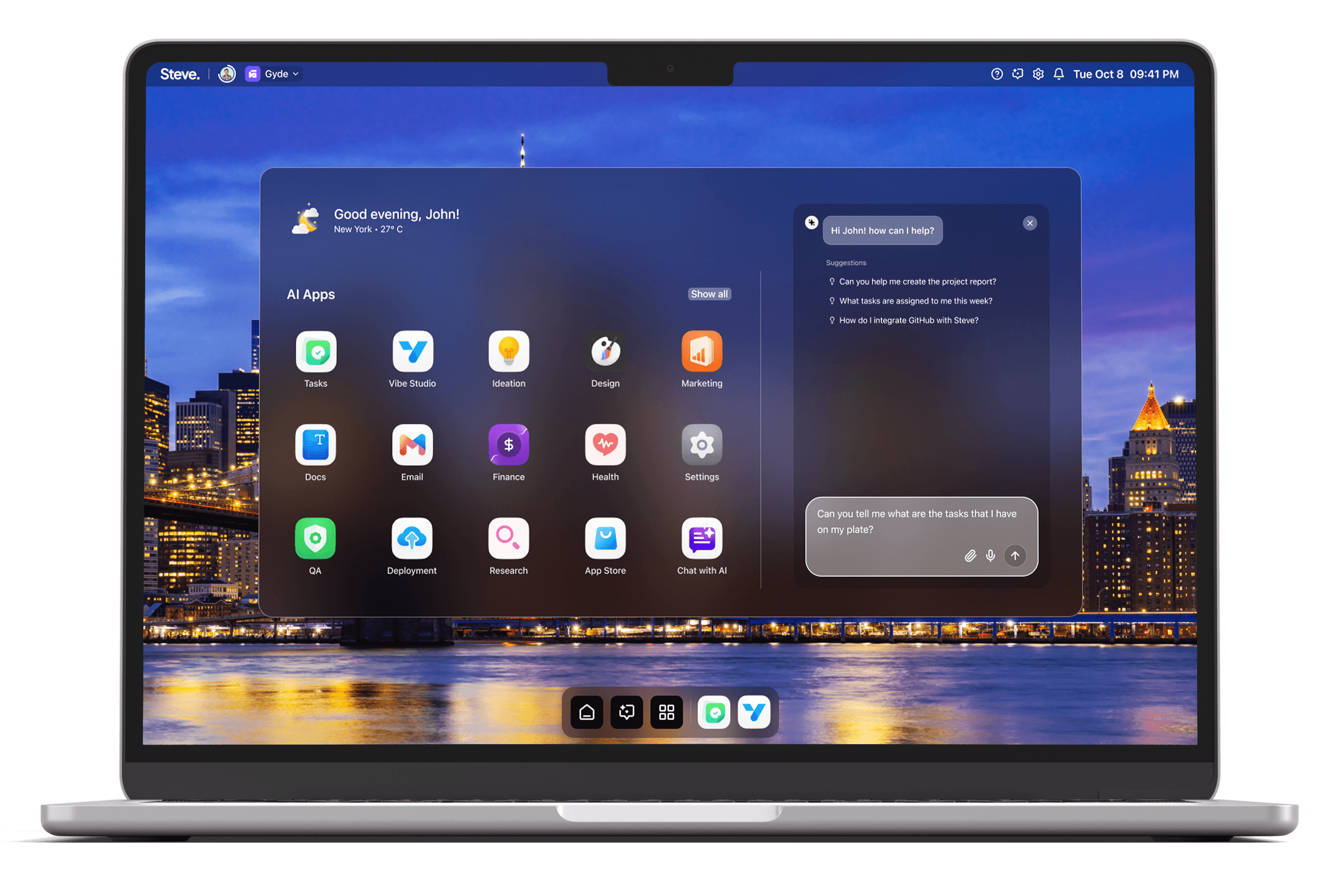
Steve is more than a productivity tool; it is an AI Operating System that elevates how teams create, coordinate, and convert ideas into outcomes. As an AI OS, Steve combines persistent context, conversational intelligence, no-code-to-code app production, and programmatic task planning to span ideation, execution, and delivery—areas where traditional productivity apps stop. This article explains how those capabilities change what work looks like in practice and why organizations should treat Steve as an operational layer, not just another app.
Persistent Context and Shared Memory
Steve’s shared memory enables continuity across sessions, tools, and agents so conversations and actions stay coherent over time. Instead of losing context when users switch tools or passes between teammates, Steve retains relevant decisions, preferences, and document links so agents can act with institutional knowledge. Practically, a product spec drafted in a chat remains discoverable to an AI agent that later generates an onboarding flow, preserving constraints and style choices without manual handoffs. That continuity reduces rework and turns disparate inputs into a living project history—an operational capability beyond task lists and calendars.
Conversational Workflows with Steve Chat
Steve Chat functions as a centralized conversational layer that connects calendars, drives, code repositories, and external services through natural language. Users schedule, search, draft, and iterate via a single chat interface that understands past interactions and file context, enabling workflows that are both human and machine-native. For example, a PM can ask Steve to sync a meeting, pull related design files, and summarize outstanding action items; the chat returns an actionable brief while recording its reasoning for later audits. This shifts the interaction model from manual switching between apps to a continuous conversational command center—an aspect that reframes Steve as an AI-driven workspace rather than a simple productivity suite.
From Idea To Product With Vibe Studio
Vibe Studio turns descriptive prompts into production-ready Flutter code, letting teams prototype and ship functional apps from natural language direction. Designers, PMs, and engineers can iterate together on the same artifact: describe an onboarding funnel, preview device-specific views, and refine behavior without losing alignment between product intent and implementation. Developer Mode preserves that traceability by exposing an embedded secure VS Code editor for targeted refinements, while integrations let teams export repos to GitHub or download for local work. In practice, a startup can validate market-fit with a clickable, production scaffold the day a concept is approved—accelerating decisions and collapsing the gap between prototype and product in ways spreadsheets and task boards cannot.
Intelligent Planning With Task Management
Steve’s AI-powered task management adds predictive, context-aware planning to routine execution: it imports or creates issues from prompts, proposes sprint scopes, and helps track progress with automation that understands project context. Rather than using static checklists, teams receive AI suggestions that align tasks with timelines, dependencies, and the artifacts stored in shared memory. Consider an engineering lead who asks Steve to propose a two-week sprint based on outstanding issues: Steve synthesizes priorities, suggests assignments, and generates a draft sprint board that reflects interdependencies. That degree of coordination makes planning adaptive and conversational—more like a product management assistant embedded in the workflow than a simple to-do manager.
Steve
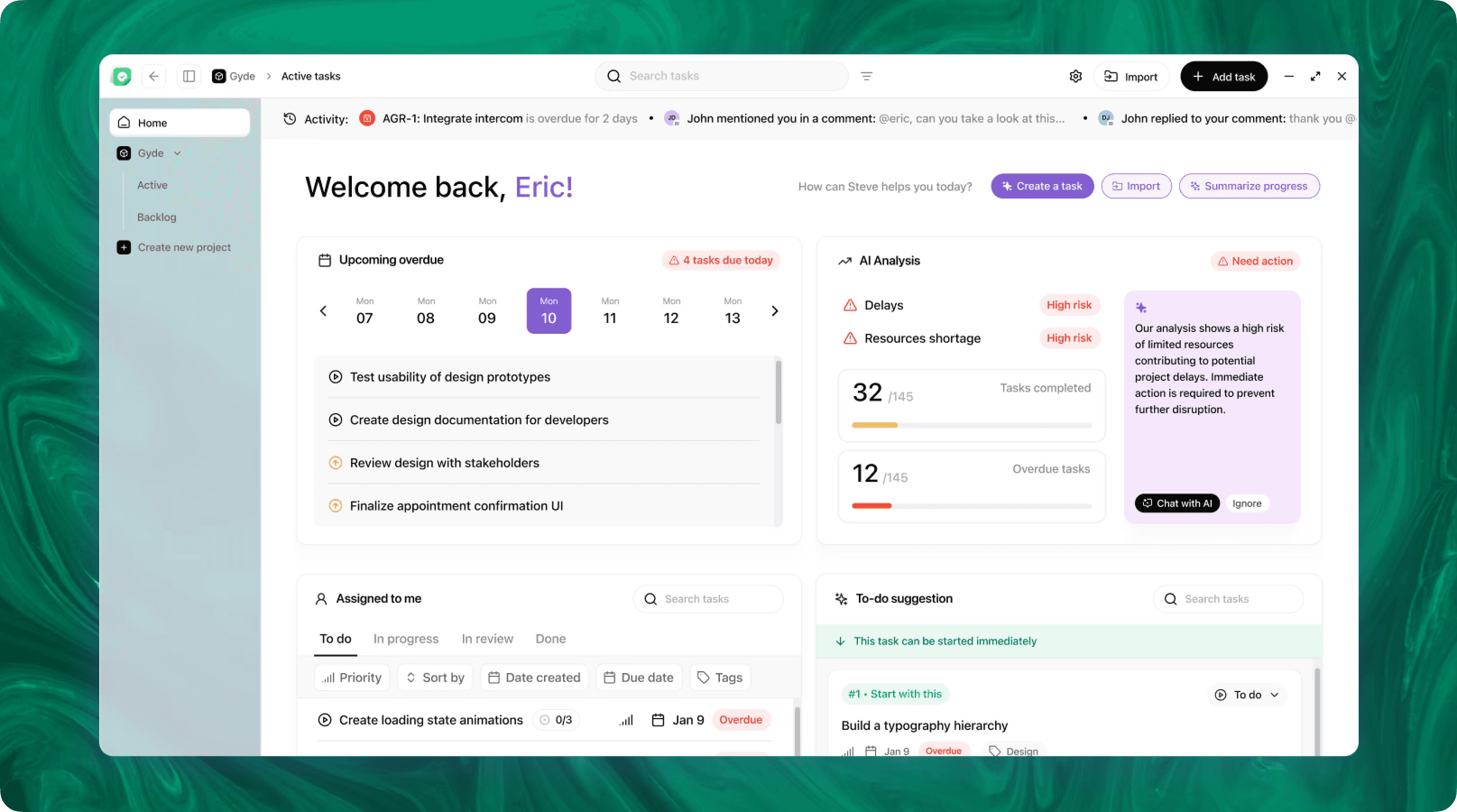
Steve is an AI-native operating system designed to streamline business operations through intelligent automation. Leveraging advanced AI agents, Steve enables users to manage tasks, generate content, and optimize workflows using natural language commands. Its proactive approach anticipates user needs, facilitating seamless collaboration across various domains, including app development, content creation, and social media management.
Conclusion
Viewed as an AI Operating System, Steve extends well beyond productivity features by providing persistent context, a unifying conversational layer, production-ready app generation, and intelligent planning. These capabilities knit together ideation, execution, and code in a way that reduces friction between roles and preserves institutional knowledge. Organizations that adopt Steve gain an operational platform that automates routine decisions, surfaces relevant context, and accelerates delivery—transforming how work gets done rather than merely helping people do more tasks.