Why Steve Is Designed For How Humans Actually Work
Oct 7, 2026

Conversational Workflows That Match Human Voice: A file-aware chat connected to calendars, drives, and third-party services lets users control work conversationally without switching apps.
Shared Memory For Continuous Context: Persistent memory stores project facts and preferences so follow-ups build on past decisions rather than restarting context.
Integrated Email That Reduces Context Switching: A smart inbox with auto-summaries, tags, and context-aware drafts keeps communication and action adjacent.
Task Management That Maps To Team Rhythms: AI-driven boards and sprint proposals convert conversational decisions into tracked tasks and visible progress.
Workflow Benefit: Combining conversation, memory, email, and task execution reduces friction and preserves intent from idea to delivery.
Introduction
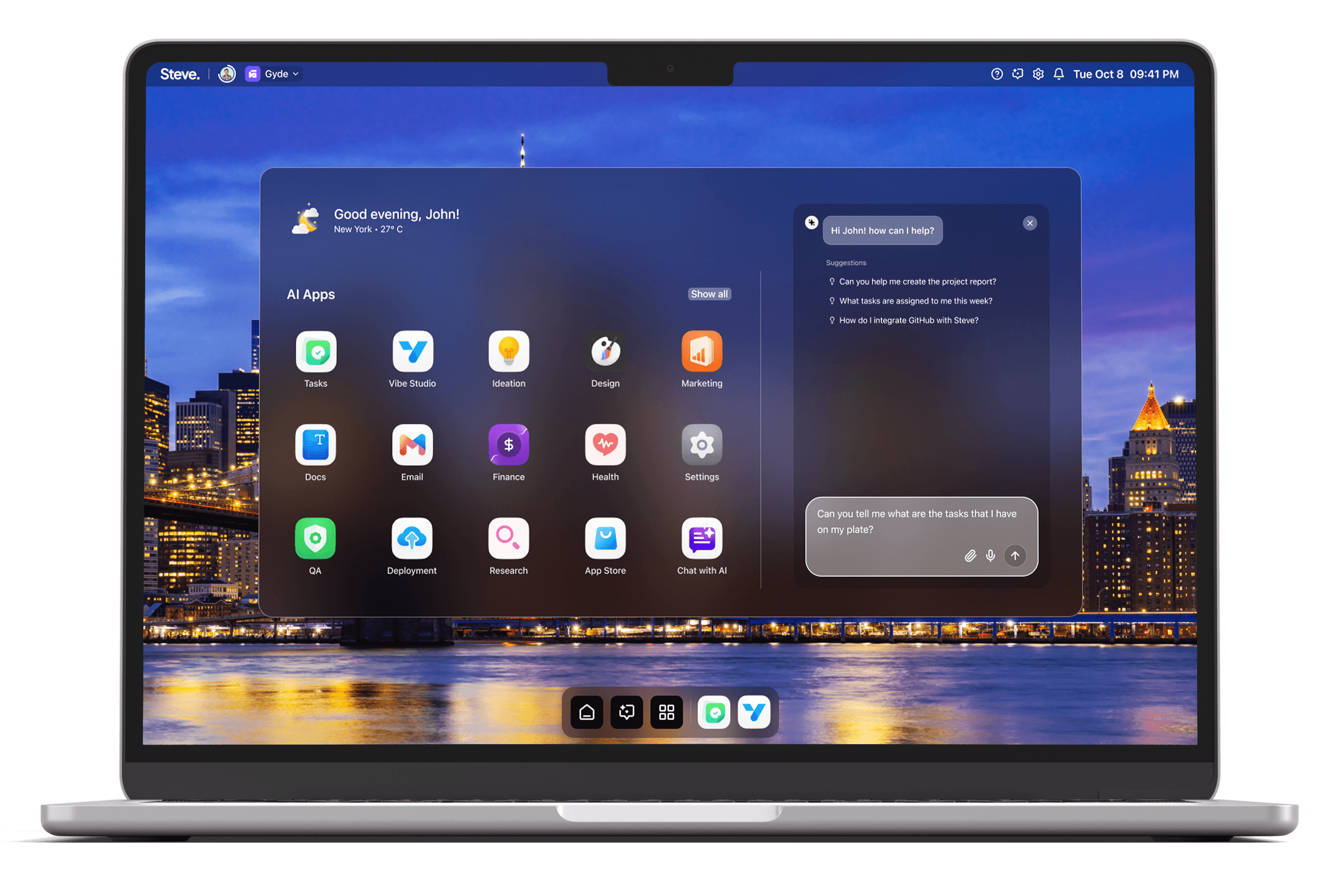
People don’t work in isolated apps or rigid sequences; they converse, remember context, triage priorities, and shift between planning and execution. Steve is built as an AI Operating System to mirror those human patterns—combining conversational agents, persistent context, integrated communication, and execution tools so work unfolds where human attention already lives. This article explains how Steve’s design reduces friction, preserves intent, and accelerates outcomes in real-world workflows.
Conversational Workflows That Match Human Voice
Steve’s conversational interface turns commands, clarifying questions, and file-backed requests into the primary control plane. Rather than opening separate tools, a user speaks or types intent into Steve Chat to schedule, find a document, summarize a thread, or iterate on a draft. The chat is file-aware and integrates with Google Calendar, Drive, Gmail, Notion, GitHub, and dozens more, so a single conversation can touch multiple systems without manual switching.
In practice: a product lead reviews a late-night bug report, uploads the log, asks Steve in chat to summarize the issue, and schedules a triage meeting with relevant owners—all in one thread. Steve preserves the conversational context so follow-up prompts (“also add QA to the invite and include reproduction steps”) remain grounded. That mirrors how people naturally work—incrementally, conversationally, and with clarifying follow-ups—so fewer ideas fall through gaps between apps.
Shared Memory For Continuous Context
Steve’s shared memory system lets AI agents store and recall context across interactions, which means conversations build on prior work rather than restarting each session. Memory captures project details, team preferences, and ongoing decisions so agents can reference relevant facts and avoid repetitive questions.
A practical scenario: after a sprint planning chat, Steve remembers the prioritized feature set and the product manager’s preferred release cadence. Weeks later, when someone asks for a regression report or a draft release note, Steve supplies context-aware summaries and suggestions that align with earlier decisions. That continuity reduces cognitive load and supports human workflows that depend on collective memory and evolving plans.
Integrated Email That Reduces Context Switching
Steve’s AI Email embeds a smart inbox directly into the AI OS, eliminating unnecessary app-hopping and helping users act on messages faster. The inbox syncs in real time, auto-tags critical conversations, generates thread summaries, and drafts context-aware replies, so users can triage and respond without reconstructing history.
For example, a customer-success manager facing a long support thread can ask Steve to summarize the ask, extract action items, and draft a reply that references the relevant product ticket. Because the email system works inside the same environment where documents, calendars, and task boards live, responses can link directly to evidence, calendar slots, or tasks—keeping execution adjacent to the conversation that spawned it.
Task Management That Maps To Team Rhythms
Steve’s AI-powered task boards transform conversational outcomes into tracked work and align them with team processes. The system proposes sprints, imports or creates tasks from prompts, and tracks execution in a shared workspace, so decisions made in chat or email become visible, assigned, and measurable without manual entry.
In a typical flow a PM and designer agree on three deliverables in Steve Chat; Steve creates tasks, proposes a sprint plan, and integrates status updates back into the conversation. That preserves the narrative thread and ensures action items follow the human rhythm of planning, assigning, and iterating—rather than getting lost in an inbox or scattered notes.
Steve
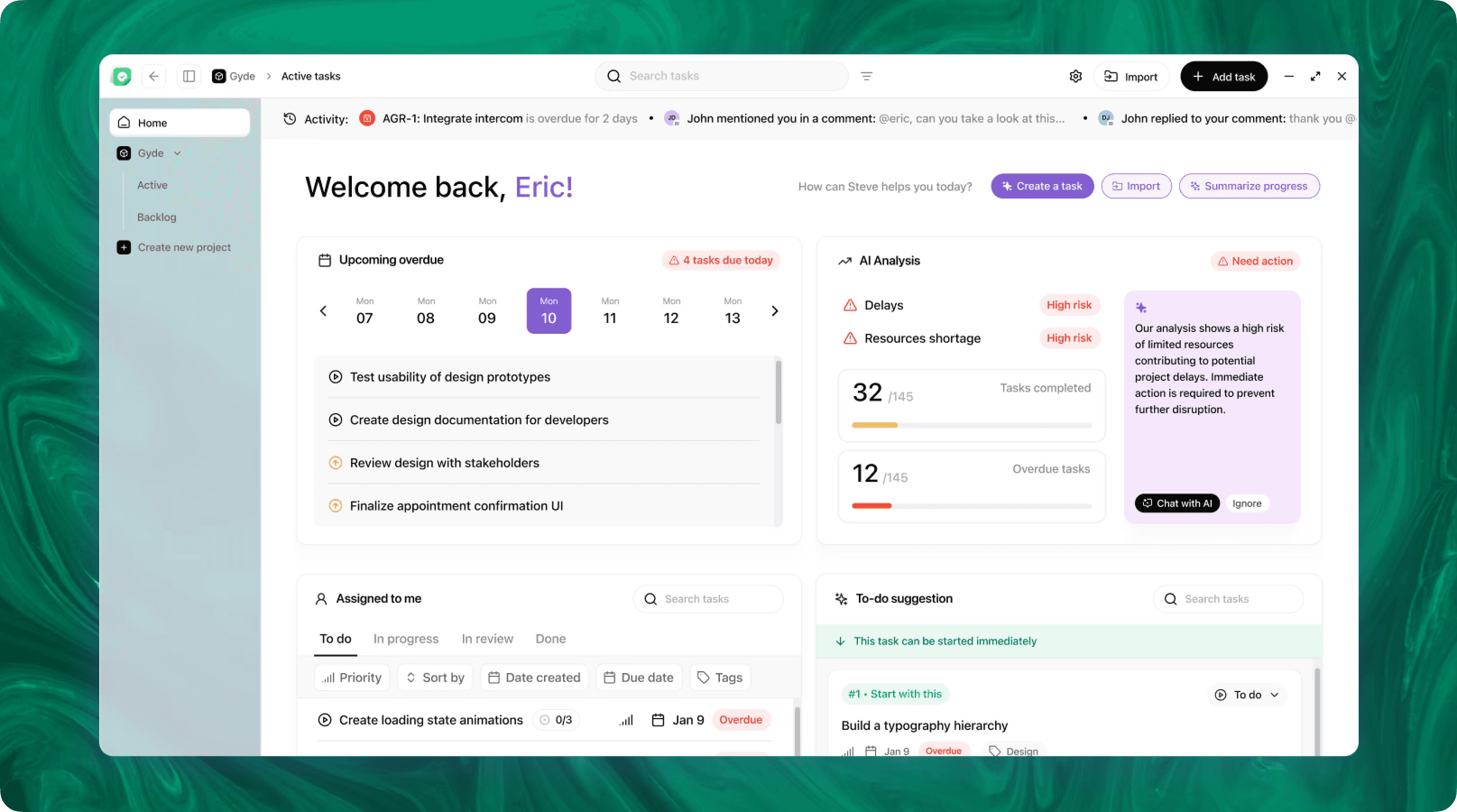
Steve is an AI-native operating system designed to streamline business operations through intelligent automation. Leveraging advanced AI agents, Steve enables users to manage tasks, generate content, and optimize workflows using natural language commands. Its proactive approach anticipates user needs, facilitating seamless collaboration across various domains, including app development, content creation, and social media management.
Conclusion
Steve is an AI OS designed around how humans actually work: conversationally, contextually, and with integrated execution. By combining a conversational interface with shared memory, an integrated smart inbox, and AI-driven task management, Steve reduces context switching, preserves intent, and keeps work moving from idea to outcome inside a single, human-centered environment. The result is a platform that lets teams operate in the modes people prefer—talking through problems, iterating quickly, and turning agreement into action.