Why Memory Is The Foundation Of Useful Ai
Oct 11, 2026

Memory Enables Coherence Across Sessions: Personal memory in Steve Chat preserves prior decisions and reduces context loss across days.
Shared Memory Powers Multi-Agent Collaboration: A common memory store lets agents hand off work and build on each other's outputs without repeated context passing.
File-Aware Memory Makes Outputs Actionable: Integrations and file-aware memory link responses to real documents, calendars, and repos so outputs are operational.
Logging and Analytics Close the Feedback Loop: LangFuse chat logging provides the observability needed to tune memory policies and improve reliability.
Practical Outcome: Combining personalized memory, shared agent state, file context, and logs converts episodic responses into sustained, trustworthy assistance.
Introduction
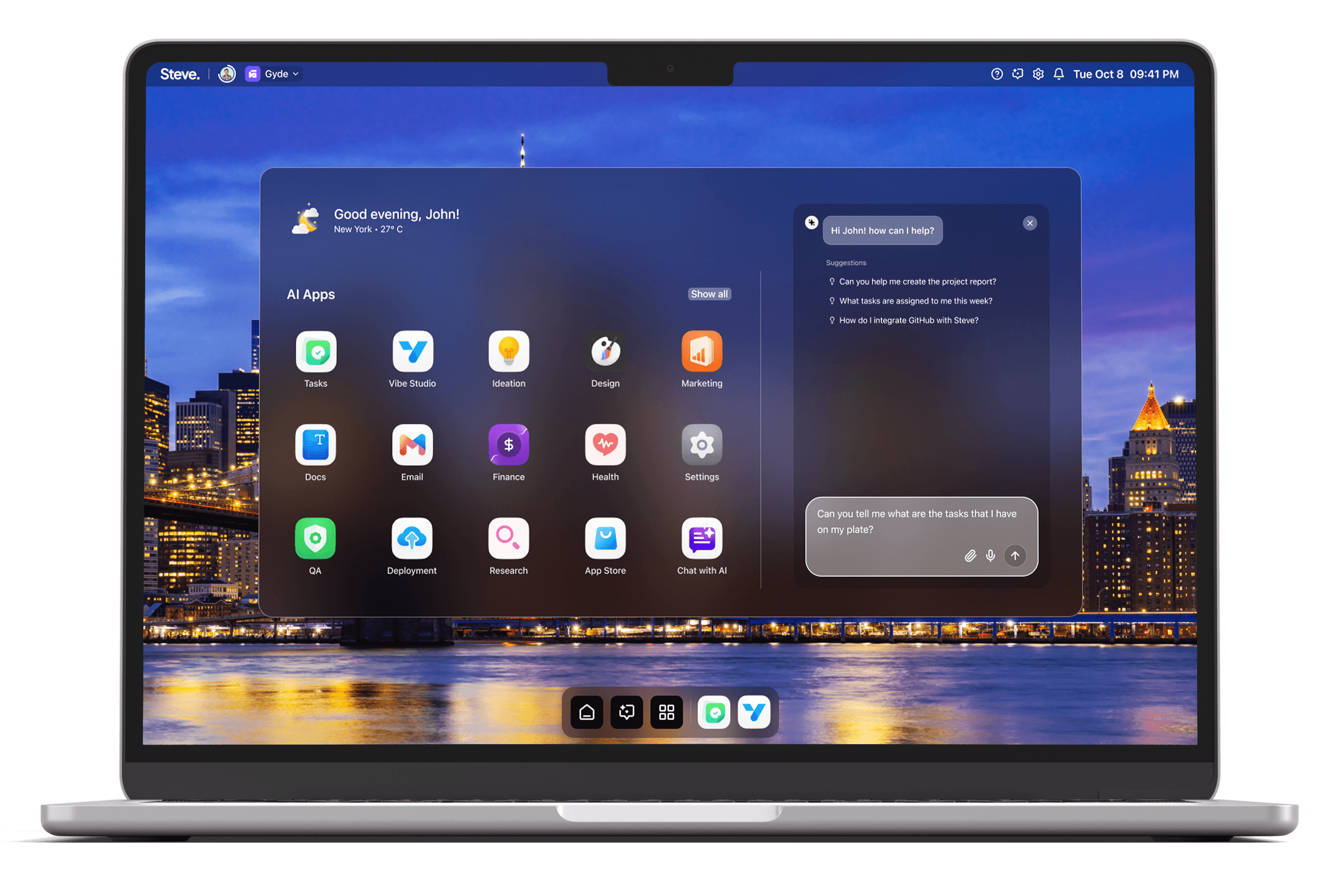
Memory is the structural layer that turns capable models into useful systems: it preserves context, connects steps in workflows, and enables personalization that scales beyond single queries. Without memory, conversational AI repeats itself, loses thread between interactions, and fails to coordinate multi-step work. As an AI Operating System, Steve centers shared and user-aware memory to make agents collaborate coherently, surface the right files and integrations, and improve over time through logging—turning transient answers into sustained, actionable assistance.
Memory Enables Coherence Across Sessions
Useful AI must remember past interactions so answers remain consistent and strategic. Steve Chat’s sophisticated memory personalizes responses over time, so follow-ups reference prior decisions instead of restarting from scratch. In practice, a product manager can ask the same assistant across days about roadmap priorities and receive answers that reflect earlier trade-offs and constraints saved in memory. That continuity reduces costly context reconstruction, accelerates decision cycles, and keeps teams aligned as conversations span meetings and asynchronous work.
Shared Memory Powers Multi-Agent Collaboration
Complex workflows rely on multiple agents with distinct strengths; they need a shared state to coordinate. Steve’s shared memory system lets AI agents read and write common context so research, drafting, and execution agents do not operate in isolation. For example, when one agent summarizes a customer interview, it stores key themes in shared memory; a follow-on agent then uses those themes to draft follow-ups or update requirements. That pattern prevents duplicated effort, preserves intent across handoffs, and enables higher-order automation where agents build on each other’s outputs.
File-Aware Memory Makes Outputs Actionable
Memory is most valuable when it links to the artifacts teams actually use. Steve Chat is file-aware and integrates directly with calendars, email, drives, and repositories, so memory can reference real documents and events rather than abstract notes. In a typical scenario, an analyst uploads a report and the assistant stores its salient points in memory; later, when asked to prepare a presentation, the assistant fetches those points, cites the original file, and aligns recommendations with calendar constraints. That tight coupling of memory, files, and integrations produces responses that are not only contextual but operational—ready to be executed or handed off.
Logging and Analytics Close the Feedback Loop
A working memory strategy requires observability: teams must measure what the system remembers and how that memory affects outputs. Steve’s LangFuse integration provides detailed chat logging for optimization and analytics, enabling teams to audit memory usage, identify where context drops or drifts occur, and refine prompts or retention policies accordingly. By combining logged interactions with shared memory traces, product and reliability teams can tune memory windows, prioritize which artifacts persist, and validate that the AI OS behaves predictably as workflows evolve.
Steve
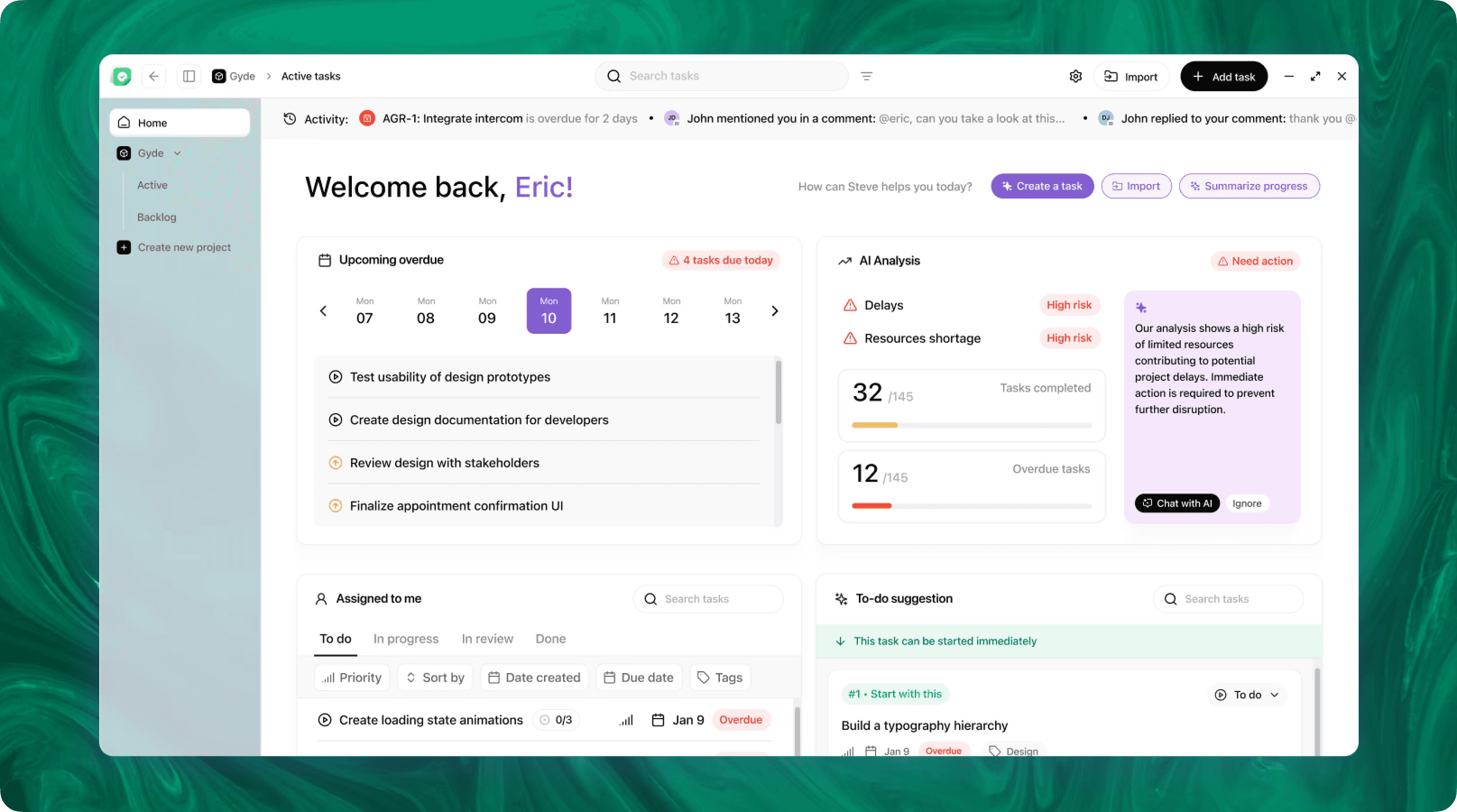
Steve is an AI-native operating system designed to streamline business operations through intelligent automation. Leveraging advanced AI agents, Steve enables users to manage tasks, generate content, and optimize workflows using natural language commands. Its proactive approach anticipates user needs, facilitating seamless collaboration across various domains, including app development, content creation, and social media management.
Conclusion
Memory is not an optional add-on: it is the foundation that converts models into continuous collaborators. Steve applies memory at three practical layers—personalized chat memory, a shared store for agent collaboration, and file-aware context stitched to real integrations—while LangFuse logging makes that behavior measurable and improvable. As an AI OS, Steve turns episodic responses into sustained productivity by keeping context available, observable, and actionable across sessions and agents. The result is an assistant that respects history, coordinates work, and reliably supports decisions at scale.