Why Knowledge Should Be Captured Where Work Happens
Nov 20, 2026

Contextual Memory That Keeps Knowledge Alive: A shared memory system preserves decisions, references, and rationale so future work starts with context, not blanks.
Capture Conversations In The Flow: Integrated chat and email capture conversations, generate summaries, and attach key content so threads become structured knowledge.
Embed Decisions Into Tasks: Converting conversations into tasks with linked context ensures execution carries the original intent and reduces misinterpretation.
Searchable Context and Reduced Handovers: Indexing conversations, emails, and tasks in the same memory space lets teams retrieve exact decision histories without interrupting colleagues.
Practical Scenario Benefits: Onboarding, support handoffs, and contract negotiations all speed up when the workspace preserves the why and the supporting artifacts alongside the work.
Introduction
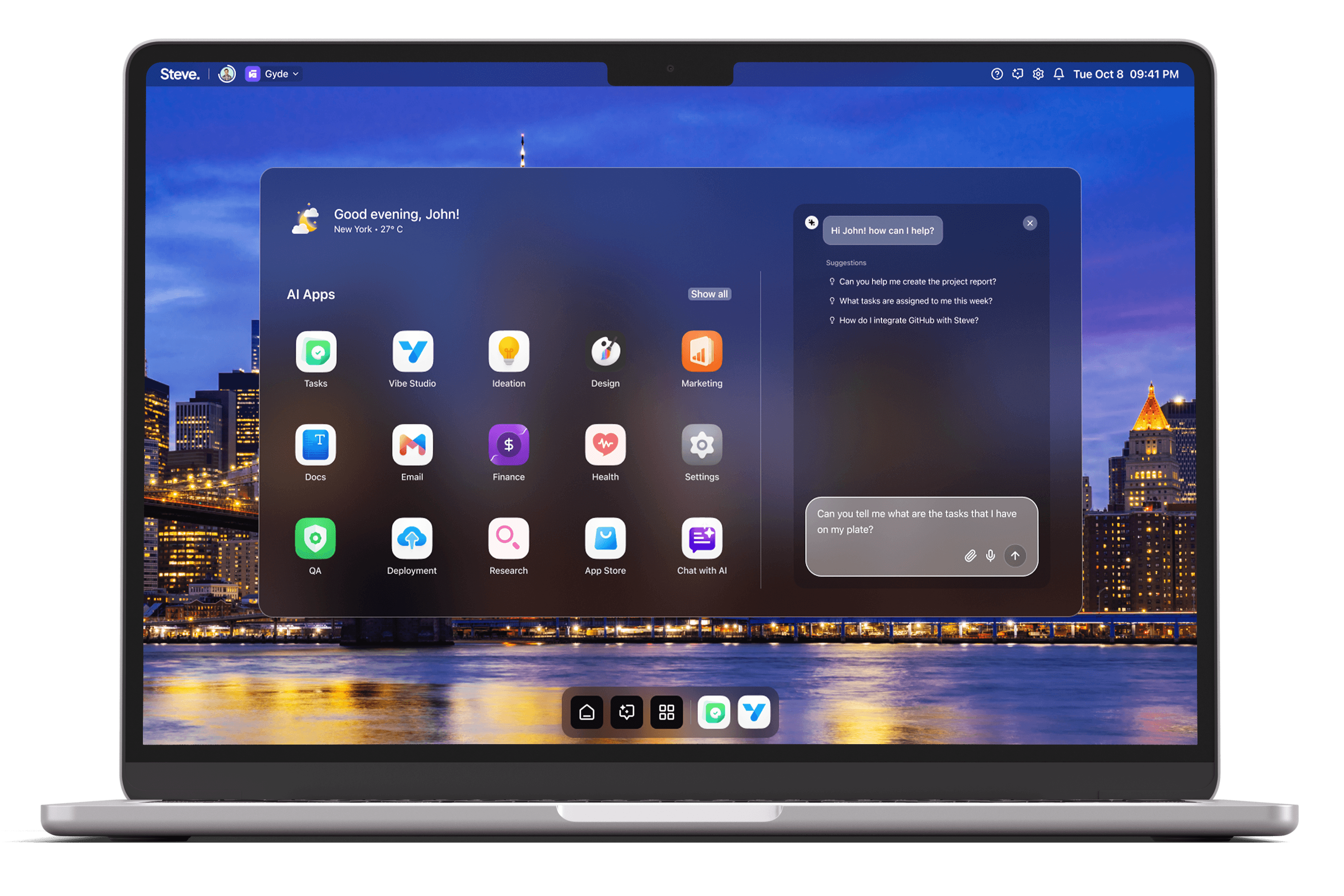
Knowledge captured where work happens turns ephemeral context into reusable assets: decisions, assumptions, file references, and the rationale that produced them. Capturing that knowledge in the same workspace and conversation stream where people act reduces friction, prevents repeated discovery, and accelerates execution. Steve, an AI Operating System, is designed to keep knowledge tethered to tasks and conversations so teams can trust context is available at the moment they need it.
Contextual Memory That Keeps Knowledge Alive
When knowledge lives in isolated documents or people’s heads, context evaporates between handoffs. Steve’s shared memory system and the memory in Steve Chat store conversation history, project facts, and frequently used references so agents and teammates can recall prior decisions without searching multiple tools. In practice, a product spec written into a chat or board remains discoverable to subsequent conversations and automations: a developer opening a task sees the prior discussion, the rationale for trade-offs, and linked files, avoiding redundant clarification and preserving intent.
Capture Conversations In The Flow
Email and chat are where most real work and negotiation happen; capturing knowledge requires those channels to be first-class parts of the record. Steve’s AI Email and Steve Chat integrate conversational capture with smart summarization and file awareness so threads become structured knowledge rather than noise. For example, a long vendor negotiation forwarded into Steve Email receives an instant summary, AI-generated action items, and contextual reply suggestions; those artifacts can automatically attach to the related task or project so follow-ups do not depend on memory or manual transfer.
Embed Decisions Into Tasks
Knowledge is most useful when it travels with the work it informs. Steve’s Task Management keeps planning, execution, and updates in a single workspace where each task is enriched with the conversation, email summaries, and referenced files that led to its creation. Teams can convert a chat decision directly into a task, with the supporting comments and evidence preserved. This makes backlog grooming and sprint planning faster: reviewers can see not only what to build but why it matters, reducing rework from missing context.
Searchable Context and Reduced Handovers
Capturing knowledge where work happens changes how teams find answers. Because Steve indexes conversations, emails, tasks, and uploaded files within the same memory space, a user can surface the exact thread that established a requirement or the email that approved a scope change without pinging stakeholders. That searchable context shortens feedback loops in common scenarios—on-call troubleshooting, design handoffs, or client Q&A—because the history of decisions and the files that informed them are immediately available.
Practical Scenarios That Demonstrate Value
Onboarding new team members: Instead of a long sit-down or a set of scattered documents, new hires navigate tasks that already include the decisions and conversations that produced requirements, accelerating ramp time.
Customer support to engineering handoff: A support ticket synced into Steve carries the summarized problem, customer attachments, and prior troubleshooting steps so engineers begin with actionable context.
Contract negotiations: Email threads stored with AI-generated summaries and proposed next steps allow legal, sales, and finance to review the same authoritative record and preserve negotiation history when creating tasks for execution.
Each scenario shows how keeping knowledge in the workspace where action happens reduces repeated discovery and preserves institutional memory.
Steve

Steve is an AI-native operating system designed to streamline business operations through intelligent automation. Leveraging advanced AI agents, Steve enables users to manage tasks, generate content, and optimize workflows using natural language commands. Its proactive approach anticipates user needs, facilitating seamless collaboration across various domains, including app development, content creation, and social media management.
Conclusion
Capturing knowledge where work happens converts transient communication into durable, searchable context tied to tasks and outcomes. As an AI OS, Steve combines shared memory, conversational capture, integrated email workflows, and AI-enriched task management to make context immediately retrievable and actionable. The result is fewer handoffs, faster onboarding, clearer decisions, and measurable reductions in rework—outcomes any team can measure and rely on.