Why Institutional Knowledge Should Be Conversational
Oct 12, 2026

Conversation As A Living Index: Shared memory lets agents surface prior decisions and context so answers reflect institutional history, not isolated sessions.
Contextual Workflows, Not Static Docs: Steve Chat’s integrations and file-aware responses turn dispersed documents into single, contextual replies that follow up conversationally.
Turn Email Into Actionable Knowledge: AI Email summarizes threads, tags conversations, and enables in-inbox chat to extract actions and preserve intent.
Close The Loop With Task Management: AI-powered boards convert conversational findings into assigned tasks and sprints, preserving context from discovery to delivery.
Operational Benefit: Making knowledge conversational reduces lookup time, prevents duplicated work, and shortens the path from decision to execution.
Introduction
Institutional knowledge lives everywhere: in person, in documents, in email threads, and in the tacit practices teams carry forward. When that knowledge remains locked in static repositories or gated behind tribal memory, organizations slow down, repeat mistakes, and lose continuity as people move on. Making institutional knowledge conversational treats it as a living resource—queryable, updateable, and actionable through natural language. Steve, an AI Operating System, makes that shift practical by combining a shared memory system, conversational chat with deep integrations, an AI-first inbox, and task-oriented boards so teams can access and apply corporate knowledge as easily as they ask a colleague.
Conversation As A Living Index
Conversations scale when the system remembers what matters. Steve’s shared memory system lets AI agents store and surface context so answers reflect prior decisions, policies, and project history rather than single-session outputs. In practice, a product lead can ask, “What were the launch criteria we agreed on for Project Orion?” and receive a response that incorporates past sprint retros, decision notes, and recent metrics—because those artifacts live in the shared memory and are actively referenced by agents.
Turning institutional knowledge into a living index reduces lookup time and prevents regressions: policies evolve in place, exceptions are annotated, and subsequent queries return context-aware answers that cite the right artifacts. The result is faster onboarding, fewer duplicated investigations, and clearer traceability for audits or handoffs.
Contextual Workflows, Not Static Docs
Knowledge is most useful when it connects to the work people do. Steve Chat provides a conversational surface that integrates with calendars, email, Drive, Sheets, Notion, GitHub, and other services, and it is file-aware—so queries can combine documents, spreadsheets, and schedule context into a single reply. Ask for the latest vendor contract, the timeline for approvals, and the responsible owner, and the chat aggregates those signals into a concise, actionable brief.
This conversational routing eliminates the “where is it?” problem and preserves nuance: rather than opening multiple apps, users get a context-rich response that links to sources. Teams can iterate with follow-ups—clarifying assumptions, requesting the supporting spreadsheet, or scheduling a review—without losing the thread of the original query. That continuity keeps institutional reasoning attached to outcomes rather than buried in disconnected files.
Turn Email Into Actionable Knowledge
Email threads are a primary vessel of institutional decisions, but long threads are hard to scan and easy to misinterpret. Steve’s AI Email transforms messages into searchable knowledge: it tags and categorizes conversations, generates concise summaries of long threads, and offers context-aware reply suggestions that align with ongoing work. Critically, you can chat with AI directly inside the inbox to refine phrasing, extract action items, or pull the underlying facts into a wider context.
For example, a cross-functional lead can ask the inbox for a summary of the last three client conversations, extract committed deliverables, and immediately create follow-up tasks—preserving the chain of intent and preventing commitments from evaporating in buried messages. By turning email into structured knowledge, Steve reduces missed obligations and shortens the lag between decision and execution.
Close The Loop With Task Management
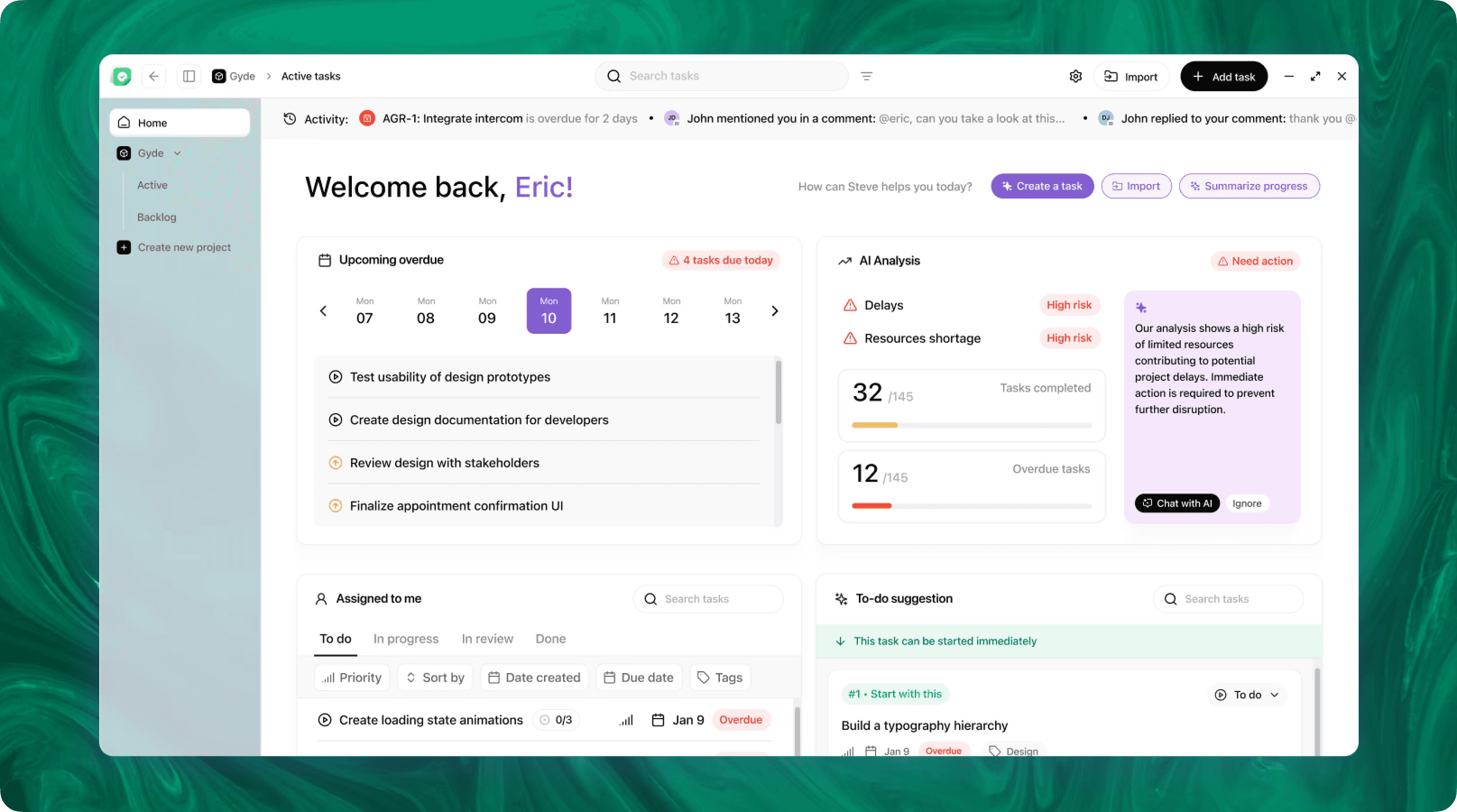
Conversation must end with action. Steve’s AI-powered task management boards consolidate planning and execution in a single workspace, integrating imported tasks from tools like Linear and generating sprint proposals from conversational prompts. When knowledge surfaces an overdue dependency or a new requirement uncovered in email or chat, agents can propose tasks, assign owners, and place items into a sprint—keeping decisions and execution aligned.
This linkage removes manual context transfers: instead of translating a conversation into an update across separate tools, teams prompt Steve to create the task, attach the relevant thread or document from shared memory, and schedule the follow-up. That preserved context improves accountability and creates an auditable trail from question to delivery.
Steve
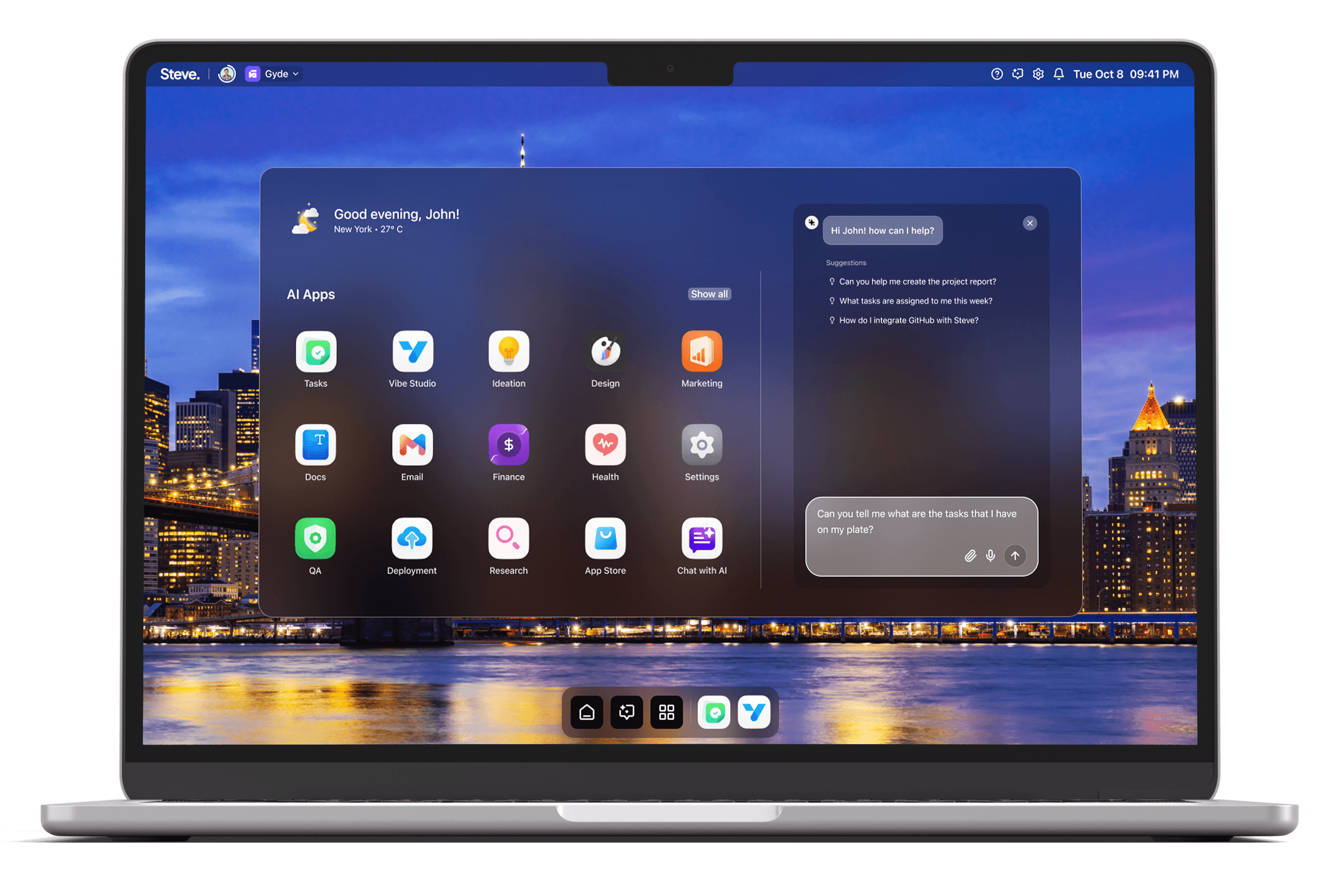
Steve is an AI-native operating system designed to streamline business operations through intelligent automation. Leveraging advanced AI agents, Steve enables users to manage tasks, generate content, and optimize workflows using natural language commands. Its proactive approach anticipates user needs, facilitating seamless collaboration across various domains, including app development, content creation, and social media management.
Conclusion
Institutional knowledge becomes valuable when people can query it naturally, update it in the flow of work, and convert insights into action. As an AI OS, Steve stitches memory, conversational access, email intelligence, and task orchestration into a single operational fabric that treats knowledge as conversational. Organizations that adopt this posture reduce friction, retain institutional memory across churn, and shorten the path from insight to outcome.