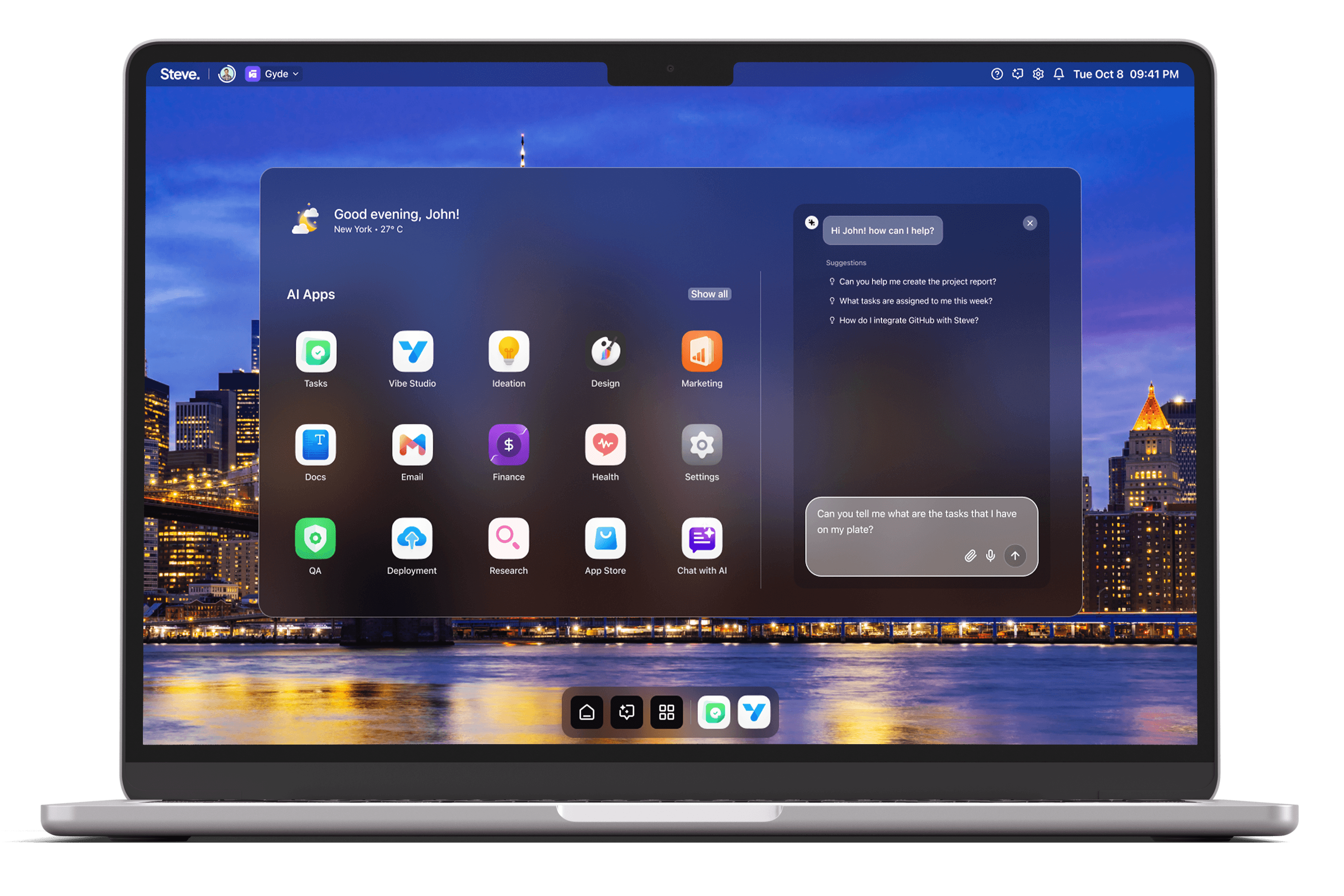
Why Every Team Needs A Shared AI Workspace
Nov 17, 2026

Unified Context With Shared Memory: Persistent memory ensures AI agents and team members reference the same project state, reducing duplication and onboarding friction.
Synchronous Collaboration Through Conversational AI: A chat-first interface turns coordination into executable outcomes by capturing decisions and triggering context-aware actions.
Centralized Communication: AI Email For Team Focus: An integrated smart inbox summarizes threads and drafts context-aligned replies to keep critical conversations actionable.
Intelligent Task Management That Keeps Work Moving: AI-assisted boards propose sprints, import tasks, and link tasks to source conversations for clearer ownership and faster execution.
Operational Efficiency With an AI Operating System: Combining memory, chat, email, and task automation in one AI OS compresses tool switching and accelerates decision-to-delivery cycles.
Introduction
Teams today juggle fragmented tools, disjointed context, and slow handoffs—problems that scale with headcount and complexity. A shared AI workspace flips that model: it centralizes context, automates routine coordination, and surfaces timely recommendations so teams move from debate to delivery. Steve, built as an AI Operating System, provides the conversation, memory, and automation layers a team needs to make collaboration faster and less error-prone. This article explains why every team benefits from a shared AI workspace and how Steve’s memory, conversational interface, smart inbox, and task management deliver measurable improvements.
Unified Context With Shared Memory
A single source of truth is essential when multiple people and tools touch the same work. Steve’s shared memory system lets AI agents retain and reference team context so conversations and automations remain aligned with prior decisions. Instead of re-explaining project history in every meeting or thread, stakeholders and agents read from the same contextual layer: requirements, past decisions, and relevant artifacts persist across interactions. In practice this reduces onboarding friction for new contributors, prevents duplicated effort, and enables the AI to generate outputs—summaries, follow-ups, code snippets—that reflect the project’s actual state rather than a fragmentary snapshot.
Synchronous Collaboration Through Conversational AI
Conversations drive most coordination; Steve turns them into action. Its conversational interface offers a chat-first experience where team members can ask questions, request draft artifacts, or trigger automations using natural language. Because Steve Chat stores memory and connects to calendars, drives, and other services, those chats produce context-aware results—scheduling decisions, document finds, or issue references—without switching tools. Teams using this pattern report faster decision cycles: a design critique that once required back-and-forth emails becomes a focused chat where the AI captures action items, assigns owners, and preserves the thread for future reference.
Centralized Communication: AI Email For Team Focus
Email remains a primary carrier of commitments and context, but its volume buries what matters. Steve’s AI Email integrates a smart inbox with conversation-aware features that tag, summarize, and prioritize threads. Long threads get instant summaries and suggested replies that align with ongoing projects stored in shared memory, so responses are faster and consistent with team decisions. Because you can chat with the AI inside your inbox, drafting a reply or extracting action items becomes a single interaction rather than a multi-tool chore. That compression of email workflows cuts meeting load and reduces the chance that critical requests fall through the cracks.
Intelligent Task Management That Keeps Work Moving
Planning and execution live or die by clarity of ownership and up-to-date context. Steve’s AI-powered task management boards centralize planning, surface dependencies, and suggest sprint plans based on current priorities. Integrations—such as importing tasks from Linear—mean the workspace reflects the team’s real workload, not an abstract plan. The AI can propose sprint scopes and help track progress, while the shared memory ensures task descriptions and acceptance criteria remain linked to the source conversations or emails that produced them. This reduces ambiguous handoffs and accelerates delivery by keeping planning and execution in the same conversational loop.
Steve
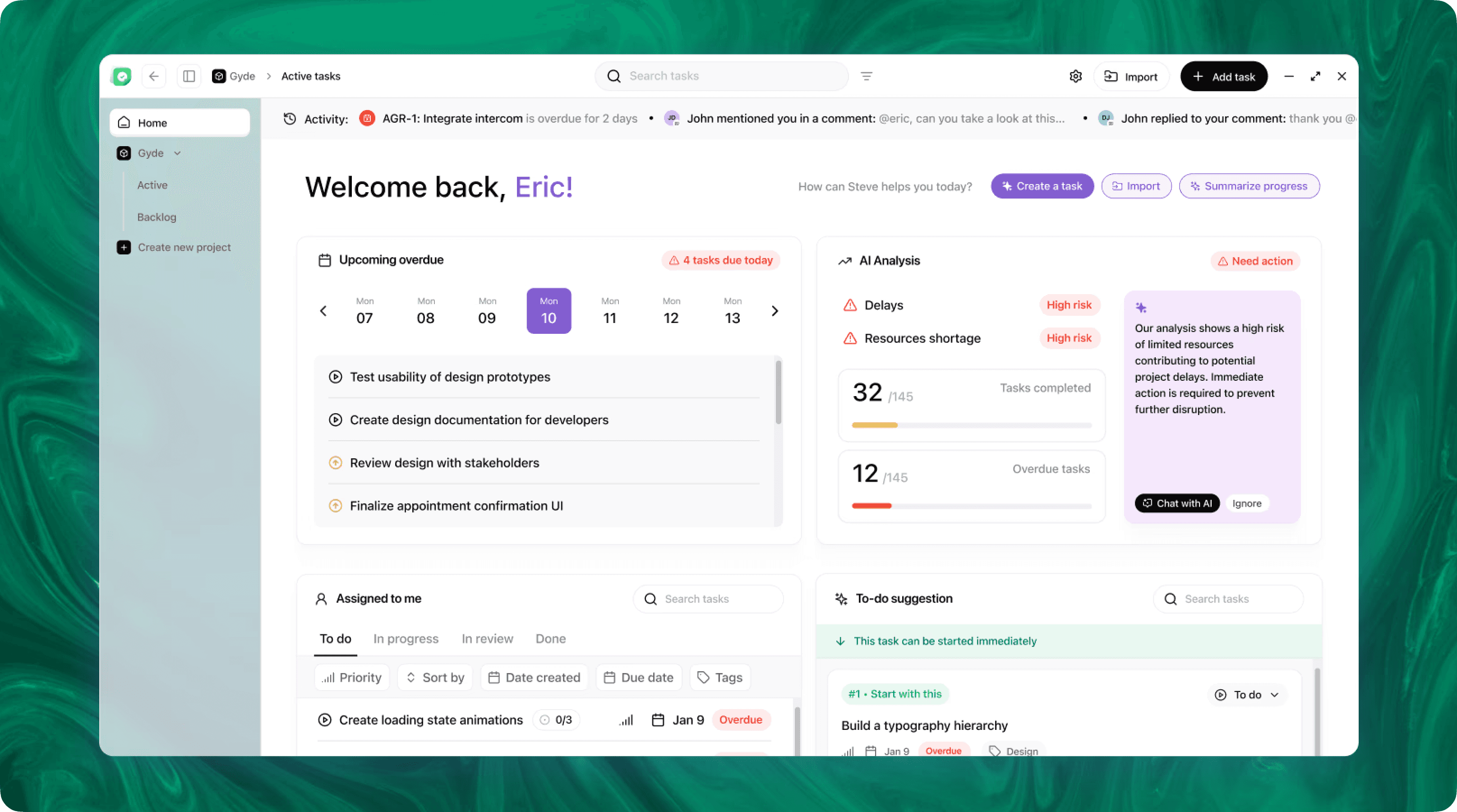
Steve is an AI-native operating system designed to streamline business operations through intelligent automation. Leveraging advanced AI agents, Steve enables users to manage tasks, generate content, and optimize workflows using natural language commands. Its proactive approach anticipates user needs, facilitating seamless collaboration across various domains, including app development, content creation, and social media management.
Conclusion
A shared AI workspace turns scattered context into a coordinated operating rhythm. By combining a persistent shared memory, a conversational AI layer, an integrated smart inbox, and AI-assisted task boards, Steve as an AI OS reduces cognitive load, shortens feedback loops, and keeps teams aligned on what matters. Teams that centralize context and actions in a single, agent-aware workspace spend less time reconciling histories and more time shipping outcomes—precisely the efficiency an AI Operating System is designed to unlock.