Why Context Is The Missing Layer In Workplace Automation
Feb 19, 2026

Context as Shared Memory: Persistent shared memory lets AI agents coordinate decisions and preserve constraints across automated steps.
Conversational Interfaces That Preserve Context: Steve Chat’s memory and integrations turn conversations into actionable workflows rather than one-off queries.
Context-Aware Communication: AI Email: Thread summaries and context-aware replies streamline signal-to-action by embedding prior decisions into outgoing communications.
Task Systems That Carry Intent: AI-powered task boards import context from conversations and emails so tasks retain acceptance criteria and rationale.
Outcome: Embedding context across chat, email, memory, and tasks converts brittle automations into trustworthy, auditable workflows.
Introduction
Automation in the workplace has optimized repeatable work, but it still fails where context matters: handoffs, evolving intent, and cross-system continuity. Missing context turns well-built automations into brittle point solutions that require constant human rescue. Steve, an AI Operating System, fills that layer by keeping conversational state, shared memories, and cross-tool signals alive so automation becomes coherent across emails, chats, and task boards. This article explains why context is the missing layer in workplace automation and how Steve’s design addresses it practically.
Context as Shared Memory
Automations succeed when they act on the right information at the right time; that requires a persistent, shared memory that AI agents can read and write. Steve’s shared memory system allows agents to interact, collaborate, and produce outputs that reference prior decisions, constraints, or preferences. In practice, a product team automating release notes can rely on a single memory record that captures feature owners, rollout windows, and stakeholder approvals; downstream agents then draft communications, update tasks, and schedule calendar events without losing those constraints.
Because the memory is explicit and accessible, automation stops re-asking basic questions. Instead of repeating context-capture prompts, Steve threads intent through subsequent processes, reducing errors and accelerating execution. Shared memory turns discrete automations into a continuous workflow that respects prior choices and current state.
Conversational Interfaces That Preserve Context
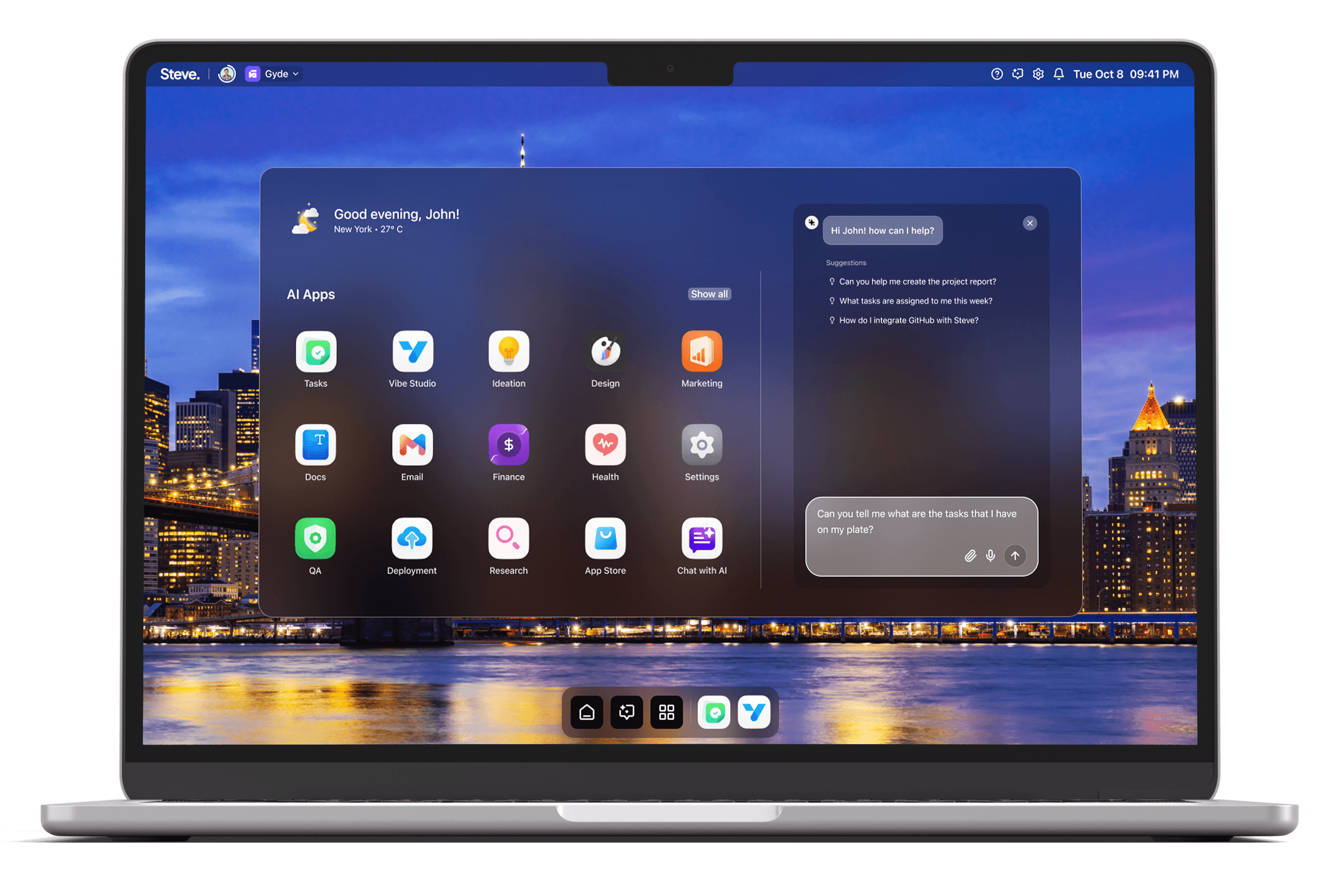
Conversational interfaces often act like ephemeral chatbots — useful for one-off queries but forgetful across sessions. Steve Chat combines advanced AI agents, long-lived memory, and deep integrations (calendar, Drive, Sheets, Notion, GitHub and more) so conversations evolve into coordinated action. When a user asks Steve to “sync the product spec with the engineering board,” the chat can reference the spec uploaded earlier, consult the shared memory for sprint constraints, and propose concrete task edits rather than returning a generic checklist.
This continuity matters in scenarios like incident response: a chat that already knows the affected service, last mitigation steps, and open PRs enables the AI to suggest precise next steps, create follow-up tasks, and compose stakeholder updates — all within the same conversational context. The result is automation that feels like a teammate rather than a stateless tool.
Context-Aware Communication: AI Email
Email remains the connective tissue of organizations, but it’s also a source of context fragmentation: threads get long, priorities shift, and critical details hide in attachments. Steve’s AI Email integrates a smart inbox with real-time sync, thread summaries, and context-aware reply suggestions that draw on shared memory and recent conversations. That means long threads are distilled into actionable summaries and suggested replies that reflect ongoing projects and prior decisions.
For example, when a customer escalates a feature request via email, Steve can generate a concise summary for the product lead, tag the conversation by priority, draft a reply aligned with roadmap constraints stored in memory, and kick off a task in the product board — all without manual context aggregation. This reduces latency between signal (the email) and programmed response (automation), preserving nuance while cutting response time.
Task Systems That Carry Intent
Task automation often fails at the moment of translation: transforming an email, chat, or meeting note into an executable task loses the original intent and acceptance criteria. Steve’s Task Management features create AI-powered boards that import tasks from systems like Linear or generate new ones from conversational prompts, while keeping the context when the task was created. The AI can propose sprints, assign owners, and suggest deadlines informed by shared memory and the current workload.
In practical terms, a PM asking Steve to “prioritize bug fixes that block the beta” results in a focused sprint proposal that carries the blocking criteria, impacted users, and previous mitigation attempts — not just a list of titles. Teams get task boards that are not merely repositories of work but living artifacts that retain the why behind every item.
Steve
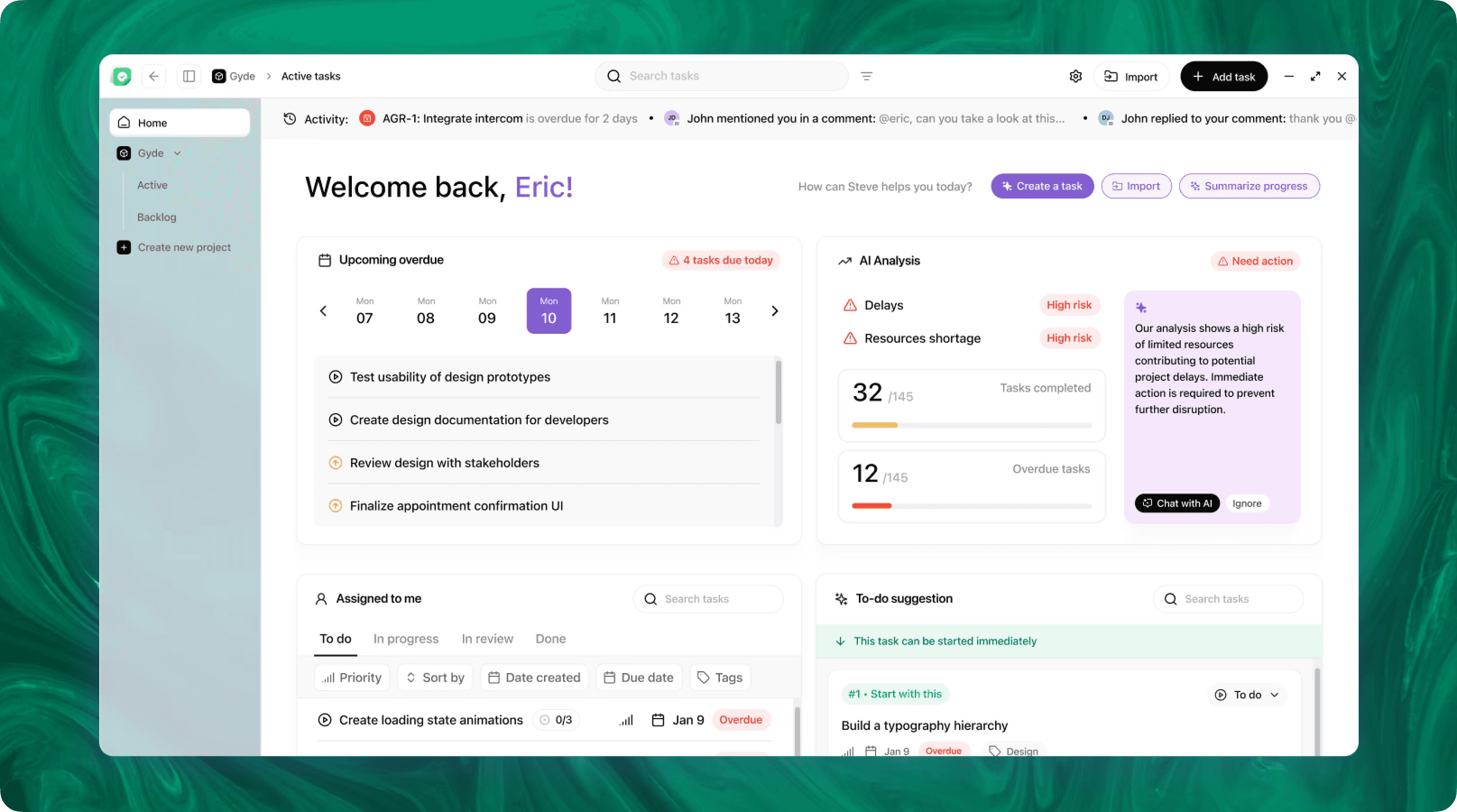
Steve is an AI-native operating system designed to streamline business operations through intelligent automation. Leveraging advanced AI agents, Steve enables users to manage tasks, generate content, and optimize workflows using natural language commands. Its proactive approach anticipates user needs, facilitating seamless collaboration across various domains, including app development, content creation, and social media management.
Conclusion
Context is the missing layer that separates brittle automations from reliable, autonomous workflows. By combining a shared memory system, conversational continuity in Steve Chat, context-aware AI Email, and intent-preserving task management, Steve the AI Operating System turns fragmented signals into coordinated action. The result: fewer interruptions, clearer handoffs, and automation that reflects organizational intent rather than erasing it. Framing automation around context makes systems scalable, auditable, and faster to trust — which is precisely what an AI OS should deliver.