Why Businesses Need An Operating System For Knowledge
Oct 11, 2026

Centralize Context With Shared Memory: Persistent memory lets AI agents share the same organizational context, reducing duplication and enabling auditable reasoning.
Surface and Synthesize Knowledge From Conversations and Email: Integrated email summarization and conversational interfaces turn unstructured threads into concise, actionable briefs.
Coordinate Execution With AI-Powered Task Management: Tasks generated from synthesized knowledge inherit context, speeding triage and preserving decision provenance.
Reduce Decision Latency: Combining shared memory with chat and email synthesis shortens the time from signal to decision by eliminating manual context gathering.
Preserve Accountability and Traceability: Contextual links between conversations, summaries, and tasks create an auditable knowledge lifecycle for governance and continuous improvement.
Introduction
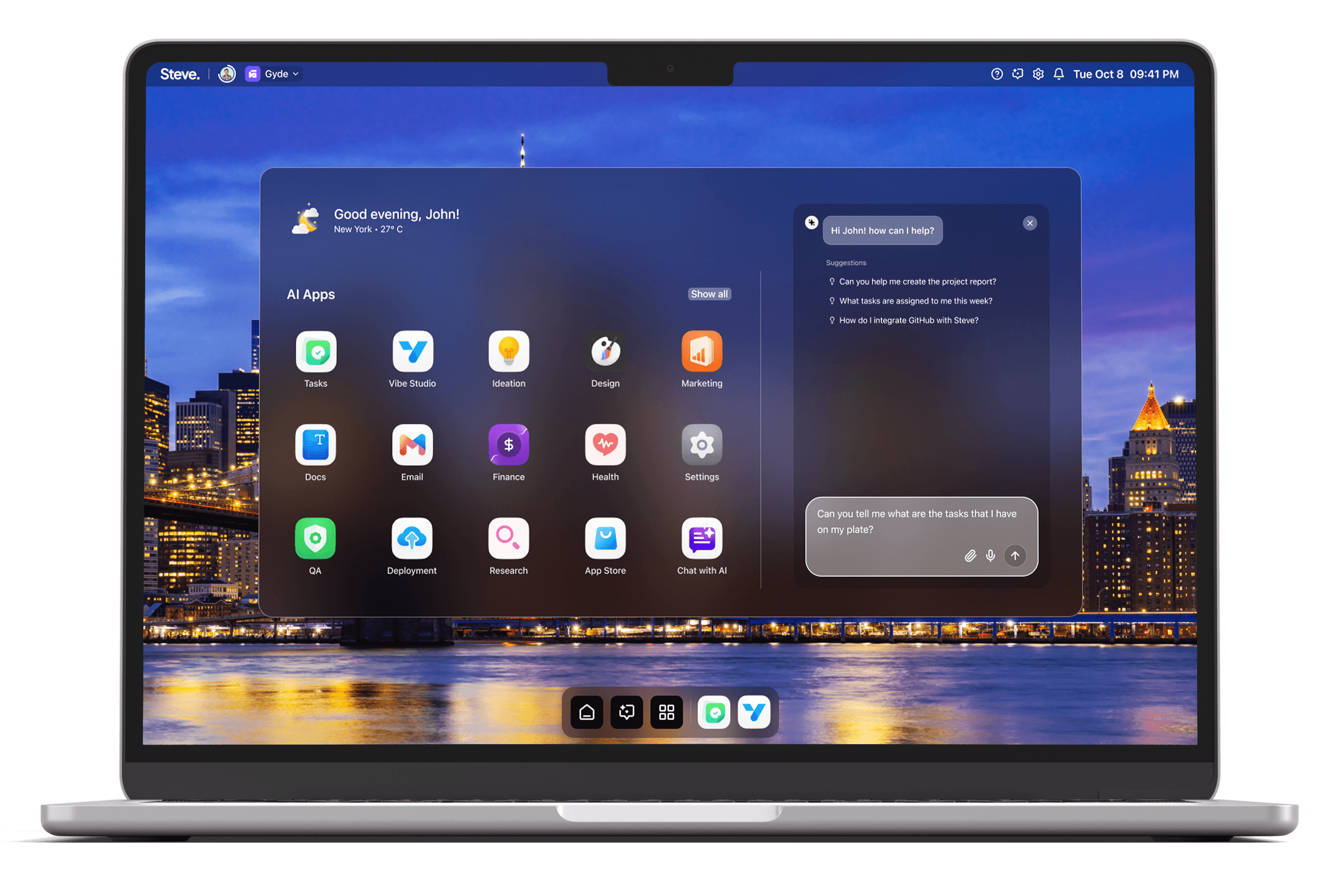
Knowledge is the lifeblood of modern businesses: decisions, customer interactions, and product development all depend on timely, accurate access to context. Yet information lives in silos—email threads, chat logs, documents, and task trackers—making consistent use of institutional knowledge slow, error-prone, and expensive. An operating system for knowledge unifies those inputs, enforces context, and turns passive data into operational signals. Steve, as an AI Operating System, applies conversational AI, a shared memory fabric, intelligent email synthesis, and task orchestration to make knowledge findable, actionable, and auditable across the organization.
Centralize Context With Shared Memory
A central challenge is context fragmentation: teams repeat work because past decisions and customer details are hidden across tools. Steve’s shared memory system gives AI agents a persistent, queryable context that represents conversations, document summaries, and relevant metadata. That memory lets agents reference prior answers, link customer history to support requests, and preserve product constraints across conversations.
In practice, a salesperson no longer needs to hunt through old emails to confirm pricing conversations: the shared memory stores the distilled outcome and surfaces it in conversation. Technical and non-technical contributors get aligned because the same contextual state is available to every agent and interface, reducing rework and decision latency. For knowledge governance, persistent memory creates an auditable trail of what context the AI used to make recommendations.
Surface and Synthesize Knowledge From Conversations and Email
Unstructured inputs are the largest source of buried knowledge. Steve’s AI Email and conversational capabilities convert long threads and scattered chats into concise, actionable summaries and context-aware suggestions. The integrated inbox tags and categorizes messages, generates instant summaries for long threads, and allows users to chat with the AI inside their email workflow to draft or refine replies.
Consider a product-launch scenario: cross-functional feedback arrives as a mix of feature requests, bug reports, and design notes. Steve’s email summaries extract the key asks, prioritize them by urgency, and surface them in chat so stakeholders can clarify requirements in natural language. Because the chat is file-aware and integrated with shared memory, the AI’s responses reflect the latest documents and historical decisions, so summaries and reply drafts are consistent with organizational context rather than isolated interpretations.
This synthesis reduces context-switching and accelerates response quality: subject matter experts spend less time summarizing, and stakeholders receive clearer, faster updates informed by the organization’s stored knowledge.
Coordinate Execution With AI-Powered Task Management
Knowledge only delivers value when it drives execution. Steve’s Task Management integrates knowledge and action by turning synthesized information into prioritized work items and visible progress. AI-powered product boards import or generate tasks from chat and email, propose sprints, and maintain a single workspace where planning and execution remain context-aware.
For example, when a customer escalates a production issue via email, Steve’s AI Email can produce a concise incident brief and create a linked task on the product board with the correct priority and assignees. Because tasks inherit context from shared memory and the originating conversation, engineers immediately see reproductions steps, relevant files, and prior related tickets—reducing triage time and preventing lost context during handoffs.
The result is shorter lead times and clearer accountability: teams can trace a task back to the original knowledge signal (email, chat, or document) and verify that decisions reflect historical constraints and stakeholder intent.
Steve
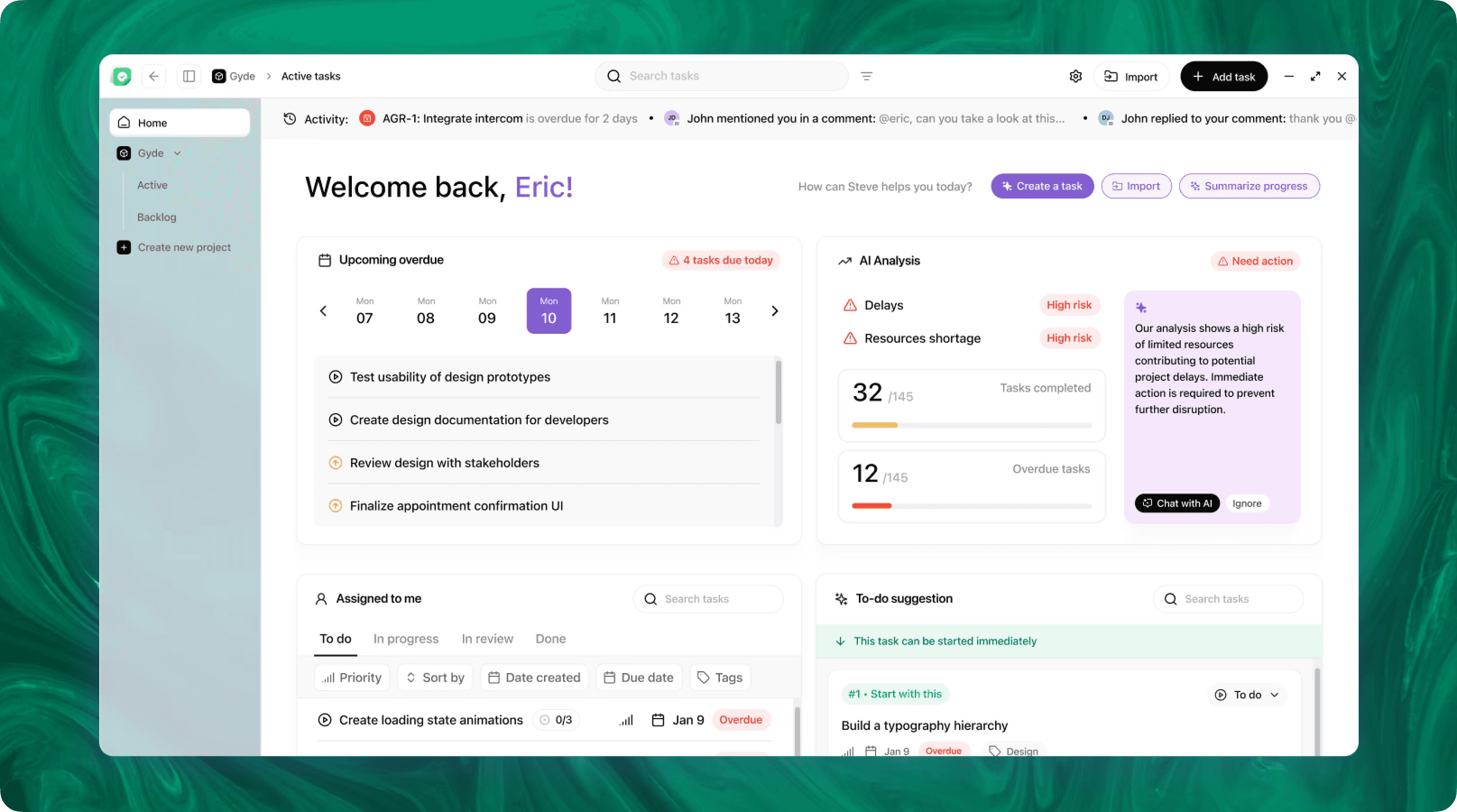
Steve is an AI-native operating system designed to streamline business operations through intelligent automation. Leveraging advanced AI agents, Steve enables users to manage tasks, generate content, and optimize workflows using natural language commands. Its proactive approach anticipates user needs, facilitating seamless collaboration across various domains, including app development, content creation, and social media management.
Conclusion
Businesses need an operating system for knowledge to convert fragmented information into coordinated action. Steve, as an AI OS, combines a shared memory fabric, conversational intelligence, integrated email synthesis, and AI-driven task management to keep context consistent, surface the right information at the right time, and translate insight directly into execution. The outcome is faster decisions, fewer repeated efforts, and a knowledge lifecycle that is both usable and auditable—making knowledge a strategic, operational asset rather than an accidental byproduct of daily work.