Why Ai Needs An Operating System Layer
Feb 21, 2026

Unified Context And Shared Memory: Persistent shared memory prevents repeated clarifications and enables agents to act on historical context.
Conversational Orchestration And Service Integration: A single conversational surface that links 40+ services eliminates tool switching and simplifies multi-step tasks.
Embedded Productivity Workflows: AI inside the inbox shortens triage and drafting loops while preserving thread context for downstream actions.
Continuous Execution And Task Management: Integrated boards and Linear connectivity turn decisions into tracked work and automated updates.
Operational Benefits: An AI OS reduces friction, preserves intent, and scales dependable automation across teams.
Introduction
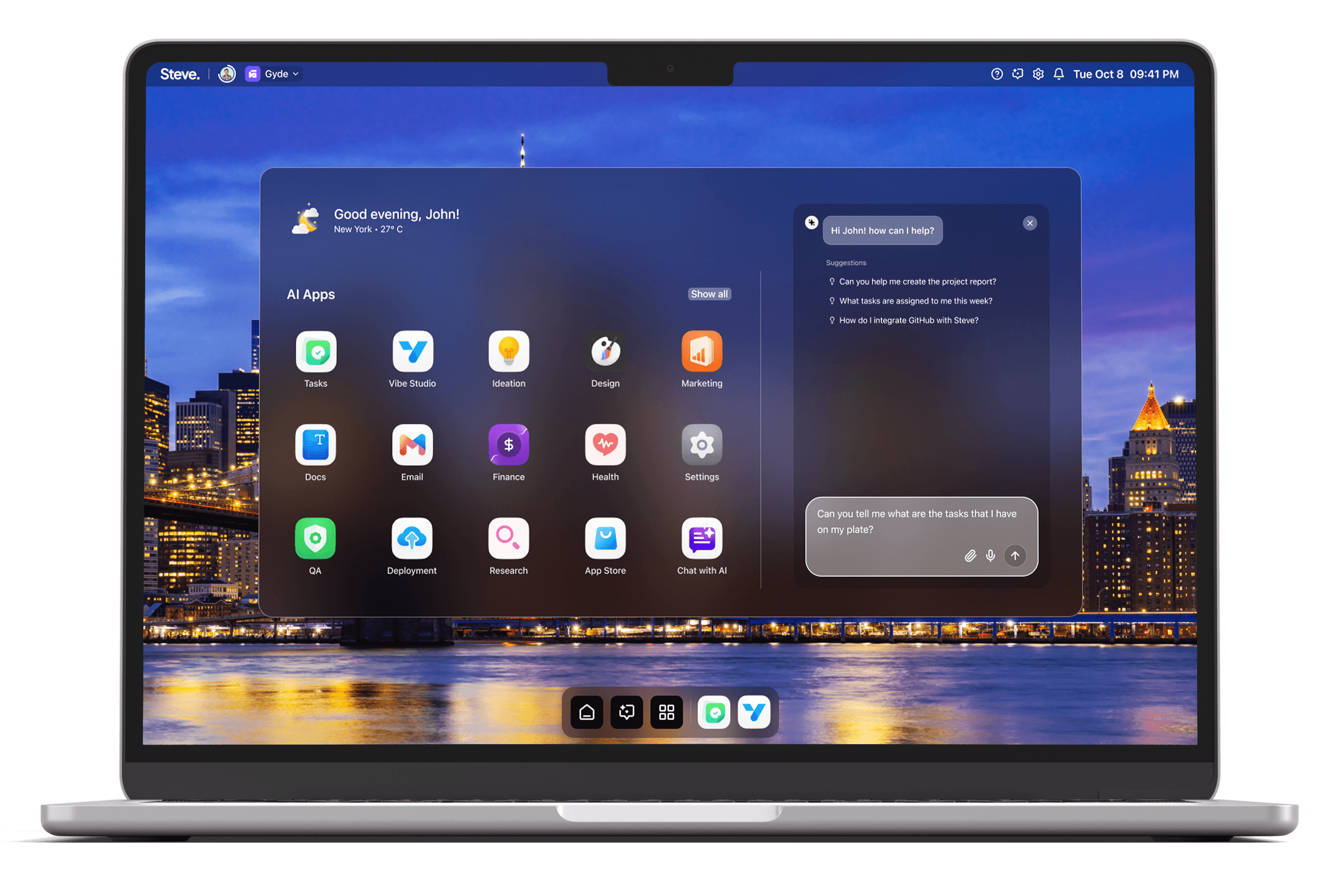
AI systems produce more value when they operate as parts of durable, coordinated workflows rather than as isolated point tools. An operating system layer for AI solves continuity, context, and orchestration problems: it maintains shared state, standardizes integrations, and exposes a single conversational surface for users and agents. Steve acts as that AI Operating System—bringing shared memory, integrated conversational agents, embedded inbox workflows, and task orchestration together so teams execute reliably at scale.
Unified Context And Shared Memory
AI models are powerful but brittle without persistent context. An AI OS must store and expose a shared memory so agents can reference past decisions, user preferences, and document facts across sessions. Steve’s shared memory system provides that continuity: agents read and write a unified context that preserves intent and reduces contradiction. In practice, this means a customer-support agent can recall a previous troubleshooting path, an app-generated draft can reuse a product spec created earlier, and automated workflows won’t repeat previously completed steps. The result is fewer repeated clarifications, faster resolution times, and AI outputs that respect the team’s history.
Conversational Orchestration And Service Integration
An operating system layer must make integrations discoverable and safely callable through a single interface so users and agents avoid tool-switching. Steve Chat delivers that conversational orchestration: a file-aware, memory-enabled chat that connects accounts, calendars, drives, issue trackers, and 40+ services. Users ask natural-language questions—schedule a follow-up, find the latest spec, or create a GitHub issue—and Steve routes actions, applies context from shared memory, and reports back in plain language. This lowers cognitive load, reduces integration friction, and lets non-technical stakeholders trigger multi-step operations without scripting or fragile automations.
Embedded Productivity Workflows (Email + Conversation)
Email remains the hub of business communication, but inboxes fragment context across threads and apps. An AI OS solves that by embedding AI directly into the inbox so conversational agents can summarize, tag, and draft within the message flow. Steve’s AI Email pairs real-time sync, conversation-driven drafting, and thread summarization to keep context in one place. A product lead can open a long thread, ask Steve to summarize decisions, and convert action items into tasks without leaving the inbox. Because the AI uses shared memory, generated replies and suggestions align with prior notes and project state rather than producing surface-level answers.
Continuous Execution And Task Management
Coordination requires persistent execution: turning conversations into tracked work and keeping those tasks synchronized with engineering workflows. An AI OS should maintain this loop from idea to delivery. Steve’s task management boards integrate with Linear and propose sprint plans, import tasks from prompts, and automate status updates based on conversational outcomes. For example, after a stakeholder meeting summarized in chat, Steve can create a prioritized sprint, assign owners, and keep progress visible—closing the loop between planning, execution, and reporting. This continuous execution reduces manual handoffs and preserves decision context inside the platform.
Steve
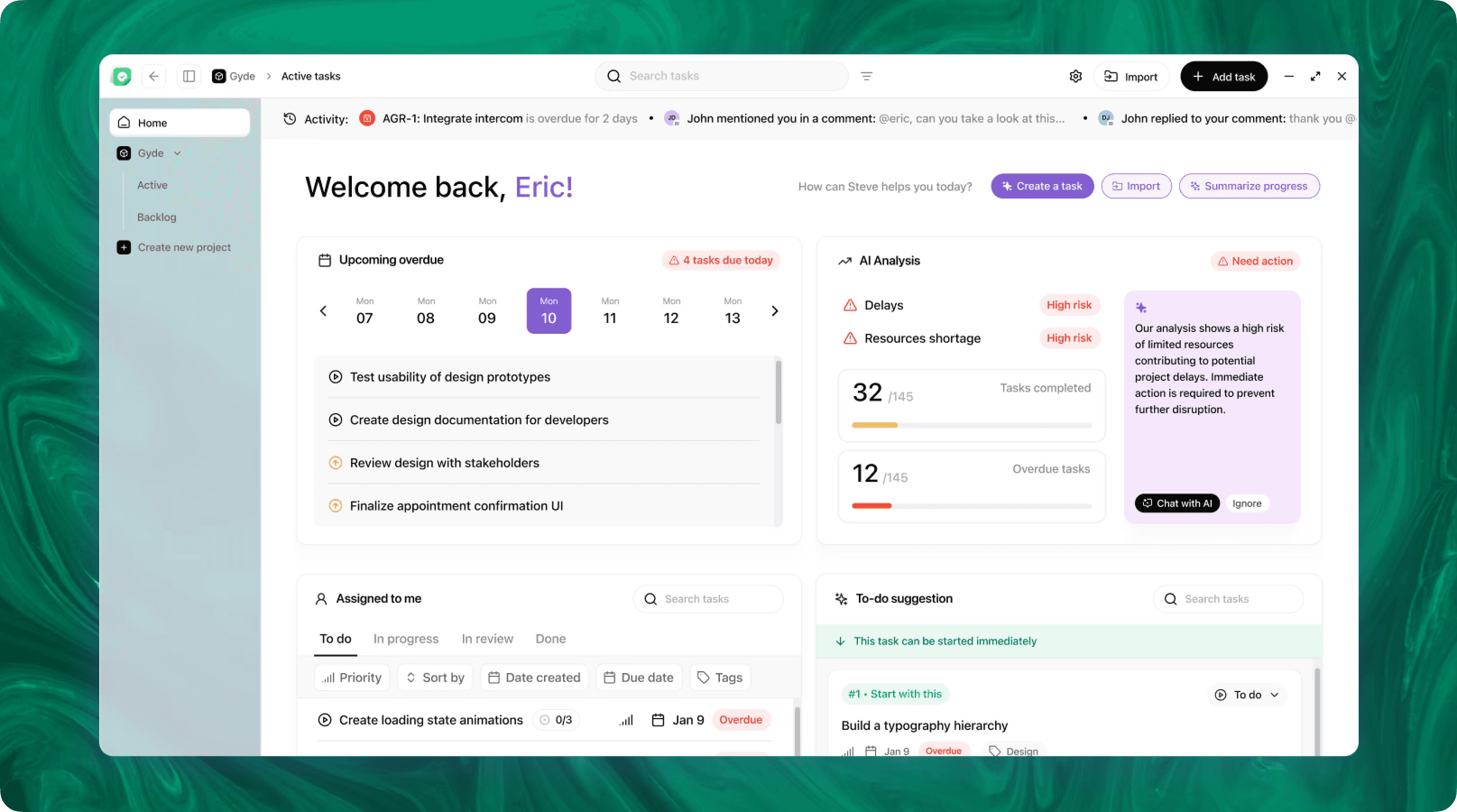
Steve is an AI-native operating system designed to streamline business operations through intelligent automation. Leveraging advanced AI agents, Steve enables users to manage tasks, generate content, and optimize workflows using natural language commands. Its proactive approach anticipates user needs, facilitating seamless collaboration across various domains, including app development, content creation, and social media management.
Conclusion
AI needs an operating system layer because isolated models and point solutions cannot preserve continuity, orchestrate cross-system actions, or maintain governance across long-lived workflows. By combining shared memory, a conversational orchestration layer, embedded email workflows, and integrated task management, Steve demonstrates how an AI OS transforms fragmented AI interactions into dependable business automation. Organizations gain fewer context losses, faster execution, and safer integrations—outcomes only achievable when AI runs on an operating system designed to hold state, route intent, and manage work over time.