What Companies Get Wrong About Ai Adoption
Oct 7, 2026

Treating AI As A Point Tool Instead Of An Operating System: Centralizing interactions in a conversational AI OS prevents tool sprawl and preserves workflow continuity.
Neglecting Shared Context And Memory: Persistent shared memory ensures AI outputs reflect prior decisions and institutional knowledge, reducing rework.
Skipping Integration With Everyday Workflows: Embedding AI into email, calendar, and chat keeps intelligence adjacent to the work and limits context switching.
Pilots Without Operational Governance: AI-driven task boards convert experimental recommendations into tracked, accountable work to enable scaling.
Outcome Focus: Combining conversation, memory, integration, and task automation turns AI experiments into measurable business impact.
Introduction
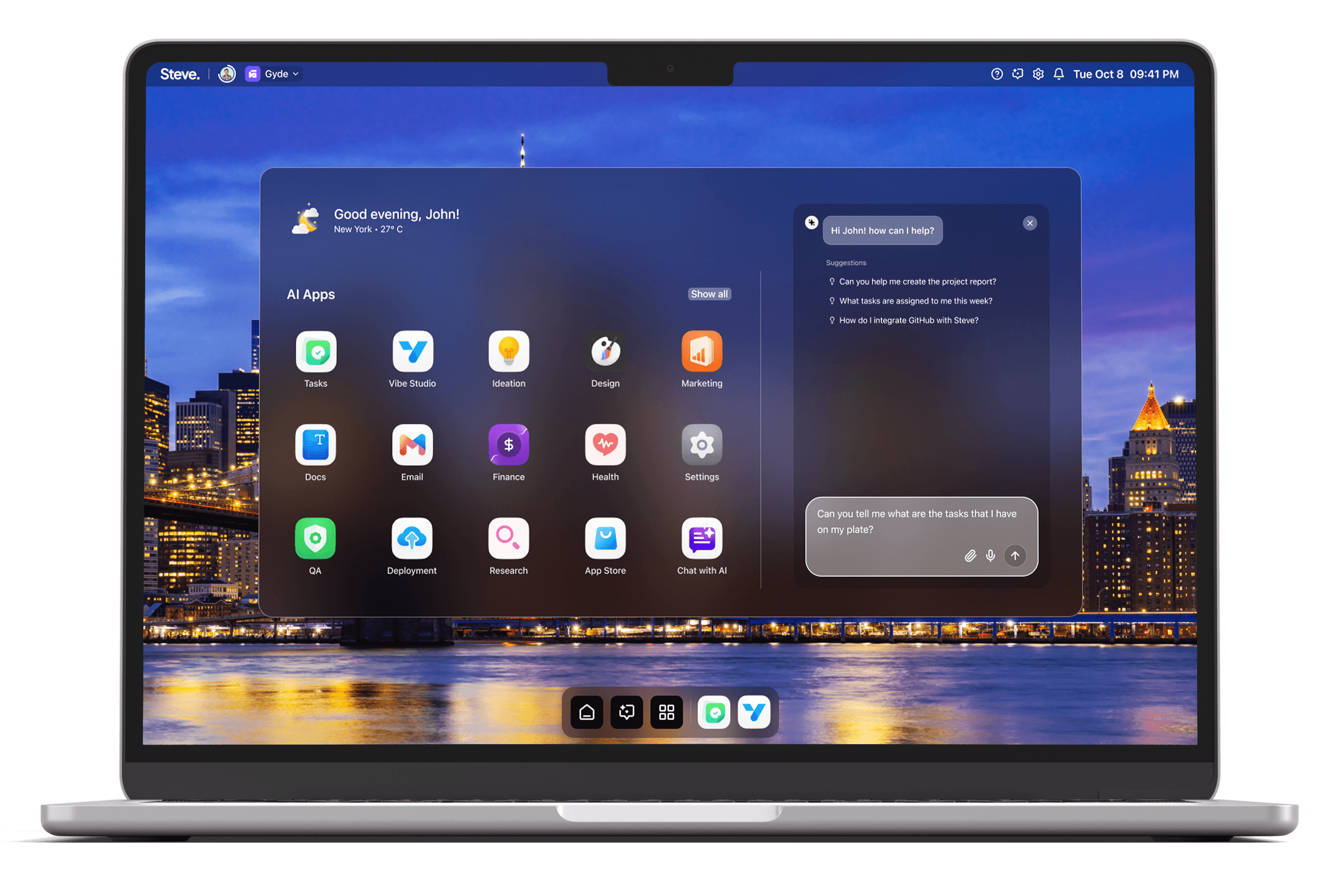
Companies repeatedly stumble in AI adoption by treating models as isolated point solutions rather than embedding them into day-to-day operations. These missteps waste budget, confuse teams, and stall value capture. Steve, an AI Operating System, addresses those failures by combining a conversational interface, cross-system integrations, a shared memory for AI agents, and AI-driven task management—making AI practical, auditable, and repeatable.
Treating AI As A Point Tool Instead Of An Operating System
Problem: Organizations buy single-purpose tools and expect quick ROI, then struggle to scale because each tool lives in its own silo. That creates duplication, inconsistent outputs, and tool fatigue.
How Steve Helps: As an AI OS, Steve centralizes interaction through a conversational interface so teams work with one intelligent surface instead of chasing multiple point solutions. In practice, a product manager can ask Steve to summarize customer feedback, generate a prioritized backlog, and then convert that backlog into tracked tasks—without switching apps. That continuity reduces friction between ideation and execution and makes AI-driven outcomes reproducible across teams.
Neglecting Shared Context And Memory
Problem: AI outputs often lack continuity because models don’t inherit organizational context; every prompt restarts the clock and loses prior decisions.
How Steve Helps: Steve’s shared memory system lets AI agents retain and reference contextual signals—prior chats, decisions, and document snippets—so recommendations reflect organizational history. For example, when a sales rep asks for a proposal draft, Steve consults previous contract language and recent negotiation notes from the shared memory, producing copy aligned with past concessions. That persistent context reduces rework and preserves institutional knowledge as AI-generated artifacts evolve.
Skipping Integration With Everyday Workflows
Problem: Successful AI adoption depends on embedding intelligence into existing workflows—email, calendars, documents, and issue trackers—not creating separate parallel processes.
How Steve Helps: Steve’s conversational AI and deep integrations let teams run work where they already operate. When an email thread contains a new feature request, Steve’s smart inbox surfaces a summary, suggests a reply, and can create a task in the team’s board without manual copy-and-paste. Likewise, Steve Chat connects to calendars, drives, and repositories so scheduling, document lookup, and code references happen as part of the conversation. Embedding AI into inboxes and chat keeps decisions near the data and reduces context switching that kills productivity.
Pilots Without Operational Governance
Problem: Many pilots succeed technically but fail to scale because they lack governance: clear ownership, measurable SLAs, and a single source of truth for actions and outcomes.
How Steve Helps: Steve’s AI-powered task management boards close the loop between suggestion and execution. The system proposes sprints, creates tracked items, and maps deliverables to owners, enabling transparent execution and measurable progress. A marketing lead can accept Steve’s suggested campaign tasks into the board, assign owners, and watch AI-suggested timelines update as work progresses. This transforms experimental outputs into accountable processes and prevents promising pilots from becoming islanded experiments.
Steve
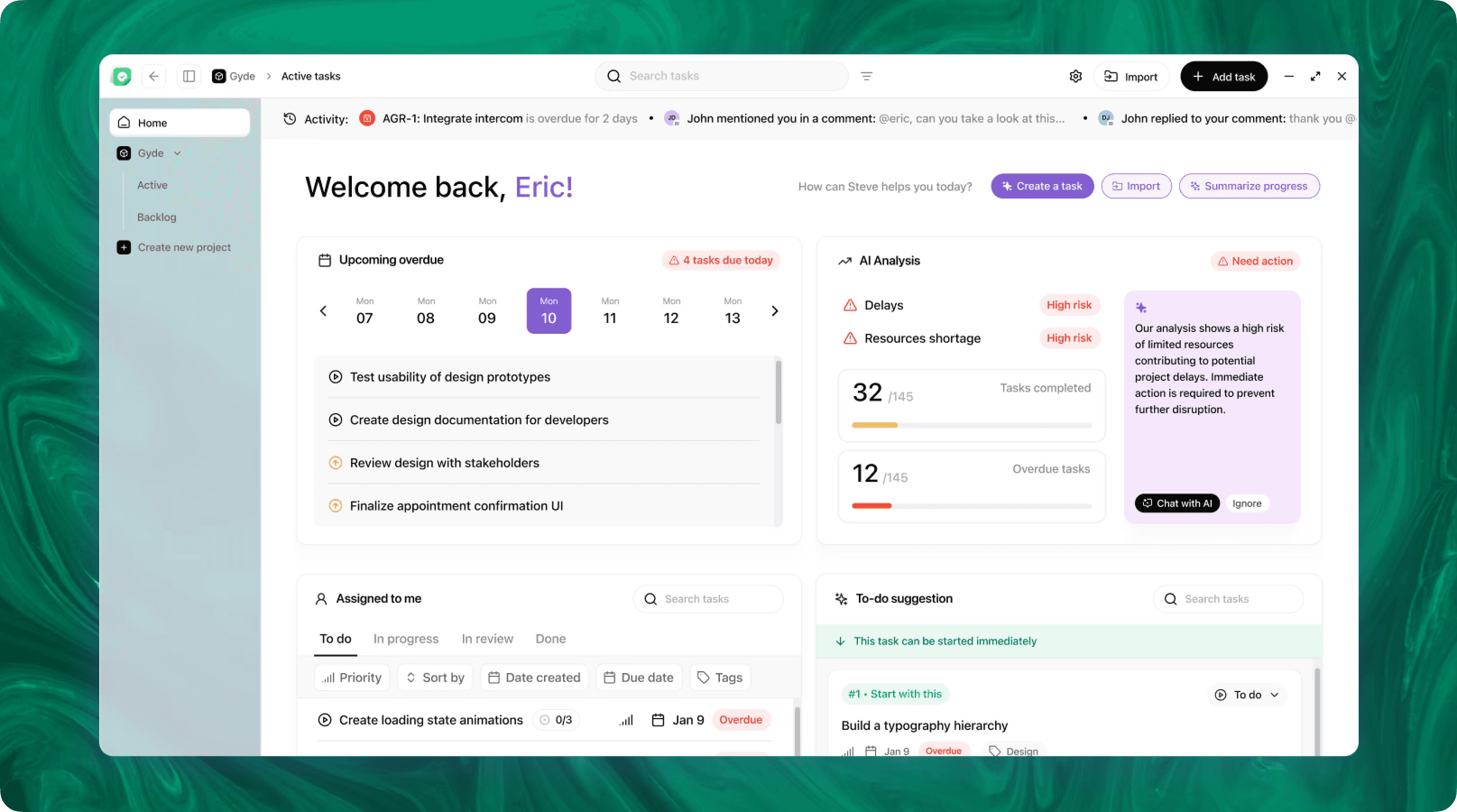
Steve is an AI-native operating system designed to streamline business operations through intelligent automation. Leveraging advanced AI agents, Steve enables users to manage tasks, generate content, and optimize workflows using natural language commands. Its proactive approach anticipates user needs, facilitating seamless collaboration across various domains, including app development, content creation, and social media management.
Conclusion
Companies that expect plug-and-play AI without changing how work flows will repeatedly underperform. Steve reframes adoption: it’s not a stack of disconnected point solutions but an AI Operating System that combines conversational interfaces, persistent shared memory, integrated workflows, and AI-driven task management. That combination reduces context loss, limits tool sprawl, and converts pilot wins into operational improvements—so organizations capture real, repeatable value from AI.