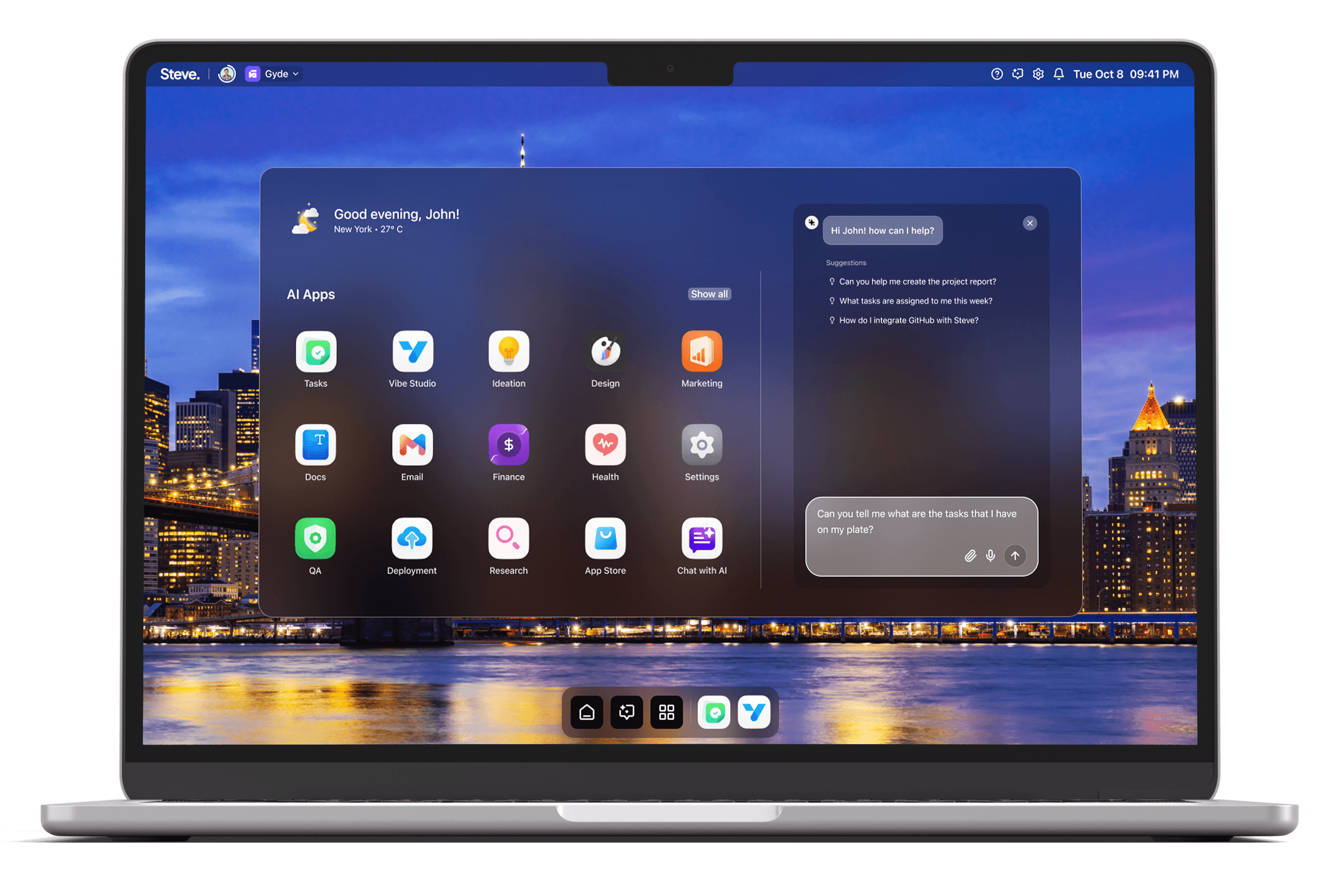
Using Steve To Detect Workflow Bottlenecks
Nov 24, 2025

Centralized Context With Shared Memory: Persistent memory links timestamps, comments, and handoffs so agents can identify recurring delay points.
Rapid Root-Cause Discovery Via Conversational Integrations: Steve Chat queries connected tools and files to produce evidence-backed hypotheses for stalled work.
Automated Prioritization With Task Management: AI task boards and Linear integration convert detected bottlenecks into tracked remediation with suggested sprints and owners.
Inbox-Level Signal Detection With AI Email: Smart tagging and summaries surface overdue commitments and hidden action items that create operational drag.
Continuous Improvement Loop: Combining detection, task creation, and outcome tracking lets teams validate mitigations and prevent regressions.
Introduction
Detecting workflow bottlenecks is essential for predictable delivery, predictable capacity, and predictable outcomes. Steve, as an AI Operating System, spots bottlenecks by combining conversational intelligence, integrated signals, and automated prioritization so teams spend less time hunting problems and more time resolving them. This article shows concrete ways to use Steve to surface causes, quantify impact, and accelerate fixes.
Centralized Context With Shared Memory
A persistent shared memory lets Steve’s AI agents accumulate and surface the contextual threads that reveal slowdowns. Instead of scattering status across dashboards, the shared memory records task handoffs, decision notes, and file references so agents can correlate repeated delays to owners, tools, or steps. In practice, an agent can surface a pattern where review cycles consistently add two business days after a specific approval node, because the shared memory holds approval timestamps, reviewer identities, and related comments. That single source of contextual truth reduces noise and prevents repeated root-cause investigations.
Rapid Root-Cause Discovery Via Conversational Integrations
Steve Chat turns cross-tool signals into direct investigation paths through conversation. Because Steve integrates with Google Calendar, Gmail, Drive, Sheets, Notion, GitHub, and many other services, you can ask the platform focused questions — for example, "Which PRs have stalled more than five business days and who last commented?" — and receive an evidence-backed list. File-aware uploads and real-time web search extend that capability: upload a project spreadsheet or a long email thread and ask Steve to summarize blockers or extract overdue actions. Agents synthesize timestamps, comments, and file versions to produce concise root-cause hypotheses you can act on immediately.
Automated Prioritization With Task Management
Steve’s AI-powered task boards convert detection into prioritized action. When agents identify recurring slow points — for example, a QA backlog or a deployment gating approval — the task management module can surface related issues on product boards, suggest sprint adjustments, and create follow-up tasks. Integration with Linear allows Steve to import existing tasks or create new ones from conversational prompts, keeping detection and remediation in the same workspace. Teams get suggested sprints, dependencies, and owners so fixes are tracked, measured, and visible without manual coordination.
Inbox-Level Signal Detection With AI Email
Much of the friction that becomes bottlenecks lives in email. Steve’s AI Email automates extraction of signals from long threads: it tags and categorizes messages, generates concise summaries of protracted conversations, and highlights action items and overdue commitments. By feeding these signals into the shared memory and task boards, Steve connects inbox delays to operational outcomes — for instance, converting a prioritized but unanswered stakeholder request into a tracked task with a proposed owner. Chatting with the AI directly inside the inbox accelerates clarification, drafts replies, or escalations without context loss.
Turning Detection Into Continuous Improvement
Detection is valuable only when it triggers measurable change. Steve closes the loop by combining memory-backed insights, conversational triage, task creation, and inbox signal capture into a repeatable workflow: identify patterns, generate hypotheses, create remediation tasks, and track outcomes. Because agents persist context, teams can compare run rates before and after interventions, and Steve can surface whether a mitigation reduced cycle time or simply shifted the delay to another node. That continuity supports data-driven retrospectives and more effective process design.
Steve
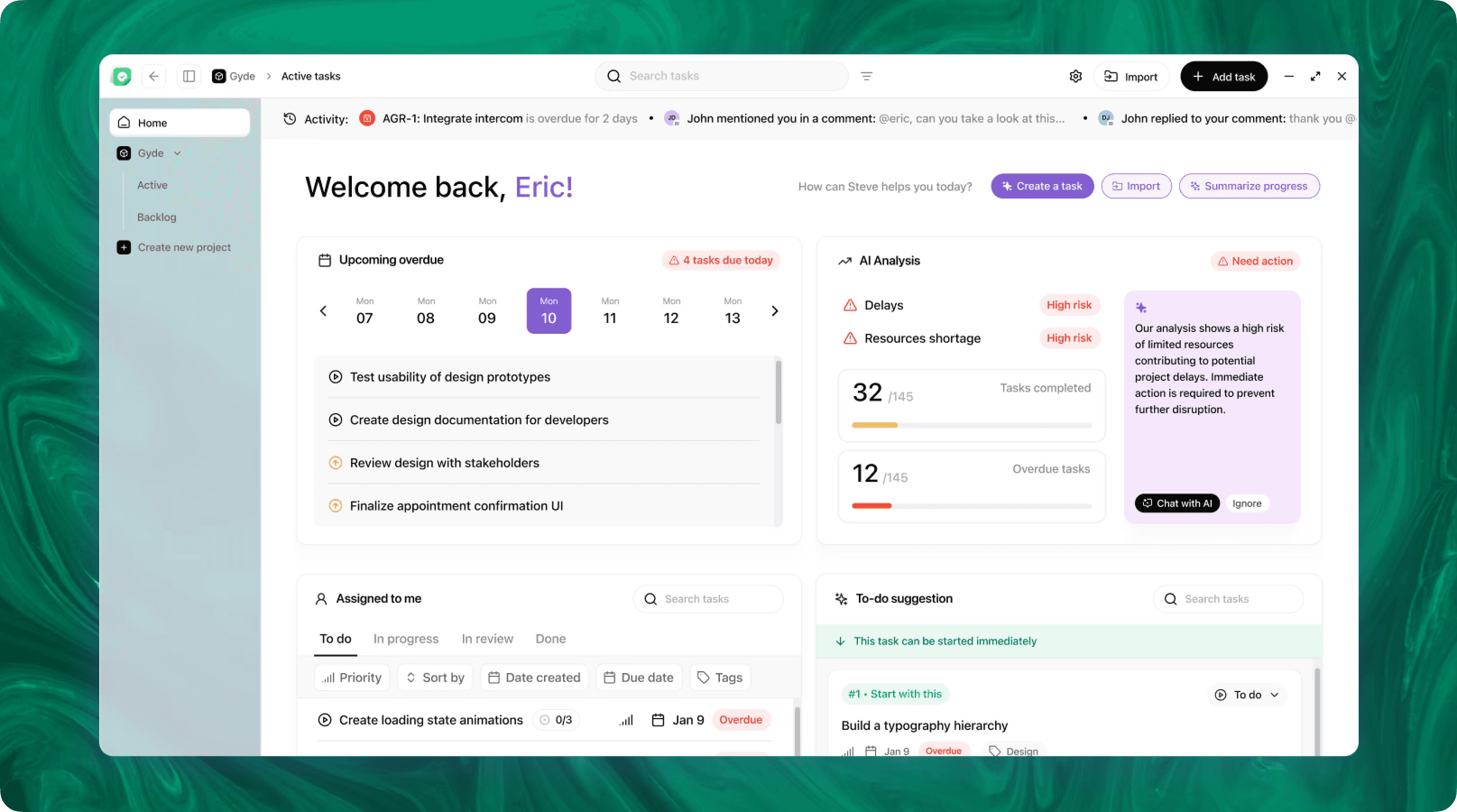
Steve is an AI-native operating system designed to streamline business operations through intelligent automation. Leveraging advanced AI agents, Steve enables users to manage tasks, generate content, and optimize workflows using natural language commands. Its proactive approach anticipates user needs, facilitating seamless collaboration across various domains, including app development, content creation, and social media management.
Conclusion
Using Steve to detect workflow bottlenecks changes the work from manual forensics to continuous operational intelligence. As an AI OS, Steve brings shared memory for cross-agent context, conversational integrations for rapid evidence gathering, AI-powered task management to prioritize fixes, and an intelligent inbox to surface unseen signals. Together these capabilities shorten investigation time, produce actionable remediation, and turn bottleneck discovery into a routine part of delivery management.