Using Steve to Automate RACI Documentation
Jan 26, 2026

Centralizing Context With Shared Memory: Persistent shared memory ensures RACI proposals reflect up-to-date org charts, briefs, and historical decisions.
Mapping And Generating RACI With Steve Chat: Conversational, file-aware chat drafts RACI matrices from briefs and explains role choices with step-by-step reasoning.
Syncing RACI Into Tasks And Calendars: Task Management converts role assignments into actionable tasks and detects scheduling conflicts across integrations.
Closing The Loop With AI Email: AI Email summarizes threads, requests confirmations, and records approvals back into shared memory to keep RACI current.
Operational Benefit: The combined workflow produces a living, auditable RACI that reduces coordination overhead and preserves accountability as work evolves.
Introduction
Creating and maintaining RACI (Responsible, Accountable, Consulted, Informed) documentation is a recurring operational cost: it requires gathering context, mapping roles to activities, keeping assignments current, and surfacing accountability as projects evolve. Steve, an AI Operating System, reduces that overhead by combining conversational intelligence, persistent shared memory, task orchestration, and integrated communication. This article shows how Steve automates RACI documentation end-to-end and keeps role clarity actionable across execution systems.
Centralizing Context With Shared Memory
A single source of truth is the first requirement for reliable RACI maps. Steve’s shared memory system lets AI agents persist and recall contextual information—project scopes, organizational charts, previous approvals, and historical ownership patterns—so role recommendations start from accurate, evolving data. Instead of rebuilding context for every request, Steve agents reference shared memory to propose role assignments that reflect prior decisions and current structures. In practice, this reduces repeated interviews and prevents stale RACI entries caused by fragmented knowledge.
Mapping and Generating RACI With Steve Chat
Steve Chat provides a conversational interface that translates natural questions into structured RACI artifacts. Ask Steve to "Draft a RACI for the Q2 product launch using the product brief and org chart," and the chat agent can ingest files, pull referenced documents from Google Drive or Sheets, and draft an initial matrix. Because Steve Chat is file-aware and integrates with common services, it can surface candidate owners from an org chart, suggest who should be consulted based on document authorship, and explain each recommendation with step-by-step reasoning. Teams can iterate on the matrix conversationally—refining scope, swapping roles, or adding dependencies—while the AI logs the dialog so decisions remain auditable.
Syncing RACI Into Tasks and Calendars
A RACI is only useful when it connects to work. Steve’s Task Management modules tie role assignments to actionable boards and sprint plans, and its integrations (for example with Linear) enable syncing responsibilities into existing workflows. Once a RACI is agreed, Steve can generate tasks aligned to each accountable owner, propose sprint allocations, and surface scheduling conflicts by cross-checking calendars via Steve Chat integrations. This keeps the RACI live: if a responsible party changes, Steve updates the task assignments and notifies stakeholders, preserving traceability from assignment to delivery.
Closing the Loop With AI Email and Ongoing Accountability
Maintaining RACI alignment requires confirmations and periodic check-ins. Steve’s AI Email capabilities summarize long threads, tag priority messages, and draft context-aware replies that seek approvals or acknowledge handoffs. Use Steve to send a concise RACI snapshot to stakeholders, request confirmation, and automatically capture replies into shared memory. When someone confirms a role over email, Steve records that confirmation and updates associated tasks and the RACI matrix. This reduces administrative friction and creates a verifiable audit trail of who accepted or contested responsibilities.
Practical Scenarios
Rapid kickoff: During project initiation, a product manager uploads the brief and asks Steve to propose a RACI; Steve Chat pulls authorship and org data, the shared memory stores the draft, and Task Management turns roles into actionable tasks for the first sprint.
Mid-project churn: If an engineer transitions teams, Steve detects the change from calendar or HR-sourced documents in shared memory, flags impacted RACI entries, and proposes reassignment options that the team reviews in chat.
Stakeholder alignment: Before milestone handoff, Steve drafts a one-click email summary of the current RACI and required approvals, captures responses, and timestamps updates to the RACI matrix.
Steve
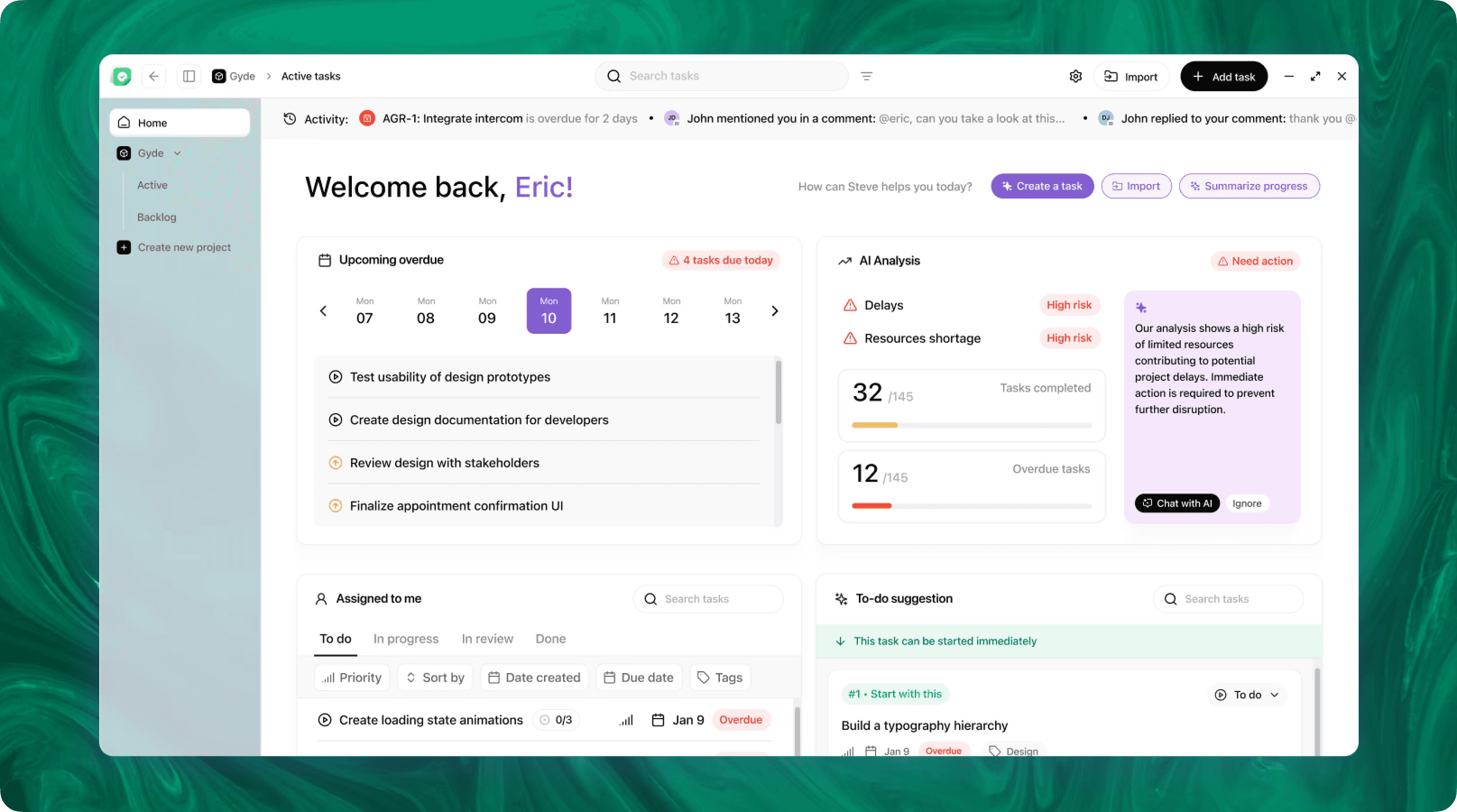
Steve is an AI-native operating system designed to streamline business operations through intelligent automation. Leveraging advanced AI agents, Steve enables users to manage tasks, generate content, and optimize workflows using natural language commands. Its proactive approach anticipates user needs, facilitating seamless collaboration across various domains, including app development, content creation, and social media management.
Conclusion
Automating RACI documentation with Steve turns a manual governance chore into a contextual, auditable workflow. As an AI OS, Steve centralizes institutional knowledge in shared memory, uses conversational intelligence to draft and explain role maps, links assignments to task boards and calendars, and closes the loop with smart email coordination. The result is a living RACI that stays aligned to real work, reduces coordination overhead, and makes accountability simple to maintain.