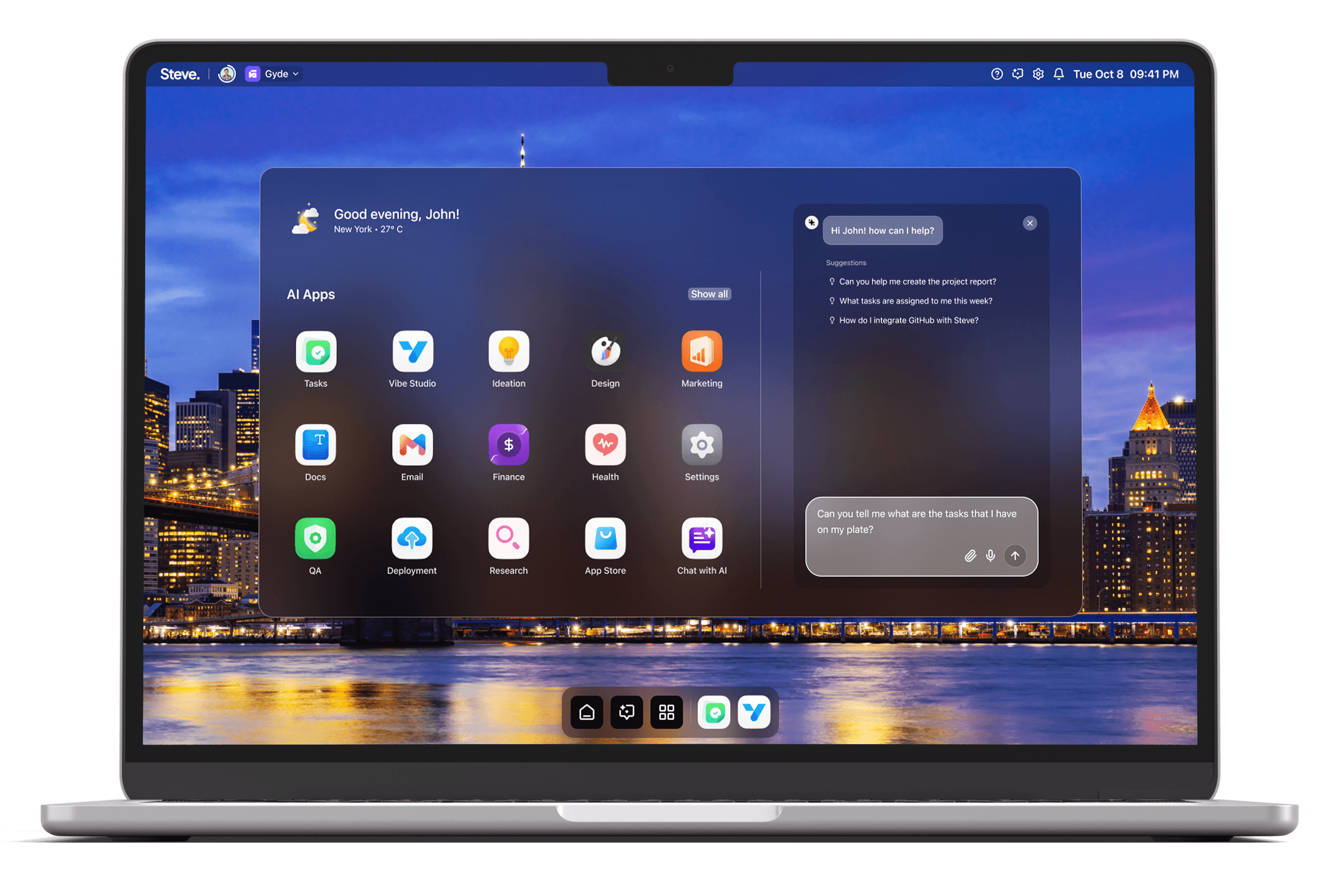
Using Steve as a Daily Business Command Center
Dec 4, 2025

Unified Inbox And Rapid Triage: AI Email summarizes threads, tags priorities, and drafts replies in-context to shrink inbox triage time.
Conversational Operations With Steve Chat: Steve Chat turns natural-language requests into scheduling, file finds, and actions across integrated services.
AI-Powered Task Management And Execution: Tasks created from chat and email sync to boards and Linear, preserving source context and suggested acceptance criteria.
Persistent Shared Memory For Continuity: Shared memory lets agents recall prior decisions and constraints so outputs stay consistent and proactive.
Workflow Benefit: Combining inbox, chat, tasks, and memory eliminates tool switching and creates a single living operational record for daily work.
Introduction
Using Steve as a Daily Business Command Center centralizes communication, scheduling, and execution so leaders and teams run a single, context-rich workflow each day. As an AI Operating System, Steve surfaces priorities, automates routine work, and keeps team memory aligned so decisions happen faster and with less friction. This article shows how Steve’s chat, smart inbox, task management, and shared memory create a practical command center for daily operations.
Unified Inbox And Rapid Triage
Start the day in Steve’s AI Email to cut triage time: the integrated smart inbox syncs in real time, tags and categorizes messages, and produces concise thread summaries so you know what needs attention in minutes. Practically, a sales lead, investor note, and internal escalation arrive in the same view; AI Email highlights the investor thread, suggests priority replies, and drafts an answer aligned with ongoing projects. Because drafts appear inside the inbox and you can chat with AI there, you iterate faster—refine copy conversationally, then send without switching tools.
Conversational Operations With Steve Chat
When email or a conversation requires action, move seamlessly into Steve Chat to schedule, find files, or create deliverables using natural language. Steve Chat connects to calendars, Gmail, Drive, Sheets, Notion, GitHub, and other services so a single message like “Schedule a 30-minute sync with product and add last week’s roadmap doc” results in a calendar invite and a linked file reference. In a practical scenario, a PM uses Steve Chat during a stand-up to convert blockers into tasks, attach the relevant spreadsheet, and propose meeting times—eliminating manual copying between apps.
AI-Powered Task Management And Execution
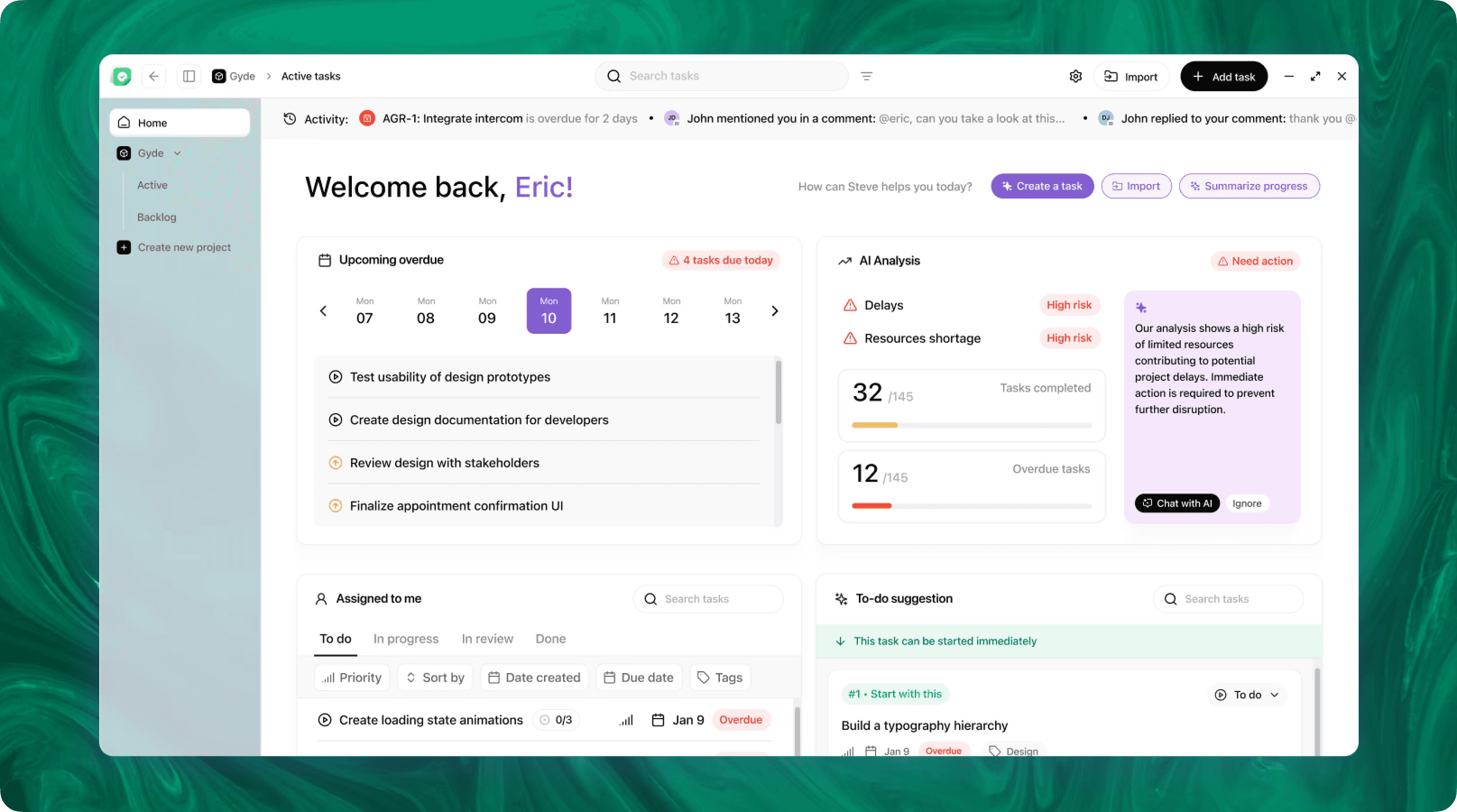
Turn conversations and inbox items into tracked work with Steve’s task boards and Linear integration so work moves from intent to execution without gaps. Create priorities, propose sprints, and monitor progress in the same workspace where decisions were made: an engineer’s bug report drafted in chat becomes a task assigned to a sprint and linked back to the originating email and GitHub issue. This keeps context intact and reduces follow-up cycles because task cards include the conversation history, attachments, and suggested acceptance criteria generated by the AI.
Persistent Shared Memory For Continuity
Steve’s shared memory system preserves context across interactions so the AI agents remember project details, team preferences, and prior decisions—reducing repetitive briefings and enabling proactive suggestions. For example, when the marketing lead asks for campaign metrics, Steve references the latest dashboards, previous campaign goals, and the established success criteria stored in memory, then surfaces a concise update and next steps. That continuity matters for daily operations: recurring requests use historical context to produce consistent outputs and the team avoids re-stating constraints or re-uploading files.
Practical Daily Workflow Example
A compact morning routine shows the command-center flow: the CEO opens Steve, scans AI Email summaries, asks Steve Chat for a prioritized task list, and accepts the AI-suggested sprint for the week. Tasks created from email threads appear on the board with links to the source messages and a suggested owner; shared memory supplies historical metrics that shape priorities. Throughout the day, the team checks Steve to update progress, resolve questions via chat with direct file uploads, and let the AI surface stalled items before they escalate. The result is fewer meetings, faster handoffs, and a living operational record.
Governance And Practical Limits
Use role-based access and review AI-generated outputs before finalizing sensitive content: Steve accelerates drafting and scheduling but organizational oversight remains essential. The AI OS model in Steve augments decision-making and automates routine work, but teams should confirm legal, financial, and strategic actions before publishing.
Steve
Steve is an AI-native operating system designed to streamline business operations through intelligent automation. Leveraging advanced AI agents, Steve enables users to manage tasks, generate content, and optimize workflows using natural language commands. Its proactive approach anticipates user needs, facilitating seamless collaboration across various domains, including app development, content creation, and social media management.
Conclusion
As an AI OS, Steve consolidates email, conversational automation, task management, and shared memory into a single command center that shortens decision loops and preserves context across the workday. Teams that adopt Steve reduce context switching, automate recurring tasks, and keep execution tied to the conversations that produced them—turning daily chaos into a repeatable operational rhythm.