Using AI to Reduce Operational Latency Across Teams
Jan 15, 2026

Unified Context With Shared Memory: Persistent memory ensures all agents and teams reference the same context, cutting repeated explanations and redundant work.
Conversational Orchestration With Steve Chat: A single, integrated chat surface executes scheduling, document retrieval, and issue management without tool switching.
Accelerating Decisions With AI Email: Thread summaries, AI tags, and contextual reply suggestions prioritize critical items and speed response times.
Closing The Loop With AI-Powered Task Management: Automatic task creation, sprint proposals, and external tracker syncs translate decisions into executable work quickly.
Workflow Benefit: Combining shared memory, conversational actions, smart email triage, and automated tasking compresses end-to-end operational latency.
Introduction
Operational latency—the time lost to context switching, handoffs, and information gaps—erodes productivity and delays outcomes across teams. Reducing that latency requires a platform that preserves context, automates routine coordination, and turns conversations into executable work. Steve, an AI Operating System, combines shared memory, conversational orchestration, an AI-driven inbox, and task automation to compress decision cycles and keep teams synchronized.
Unified Context With Shared Memory
Latency often stems from repeated context transfer: each handoff requires re-explaining goals, constraints, and previous decisions. Steve’s shared memory system lets AI agents persist and surface relevant context so conversations, summaries, and actions reference the same canonical state. Practically, a product spec discussed in chat becomes an accessible memory artifact that email summarizers and task generators can reuse; engineers receive the same constraints the product manager referenced, eliminating clarification rounds. That persistent context also reduces duplicated work: agents can detect prior attempts, avoid repeating analysis, and recall accepted trade-offs during downstream execution.
Conversational Orchestration With Steve Chat
A single conversational surface shortens decision loops by turning questions into coordinated actions. Steve Chat integrates with calendars, email, drives, issue trackers, and other services so teams can schedule, fetch documents, and assign follow-ups without leaving the conversation. In a cross-functional planning session, a PM can ask Steve to find the latest spec, summarize open issues, schedule a sync, and create follow-up tasks—actions that previously required multiple tools and manual updates. Because Steve Chat is file-aware and integrates with source systems, it retrieves precise artifacts and attaches them to task items, speeding the transition from discussion to execution.
Accelerating Decisions With AI Email
Email is a persistent source of context but also a major latency sink when teams must wade through long threads. Steve’s AI Email reduces that drag by tagging, categorizing, and summarizing threads so recipients see priority items and decisions immediately. For incident responses or vendor negotiations, concise thread summaries surface action items and stakeholders so teams can respond rapidly. Context-aware reply suggestions and an in-inbox chat allow quick draft-and-refine cycles that keep conversation momentum; instead of composing and forwarding separate notes, users iterate with the AI and send focused replies that drive progress.
Closing The Loop With AI-Powered Task Management
Conversations and emails only shorten latency when they translate into tracked work. Steve’s AI-powered task management boards capture decisions, propose sprints, and sync with external trackers like Linear so execution begins immediately. After a planning chat or an email summary, Steve can create tasks with suggested assignees, deadlines, and dependencies, reducing the manual step that often stalls initiatives. The system’s context-aware proposals help teams prioritize realistically—proposed sprints reflect available capacity and outstanding blockers—so work flows from alignment to completion with fewer back-and-forths.
Steve
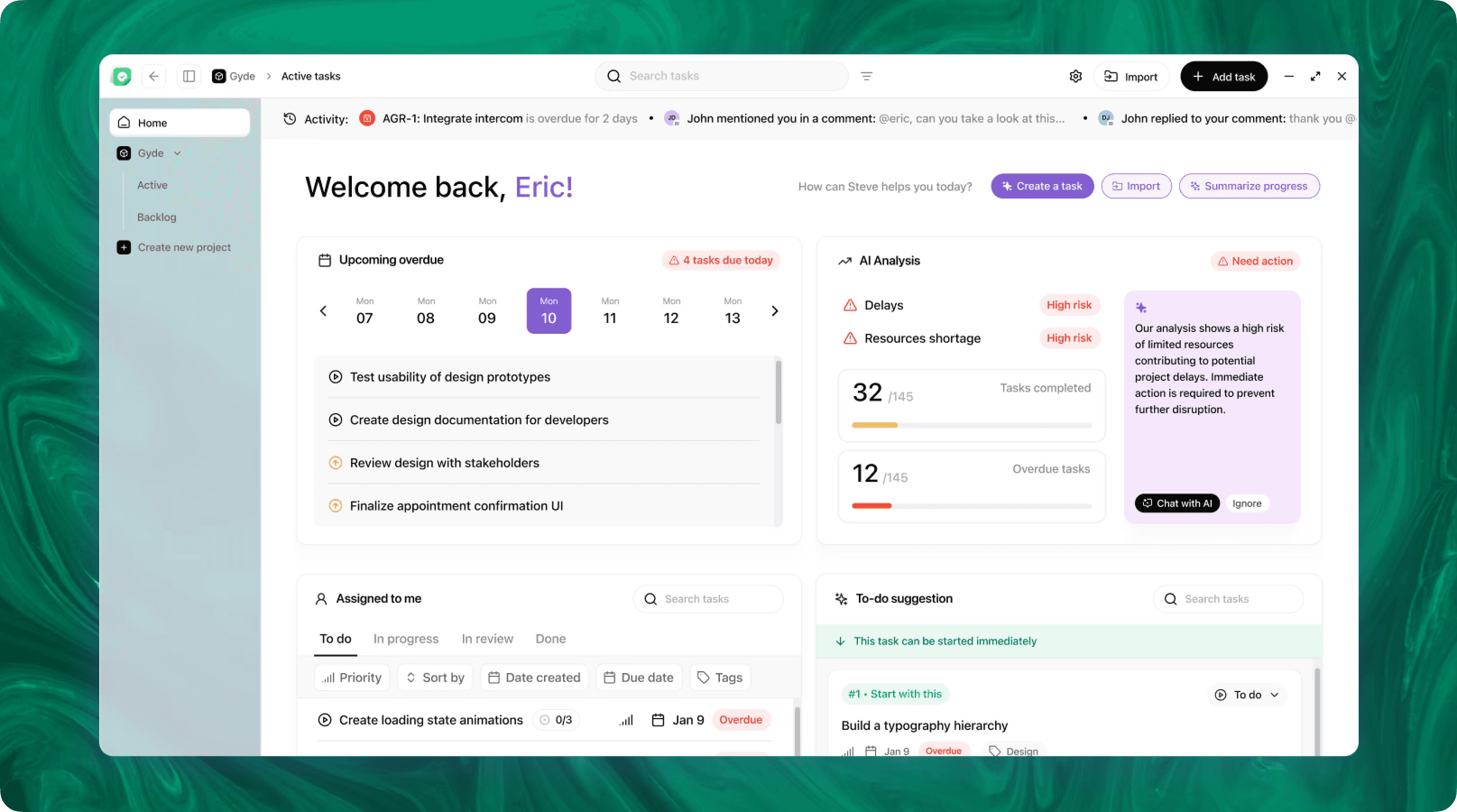
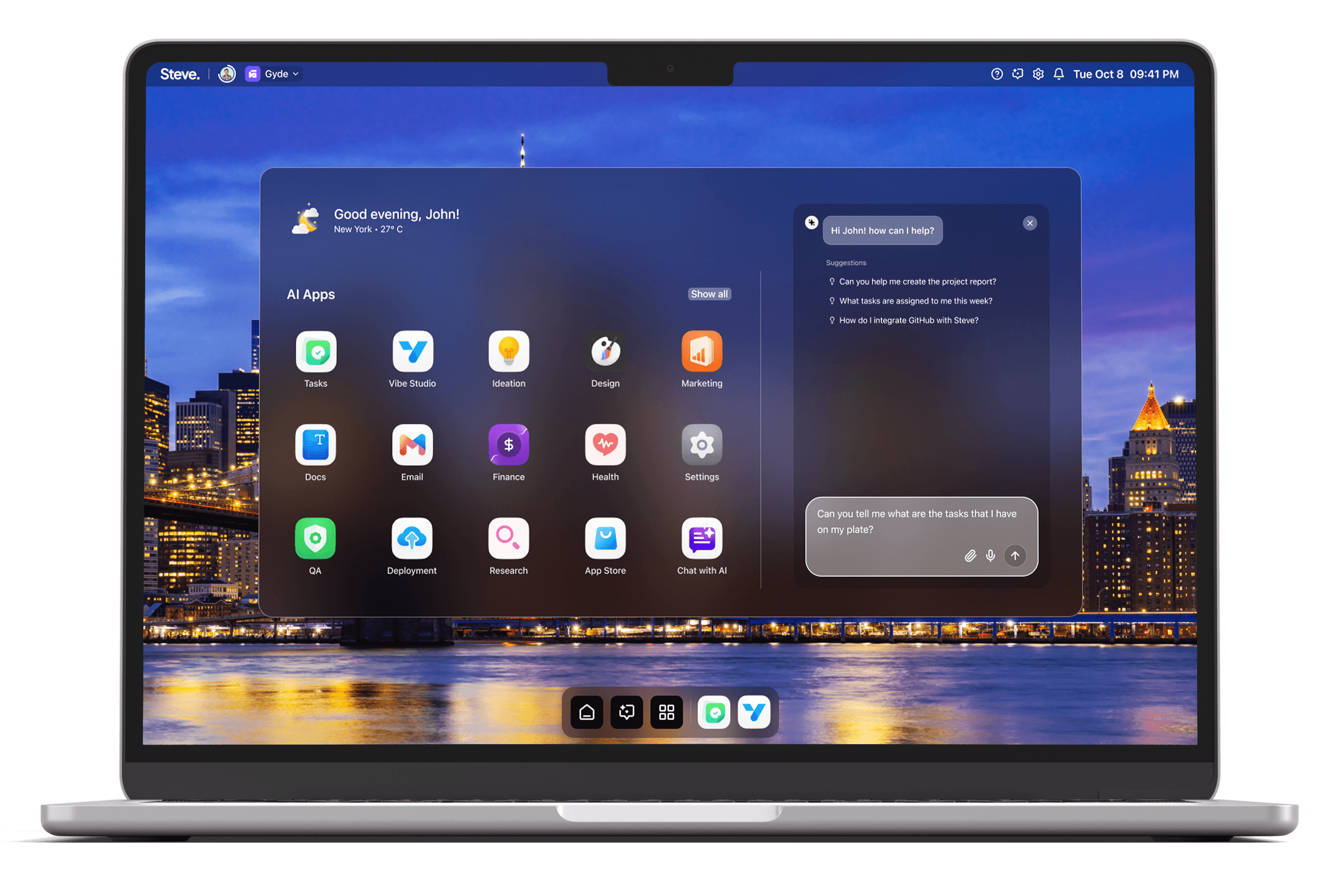
Steve is an AI-native operating system designed to streamline business operations through intelligent automation. Leveraging advanced AI agents, Steve enables users to manage tasks, generate content, and optimize workflows using natural language commands. Its proactive approach anticipates user needs, facilitating seamless collaboration across various domains, including app development, content creation, and social media management.
Conclusion
Reducing operational latency requires continuity: consistent context, swift coordination, rapid decision-making, and automated handoffs. As an AI OS, Steve ties those elements together—shared memory preserves institutional context, Steve Chat lets teams act conversationally across integrated systems, AI Email distills and accelerates inbox decisions, and task management automates the transition from agreement to execution. The result is fewer interruptions, faster resolution, and a measurable shortening of the path from idea to outcome.