Using AI to Enforce Process Consistency Across Teams
Jan 15, 2026

Shared Memory As The Single Source Of Process Truth: Centralized memory lets agents and teams reference the same canonical procedures, preventing version drift and preserving institutional knowledge.
Conversational Orchestration With Steve Chat: Chat-driven workflows turn approvals and handoffs into auditable, context-aware interactions that keep teams aligned to process requirements.
Enforcing Execution With AI-Powered Task Management: Automated task generation and sprint proposals ensure process steps are instantiated, assigned, and tracked consistently across projects.
Aligning Communication With AI Email: Thread summarization, AI tagging, and context-aware drafts keep external and internal communications compliant with defined process checkpoints.
Operational Benefit: Combining memory, chat, task automation, and inbox intelligence reduces variation, accelerates onboarding, and creates measurable, improvable process flows.
Introduction
Maintaining consistent processes across teams is a perennial challenge: handoffs break, tribal knowledge fragments, and standards erode as organizations scale. Using AI to enforce process consistency across teams reframes enforcement as intelligent orchestration rather than policing. As an AI Operating System, Steve combines shared memory, conversational orchestration, an AI-driven task backbone, and an integrated smart inbox to make repeatable workflows visible, automated, and auditable.
Shared Memory As The Single Source Of Process Truth
Process consistency begins with shared context. Steve’s shared memory system ensures AI agents and team members access the same, evolving record of decisions, rules, and exceptions. Rather than burying process variants in individual notes or ticket comments, teams surface canonical steps, templates, and approval criteria into a common memory layer that agents consult when taking actions or making suggestions.
Practical scenario: a product launch checklist is encoded in shared memory; when a PM asks Steve to prepare the launch plan, agents fetch the canonical checklist, apply product-specific variables, and return a standardized plan. Because the memory persists updates, subsequent launches inherit improvements automatically, eliminating version drift between teams and preserving institutional knowledge without manual syncs.
Conversational Orchestration With Steve Chat
Enforcing processes requires human-friendly enforcement. Steve Chat’s conversational interface—backed by persistent memory and integrations—lets teams invoke, validate, and adapt processes through natural language. Approvals, handoffs, and verification steps become chat-driven workflows rather than buried tasks, so stakeholders receive context-aware prompts and can confirm or correct steps inline.
Practical scenario: a designer submits a release request via Steve Chat; the assistant references the shared release criteria, checks relevant docs from Google Drive, and posts a prefilled approval thread to the appropriate reviewers. Reviewers receive a concise summary and a direct call to action in chat, ensuring the release follows the same gate process every time. Chat history and decisions remain linked to memory, creating an auditable trail of who approved what and when.
Enforcing Execution With AI-Powered Task Management
Policies and checklists matter only if execution follows them. Steve’s AI-powered task management boards translate high-level process definitions into concrete, assignable tasks and enforce sequencing, dependencies, and recurring checks. Integration with Linear and the ability to propose sprints or task breakdowns means Steve can instantiate consistent workflows as live project boards rather than static documents.
Practical scenario: when a marketing campaign is approved, Steve auto-generates a sprint with standardized task templates—creative brief, assets, QA, legal review—assigns owners, and sets due dates based on the organization’s SLA. If a step falls behind, Steve suggests contingency tasks or escalations aligned with the original process, keeping remediation consistent and reducing ad hoc workaround patterns.
Aligning Communication With AI Email
Process consistency depends on consistent communication. Steve’s AI Email consolidates threads, tags messages, and generates summaries that map conversations back to process checkpoints. Context-aware reply suggestions keep responses aligned with corporate standards, while the ability to chat with AI inside the inbox lets users resolve queries without deviating from defined workflows.
Practical scenario: a customer escalation email triggers Steve Email to tag the message, summarize the thread, and draft a response that references the support process and SLA. The draft includes required disclosure language and next steps; the responder edits minimally and sends. The interaction is logged, and any deviations are flagged for review, reinforcing uniform handling of sensitive scenarios across agents and teams.
Steve
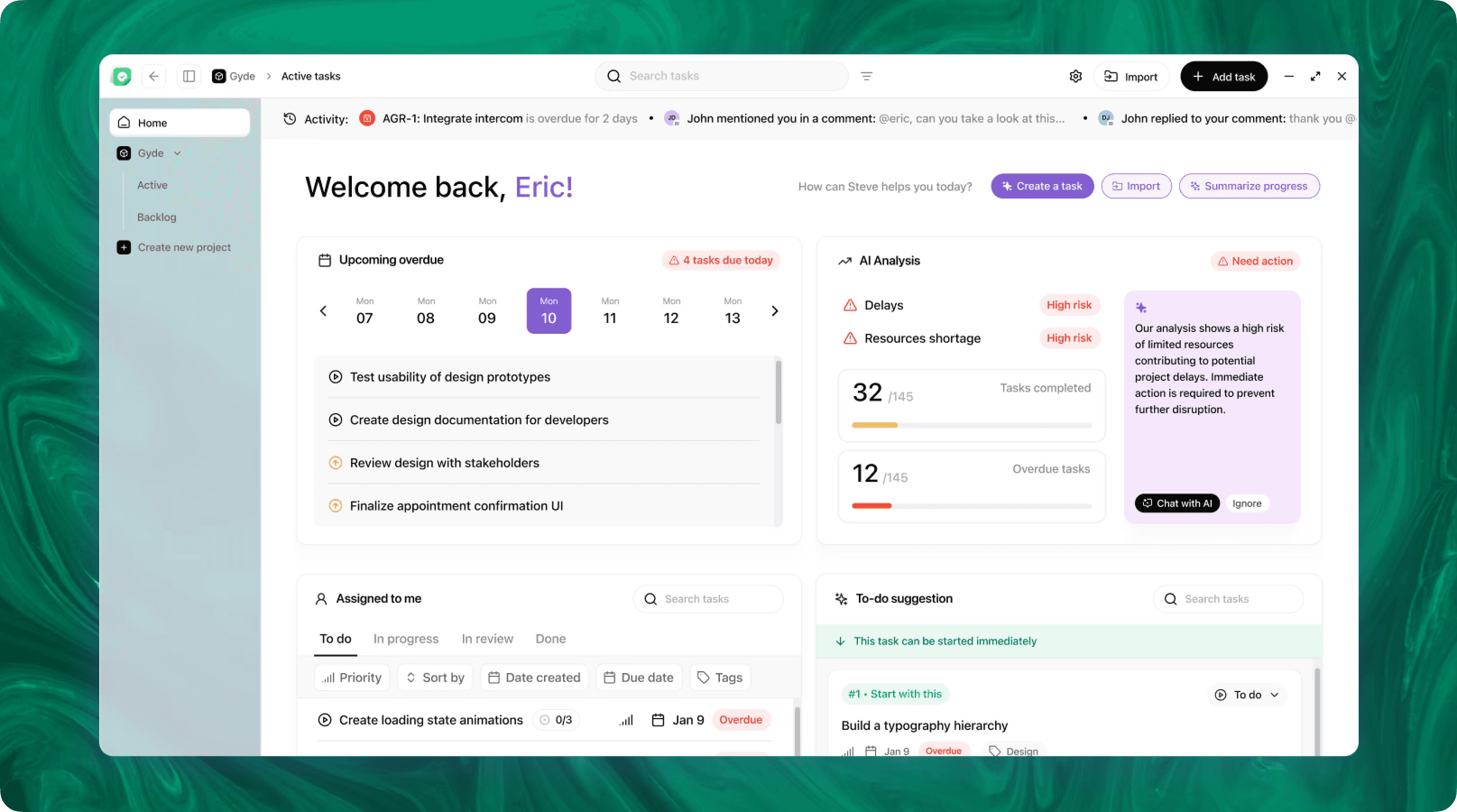
Steve is an AI-native operating system designed to streamline business operations through intelligent automation. Leveraging advanced AI agents, Steve enables users to manage tasks, generate content, and optimize workflows using natural language commands. Its proactive approach anticipates user needs, facilitating seamless collaboration across various domains, including app development, content creation, and social media management.
Conclusion
Consistent processes emerge from repeatable context, frictionless orchestration, and automated execution. Steve — as an AI OS — brings those elements together: shared memory preserves the single source of truth, Steve Chat enables conversational enforcement and approvals, task management converts process definitions into actionable, trackable work, and AI Email keeps communications aligned and auditable. Together these capabilities reduce variation, speed onboarding, and create measurable, improvable process flows without adding bureaucratic overhead.
Steve helps teams treat consistency as an operational layer—one that lives in memory, speaks in chat, acts through tasks, and communicates through email—so standard practices become the default rather than the exception.