Using AI to Create Automated Product Specs From Conversations
Jan 23, 2026

Capture Conversations Into Structured Requirements: Conversation-aware agents extract user stories, acceptance criteria, and constraints directly from meetings and threads.
Use Shared Memory To Maintain Context Across Agents: A central memory store keeps specifications coherent as multiple agents augment and update requirements.
Convert Conversations Into Formal Specs And Templates: Agents map extracted elements into standardized spec templates with traceable links to source material.
Integrate Specs With Task Management To Drive Execution: Generated specs can be converted into prioritized tickets and sprint proposals, syncing with tools like Linear.
Practical Handoff Benefits: Linking tickets and specs back to original conversations preserves rationale, reduces rework, and accelerates delivery.
Introduction
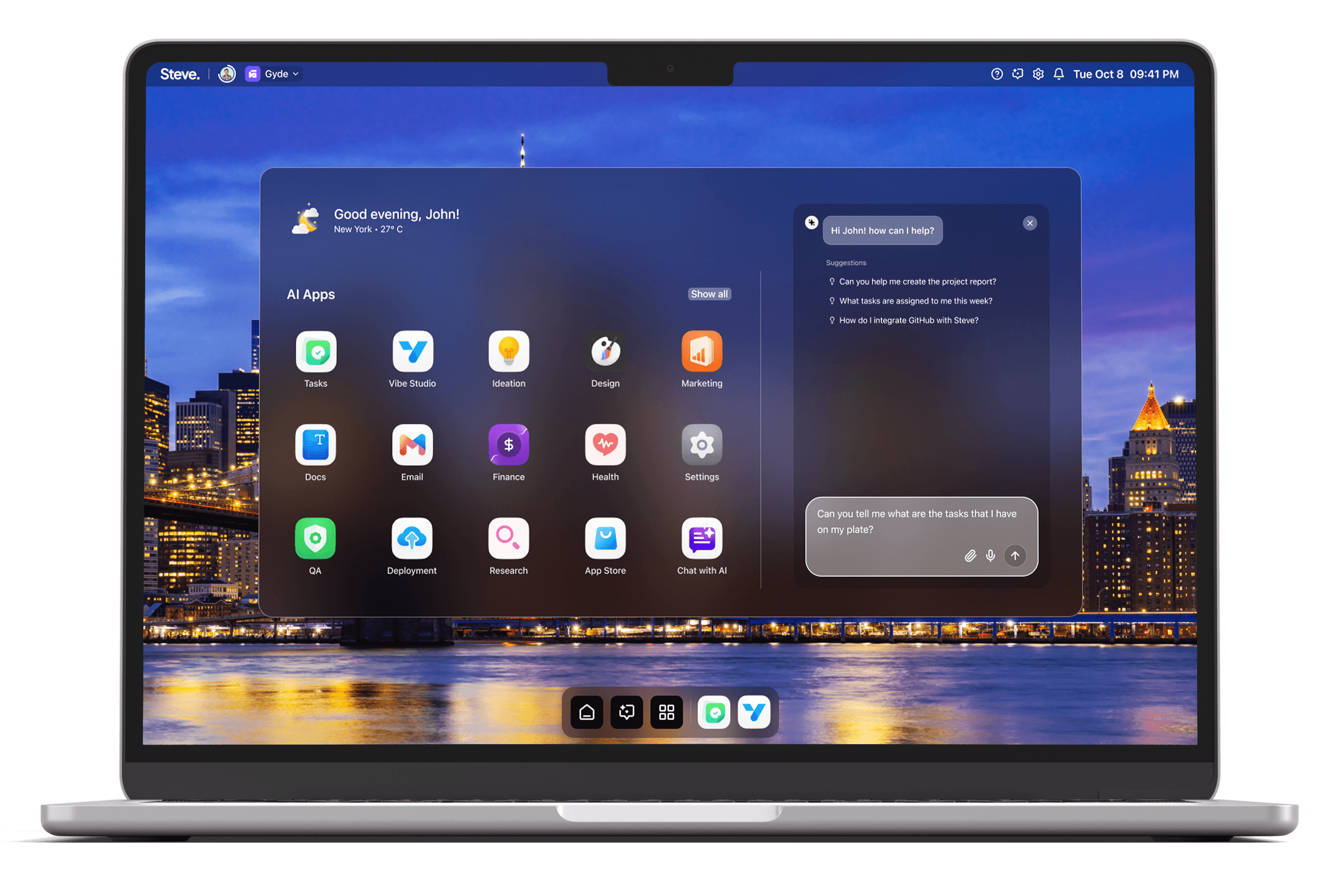
Creating accurate product specifications from meetings and chat threads is a chronic bottleneck: nuance is lost, decisions scatter across tools, and handoffs to engineering become debates over intent. Using AI to create automated product specs from conversations reduces this friction by capturing intent in context, synthesizing requirements, and linking them to execution. Steve, an AI Operating System, combines conversational agents, a shared memory system, and AI-driven task management to turn dialogue into actionable, traceable specs without manual transcription or repeated clarifications.
Capture Conversations Into Structured Requirements
The first step to reliable automated specs is capturing the conversation as structured input instead of freeform text. Steve Chat provides a conversational interface that ingests meetings, chat logs, uploaded documents, and email threads; it’s file-aware and remembers prior interactions so prompts don’t start from zero. In practice, a product manager can paste a meeting transcript or summarize a call inside Steve Chat and ask: “Extract acceptance criteria, user roles, and success metrics.” The agent returns a clear, grouped draft: user stories, functional requirements, constraints, and open questions. Because Steve Chat links to calendars, email, and file storage, it can enrich the draft with related docs or prior decisions, reducing the need to hunt for context.
Use Shared Memory To Maintain Context Across Agents
Automated spec generation succeeds only if the system preserves context across follow-ups. Steve’s shared memory system lets multiple AI agents access and update a common context store so the specification evolves coherently as the conversation continues. For example, an initial extraction agent produces a draft spec; a requirements agent augments it with edge cases pulled from past tickets; a compliance agent flags missing privacy constraints — all writing back to the same memory. The result is a living spec that accumulates institutional knowledge: who owns a requirement, which decisions were tentative, and which constraints remain unresolved. That continuity prevents contradictory edits and reduces repeated questions during handoffs.
Convert Conversations Into Formal Specs And Templates
Turning conversational artifacts into formal documents requires patterning and templating. Steve’s conversational agents can map extracted elements into standard spec templates (user stories, acceptance criteria, API contracts, UI mock descriptions) and populate fields automatically. In a typical workflow, a PM tells Steve Chat to “generate a product spec for single-sign-on with social providers.” The AI produces a document with scope, success metrics, API endpoints, error handling cases, and a prioritized backlog of stories. Each item links back to the originating message or file in memory so reviewers can trace why a decision was made. Because the system is file-aware and supports attachments, the spec can include relevant design files, test data, or compliance checklists alongside the requirements.
Integrate Specs With Task Management To Drive Execution
A specification is useful only if it flows into execution. Steve’s Task Management features integrate spec outputs with product boards, propose sprints, and sync with tools such as Linear so requirements become tracked work. After a spec is generated, Steve can create prioritized tickets, assign owners, and suggest sprint boundaries based on historical velocity and team availability. That tight loop—conversation to spec to tracked tasks—removes repetitive manual entry, preserves traceability, and lets teams start implementation with a shared reference. Because the memory system retains links between tickets and the originating conversation, reviewers and engineers can surface the original rationale at any time, reducing rework and callbacks.
Practical Scenario: From Standup Note To Production-Ready Tasks
Imagine an engineering lead summarizes a standup thread in Steve Chat: “We need rate-limiting on the upload endpoint, add tests, and update docs.” Steve extracts requirements, identifies impacted services from prior specs in memory, and generates a small spec with API behavior, test criteria, and documentation changes. The Task Management module then proposes three tickets — implementation, testing, and docs — suggests owners based on recent contributions, and schedules them into the next sprint. Each ticket links back to the spec and the original standup note, preserving auditability through delivery.
Steve
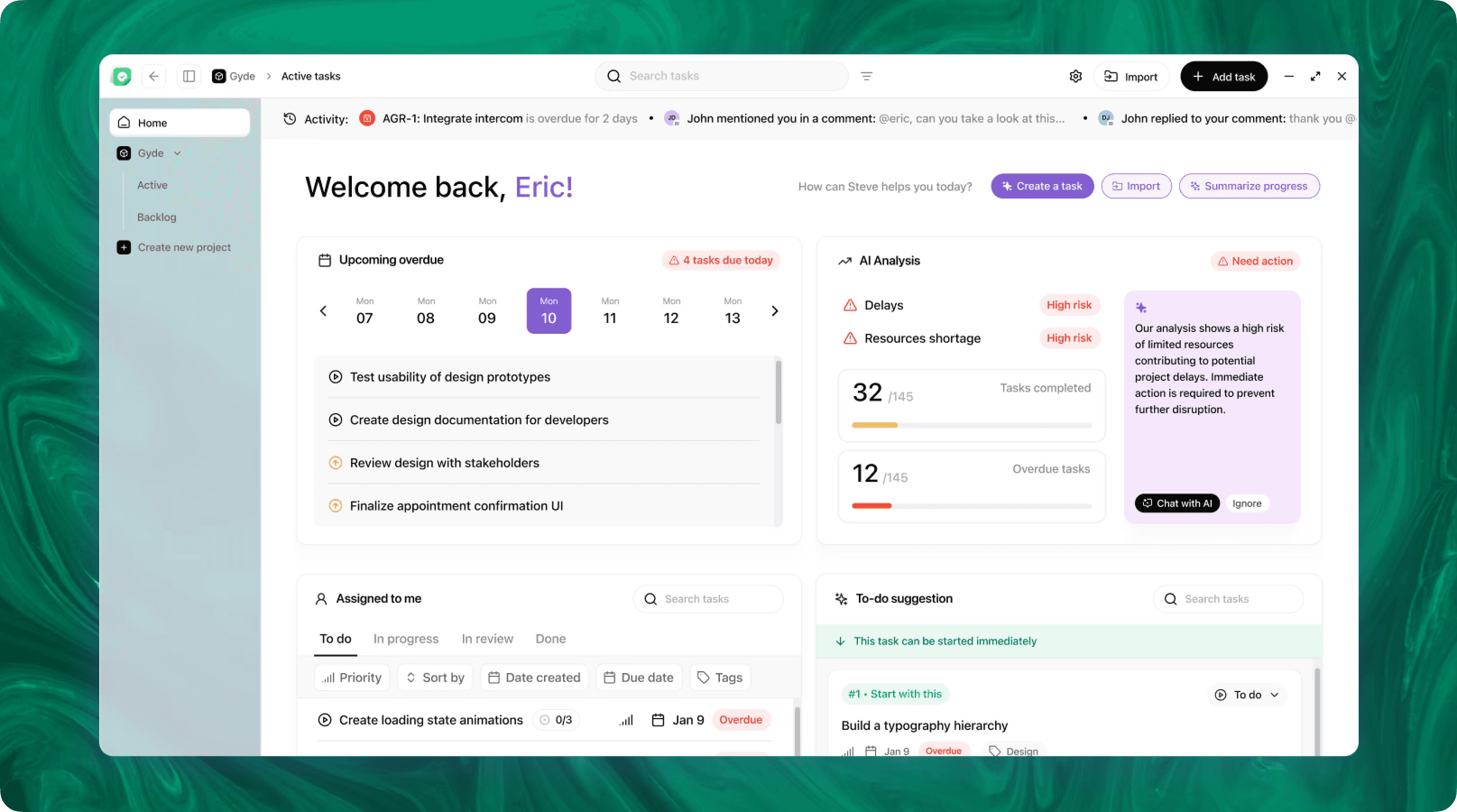
Steve is an AI-native operating system designed to streamline business operations through intelligent automation. Leveraging advanced AI agents, Steve enables users to manage tasks, generate content, and optimize workflows using natural language commands. Its proactive approach anticipates user needs, facilitating seamless collaboration across various domains, including app development, content creation, and social media management.
Conclusion
Automating product specs from conversations depends on three coordinated capabilities: a robust conversational interface that captures and enriches dialogue, a shared memory system that preserves and propagates context, and task management that turns requirements into tracked work. As an AI OS, Steve brings these elements together so teams move from talk to implementation with fewer handoffs, clearer intent, and full traceability. The result is faster alignment, fewer ambiguities, and smoother delivery cycles.