Turning Weekly Reports Into Conversational Briefs
Nov 26, 2025

Summarize And Distill: AI Email collapses long reports and threads into concise, shareable briefs with context-aware reply drafts.
Contextualize And Personalize: Steve Chat enriches briefs with files, calendar, and document context to make summaries targeted and actionable.
Maintain Continuity: The shared memory system lets agents reference past decisions so briefs reflect history and evolving context.
Drive Execution: Task Management maps conversational outcomes into Linear-compatible tasks, proposed sprints, and ownership.
Workflow Benefit: Combining summarization, contextual chat, memory, and task creation shortens decision cycles and increases follow-through.
Introduction
Turning weekly reports into conversational briefs changes how teams consume updates: dense status documents become actionable, short dialogues that speed decision making. Steve, an AI Operating System, compresses that conversion into a repeatable workflow by combining AI Email’s summarization and chat-in-inbox features, the conversational depth of Steve Chat, a shared memory system that preserves context, and Task Management that converts brief outcomes into execution items. The result: reports that read like conversations and lead directly to work.
Summarize And Distill: AI Email Converts Reports Into Short Briefs
Start with AI Email to collapse long weekly reports into a focused briefing. AI Email syncs with your inbox in real time and generates instant summaries of long threads or attached documents so a stakeholder can see priorities in seconds instead of skimming pages. In practice, a product lead uploads the weekly report PDF to an email thread; AI Email tags the message as high priority, produces a one-paragraph executive summary, and offers context-aware reply drafts that preserve tone and emphasize risks and blockers. This reduces cognitive load and creates a shareable brief without manual editing.
Contextualize And Personalize: Steve Chat Enriches Briefs
A brief is only useful when it reflects current context. Steve Chat uses sophisticated memory and direct integrations (Google Drive, Sheets, Calendar, Gmail, Notion, and others) to enrich summaries with up-to-date facts. For example, after AI Email creates an overview, a PM can open Steve Chat, attach the original spreadsheet, and ask for a two-minute spoken-style brief customized for engineering leads that highlights missed SLAs and next steps. Because Steve Chat is file-aware and can pull calendar and document context, the conversational brief includes relevant dates, linked artifacts, and suggested stakeholders to notify, making the message conversational and actionable.
Maintain Continuity: Shared Memory Keeps Conversations Coherent
One-off summaries lose value without continuity; shared memory preserves the thread of decisions and edges over time. Steve’s shared memory system allows AI agents to reference prior briefs, noted constraints, and previous decisions so each new conversational brief reflects history rather than isolated snapshots. Use case: an operations manager who reviews weekly supply-chain reports can ask Steve to “summarize changes since last month,” and the agents will compare current metrics to stored memory, calling out regressions and reminding the team of prior mitigations. That continuity turns weekly reports into an ongoing dialogue instead of repetitive snapshots.
Drive Execution: Task Management Turns Briefs Into Workflows
A conversational brief should end with clear next steps. Steve’s Task Management integrates with Linear and other planning tools to translate conversational outcomes into tasks, sprints, and ownership. After creating a concise brief in Steve Chat or AI Email, you can ask the system to “create tasks for the top three blockers with owners and deadlines.” The AI proposes sprint items, maps dependencies, and suggests timelines based on historical velocity. This closes the loop: the brief becomes a set of prioritized actions assigned and tracked in the same workspace, reducing friction between insight and execution.
Practical Scenario: From Report To Standup Ready
Imagine a weekly revenue report arrives as a spreadsheet and a long commentary. AI Email produces a one-paragraph brief and tags finance and sales. The product lead opens Steve Chat, requests a customer-impact summary, and receives a conversational brief that mentions two flagged accounts and recommended next steps. Shared memory surfaces a past decision to delay pricing changes, which the brief recalls as relevant. Finally, Task Management converts the recommendations into three Linear tasks assigned to owners with suggested deadlines. The next standup starts with that conversational brief and a clear backlog ready for execution.
Steve
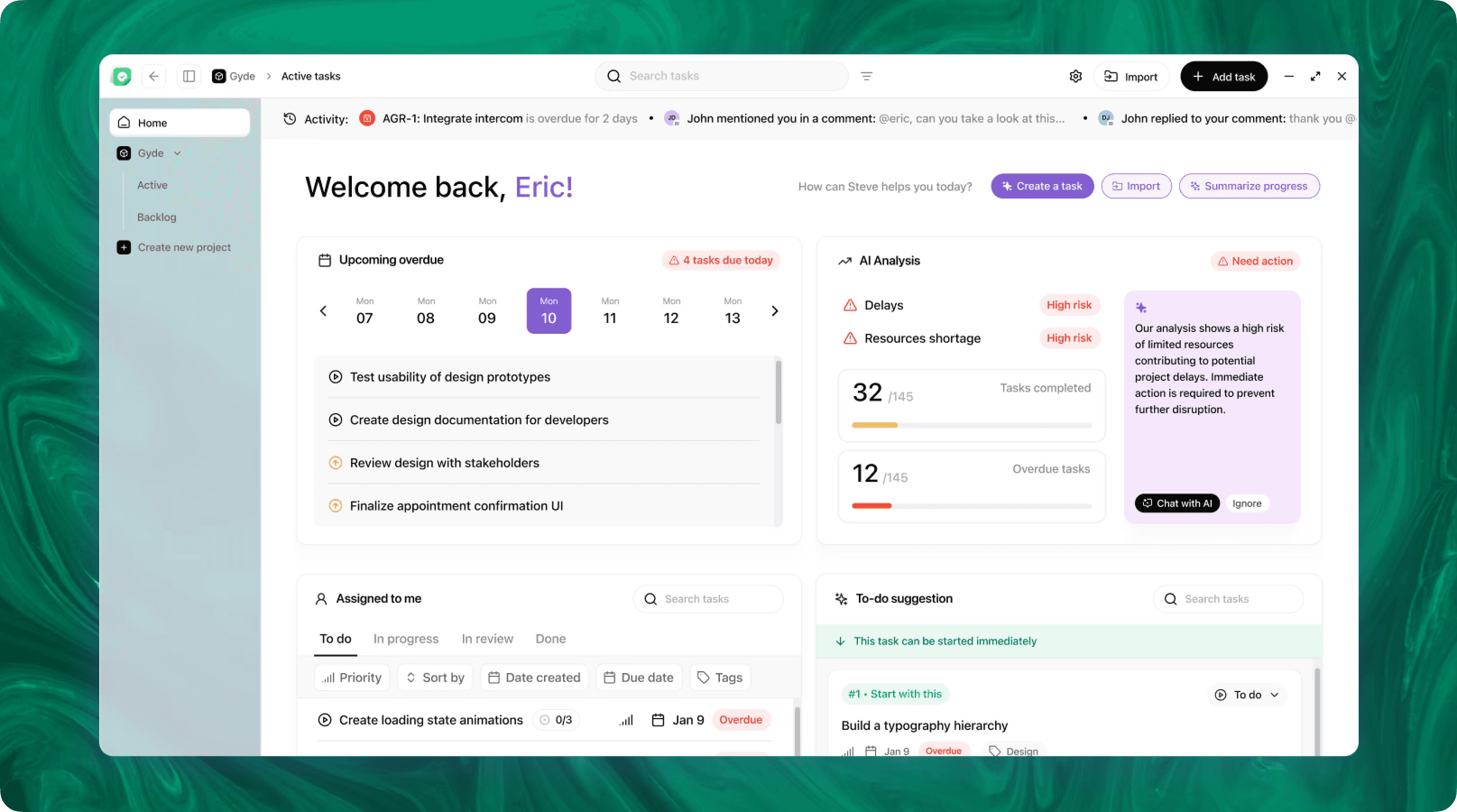
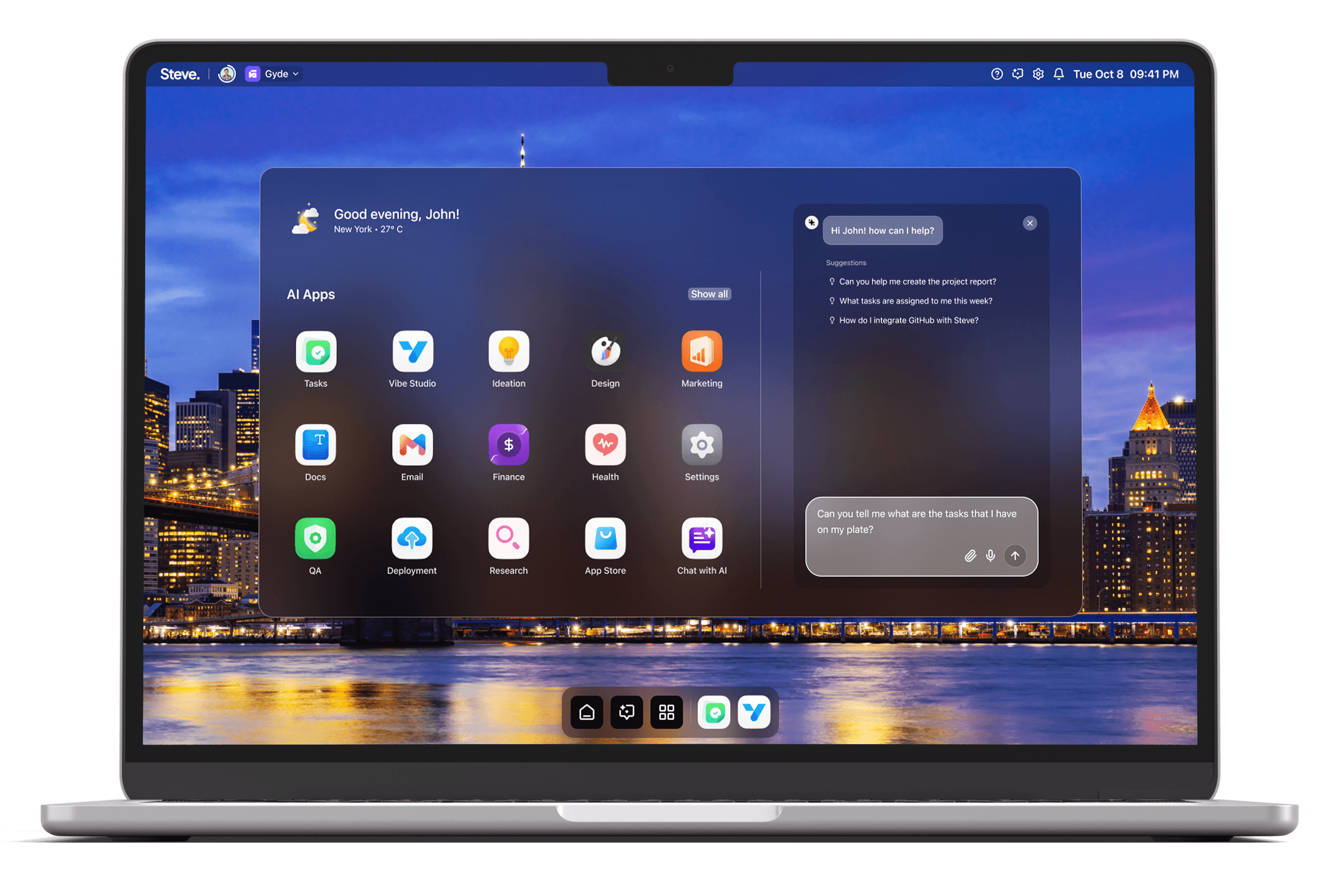
Steve is an AI-native operating system designed to streamline business operations through intelligent automation. Leveraging advanced AI agents, Steve enables users to manage tasks, generate content, and optimize workflows using natural language commands. Its proactive approach anticipates user needs, facilitating seamless collaboration across various domains, including app development, content creation, and social media management.
Conclusion
Turning weekly reports into conversational briefs reduces time-to-decision and increases follow-through. Steve, as an AI Operating System, stitches together AI Email’s concise summarization and in-inbox chat, Steve Chat’s contextual, file-aware conversations, a shared memory system that preserves continuity, and Task Management that converts dialogue into tracked work. The combined flow turns static weekly documents into living conversations that drive action.