Turning Video Meetings Into Fully Actionable Docs With Steve
Dec 4, 2025

Capture and Contextualize Meetings with Steve Chat: File-aware chat plus integrations centralize recordings, transcripts, and calendar metadata so summaries are anchored to source artifacts.
Auto-Summaries and Action Extraction with AI Email: AI Email produces executive summaries, extracts prioritized action items, and drafts context-aware follow-up messages for rapid alignment.
Turn Actions into Trackable Workflows with Task Management: Extracted actions convert into prioritized tasks and sprint proposals, with integrations (including Linear) to keep engineering and product workflows synchronized.
Maintain Continuity with Shared Memory: Shared memory preserves historical context so agents produce consistent summaries, surface unresolved items, and reduce repetitive clarifications across meetings.
Workflow Benefit: Combining contextual ingestion, automated summarization, task conversion, and persistent memory turns meetings from ephemeral events into auditable, actionable processes.
Introduction
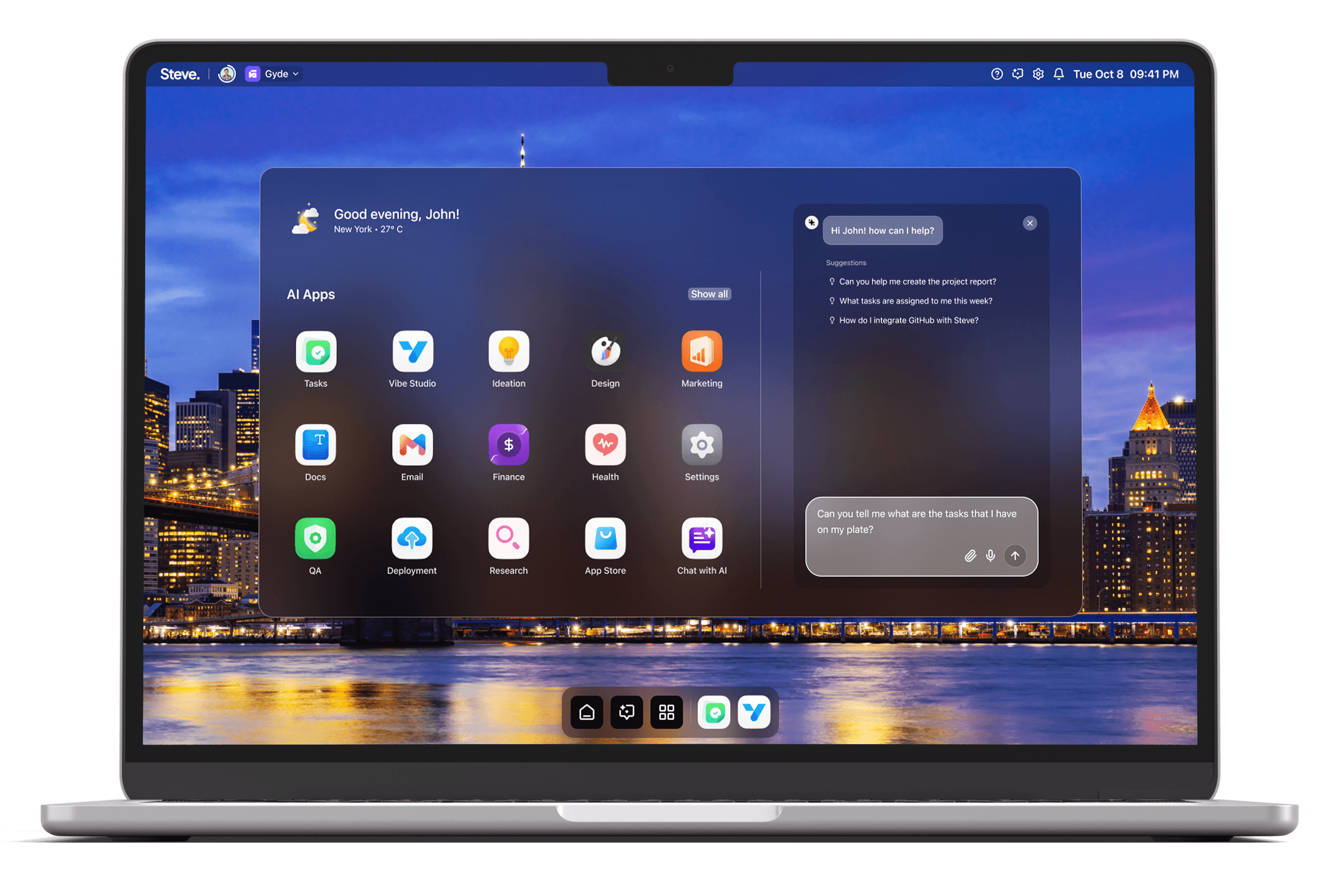
Turning video meetings into fully actionable documents is a common pain point: recordings and notes live in silos, decisions blur, and follow-through stalls. Steve, an AI Operating System, compresses that gap by converting meeting artifacts and context into concise summaries, prioritized action items, and tracked tasks—without manual consolidation. This article shows how Steve’s conversational AI, integrated inbox, task boards, and shared memory make meetings not just memorable but operational.
Capture and Contextualize Meetings with Steve Chat
Start by centralizing meeting artifacts in Steve Chat. Its file-aware chat accepts uploads—transcripts, slide decks, and meeting attachments—so the same conversational interface that schedules and finds documents can ingest meeting context. Because Steve integrates with Google Calendar, Gmail, Google Drive, and 40+ services, it can link a recording to the original calendar event, surface relevant documents, and attach prior notes automatically. In practice, a PM can upload a meeting transcript or paste key timestamps into Steve Chat and ask for a concise brief: the assistant uses chat history and linked files to produce a focused meeting overview that preserves thread context.
This step matters because the output is not an isolated summary: it’s anchored to the meeting’s artifacts and calendar metadata, making downstream action more precise and auditable. As an AI OS, Steve keeps the conversation contextual, which reduces ambiguity when converting discussion into tasks.
Auto-Summaries and Action Extraction with AI Email
Once the meeting content is in Steve, AI Email turns long threads and meeting artifacts into succinct summaries and recommended follow-ups. Use AI Email to generate an executive summary, extract decisions, and surface explicit and implicit action items formatted for stakeholders. The same interface offers context-aware reply drafts to confirm decisions or request clarifications, ensuring quick, aligned communication after the meeting.
A practical scenario: after a product review, Steve generates a one-paragraph executive summary, a bullet list of four prioritized action items with owners and suggested due dates, and a draft email to the team that references the exact slide and transcript timestamp for each decision. That email can be edited in-line or sent directly, collapsing the usual post-meeting cadence into minutes.
Turn Actions into Trackable Workflows with Task Management
Captured actions become executable work through Steve’s Task Management. From a summary or email, convert extracted items into tasks on an AI-powered board; assign owners, set priorities, and propose sprints. Steve’s integrations with Linear let teams import existing issues or create new ones from natural prompts, so work is recorded where engineering and product teams already operate.
In real use, a team lead converts five action items into sprint tickets, and Steve suggests a two-week sprint plan, estimating dependencies and sequencing based on project context. Automated status updates and context-aware notifications keep the meeting’s intent visible across delivery, closing the loop between talk and execution.
Maintain Continuity with Shared Memory
Where many tools forget prior decisions, Steve’s shared memory system preserves meeting context across agents and sessions. Shared memory enables the AI agents to reference past meeting outcomes, ongoing projects, and stakeholder preferences so subsequent meeting summaries and task suggestions are consistent with historical context. That continuity reduces repetitive clarifications and prevents drift in multi-session initiatives.
For example, when a recurring program review resumes, Steve references the prior meeting’s action log and progress notes, flags overdue items, and pre-populates the agenda with unresolved decisions. This keeps teams aligned without asking participants to re-establish context each time.
Steve
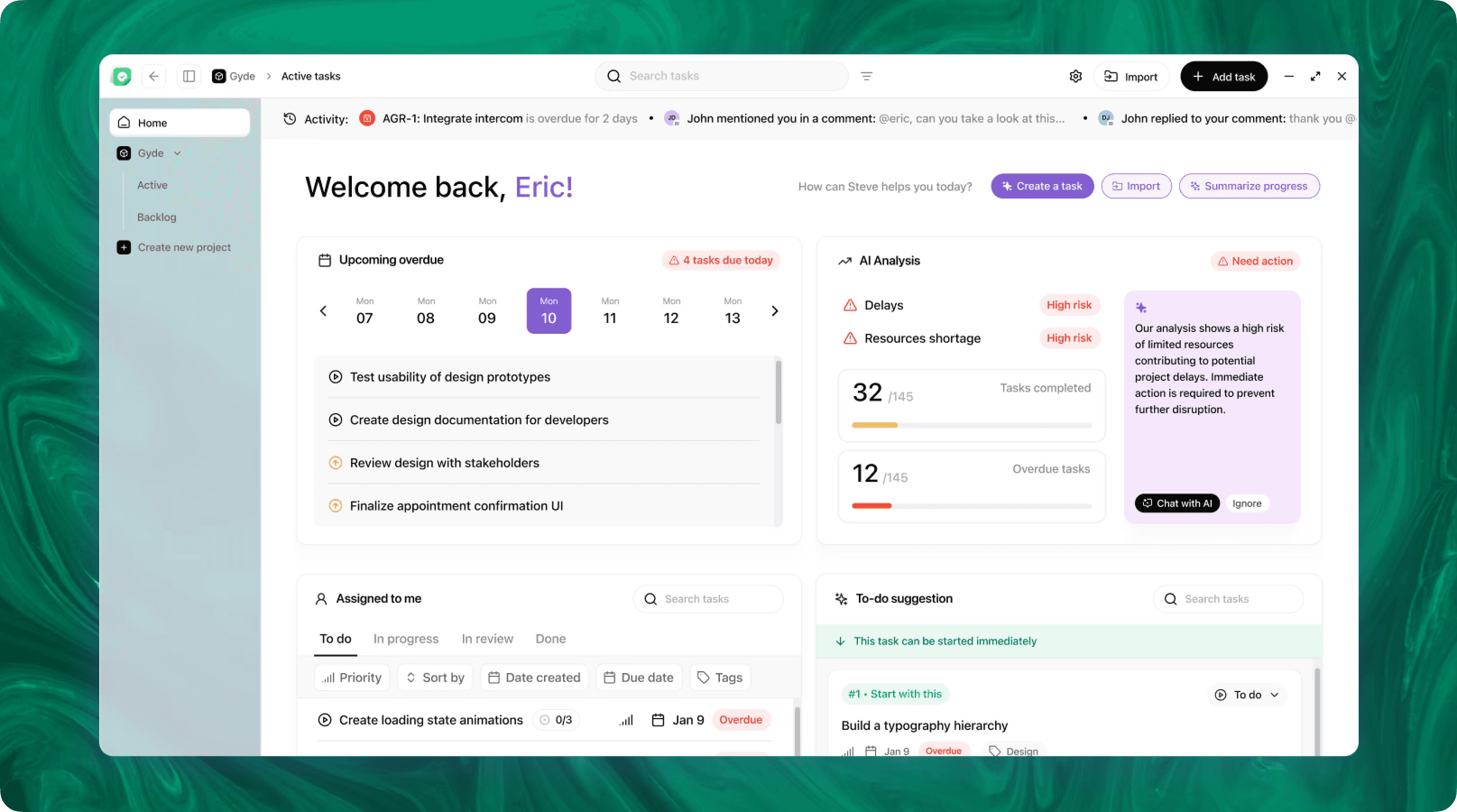
Steve is an AI-native operating system designed to streamline business operations through intelligent automation. Leveraging advanced AI agents, Steve enables users to manage tasks, generate content, and optimize workflows using natural language commands. Its proactive approach anticipates user needs, facilitating seamless collaboration across various domains, including app development, content creation, and social media management.
Conclusion
Turning video meetings into fully actionable docs requires more than a transcript—it demands contextual synthesis, clear follow-up, and tracked execution. As an AI OS, Steve combines a conversational, file-aware chat, integrated AI Email summaries and drafts, task boards that bridge to existing engineering workflows, and a shared memory that preserves continuity. The result: meetings become compact engines of progress—decisions documented, owners assigned, and work that advances automatically from conversation to delivery.