Turning Slack And Email Noise Into A Clear Action List
Nov 12, 2026

Consolidate Context With AI Email: Automated tagging and instant thread summaries turn long email conversations into concise action seeds.
Capture Chat Noise Through Conversational Workflows: Pasted or forwarded channel threads in Steve Chat become identified action items with owner and deadline suggestions.
Turn Context Into Tracked Work With Task Management: AI-created tasks flow into boards and sprints, with Linear integration and AI-proposed priorities to reduce manual triage.
Maintain Continuity With Shared Memory And Agent Collaboration: Persistent memory links past decisions to new queries so actions stay consistent and avoid duplication.
Workflow Benefit: Combining in-inbox drafting, conversational extraction, persistent context, and task boards converts noise into a single actionable backlog.
Introduction
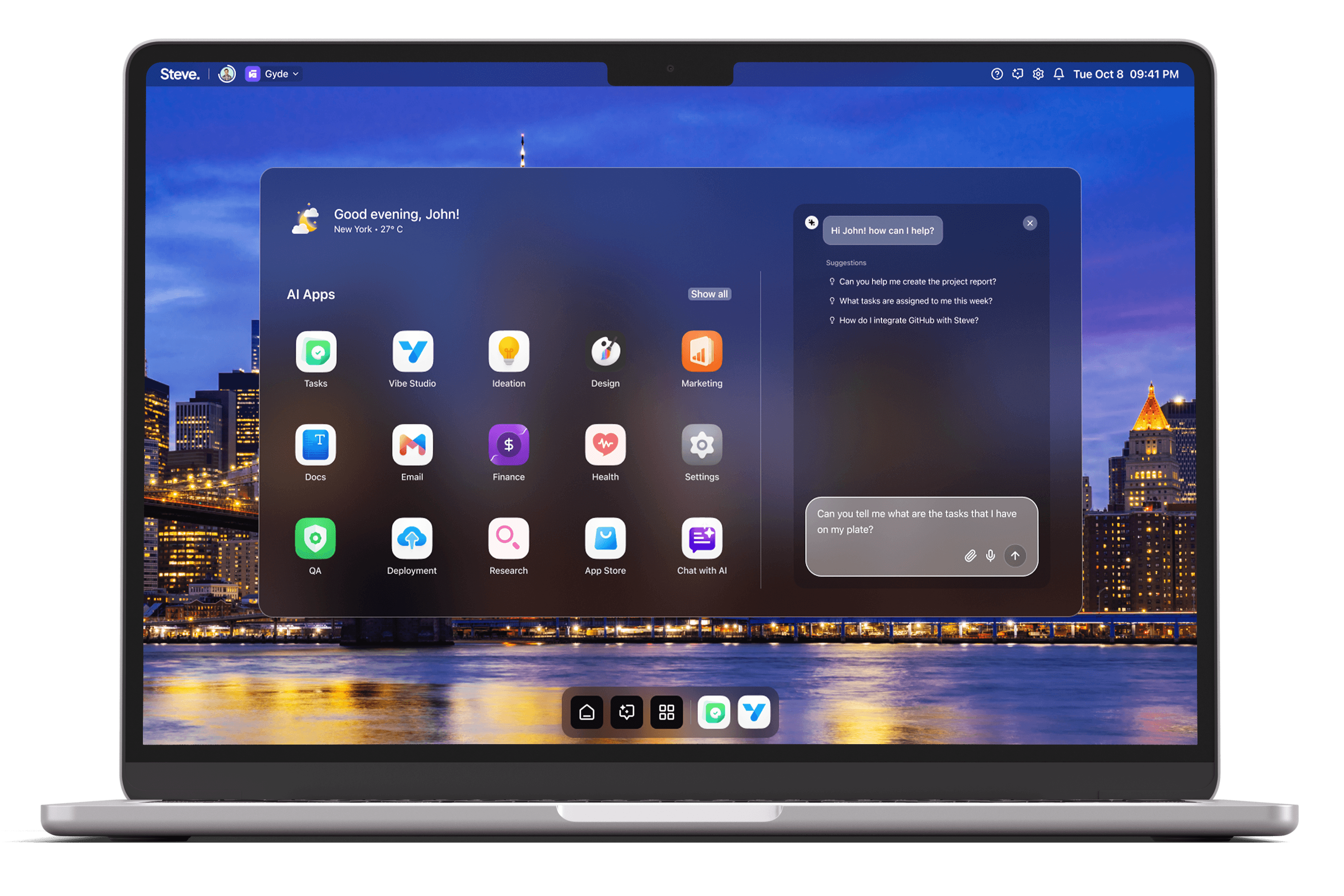
Inbox and channel overload is the daily reality for knowledge workers: important requests hide behind status updates, threaded debates, and long email chains. Turning Slack and email noise into a clear action list is less about willpower and more about structure and tooling. Steve, an AI Operating System, applies conversational AI, shared memory, and targeted automation to convert scattered conversations into prioritized, executable tasks—reducing context switching and ensuring nothing actionable falls through the cracks.
Consolidate Context With AI Email
The first step to a reliable action list is extracting signal from email volume. Steve’s AI Email automatically tags and categorizes messages, generates instant summaries of long threads, and offers context-aware reply suggestions. In practice: a ten-message negotiation thread becomes a two-line summary with identified owners, deadlines, and open decisions—right inside your inbox. That summary can be the seed of an action item rather than another message to read later. Because AI Email syncs in real time and supports conversational drafting inside the inbox, you can convert summaries into short directives or create follow-up messages that assign responsibility and dates without leaving your mail client.
Practical scenario: a product manager receives a long vendor thread. Instead of manually parsing, they open Steve’s AI Email summary, accept the suggested owner and deadline, and convert the item into an action—reducing an hour of triage to minutes.
Capture Chat Noise Through Conversational Workflows
Channel conversations—Slack, Teams, or other chat—are where most tactical coordination happens, but those platforms often lack durable task hygiene. When teams paste or forward key channel threads into Steve Chat, Steve’s conversational interface and shared memory system preserve context and surface actionables. The AI recognizes commitments, decisions, and blockers across messages, then formulates concise tasks with context-aware descriptions.
Practical scenario: a cross-functional standup spawns several to-dos. A lead pastes the threaded highlights into Steve Chat; the AI extracts three action items, assigns owners based on message authors, and records dependencies in shared memory so subsequent agents recall prior commitments. That creates a single source of truth for actions originally scattered across ephemeral chat.
Turn Context Into Tracked Work With Task Management
Extracted actions need structure: assignment, priority, and progress tracking. Steve’s Task Management boards accept items generated by AI Email and Steve Chat, automatically categorizing and suggesting sprint placement or priority. Integration with Linear lets teams import or create tasks from prompts, while the AI proposes realistic sprint boundaries and tracks execution progress within the same workspace.
Practical scenario: after converting inbox summaries and pasted chat threads into tasks, the AI groups related items, recommends a two-week sprint scope, and creates the initial board. Engineers receive tasks with the original conversation attached, preserving context and reducing clarification loops.
Maintain Continuity With Shared Memory And Agent Collaboration
Noise becomes reliable output when the system remembers prior decisions and connects future queries to that history. Steve’s shared memory system allows AI agents to interact, collaborate, and output contextually relevant information across conversations and tools. That persistent memory prevents duplicate work: when a new email references a past decision, Steve surfaces the original thread and any linked tasks, so the response is informed and actionable.
Practical scenario: a stakeholder asks for the status of a feature discussed two months earlier. Steve retrieves the original chat summary, current task board updates, and recent file edits, then compiles a short status report and next steps—eliminating hunting and aligning everyone on the same action list.
Steve
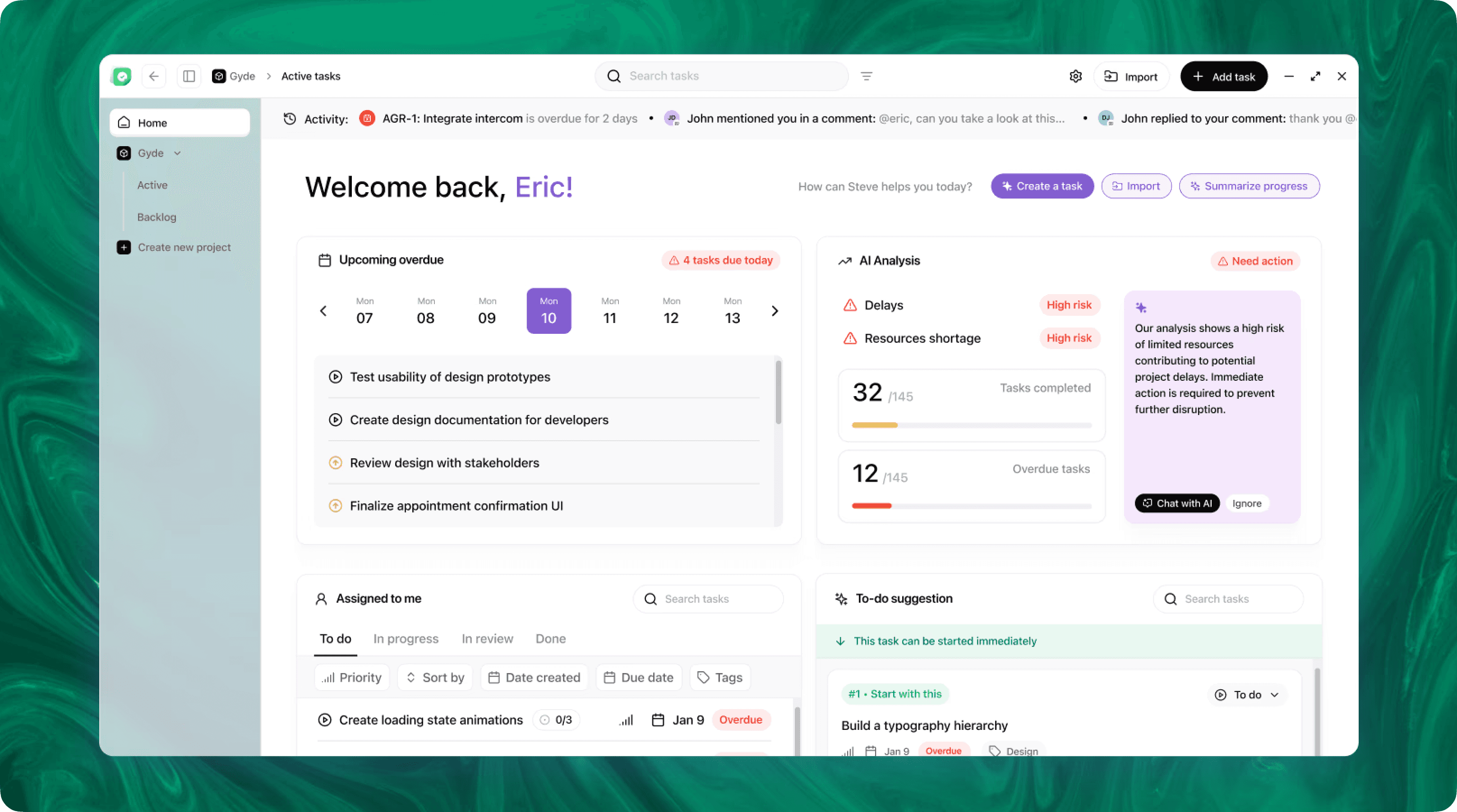
Steve is an AI-native operating system designed to streamline business operations through intelligent automation. Leveraging advanced AI agents, Steve enables users to manage tasks, generate content, and optimize workflows using natural language commands. Its proactive approach anticipates user needs, facilitating seamless collaboration across various domains, including app development, content creation, and social media management.
Conclusion
Turning Slack and email noise into a clear action list requires rapid extraction, consistent structure, and persistent context. As an AI OS, Steve pairs real-time AI Email summarization and in-inbox drafting with a conversational Steve Chat, shared memory for durable context, and integrated Task Management to move items from chatter to tracked work. The result: fewer missed commitments, faster handoffs, and a single, actionable backlog that reflects the real commitments embedded in your conversations.