Turning Project Briefs Into Executable Workflows Automatically
Jan 15, 2026

Translate Briefs Into Structured Work Plans With Steve Chat: Conversational intake converts natural-language briefs into prioritized deliverables and acceptance criteria, shortening decision cycles.
Maintain Context And Continuity With Shared Memory: Persistent memory records assumptions and decisions so agents and team members work from the same updated context, reducing rework.
Automate Tasks And Sprints With Task Management: AI-generated task boards and Linear integration create ready-to-run sprints with owners, dates, and dependency grouping.
Rapid Prototyping And Deliverables With Vibe Studio: Prompt-driven prototypes translate functional requirements into working artifacts that preserve intent and speed stakeholder validation.
Workflow Benefit: Combining conversation, shared memory, task orchestration, and prototype generation turns briefs into traceable, executable workflows with minimal manual handoff.
Introduction
Turning project briefs into executable workflows automatically is a measurable productivity lever: it reduces ambiguity, compresses planning cycles, and turns decisions into tracked actions. As an AI Operating System, Steve ties conversational intent to concrete execution by combining persistent context, agent collaboration, automated task generation, and prompt-driven deliverables. This article shows how teams can use Steve to convert a written or spoken project brief into a traceable, actionable workflow with minimal manual handoffs.
Translate Briefs Into Structured Work Plans With Steve Chat
Begin with a conversation. Steve Chat ingests a project brief—uploaded docs, email threads, or spoken notes—and converts natural language into structured requirements through active questioning. Instead of a static spec, Steve surfaces clarifying questions (dependencies, success criteria, stakeholders) and iteratively refines the brief until the scope is actionable. Practically, a PM can paste a two-paragraph brief and ask: “Break this into milestones and the first sprint.” Steve replies with a prioritized list of deliverables, acceptance criteria, and suggested owners, all anchored to files or calendar entries through its integrations.
This conversational loop short-circuits ambiguity: stakeholders see a living interpretation of their brief and can correct intent immediately, which preserves alignment and accelerates handoff to execution.
Maintain Context And Continuity With Shared Memory
Projects evolve; context gets lost. Steve’s shared memory system records decisions, assumptions, and incremental clarifications so AI agents and team members reference the same state. That shared memory persists across conversations, task boards, and prototypes, enabling automatic updates to plans when new information arrives.
For example, if a legal requirement emerges mid-sprint, Steve can flag affected tasks, annotate the reason in memory, and surface impacted milestones when asked. Because the memory is accessible to agents that generate tasks, code, or documentation, the brief’s intent remains embodied in every downstream artifact, reducing rework caused by knowledge gaps.
Automate Tasks And Sprints With Task Management
Once the brief is structured and context is stored, Steve’s Task Management translates requirements into executable items on product boards. The system proposes task breakdowns, estimates, and sprint compositions; it can import existing issues from Linear or create new ones from the AI-generated plan. Teams receive a ready-to-execute board with priorities, owners, due dates, and links back to the source brief and memory entries.
A practical scenario: a marketing campaign brief becomes a task board where creative assets, approval checkpoints, analytics setup, and deployment tasks are auto-generated and assigned. Steve suggests a two-week sprint, groups dependent tasks, and adds reminders for stakeholder reviews—so teams can start execution within minutes of finalizing the brief.
Rapid Prototyping And Deliverables With Vibe Studio
When a brief includes product changes or new feature requests, Vibe Studio converts descriptive intent into production-ready artifacts that accelerate validation. From a functional brief, Steve can spin up a prototype scaffold that demonstrates the proposed flow or UI, preserving functional notes stored in shared memory (validation rules, accessibility needs, integrations).
This accelerates review cycles: stakeholders interact with a working artifact rather than a paper spec, and engineers inherit intent-rich code rather than reconstruct requirements from static designs. The generated prototype anchors conversations and shortens the loop between approval and implementation.
Steve
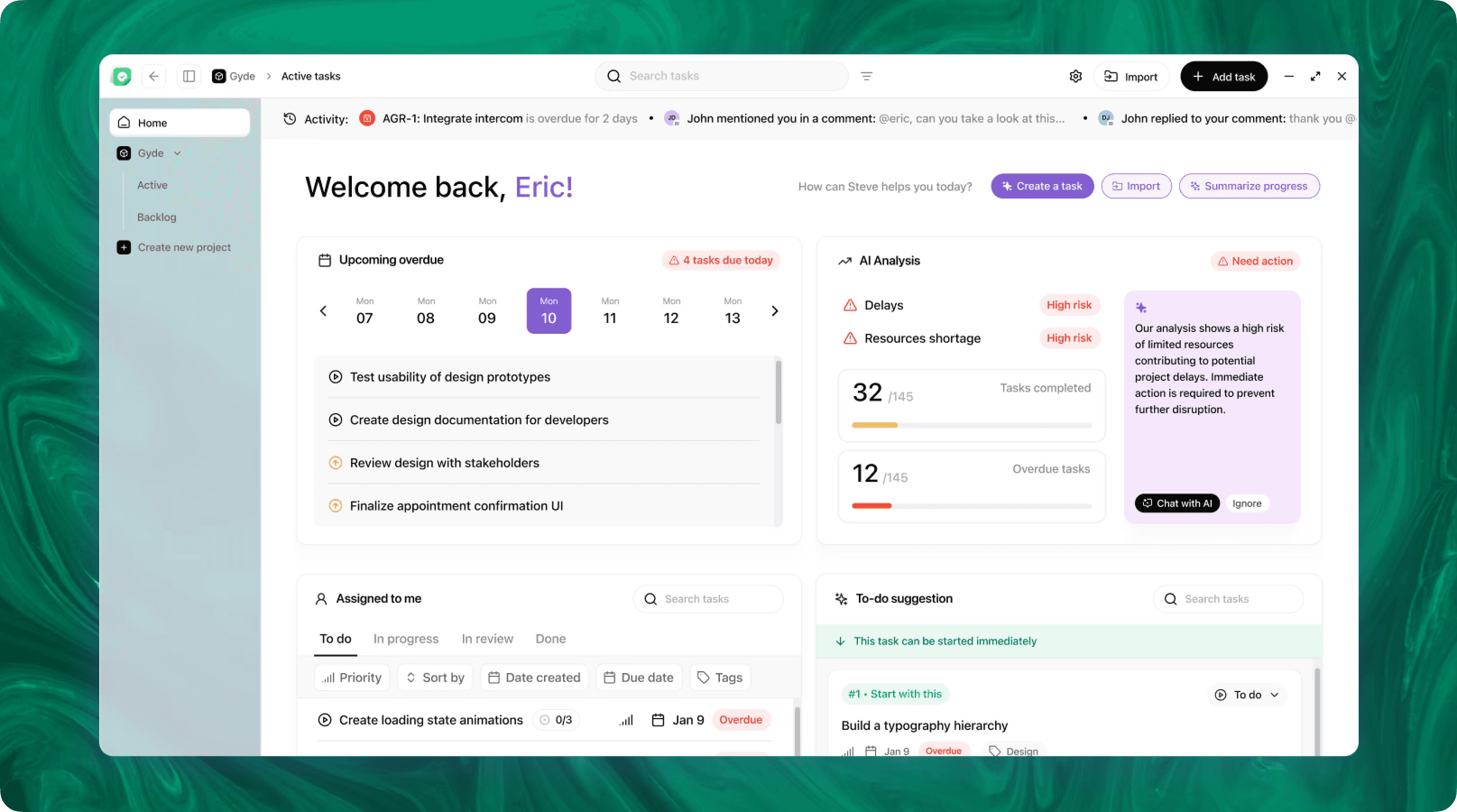
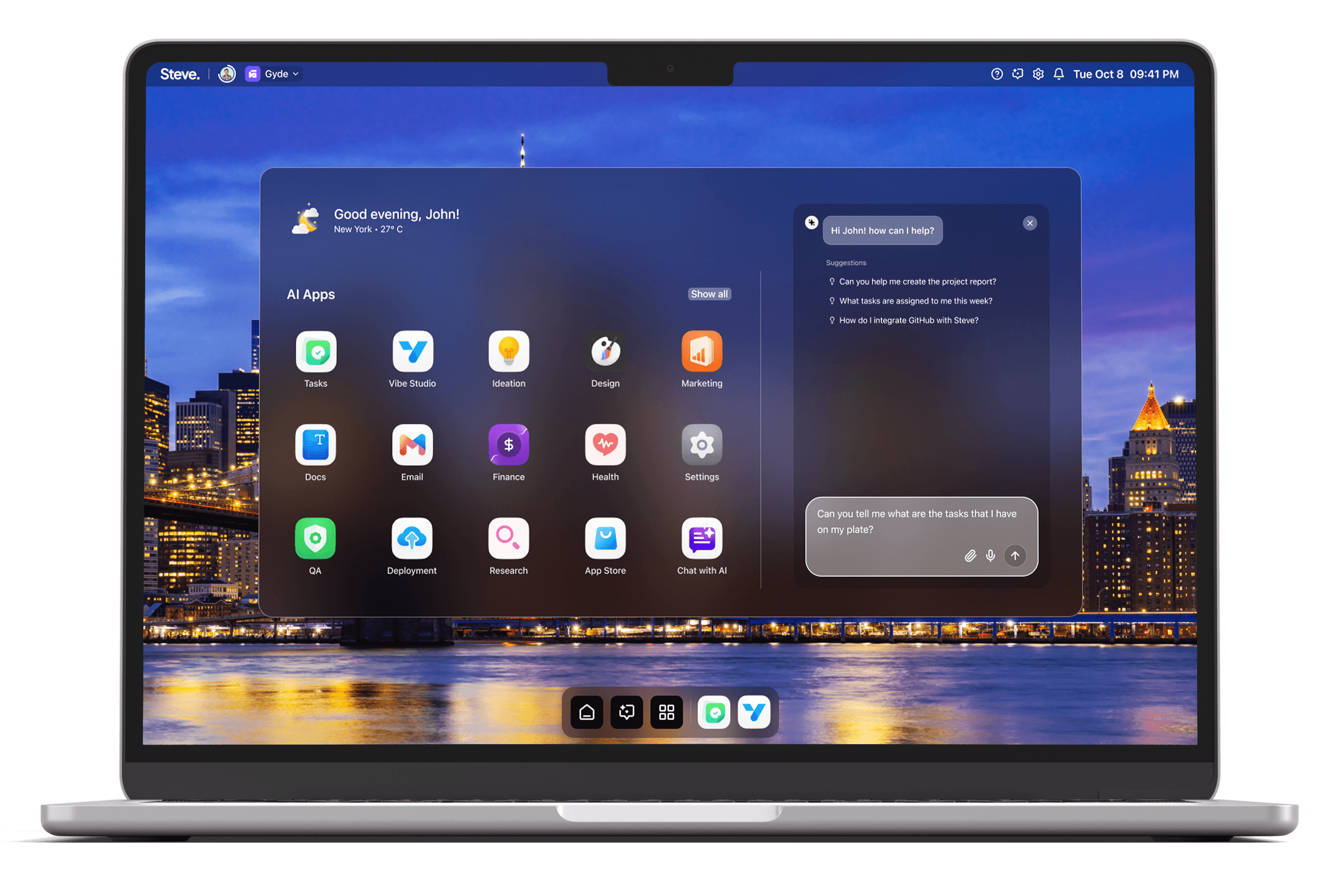
Steve is an AI-native operating system designed to streamline business operations through intelligent automation. Leveraging advanced AI agents, Steve enables users to manage tasks, generate content, and optimize workflows using natural language commands. Its proactive approach anticipates user needs, facilitating seamless collaboration across various domains, including app development, content creation, and social media management.
Conclusion
Turning project briefs into executable workflows automatically demands four capabilities working together: conversational interpretation to surface and clarify intent, persistent memory to preserve context, task orchestration to create and manage execution, and deliverable generation to produce tangible artifacts. Steve, as an AI OS, combines those capabilities so teams move from idea to tracked work without manual translation layers. The result is fewer misunderstandings, faster kickoff, and a consistent audit trail from brief to delivery—making project execution predictable and repeatable.