Turning Internal Wikis Into Living Knowledge Systems With AI
Jan 20, 2026

Scale Contextual Memory: Shared memory lets AI agents persist rationale and decisions so the wiki returns context-rich answers rather than isolated documents.
Conversational Access And Discovery: Steve Chat provides natural-language queries, file-aware search, and follow-up dialogue to surface precise, actionable knowledge.
Capture Signals Into Summaries: AI Email extracts and structures key points from long threads, making them ready to populate or update wiki pages.
Operationalize Knowledge With Tasks: Task Management turns identified gaps into tracked work, ensuring wiki updates are assigned and completed.
Continuous Improvement Loop: Combining memory, chat, summarization, and tasking creates an automated cycle that keeps documentation accurate and aligned with active work.
Introduction
Turning an internal wiki into a living knowledge system means moving beyond static pages toward a continuously updated, searchable, and actionable repository that teams trust. Steve, an AI Operating System, makes that shift practical by combining a shared memory architecture with conversational access, document-aware search, and task orchestration. This article shows concrete ways Steve turns scattered signals—documents, emails, and conversations—into a coherent knowledge system that stays current and useful.
Scale Contextual Memory
A living wiki depends on context: who asked a question, which projects are active, and which documents matter now. Steve’s shared memory system gives AI agents a persistent, contextual layer they can read and write to, so insights discovered by one agent become reusable by others. In practice, that means a discovery made during a design review—key decisions, rationale, and constraints—can be stored in shared memory and surfaced by later queries without re-parsing the entire doc set.
Scenario: During a product retro, Steve records agreed API deprecations and reasons into shared memory. Later, when an engineer asks about integration constraints, the AI OS returns the exact rationale and links to the originating notes, preventing repeated debates and saving onboarding time.
Conversational Access And Discovery
Search alone doesn't equal discoverability; people need natural-language access, follow-up questions, and the ability to attach files or context. Steve Chat provides conversational access with sophisticated memory, file-aware inputs, and integrations across Google Drive, Notion, GitHub, and more, enabling teams to query the wiki in plain language and iterate on ambiguous questions.
Scenario: A product manager asks Steve Chat, "What edge cases did we document for the billing flow?" The AI OS scours the wiki, relevant PRs, and attached spreadsheets, summarizes the edge cases, and links back to source documents. If the answer lacks detail, the PM can ask follow-ups in the same thread, and the system refines results using session context—turning a static search into a dynamic discovery session.
Capture Signals Into Summaries
Internal knowledge often lives in email threads and meeting notes. Steve’s AI Email module tags, categorizes, and generates instant summaries of long threads, producing concise, structured artifacts suitable for wiki pages. Because the inbox is integrated with the AI OS, summaries can be reviewed in place and then persisted to the shared memory or a wiki page with minimal friction.
Scenario: After a supplier negotiation, Steve Email produces a short summary that highlights commitments, deadlines, and open questions. The team reviews the summary in-chat and instructs Steve to create or update the vendor policy page, embedding the summary and linking the original thread—preserving context and ensuring the wiki reflects current agreements.
Operationalize Knowledge With Tasks
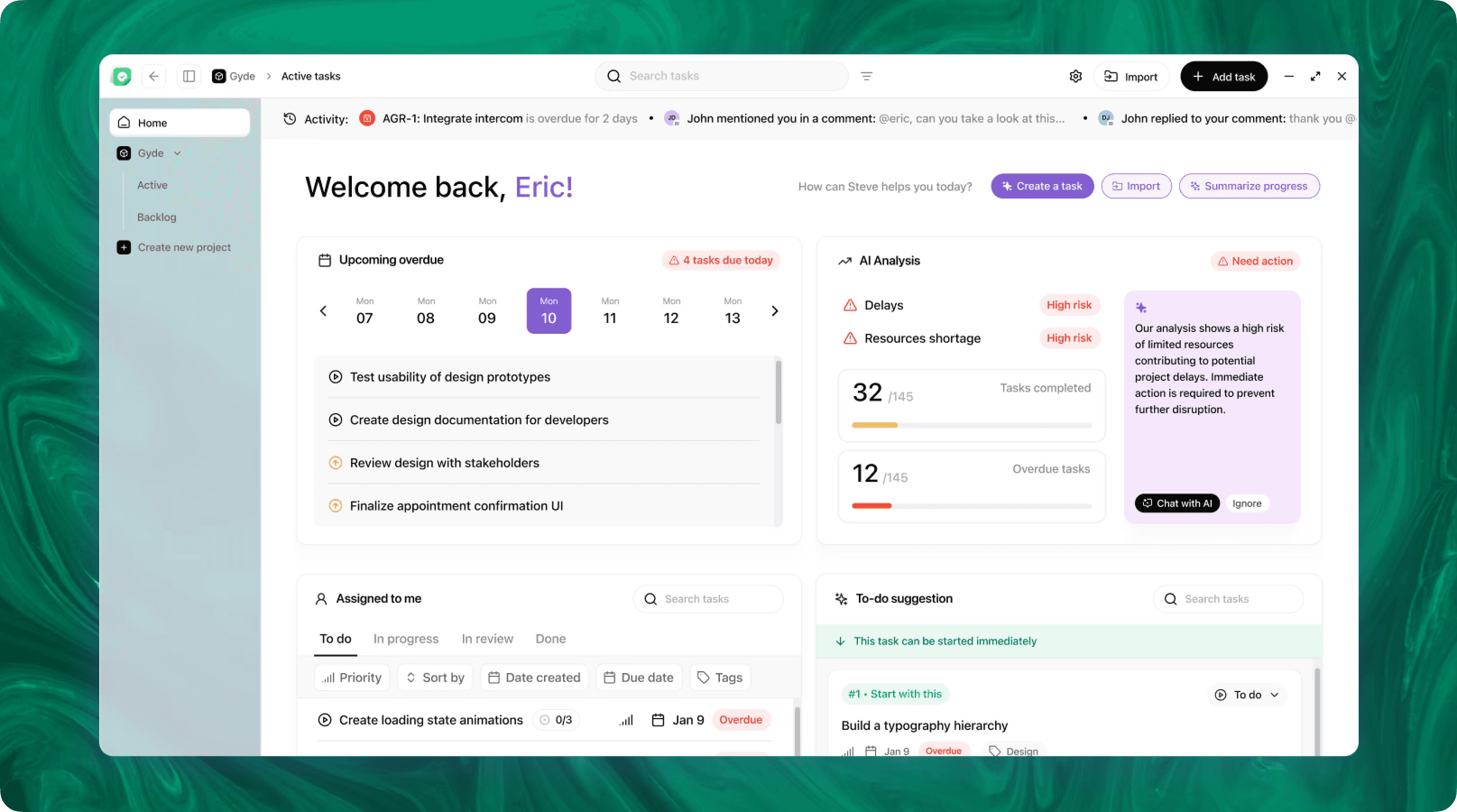
A living knowledge system must connect information to action. Steve’s Task Management integrates with tools like Linear, proposes sprints, and converts insights into executable work items. That closes the loop: when Steve identifies outdated procedures or gaps during conversational queries, it can suggest tasks to update the wiki, assign owners, and track progress until the content is refreshed.
Scenario: Steve Chat flags a deprecated process referenced in multiple wiki pages. The AI OS proposes a task to consolidate guidance, suggests owners based on recent contributors, and creates a ticket in the team’s board. As the task progresses, shared memory notes the change, and subsequent queries return updated guidance—automatically aligning knowledge and execution.
Steve
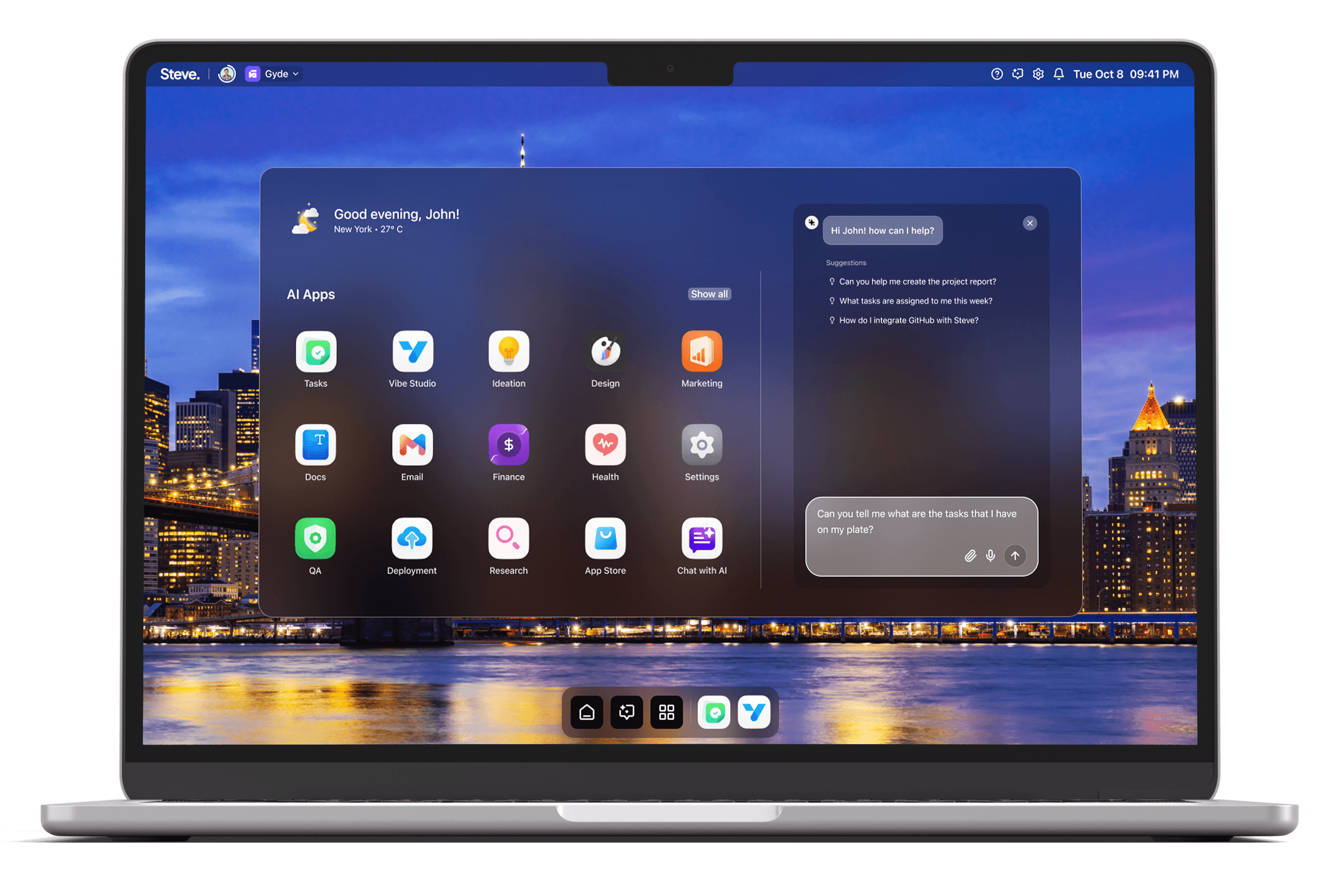
Steve is an AI-native operating system designed to streamline business operations through intelligent automation. Leveraging advanced AI agents, Steve enables users to manage tasks, generate content, and optimize workflows using natural language commands. Its proactive approach anticipates user needs, facilitating seamless collaboration across various domains, including app development, content creation, and social media management.
Conclusion
A living knowledge system requires persistent context, conversational discovery, signal capture, and operational hooks. As an AI OS, Steve combines a shared memory system with conversational Steve Chat, inbox-first AI Email summarization, and Task Management to keep wikis current, discoverable, and actionable. Teams that apply these capabilities reduce rework, accelerate onboarding, and turn documentation from a backlog chore into a strategic asset that evolves with the business.