Turning Complex Workflows Into Simple Conversations
Dec 2, 2025

Shared Memory As The Context Backbone: Persistent contextual memory prevents repeated explanations and preserves constraints across conversations.
Steve Chat As The Conversational Hub: Integrated chat with memory and service connections turns single messages into coordinated actions.
Embedding Conversations In Email: AI Email treats threads as actionable conversations with summaries and context-aware reply drafting.
Turning Conversations Into Actionable Tasks: Task Management converts chat outcomes into organized boards, sprints, and tracked work.
Workflow Benefit: Combining shared memory, conversational interfaces, inbox intelligence, and task automation reduces handoffs and accelerates execution.
Introduction
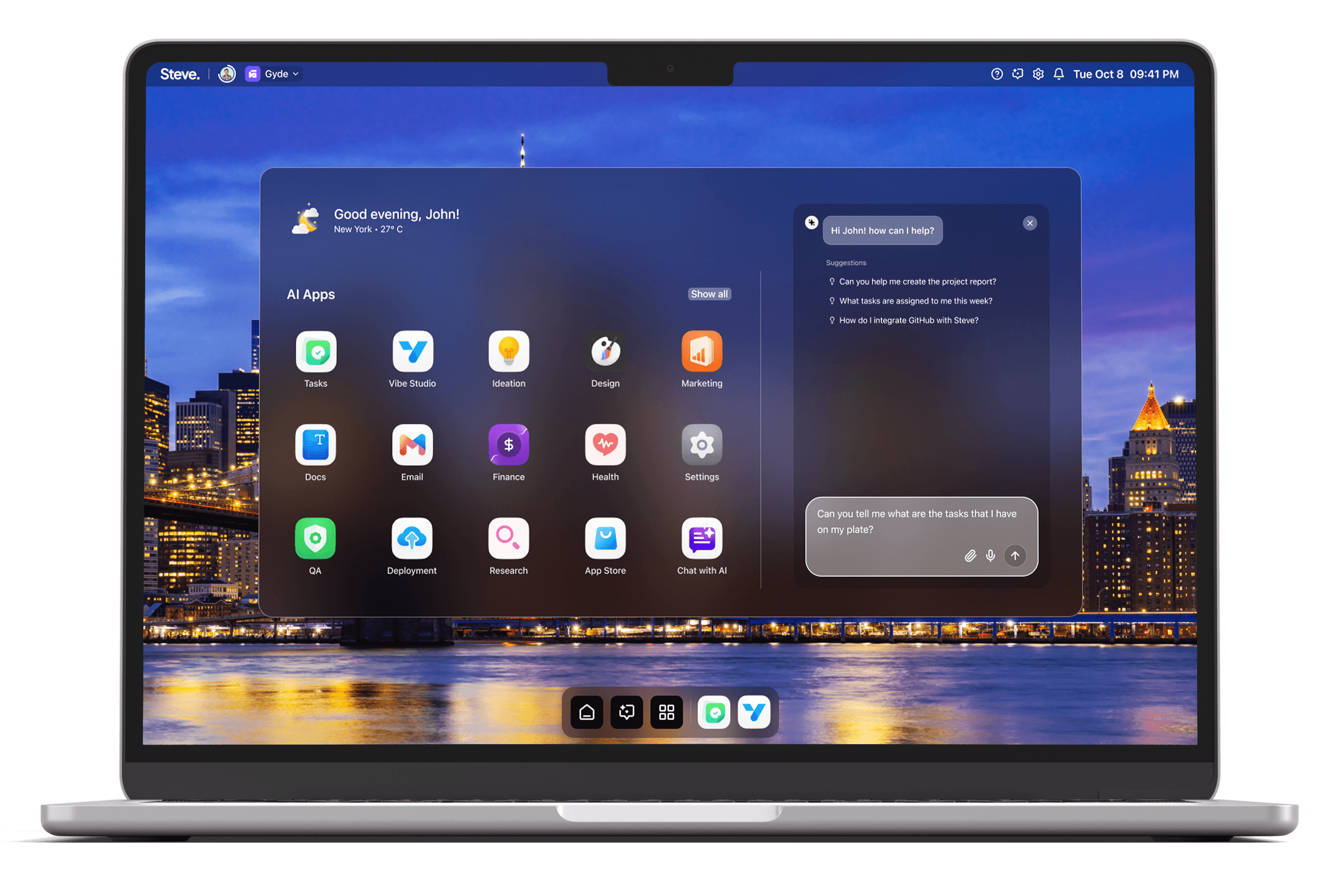
Turning complex workflows into simple conversations is no longer a futuristic ideal — it is a practical design pattern for modern organizations. Conversation as an interface collapses task switching, preserves context, and surfaces actions where people already communicate. As an AI Operating System, Steve acts as the connective layer that keeps conversational state, executes context-aware tasks, and converts talk into repeatable work without forcing users into separate tools.
Shared Memory As The Context Backbone
Complex workflows collapse when every participant — human and agent — accesses the same contextual record. Steve’s shared memory system stores decisions, project context, and agent outputs so follow-up conversations begin where the last left off. In practice, that prevents recurring explanations: a legal question asked in one chat becomes a remembered constraint for scheduling, drafting, or task creation later.
A practical scenario: a product launch requires alignment among design, engineering, and marketing. Instead of forcing stakeholders to repeat specifications across emails and meetings, Steve retains the launch brief, risk notes, and timeline snippets in shared memory. Subsequent conversations automatically include those constraints, so a quick chat asking “Can we shift the demo to next week?” triggers validation against the stored timeline and returns an answer with consequences — reducing friction and misalignment.
Steve Chat As The Conversational Hub
Steve Chat centralizes interaction with sophisticated memory and a broad set of integrations, turning questions into actions without leaving the conversation. It can schedule meetings, sync notes, manage issues, and fetch documents using connected services, so a single chat message becomes a multi-step orchestration.
For example, a project lead can type: “Summarize current blockers and propose a 2-week sprint plan.” Steve Chat pulls notes, issue status, and calendar availability from connected services, synthesizes the information, and presents a prioritized plan. Because Steve is file-aware and can search the web in real time, the response includes links to relevant documents and suggested calendar slots, enabling an immediate decision or a follow-up directive — all within the same conversational thread.
Embedding Conversations In Email
Email remains the default collaboration surface for many teams. Steve’s AI Email feature keeps the conversation live where decisions often happen: in the inbox. Real-time sync, AI tagging, and instant thread summaries let users treat long email exchanges like a single, actionable conversation rather than scattered messages.
Consider a cross-functional thread that runs dozens of replies. Instead of wading through the history, a stakeholder asks Steve to summarize the thread and draft a decisive reply that reflects prior commitments. Steve’s context-aware suggestions generate a concise response aligned with the project memory. When an action is required, the conversation converts to a task or a calendar item without manual copying, preserving the conversational flow and eliminating the common handoff gaps that derail complex workflows.
Turning Conversations Into Actionable Tasks
Conversations are valuable only if they translate into execution. Steve’s Task Management features close that loop by converting chat outcomes and email decisions into organized work: AI-powered boards, sprint proposals, and integrations with tools like Linear ensure that a plan born in conversation becomes tracked progress.
In a typical workflow, a team agrees on priorities in Steve Chat; the AI then creates tasks, assigns owners, and suggests a sprint cadence. The tasks remain linked to the originating conversation and the shared memory so context is never lost. Progress updates, automated reminders, and context-aware automation keep the team aligned, reducing administrative overhead and increasing the predictability of outcomes.
Steve
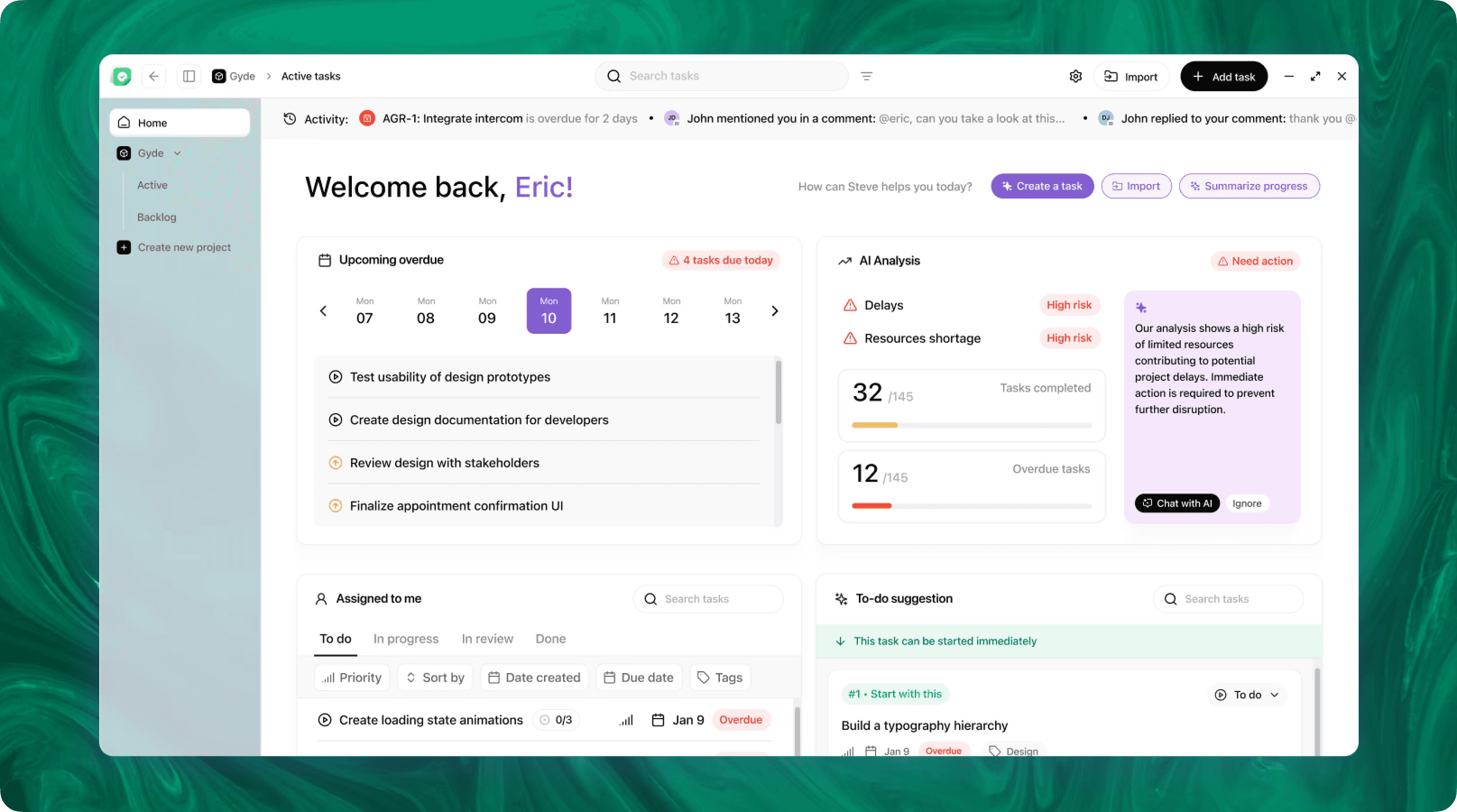
Steve is an AI-native operating system designed to streamline business operations through intelligent automation. Leveraging advanced AI agents, Steve enables users to manage tasks, generate content, and optimize workflows using natural language commands. Its proactive approach anticipates user needs, facilitating seamless collaboration across various domains, including app development, content creation, and social media management.
Conclusion
Making complex workflows feel like straightforward conversations requires persistent context, a central conversational hub, in-place email intelligence, and automatic conversion of decisions into tracked tasks. Steve, as an AI OS, combines these capabilities to compress cycles of explanation, decision, and execution into the places teams already communicate. The result is faster alignment, fewer handoffs, and clearer accountability — all through conversation.