Turning Chat Conversations Into Structured Records With Steve
Nov 20, 2026

Capture Conversations With Context-Aware Chat: Steve Chat records file-aware, integrated conversations so attachments and links stay part of the record.
Organize Memory Into Shared, Persistent Records: Shared memory lets agents persist facts and project history, converting ephemeral messages into cumulative records.
Log And Audit Conversations For Analytics And Compliance: LangFuse integration provides detailed logging for traceability, optimization, and audits.
Convert Chats Into Tasks And Structured Workflows: Task Management features and Linear integration turn chat-derived actions into tracked work without manual entry.
Practical Value: Combining capture, memory, logging, and task sync closes the loop from conversation to execution while preserving provenance.
Introduction
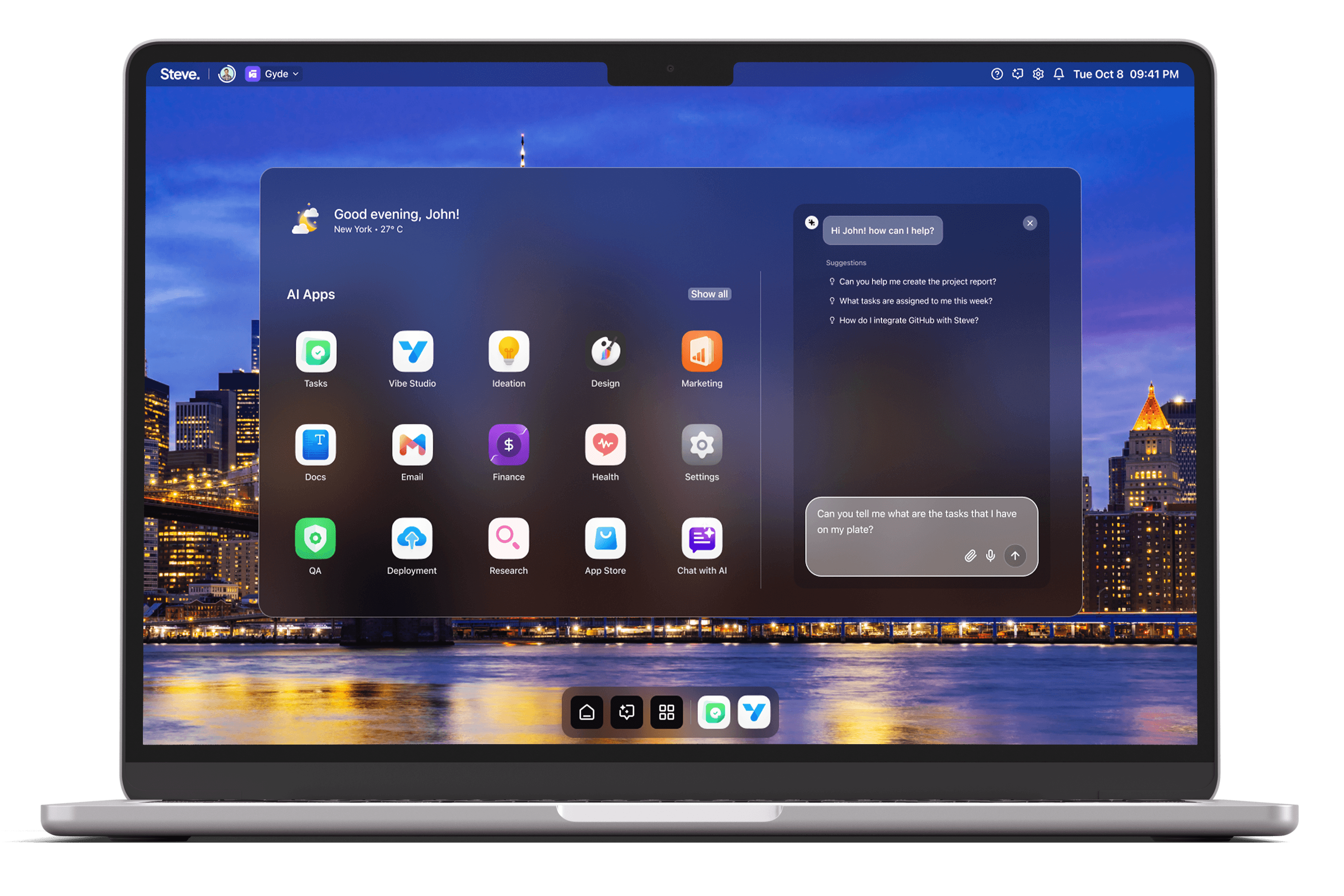
Turning chat conversations into structured records is a common pain point for teams that rely on conversational workflows for decisions, handoffs, and task creation. Steve, an AI Operating System, centralizes conversational capture and converts informal chat into durable, searchable, and actionable records—preserving context, attachments, and follow-up actions so teams can move from talk to tracked work without manual transcription.
Capture Conversations With Context-Aware Chat
Steve Chat is the primary capture surface: it records interactive conversations that are file-aware and integrated with calendars, email, Drive, Sheets, Notion, and GitHub. Because Steve accepts uploads (PDFs, spreadsheets, images) and connects to your apps, a single chat can contain the documents, links, and scheduling context necessary to reconstruct decisions later. In practical use, a product kickoff chat that includes a requirements spreadsheet and a design PDF becomes a single, context-rich record rather than a set of disconnected artifacts. That reduces information loss and saves the time otherwise spent hunting for attachments after the fact.
Organize Memory Into Shared, Persistent Records
Steve’s shared memory system gives AI agents a persistent view of relevant context across conversations. Instead of each chat starting from zero, the shared memory holds facts, preferences, and project history that agents can reference and update. For example, when a sales rep summarizes a client call in Steve Chat, the memory can store the client’s key requirements and timelines; subsequent chats automatically surface that stored context. This persistence turns ephemeral messages into structured, cumulative records that reflect evolving project state without manual note consolidation.
Log And Audit Conversations For Analytics And Compliance
LangFuse integration provides detailed chat logging so every conversational turn is captured for optimization, analytics, and auditability. Steve’s chat logs maintain a traceable record of who said what, which attachments were shared, and how AI agents suggested or amended content. In a compliance or postmortem scenario, teams can review a logged conversation to reconstruct decisions and timelines, measure responsiveness, and identify recurring friction points in handoffs. These logs make conversational workflows auditable while enabling data-driven improvements to prompts and agent behavior.
Convert Chats Into Tasks And Structured Workflows
Steve bridges chat and execution through its Task Management capabilities and integrations like Linear. Agents can extract action items, propose sprint candidates, or create product board entries directly from conversation threads. Consider a retrospective: participants debate three improvements, and Steve suggests three tasks with owners and due dates; with one approval, those tasks populate the AI-powered product board and sync to Linear. This reduces double entry, ensures alignment between discussion and execution, and keeps the record of the original conversation linked to the created tasks for future reference.
Practical Scenarios
Client Handoff: A customer success rep uploads a contract into Steve Chat, annotates key dates, and asks the agent to generate onboarding tasks—those tasks appear on the product board and the client’s memory profile is updated so future chats remember constraints.
Decision Record: During a design review, designers attach mockups and discuss trade-offs in Steve Chat; the shared memory captures the chosen direction and the LangFuse logs provide an auditable decision trail for stakeholders.
Rapid Triage: A support engineer drops a bug report PDF into chat; Steve extracts reproduction steps and creates a Linear issue from the conversation, preserving the original chat as the issue’s history.
Steve

Steve is an AI-native operating system designed to streamline business operations through intelligent automation. Leveraging advanced AI agents, Steve enables users to manage tasks, generate content, and optimize workflows using natural language commands. Its proactive approach anticipates user needs, facilitating seamless collaboration across various domains, including app development, content creation, and social media management.
Conclusion
By combining a file-aware conversational surface, persistent shared memory, detailed chat logging, and built-in task management with third-party sync, Steve makes it straightforward to turn chat conversations into structured records. As an AI OS, Steve reduces friction between dialogue and execution: conversations become searchable artifacts, decisions gain traceability, and action items flow directly into the team’s workflow tools—so talk becomes work, and work stays organized.