The Shift From Task Management To Intent Management
Oct 3, 2026

From Tasks To Intent: Intent packages desired outcomes and constraints so systems and teams can act without repeated clarification.
Shared Memory Keeps Context Alive: A centralized memory lets agents and users read and update the same intent state, preventing context loss and rework.
Conversational Intel With Steve Chat: Steve Chat captures and refines intent in context, leveraging memory and integrations to validate and enrich plans.
Inbox-As-Intent With AI Email: AI Email extracts actionable intent from threads via tagging and summaries, turning communication into aligned outcomes.
Operationalizing Intent With Task Management: AI-powered boards translate intent into prioritized work and propose re-plans that preserve rationale and dependencies.
Introduction
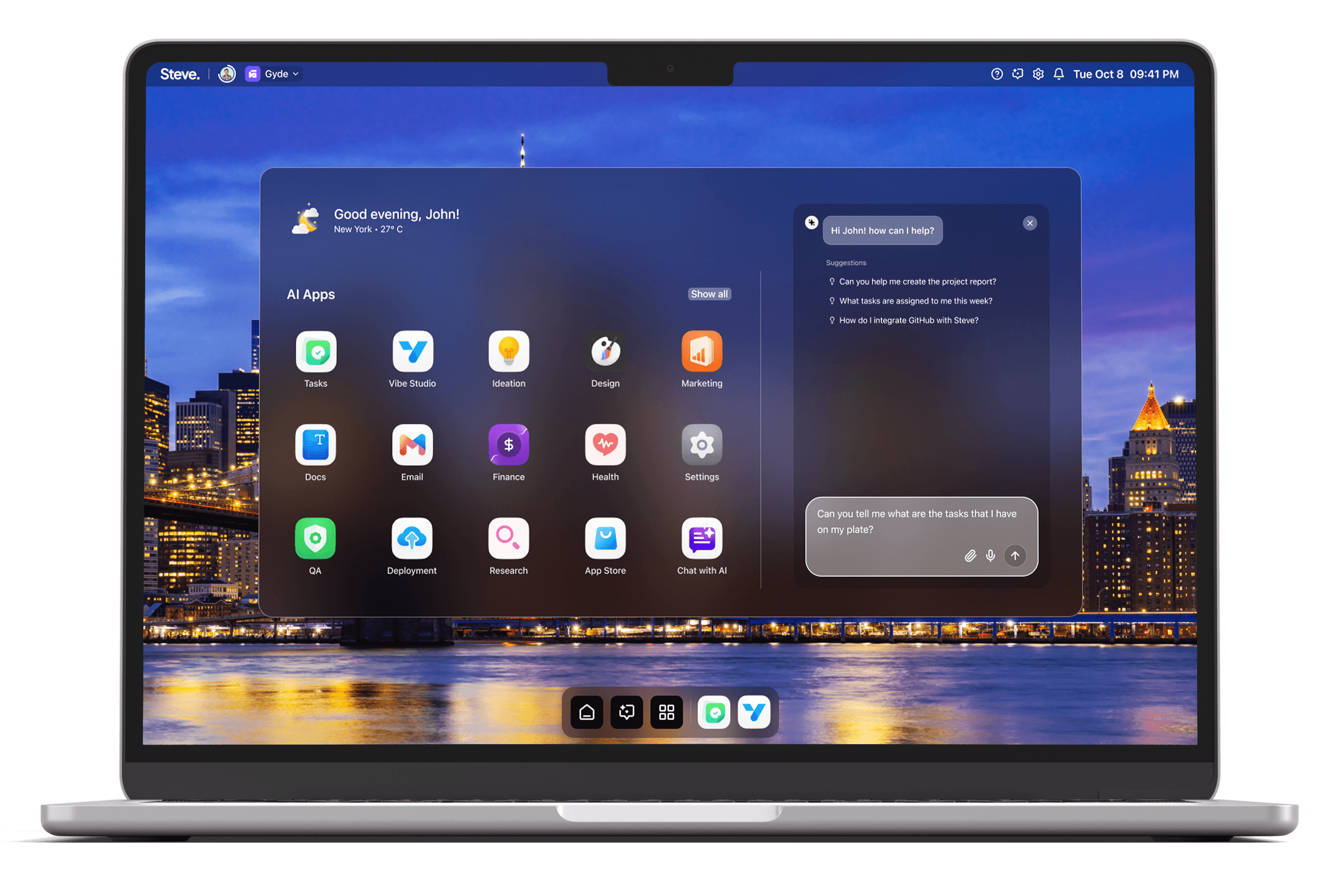
The shift from task management to intent management reframes productivity: teams move from tracking discrete to-dos to encoding desired outcomes, context, and constraints so work systems can act and adapt proactively. Intent management reduces coordination overhead, preserves strategic context, and lets teams focus on decisions, not status updates. As an AI Operating System, Steve centralizes contextual memory, conversational interfaces, inbox intelligence, and execution-aware planning to translate intents into sustained action across tools and people.
From Tasks To Intent
Task lists answer “what” to do; intent captures “why,” acceptable outcomes, and boundary conditions. Intent management packages priorities, dependencies, and success criteria so downstream agents — human or machine — can interpret and act without repeated clarification. In practice, a product lead writes an intent like “launch beta with analytics, privacy opt-in, and a single-email onboarding” rather than drafting ten granular tickets; the system interprets and decomposes that intent into work while keeping the strategic constraints intact.
Steve makes this practical by treating intents as first-class objects in an AI OS: conversations and artifacts carry persistent context rather than ephemeral notes. That persistent context prevents drift between decision and execution, so teams spend less time translating strategy into tasks and more time validating outcomes.
Shared Memory Keeps Context Alive
A shared memory system lets multiple AI agents and users read and write a single contextual state that represents goals, constraints, and historical decisions. This solves a core intent-management problem: context leakage. When a designer, engineer, and marketer reference the same shared memory, the original intent — including trade-offs and non-negotiables — travels with the work.
Consider a scenario where legal updates privacy requirements mid-sprint. With shared memory, the new constraint propagates automatically to relevant agents and summaries; implementation tasks update, suggested communications change, and meeting notes reflect the shift without manual re-specification. That continuous, synchronized context prevents rework and preserves intent integrity across teams.
Conversational Intel With Steve Chat
Conversations are where intent is born and refined. Steve Chat’s interactive interface, long-term memory, and broad integrations let teams capture intent naturally and have it persist. Users can state or refine an intent in plain language, and Steve Chat references calendar events, documents, issues, and past conversations to enrich and validate that intent in real time.
In a practical example, a product manager tells Steve Chat: “Prepare the release plan for Beta 1 targeting enterprise users next quarter.” Steve Chat uses memory and connected services to surface dependencies, draft a milestone list, and flag conflicting timelines. Because the chat retains context and links to related documents, follow-up prompts iterate the intent instead of recreating it, accelerating alignment and reducing context-switching.
Inbox-As-Intent With AI Email
Email often contains emergent intent: decisions, approvals, and requests buried inside long threads. AI Email converts those signals into actionable context by tagging, summarizing, and proposing context-aware replies. Summaries extract the core intent and constraints from threads so recipients can confirm or refine outcomes instead of re-reading entire chains.
For example, a vendor thread negotiating SLAs can produce a concise intent artifact: “Accept vendor terms if uptime ≥99.9% and quarterly review clause included.” Steve’s AI Email tags that outcome, suggests a reply aligned with related project priorities, and funnels the intent into shared memory or the task planning workspace. This extracts work-driving intent from communication noise and keeps stakeholders aligned on the agreed boundaries.
Operationalizing Intent With Task Management
Intent does not replace execution; it informs smarter execution. Steve’s AI-powered task management boards translate intent into prioritized backlogs, propose sprints, and maintain traceability between high-level outcomes and individual tasks. When intents change, the system recommends re-plans that respect dependencies and deadlines rather than forcing manual rework.
A product team can import current issues, state a revised intent in Steve, and receive a proposed sprint that reorders work to meet the new outcome. That replan preserves the original intent metadata — success criteria, constraints, and stakeholders — so each task carries the rationale behind it. The result: execution aligns with purpose, not merely checklist completion.
Steve
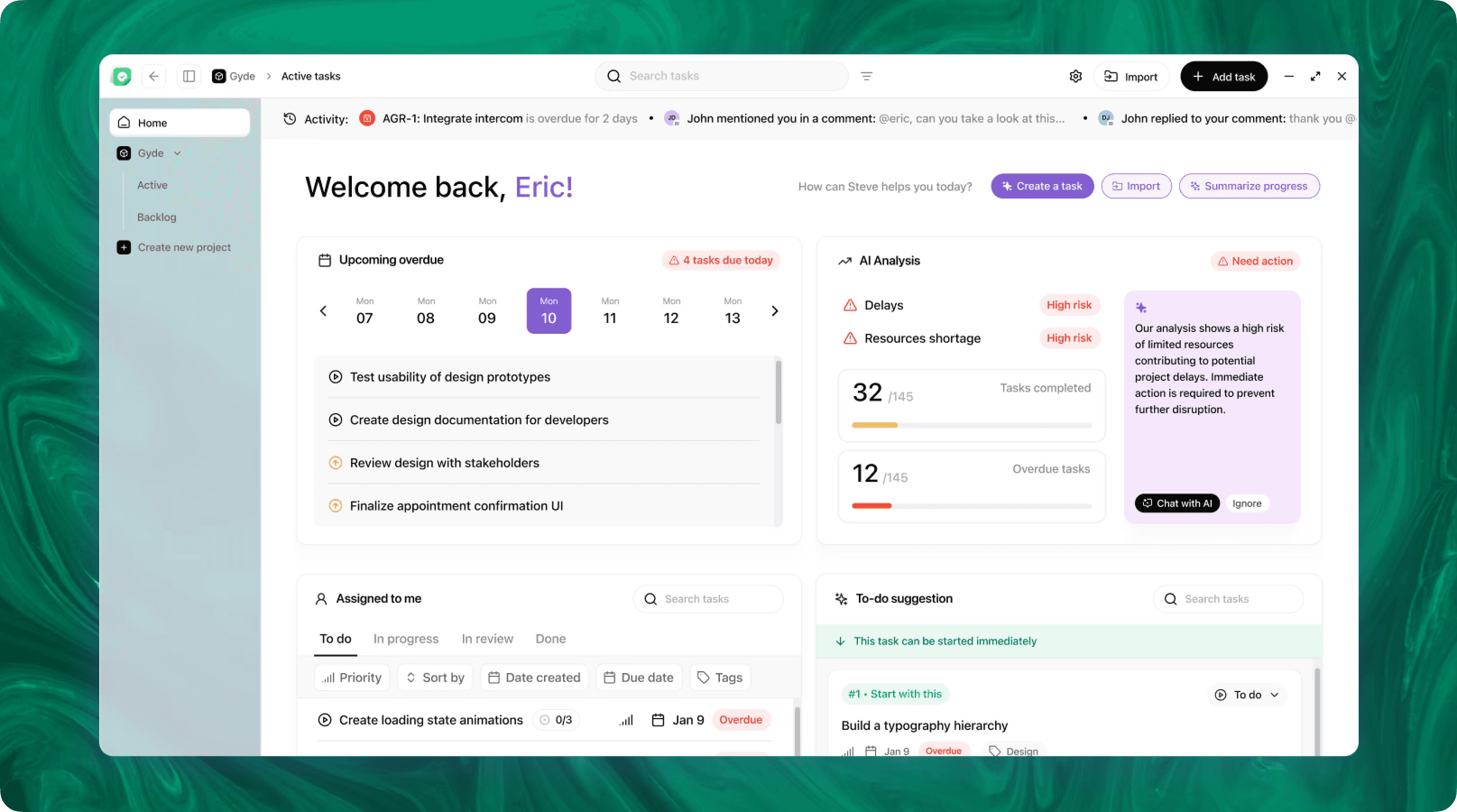
Steve is an AI-native operating system designed to streamline business operations through intelligent automation. Leveraging advanced AI agents, Steve enables users to manage tasks, generate content, and optimize workflows using natural language commands. Its proactive approach anticipates user needs, facilitating seamless collaboration across various domains, including app development, content creation, and social media management.
Conclusion
Moving from task management to intent management elevates how organizations coordinate work: fewer status updates, clearer trade-offs, and faster, context-aware execution. As an AI OS, Steve brings the components required for that shift — shared memory to preserve context, Steve Chat to capture and iterate intent conversationally, AI Email to extract intent from communication, and AI-powered task management to operationalize outcomes. Together, these capabilities let teams define outcomes once and let the system sustain, decompose, and adapt them across the lifecycle of work.