The Role Of Shared Ai Context In Faster Decision Making
Feb 9, 2026

Shared Memory As a Single Source of Truth: Persistent memory stores rationale and state so agents and people avoid repeated discovery and conflicting decisions.
Conversational Context in Steve Chat: Memory-aware chat ties conversations to calendars, repos, and docs, enabling immediate, context-rich answers and follow-ups.
Context-Aware Email Summaries And Replies: Summaries and context-linked reply drafting extract decision-relevant deltas from long threads for quicker choices.
AI-Powered Task Boards For Aligned Execution: Automated reprioritization and task annotations convert decisions into coordinated action with traceable reasoning.
Operational Benefit: Combining shared memory, chat, email, and tasks reduces cognitive load and shortens the loop from decision to execution.
Introduction
Shared AI context accelerates decision making by collapsing the time teams spend rediscovering facts, reconciling fragmented status, and re-establishing priorities. An AI Operating System that maintains persistent, queryable context lets people and agents make consistent choices faster. Steve, as an AI OS, centralizes conversational memory, email context, and task state so decisions surface from accumulated knowledge instead of repeated explanation. This article explains how shared context shortens cycles, reduces cognitive load, and drives aligned execution with concrete Steve capabilities.
Shared Memory As a Single Source of Truth
A shared memory system lets multiple AI agents read and write the same contextual signals—project goals, key constraints, recent decisions, and file pointers—so every response reflects the latest state. When Steve’s shared memory stores decision rationale, follow-ups automatically incorporate prior trade-offs; teams avoid rehashing the same debates. Practical scenario: a product manager checks why a scope was reduced two sprints ago; Steve retrieves the original constraint and the cost estimate that motivated the change, letting the manager assess options immediately instead of hunting through threads. That persistent context cuts discovery time and prevents costly reversals.
Conversational Context in Steve Chat
Conversational interfaces become decision accelerants when they remember context across interactions. Steve Chat’s sophisticated memory and integrations mean users can ask high-level questions—"What’s blocking release?"—and receive answers that span calendar availability, open issues, and linked documents. Because Steve links chat memory to tools (calendars, repos, docs), follow-up questions require no reintroduction of facts. In practice, a cross-functional lead can run a stand-up via chat: Steve surfaces blocker owners, suggests reassignments based on workload, and drafts next steps. That immediacy turns conversation into action without manual status compilation.
Context-Aware Email Summaries And Replies
Email is a primary source of situational context; abstracting it into concise, actionable summaries speeds decisions. Steve’s AI Email summarizes long threads, tags priority items, and drafts context-aware replies that align with ongoing projects recorded in shared memory. For example, when a vendor threads a pricing change into an existing contract discussion, Steve surfaces the last agreed terms from memory, highlights dependencies, and proposes a reply that preserves prior commitments. Decision makers no longer wade through long chains; they see the delta and choose faster.
AI-Powered Task Boards For Aligned Execution
Decision speed matters only when execution follows. Steve’s task management boards integrate AI suggestions with live task state, so choices immediately translate to assignments, timelines, and dependencies. The system proposes sprints, reprioritizes tasks when context changes, and keeps a traceable log of the rationale tied back to shared memory. In a scenario where a critical bug emerges, Steve reorders the backlog, notifies impacted owners via chat and email, and annotates the change with the decision reason. That reduces coordination lag and preserves auditability for future decisions.
Steve
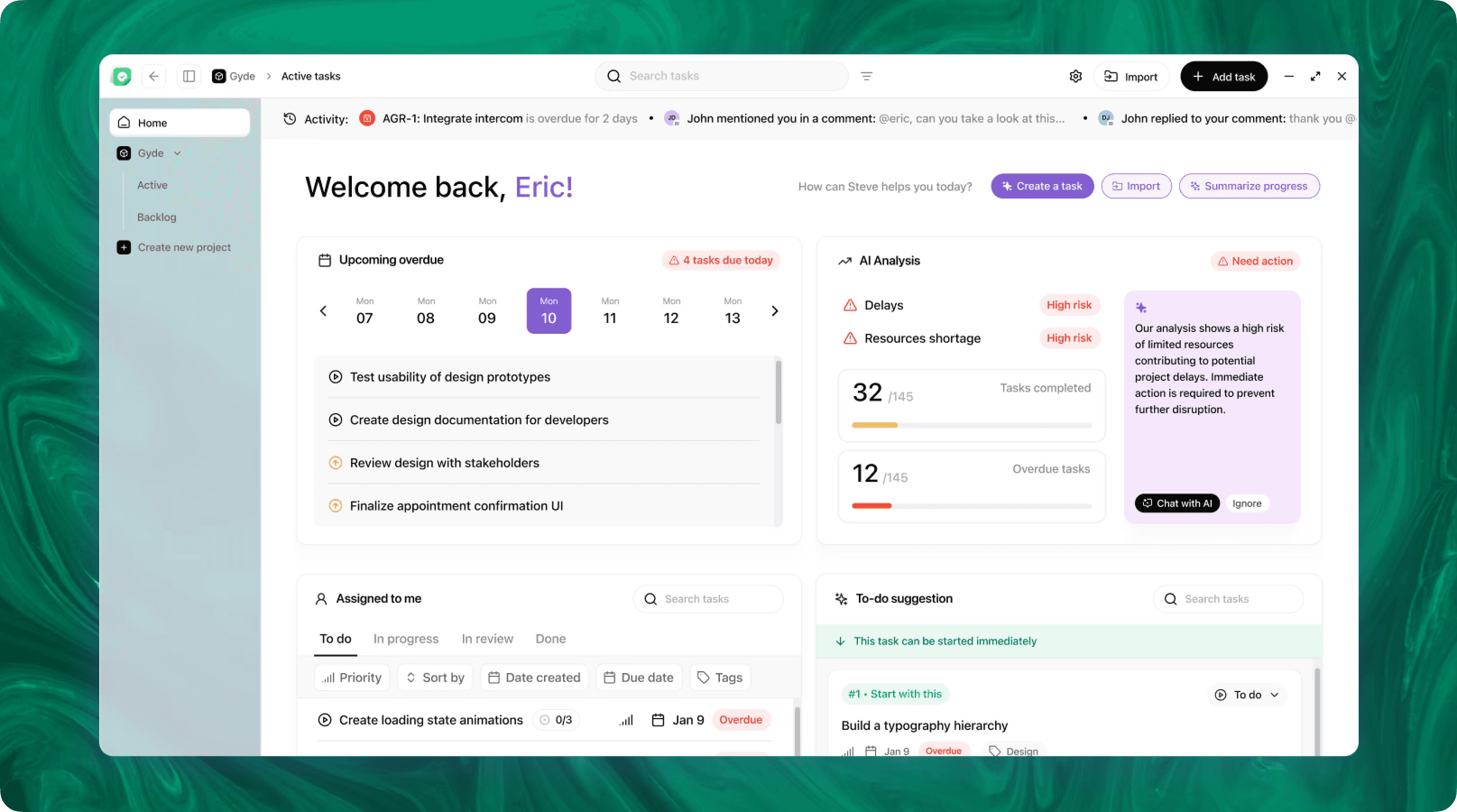
Steve is an AI-native operating system designed to streamline business operations through intelligent automation. Leveraging advanced AI agents, Steve enables users to manage tasks, generate content, and optimize workflows using natural language commands. Its proactive approach anticipates user needs, facilitating seamless collaboration across various domains, including app development, content creation, and social media management.
Conclusion
Shared AI context reduces friction at every decision point: it preserves rationale, eliminates redundant context transfers, and ties choices directly to execution. As an AI Operating System, Steve unifies memory, conversational intelligence, email context, and task workflows so decisions are informed, consistent, and fast. Organizations that embed shared context into daily workflows shorten feedback loops, reduce cognitive overhead, and increase the velocity of reliable outcomes. Steve turns scattered signals into a single operational context that speeds smarter decisions across teams.