The Long-Term Value Of Shared Ai Memory
Oct 7, 2026

Collective Context That Reduces Repetition: Shared memory reduces repeated explanations and shortens review cycles by preserving project history and conventions.
Persistent Conversational Continuity Across Tools: Memory-aware chat plus integrations ensure later interactions reference prior commitments and artifacts for coherent follow-ups.
Embedding Memory Into Email Workflows: Contextual summaries and AI-drafted replies leverage stored memory to improve consistency and reduce response churn.
Coordinated Execution And Institutionalizing Decisions: Linking memory to task boards converts rationale into executable backlogs and supports governance and audits.
Practical Safeguards And Lifecycle Considerations: Curating retention policies and validating memory entries preserves utility, reduces drift, and manages compliance risk.
Introduction
Shared AI memory transforms isolated interactions into a persistent institutional resource that compounds value over months and years. For organizations, the long-term value of shared AI memory lies in continuity, reduced rework, cumulative insights, and safer delegation. Steve, an AI Operating System, embeds a shared memory system and memory-aware conversational agents into daily workflows so contextual knowledge persists across chat, email, and task management—turning ephemeral conversations into lasting operational capital.
Collective Context That Reduces Repetition
When teams rely on intermittent human recall, the same context gets re-stated in tickets, emails, and meetings. A shared memory system captures agent-to-agent and agent-to-user context so decisions, preferences, and project histories follow the team. In practice, Steve’s shared memory lets an AI agent recall prior requirements, previous iterations, and established conventions when generating proposals or recommendations, which reduces repeated clarifications and shortens review cycles. Over time this lowers meeting frequency and accelerates onboarding because new participants inherit context already encoded in the system rather than reconstructing it.
Persistent Conversational Continuity Across Tools
Conversational continuity matters when work flows across channels. Steve’s interactive chat includes sophisticated memory and direct integrations with calendars, drives, and issue trackers, enabling the AI to act with awareness of prior commitments and artifacts. For example, a product manager who discussed a roadmap in chat can ask Steve later to generate a status update; Steve references the earlier conversation and linked documents to produce a coherent report rather than a generic summary. That continuity preserves intent across context switches and reduces the cognitive load of re‑explaining scope to the AI or to collaborators.
Embedding Memory Into Email Workflows
Email is a persistent record but often disconnected from conversational systems; bridging that gap unlocks long-term memory benefits. Steve’s AI Email tags and summarizes threads, and its context-aware suggestions draw on shared memory so replies reflect accumulated project knowledge. A customer-support lead can rely on Steve to draft responses that incorporate past resolutions, contracted service levels, and prior escalations—ensuring consistency and reducing response churn. Over time, the inbox becomes an indexed extension of organizational memory, enabling trend detection and faster dispute resolution without manual aggregation.
Coordinated Execution And Institutionalizing Decisions
Shared memory has operational value only when it drives execution. Steve’s AI-powered task management boards centralize plans and integrate with external trackers so the memory that informed decisions flows directly into execution artifacts. When Steve proposes a sprint or converts a conversation into tasks, the resulting backlog includes links to the originating context, rationale, and acceptance criteria retained in memory. That linkage reduces misalignment between planning and delivery and makes it easier to audit why certain trade-offs were made, which supports long-term governance and continuous improvement.
Practical Safeguards And Lifecycle Considerations
Long-term memory needs curation. Steve’s architecture supports persistent context while allowing teams to annotate relevance, scope retention, and archival rules via normal workflows. Practically, teams should define retention policies for customer data, tag sensitive threads, and periodically validate memory entries against current practices. Doing so preserves the utility of stored context while mitigating drift and compliance risk. Over time, curated memory improves model outputs because agents train and reason over higher-quality institutional signals rather than transient, noisy exchanges.
Steve
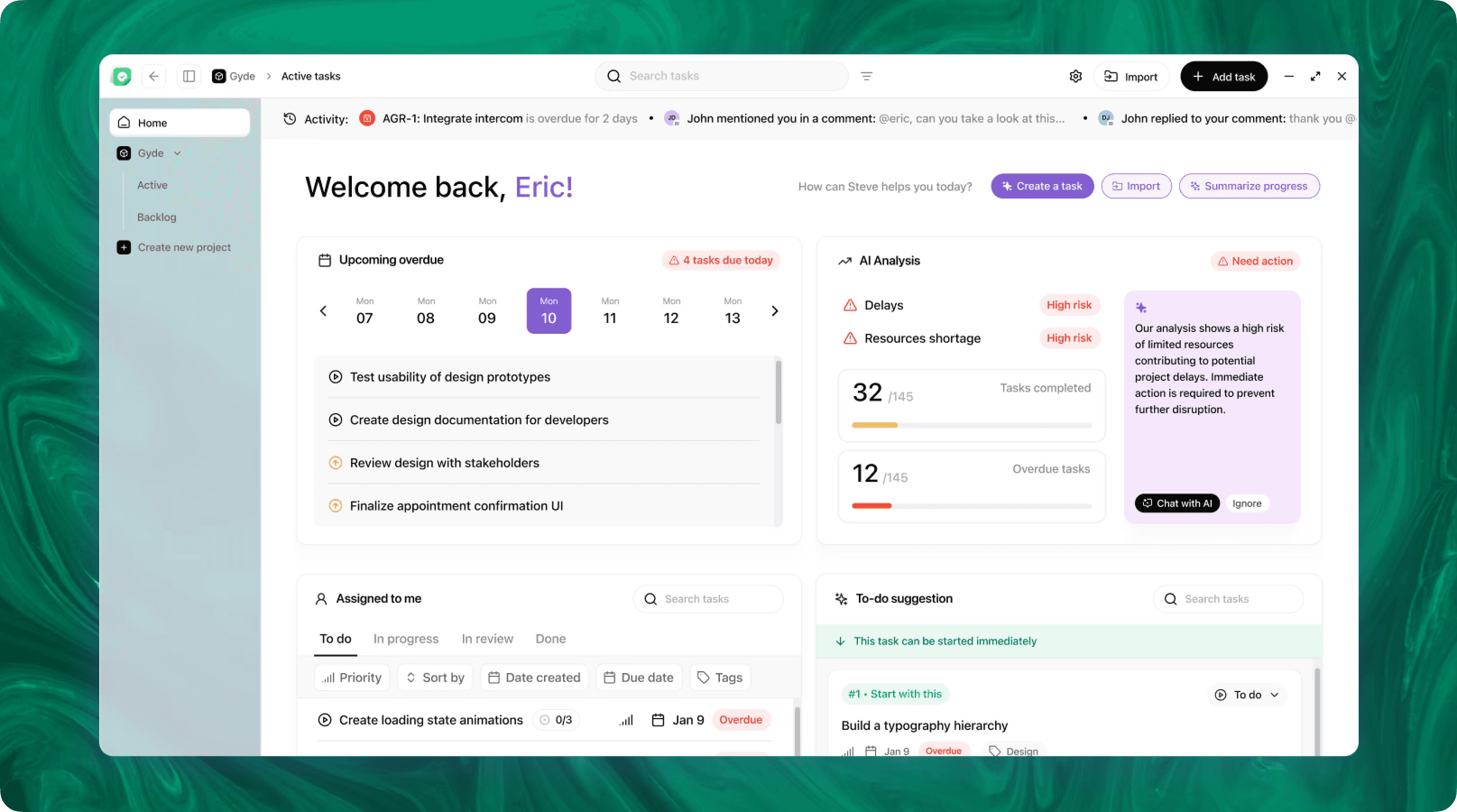
Steve is an AI-native operating system designed to streamline business operations through intelligent automation. Leveraging advanced AI agents, Steve enables users to manage tasks, generate content, and optimize workflows using natural language commands. Its proactive approach anticipates user needs, facilitating seamless collaboration across various domains, including app development, content creation, and social media management.
Conclusion
The long-term value of shared AI memory is measurable: fewer repeated explanations, faster onboarding, more consistent customer interactions, and clearer audit trails for decisions. As an AI OS, Steve combines a shared memory system with memory-aware chat, integrated email workflows, and AI-driven task management to convert ephemeral conversations into durable operational assets. Organizations that treat their shared AI memory as a maintained resource will compound efficiency and decision quality month after month rather than losing institutional knowledge in inboxes and forgotten threads.