The Evolution From Workflow Tools To Ai Operating Systems
Feb 20, 2026

Conversational Layer Replacing Tool Switching: Natural-language orchestration reduces context switches by letting one conversational interface execute multi-app workflows.
Shared Memory Enables Persistent Context: A shared memory system lets AI agents retain and reuse project context, preventing repetitive re-prompting and information loss across handoffs.
Embedded Smart Inbox As The Operational Hub: Integrating AI Email with summaries, tagging, and in-inbox drafting converts email from a passive feed into an actionable operational surface.
AI-Driven Task Management Moves From Boards To Proactive Execution: AI-powered task boards propose sprints, create and assign tasks from prompts, and align plans with calendar and workload data.
Combined Outcome: Together these capabilities let an AI OS like Steve run routine coordination and execution, shifting human effort toward higher-value decisions.
Introduction
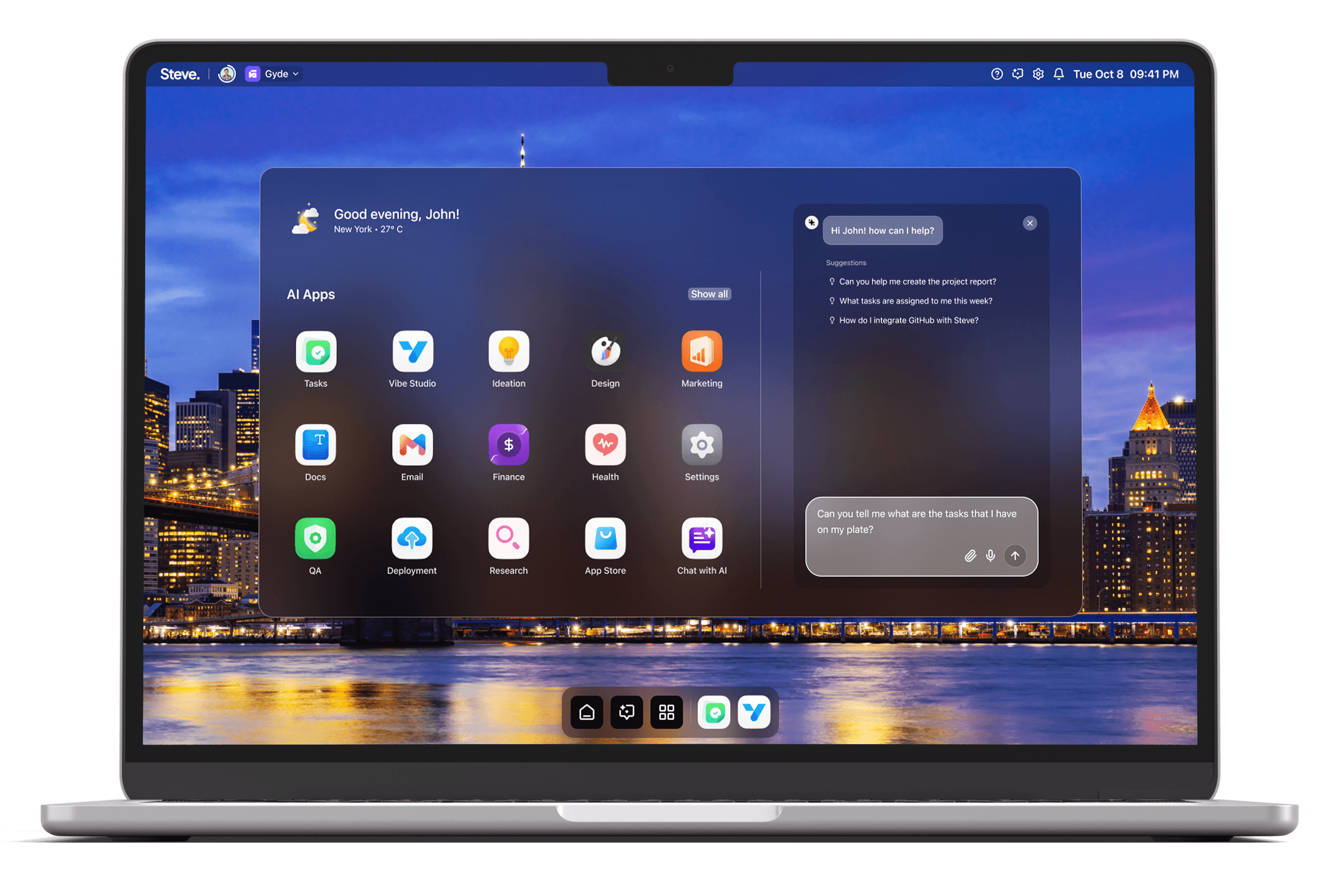
The evolution from discrete workflow tools to a unified AI Operating System reframes how organizations coordinate work: from manual handoffs and multiple apps to an intelligent platform that understands context, automates routine decisions, and surfaces the right action at the right time. As an AI OS, Steve combines a conversational interface, shared memory across AI agents, a smart integrated inbox, and AI-driven task management to collapse friction between discovery, coordination, and execution. This article explains how those capabilities shift workflows from tool chains to an operating layer that actively runs the business.
Conversational Layer Replacing Tool Switching
Traditional workflows require people to hop between email, chat, calendars, and specialized apps; each switch loses context and creates cognitive overhead. Steve’s conversational interface, powered by advanced AI agents and LLMs, lets users orchestrate cross-tool workflows through natural language—scheduling, finding documents, triaging issues, and drafting communications happen in a single conversational thread. In practice, a product manager can ask Steve to "summarize last week's roadmap discussion, pull the backlog items tagged UX, and schedule a planning session next Tuesday," and the AI agent executes the sequence by reading calendars, querying the task board, and proposing times—no manual tab juggling required. That single-interface model reduces time spent on coordination and surfaces decisions that used to be buried across apps.
Shared Memory Enables Persistent Context
A core difference between isolated automation and an AI OS is persistent, shared memory: a system where agents retain and reference evolving context so subsequent interactions build on prior work. Steve’s shared memory lets multiple AI agents collaborate on a project without re-prompting the same facts, preserving user preferences, project constraints, and prior outputs. For example, when onboarding a new campaign, an initial conversation with Steve can capture brand guidelines, target KPIs, and stakeholder roles; subsequent agents—email drafting, task generation, and scheduling—use that memory to keep messaging consistent and deadlines realistic. The result is continuity: decisions persist across sessions and agents, reducing repetition and preventing context loss during handoffs.
Embedded Smart Inbox As The Operational Hub
Email remains a primary source of requests and decisions; turning it into an operational hub is a natural step in evolving workflows. Steve’s AI Email integrates a live, smart inbox with real-time sync and in-context conversational assistance: it tags and prioritizes threads, generates concise summaries of long conversations, and drafts context-aware replies that align with ongoing projects. In a practical scenario, a support lead can forward a long contract negotiation thread to Steve, receive a prioritized summary with outstanding asks, and obtain a reply draft that reflects the legal constraints stored in shared memory—then convert action items into tasks without leaving the inbox. By embedding action and intelligence directly into email, Steve removes repeated manual extraction and accelerates response cycles.
AI-Driven Task Management Moves From Boards To Proactive Execution
Static task boards capture work, but the next step is making them proactive: suggesting sprints, estimating effort, and creating linked tasks from conversational commands. Steve’s AI-powered task management boards integrate with existing systems, propose sprint plans, import or create tasks from prompts, and track execution progress with contextual automation. A product owner might ask Steve to "turn these discussion notes into a three-week sprint," and the AI will create prioritized tasks, assign owners based on workload, and set milestones that align with calendar availability. That shift—from manual task entry to AI-curated plans—reduces planning friction and makes operational execution continuously adaptive.
Steve
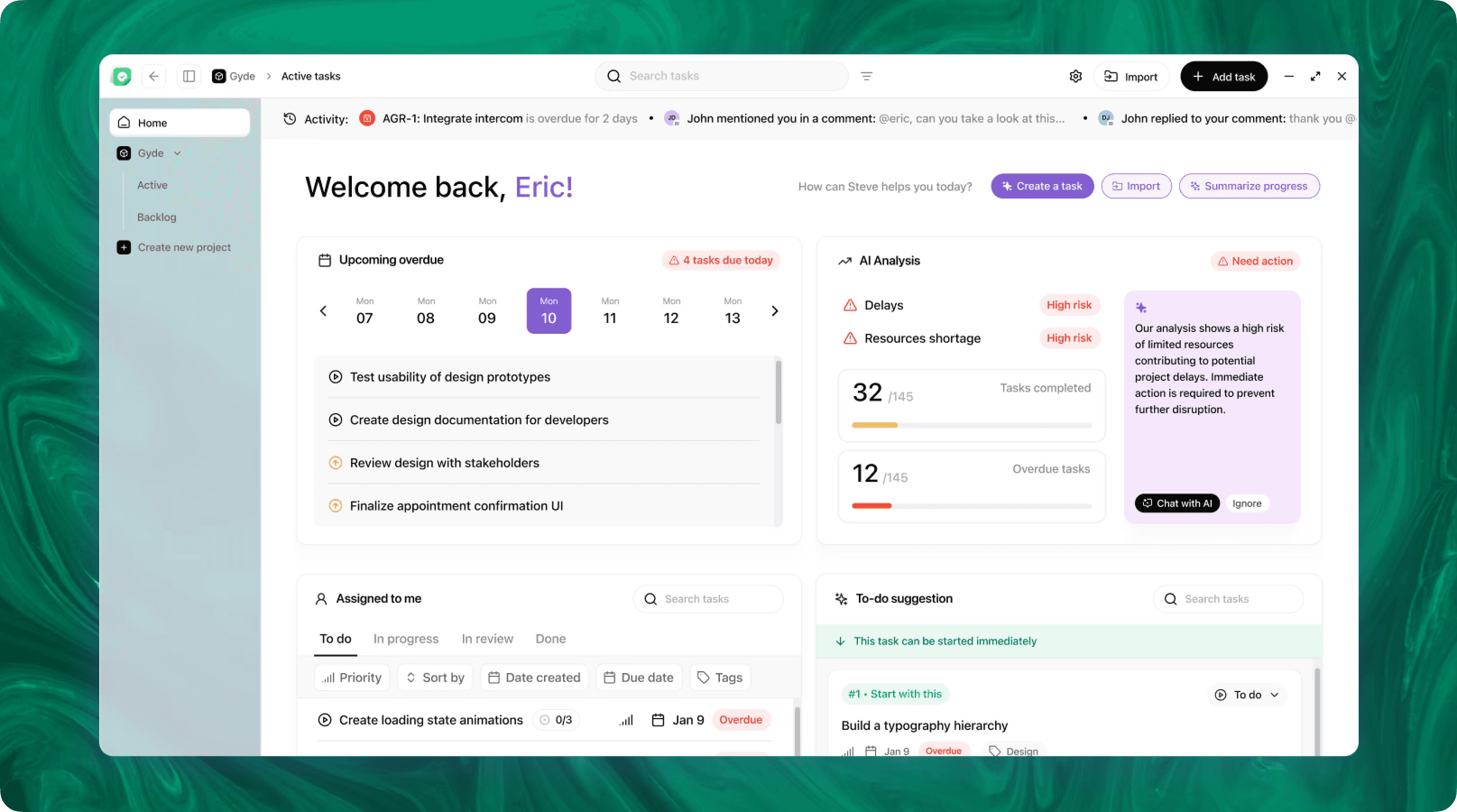
Steve is an AI-native operating system designed to streamline business operations through intelligent automation. Leveraging advanced AI agents, Steve enables users to manage tasks, generate content, and optimize workflows using natural language commands. Its proactive approach anticipates user needs, facilitating seamless collaboration across various domains, including app development, content creation, and social media management.
Conclusion
Moving from a mosaic of workflow tools to an AI OS transforms coordination into continuous operation: conversations replace context-switching, shared memory preserves organizational intent, the inbox becomes an execution surface, and task management becomes a proactive engine. Steve combines these elements into an AI Operating System that automates routine decisions, maintains contextual continuity, and accelerates execution—helping teams focus on judgment rather than logistics. For organizations ready to evolve, an AI OS like Steve turns scattered tools into a single, intelligent layer that runs work more predictably and efficiently.