The Difference Between Ai Tools And Ai Infrastructure
Feb 21, 2026

How Conversational Interfaces Function As Tools: Conversational agents provide immediate, task-focused outputs that solve discrete user needs quickly.
Shared Memory And Agent Collaboration As Infrastructure: Shared memory preserves context and enables multiple agents to produce coherent, coordinated outputs over time.
Integrations, Context, And Task Management: Real-time integrations and automated task boards convert tool outputs into assignable, traceable work.
Practical Implications For Strategy: Tools deliver quick wins; infrastructure delivers scalable, repeatable processes that reduce manual handoffs.
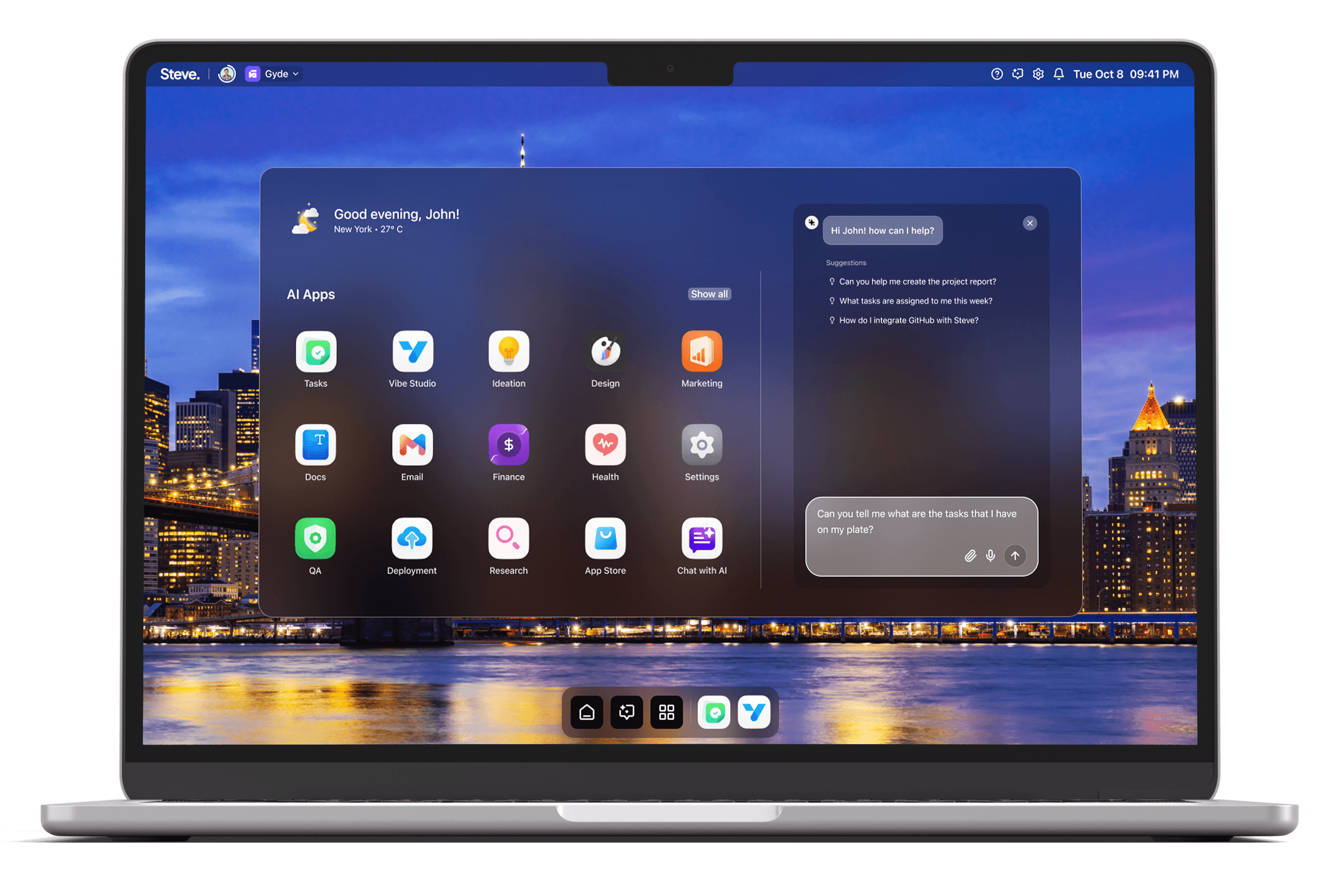
Steve's Role As An AI OS: By combining conversational tools with shared memory and integrations, Steve turns isolated answers into production-ready workflows.
Introduction
Distinguishing AI tools from AI infrastructure is essential for leaders who must decide what to buy, build, or embed in workflows. AI tools are point solutions that solve specific tasks—summarization, drafting, or a chat assistant—while AI infrastructure is the underlying platform that enables those tools to operate at scale, share context, and integrate with business systems. As an AI Operating System, Steve exemplifies the infrastructure layer that both hosts and elevates AI tools: its conversational interface, shared memory system, rich integrations, and task-management automation turn discrete capabilities into continuous, enterprise-grade workflows.
How Conversational Interfaces Function As Tools
Conversational interfaces are classic AI tools: they take prompts and return focused outputs, making them ideal for individual tasks like writing an email draft or extracting a brief from a document. Steve’s conversational interface, powered by advanced agents and LLMs, behaves like this category of tool—fast, interactive, and task-oriented—so a user can ask for a summary, an agenda, or a draft and receive an immediate result.
Practical scenario: a product manager needs a crisp project brief from a long thread. They ask Steve in natural language and get a condensed brief in minutes. That interaction is the tool-level outcome: single-query, high-value output. But the true multiplier is when the same conversational interface is embedded inside an AI OS that preserves context and hands off results to downstream systems—converting a one-off answer into a repeatable process.
Shared Memory and Agent Collaboration as Infrastructure
Where tools stop, infrastructure takes over. A shared memory system is foundational infrastructure: it stores context, tracks state across interactions, and lets multiple AI agents collaborate without repeated manual input. In Steve, shared memory ensures that the conversational outputs are not ephemeral; subsequent agents and sessions reference past decisions, user preferences, and document context to produce consistent, context-aware outcomes.
Practical scenario: a sales rep asks Steve to draft a follow-up email using a previous negotiation note. Because shared memory retains the negotiation context and the preferred tone, the draft aligns with earlier commitments and reduces the risk of contradictory messaging. Later, when a different agent generates a timeline or an action item list for the account, it can read the same memory entries—producing coordinated outputs rather than siloed answers.
Integrations, Context, and Task Management: Infrastructure That Enables Tools
Integrations and task management are infrastructure components that convert tool outputs into operational work. Steve’s direct integrations and file-aware capabilities let its conversational agents access calendars, documents, spreadsheets, and web data in real time; task management boards then translate insights into assignable work and measurable progress. This combination is what distinguishes platform-grade infrastructure from isolated tools.
Practical scenario: an engineer uploads a design spec and asks Steve to generate a list of implementation tasks. Steve’s agents parse the file, reference calendar constraints via integrations, and propose a prioritized task board. The system creates actionable tickets with owners and due dates that sync into ongoing sprints. What began as a tool-level extraction becomes a traceable workflow because infrastructure passes context and state between systems.
Practical Implications For Product and IT Strategy
The difference between tools and infrastructure has immediate purchase and technical implications. Tools are fast wins: deploy a chat assistant or summarizer and gain immediate utility. Infrastructure requires investment but yields durable returns: shared memory reduces repetitive context-setting, integrations automate handoffs, and task-management automation embeds AI into execution loops.
With Steve as an AI OS, organizations get both: the conversational interface provides the familiar tool-level UX, while shared memory, integrations, and task automation ensure outputs are composable and auditable. That reduces friction between discovery and delivery and lowers the cognitive load on teams that must turn AI outputs into action.
Steve
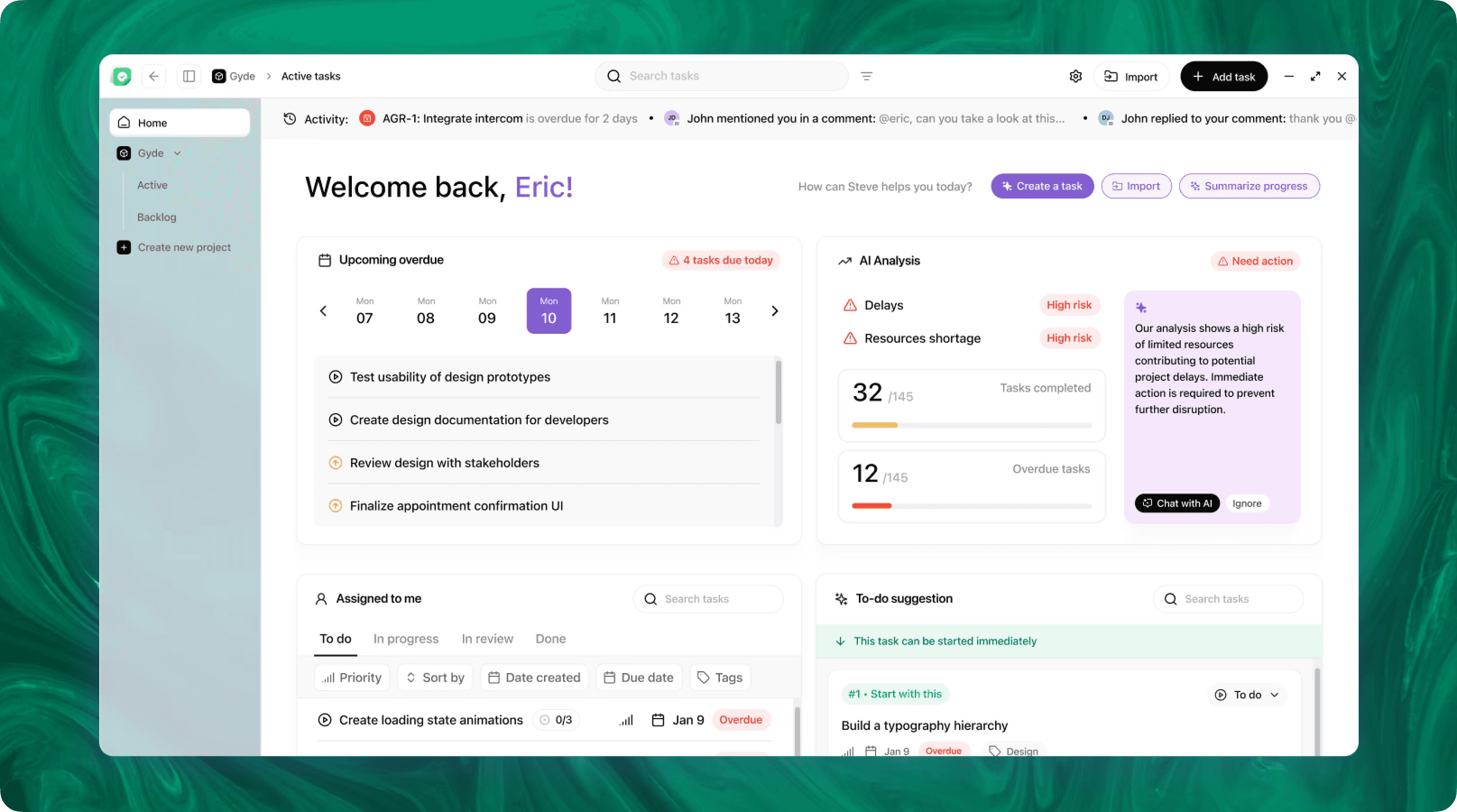
Steve is an AI-native operating system designed to streamline business operations through intelligent automation. Leveraging advanced AI agents, Steve enables users to manage tasks, generate content, and optimize workflows using natural language commands. Its proactive approach anticipates user needs, facilitating seamless collaboration across various domains, including app development, content creation, and social media management.
Conclusion
Understanding the separation between AI tools and AI infrastructure clarifies procurement and architecture choices: tools address discrete needs; infrastructure sustains continuous, context-aware workflows. Steve, as an AI Operating System, bridges those layers—its conversational interface offers task-focused interactions while shared memory, integrations, and task management form the infrastructure that makes those interactions repeatable, coordinated, and production-ready. For teams that need predictable outcomes from AI, investing in an AI OS like Steve shifts the conversation from isolated answers to integrated execution.