The Competitive Advantage Of Operating On An Ai Os
Oct 7, 2026

Contextual Memory Enables Continuous Context: A shared memory lets agents reuse institutional knowledge so actions start from prior decisions instead of blank states.
Faster Communication With AI Email: Smart tagging, thread summaries, and draft replies reduce time spent triaging and responding to critical messages.
Conversational Integration That Executes Workflows: Direct integrations in conversation turn requests into actions across calendars, drives, and trackers.
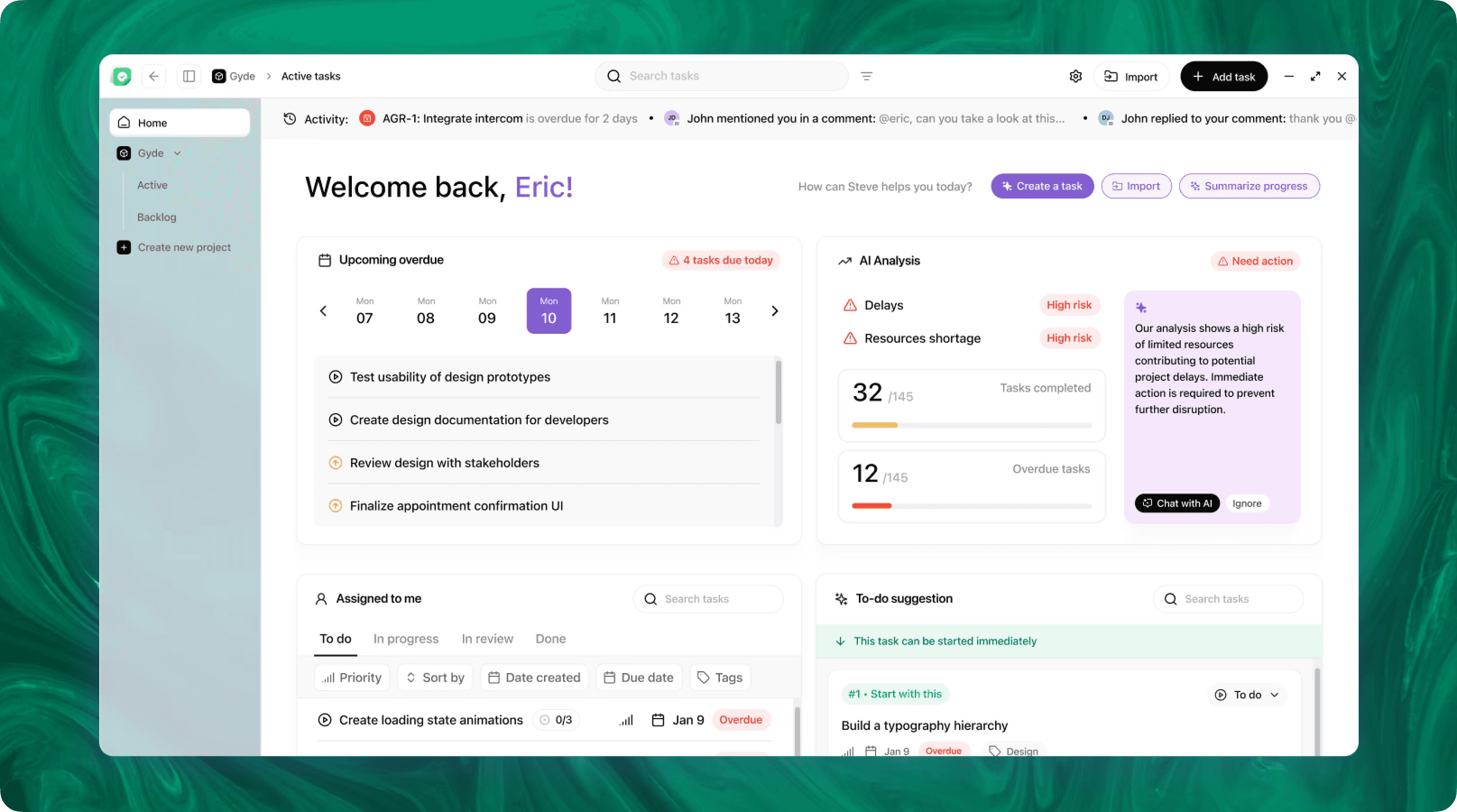
Coordinated Delivery Through AI Task Management: AI-powered boards convert conversational priorities into sprints and tracked tasks, reducing rework.
Combined Effect On Competitive Advantage: Linking memory, inbox, chat, and tasking compresses decision cycles and scales outcomes without linear headcount growth.
Introduction
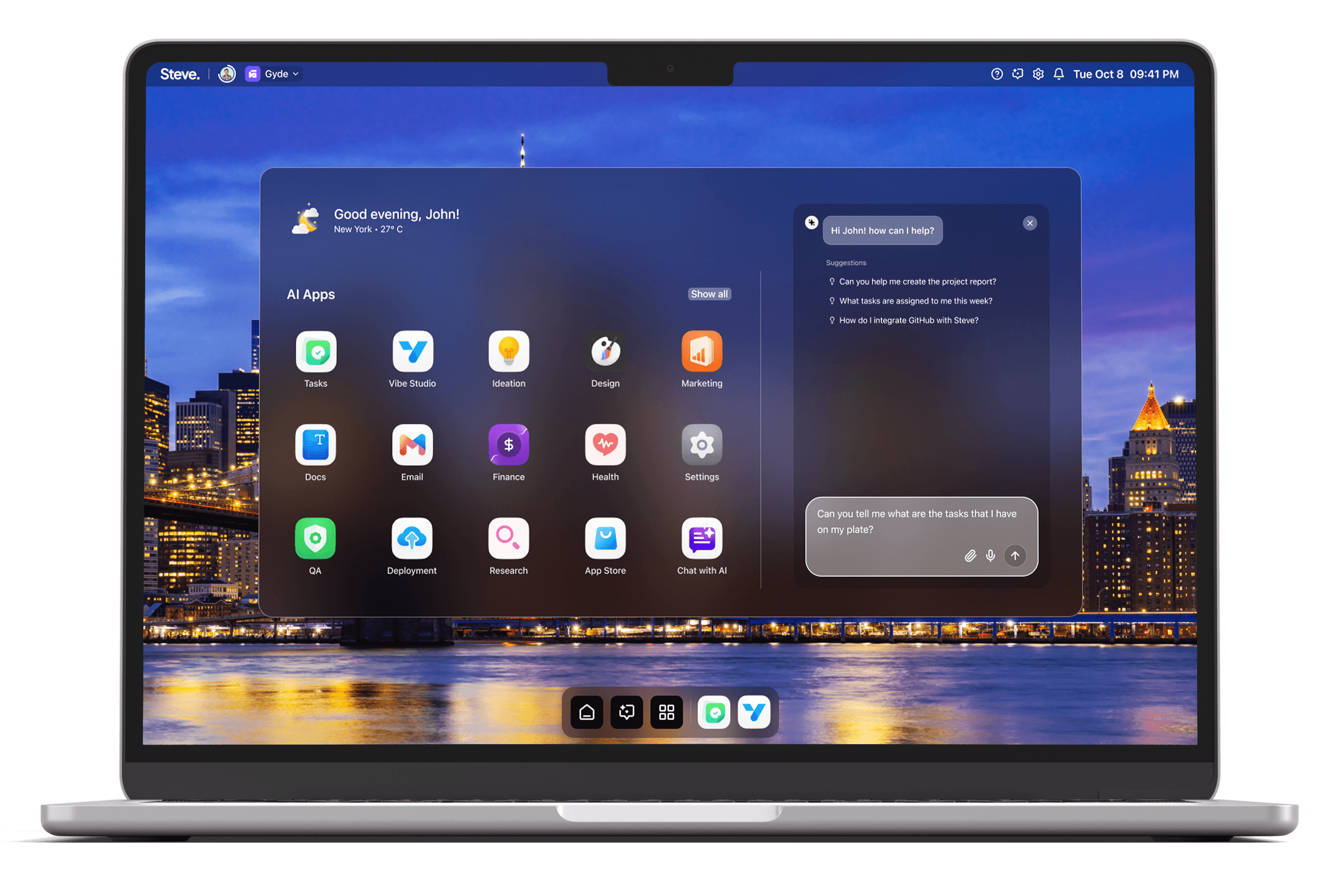
Operating on an AI Operating System is no longer an experimental advantage — it is a structural edge. Organizations that centralize context, automate repetitive work, and stitch communication into execution shorten decision cycles and extract more value from existing teams. Steve, an AI OS built to streamline business operations through intelligent automation, combines a shared memory for agents, a smart inbox, conversational integrations, and AI-powered task management to convert situational knowledge into predictable outcomes.
Contextual Memory Enables Continuous Context
An AI OS delivers advantage when it preserves and reuses organizational context; Steve’s shared memory system lets AI agents interact, collaborate, and produce outputs that reflect history and intent. Rather than treating each query as stateless, Steve retains pertinent facts and prior decisions so subsequent actions require less human re‑explanation. In practice, a product team can ask Steve Chat for the latest roadmap reasoning, and the agents will reference prior meeting notes, relevant documents, and outstanding action items to produce a response that aligns with earlier trade-offs. That continuity reduces churn from repeated context-setting and accelerates execution across distributed teams.
Faster Communication With AI Email
Email remains the primary locus of decisions; Steve’s AI Email transforms it into an active productivity surface. By tagging and categorizing messages, generating concise thread summaries, and offering context‑aware reply suggestions, Steve shrinks the time to triage and respond. A sales lead that arrives in the morning can be auto‑tagged as high priority, summarized, and surfaced with a draft reply that reflects the current deal status pulled from shared memory. Teams reclaim time otherwise lost to scanning long threads, and leaders gain clarity to make faster commitments.
Conversational Integration That Executes Workflows
An AI OS becomes competitive when it turns conversational intent into real work. Steve Chat provides a conversational interface powered by advanced AI agents and LLMs with direct integrations to calendars, email, cloud drives, issue trackers, and dozens of services. Users can schedule meetings, fetch documents, or create issues simply by conversing with Steve, and the system acts on behalf of the team with file awareness and real‑time web searches for up‑to‑date context. For example, an operations manager can ask Steve to prepare a stakeholder packet: Steve Chat locates the latest metrics, summarizes key points, attaches the right files, and proposes calendar slots — all within the same conversational flow. That capability collapses handoffs and turns chat into coordinated execution.
Coordinated Delivery Through AI Task Management
An AI OS converts decisions into tracked outcomes when it links planning, execution, and measurement. Steve’s Task Management boards use AI to organize work, propose sprints, and integrate with tools like Linear so tasks flow from conversation to execution without manual reentry. A product owner describing priorities in Steve Chat can have those priorities translated into a sprint plan, with tasks created, assignees suggested, and progress monitored in one workspace. This tight linkage reduces missed commitments and ensures plans reflect current context and capacity.
Steve
Steve is an AI-native operating system designed to streamline business operations through intelligent automation. Leveraging advanced AI agents, Steve enables users to manage tasks, generate content, and optimize workflows using natural language commands. Its proactive approach anticipates user needs, facilitating seamless collaboration across various domains, including app development, content creation, and social media management.
Conclusion
The competitive advantage of operating on an AI OS derives from five mutually reinforcing effects: continuity of context, accelerated communication, conversational execution, automated coordination, and measurable follow‑through. Steve embodies those effects through a shared memory that preserves institutional knowledge, AI Email that turns messages into actions, Steve Chat that executes across integrated systems, and AI task boards that convert intent into tracked delivery. Companies that adopt an AI Operating System like Steve shorten feedback loops, reduce cognitive overhead, and scale decision throughput without proportionally increasing headcount — a practical advantage in speed, alignment, and resilience.