The Case For A Conversational Layer Over Business Software
Oct 11, 2026

In-Context Email And Conversation: Embedding conversational assistance in the inbox reduces context switching and speeds replies through summaries and draft suggestions.
One Conversational Agent Across Tools: A unified chat that integrates with calendars, storage, and dev tools lets users perform cross-app actions without leaving the conversation.
Shared Memory For Persistent Context: Memory that persists project facts and preferences prevents repeated explanations and ensures consistency in recommendations.
Task Automation And Decision Support: Conversational task generation and sprint proposals convert planning prompts into prioritized, trackable work items.
Platform Benefit: When an AI Operating System orchestrates conversation, intent becomes traceable action and teams gain measurable time savings.
Introduction
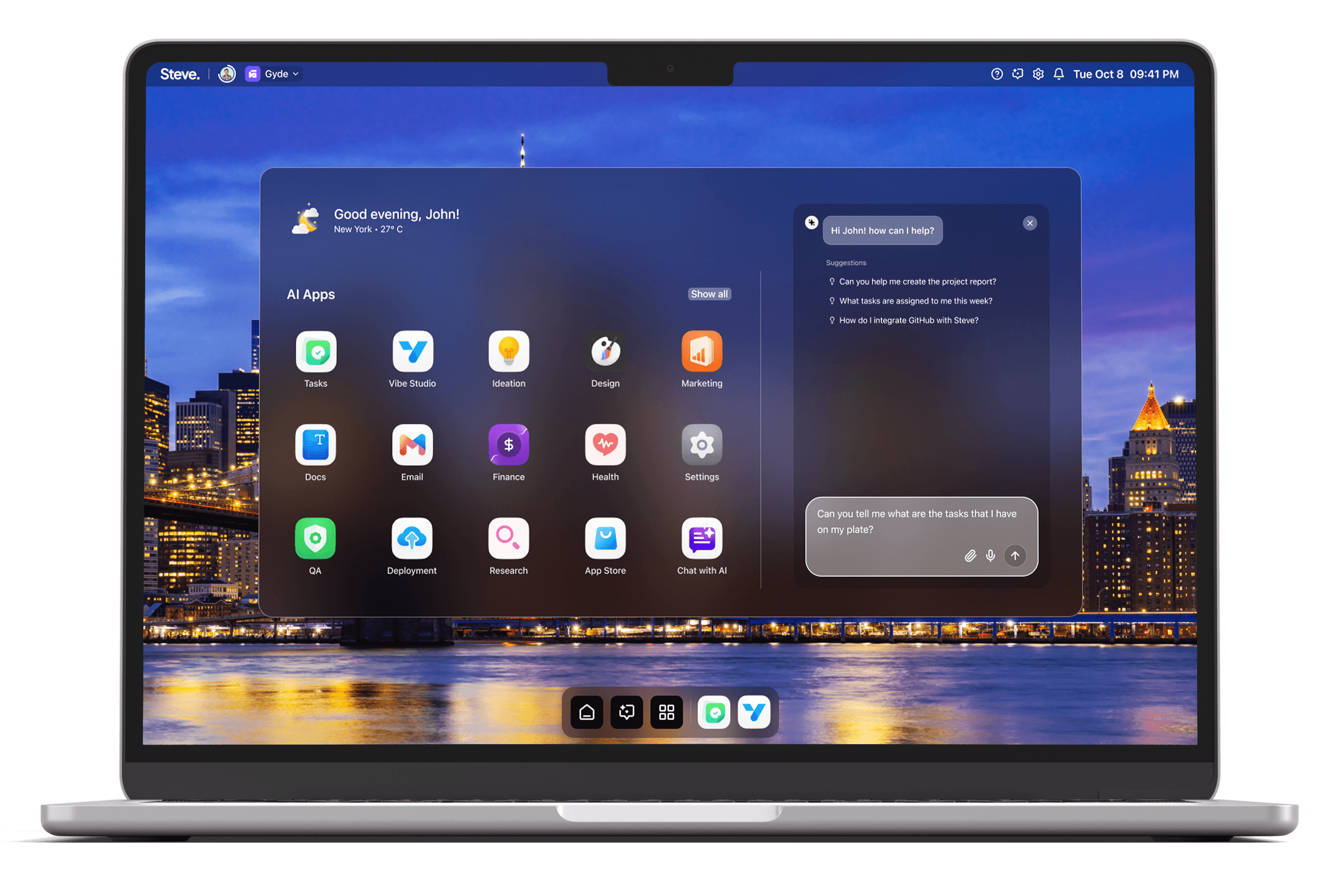
A conversational layer over business software turns fragmented interfaces into a continuous, human-centered workflow: ask, act, and record without context loss. The case for that layer is practical — it reduces friction, preserves institutional context, and accelerates decisions — and it becomes actionable when an AI Operating System orchestrates it. Steve is an AI OS designed to embed conversation into core workstreams, enabling teams to treat software as a responsive collaborator rather than a set of disconnected tools.
In-Context Email And Conversation
Email is where decisions and obligations accumulate; treating it as a place to converse rather than a silo eliminates repetitive context switching. Steve’s AI Email embeds conversational assistance directly in the inbox: the system syncs in real time, tags and prioritizes threads, generates concise summaries of long conversations, and offers context-aware reply suggestions. In practice, a product lead can open a months-long procurement thread, read a two-sentence AI summary, ask the chat to draft a reply that aligns with current sprint priorities, and send it without leaving the inbox — preserving thread history and eliminating the need to copy context into a separate drafting tool.
One Conversational Agent Across Tools
A single conversational agent reduces the cognitive overhead of juggling multiple apps by performing actions, fetching documents, and reflecting state through the same interface. Steve Chat connects conversationally to calendars, email, Drive, Sheets, Notion, GitHub, and dozens more, so a user can ask the agent to schedule a review, surface the latest spec, or create an issue — all in the same chat. For example, a program manager can say, “Find the latest roadmap, create a task for the mobile sprint, and propose three candidate review times next week,” and Steve will assemble the context, create the task, and present scheduling options in-line. That continuity lets teams treat the conversational layer as a command surface and a shared hub for action.
Shared Memory For Persistent Context
A transient exchange is useful; persistent, structured context is transformational. Steve’s shared memory system lets AI agents remember project facts, preferences, and prior decisions so subsequent conversations retain relevance. Imagine onboarding a new stakeholder: instead of rehashing past choices, the conversational layer can recall the agreed API timeline, the chosen vendor constraints, and prior risk notes, then tailor recommendations accordingly. That memory reduces repeated explanations, accelerates alignment, and ensures advice or actions are consistent with historical context.
Task Automation And Decision Support
Embedding conversation into task workflows turns planning into execution without manual translation of intent into tickets or boards. Steve’s Task Management integrates with Linear and uses AI to propose sprints, create or import tasks from prompts, and track execution progress. A product owner can describe a release scope conversationally and have Steve generate a prioritized task board, suggest sprint boundaries, and surface dependencies — all while keeping the rationale visible in the chat. This makes planning iterative and audible: teams can question assumptions, adjust priorities, and see the downstream task structure update in real time.
Steve
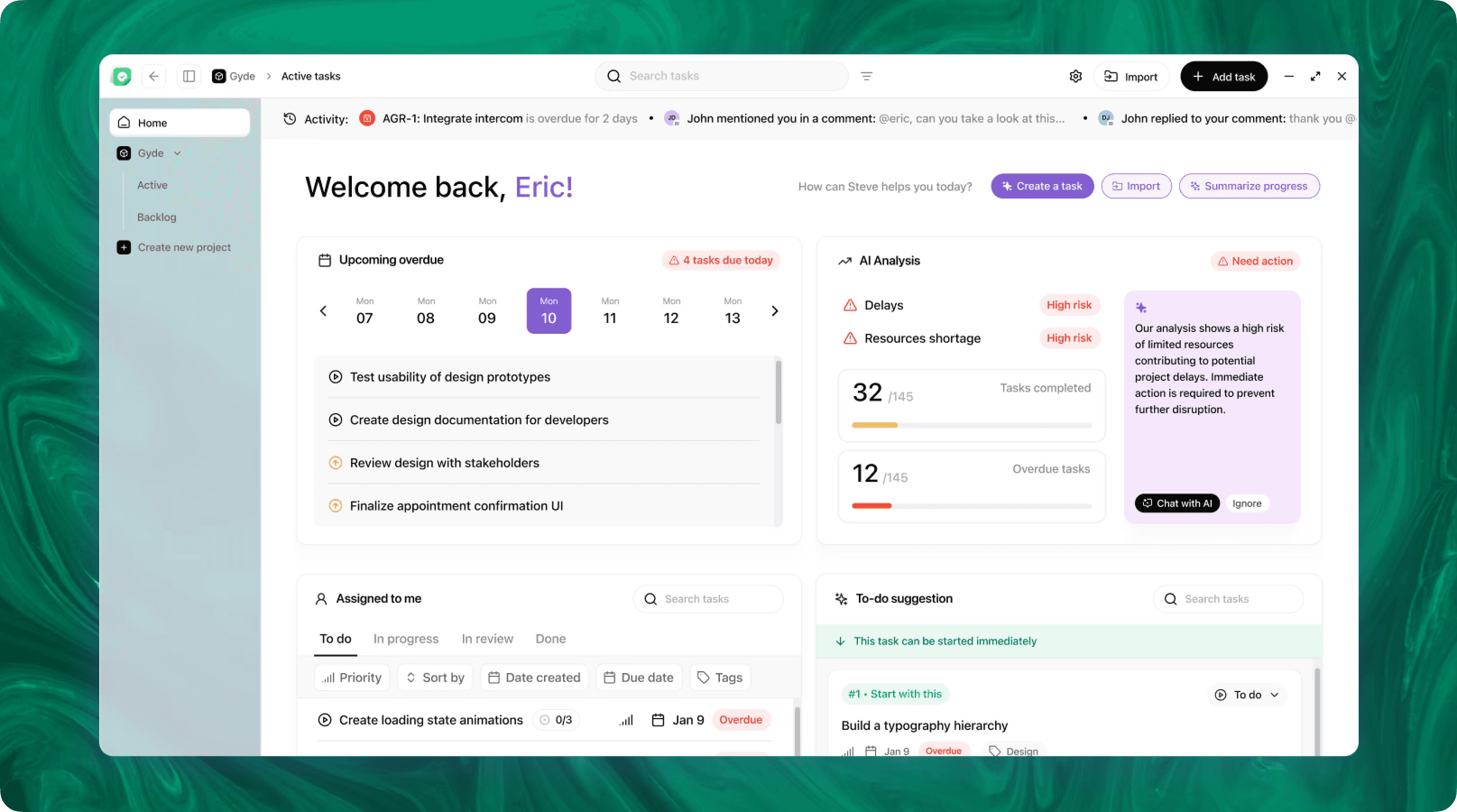
Steve is an AI-native operating system designed to streamline business operations through intelligent automation. Leveraging advanced AI agents, Steve enables users to manage tasks, generate content, and optimize workflows using natural language commands. Its proactive approach anticipates user needs, facilitating seamless collaboration across various domains, including app development, content creation, and social media management.
Conclusion
A conversational layer over business software reduces friction, preserves context, and converts intent into recorded action. When that layer is delivered by an AI Operating System, it becomes a platform-level capability: Steve combines in-inbox conversation, a unified chat that acts across services, shared memory to preserve context, and task automation to close the loop between intent and execution. The result is faster decisions, fewer meetings spent repeating context, and a traceable record of why and how work moved forward — making the conversational layer not just a convenience but a productivity multiplier for modern organizations.