Steve for Procurement: Vendor Risk and Compliance Tracking
Jan 14, 2026

Centralized Vendor Intelligence: File-aware chat plus shared memory turns scattered contracts and spreadsheets into a persistent, queryable vendor knowledge base.
Continuous Compliance Monitoring: AI Email tagging and summaries surface incident signals and pair them with real-time web context for faster risk detection.
Automated Remediation Workflows: Task management converts identified risks into prioritized, assignable tasks and integrates with development trackers to enforce remediation.
Auditability And Collaboration: Persistent memory and chat records create auditable decision trails linking evidence, analysis, and actions.
Operational Benefit: Combining conversational AI, memory, email intelligence, and task orchestration reduces review overhead and accelerates vendor risk closure.
Introduction
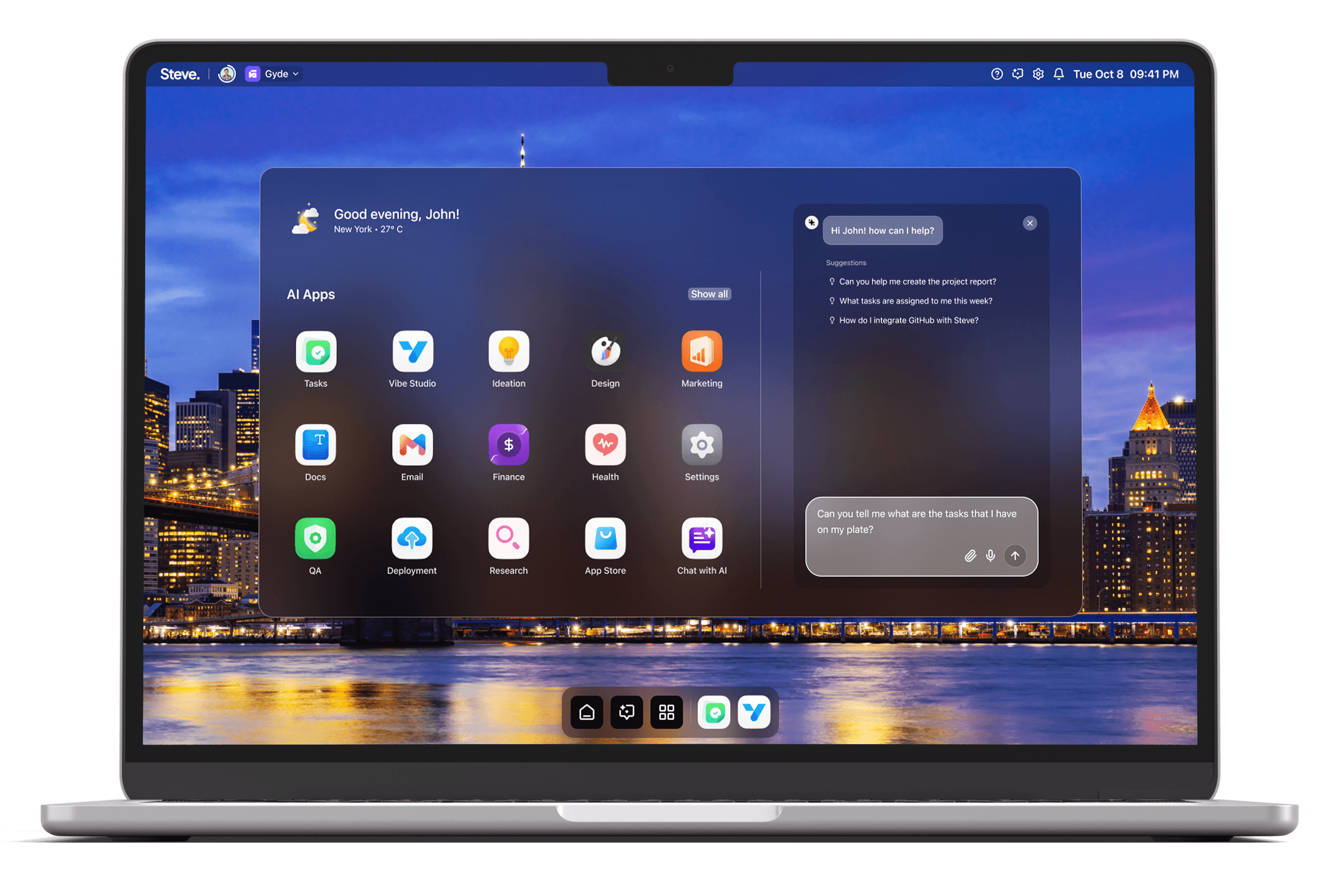
Vendor risk and compliance tracking demands continuous context, fast evidence review, and coordinated remediation. Steve, an AI Operating System, addresses these needs by combining conversational intelligence, persistent memory, email-level summarization, and task orchestration so procurement teams can detect, document, and remediate vendor issues with less friction.
Centralized Vendor Intelligence
Steve ingests contracts, security questionnaires, spreadsheets, and correspondence via its file-aware chat so procurement teams get a single, searchable source of vendor truth. Upload PDFs or spreadsheets and ask conversational questions—Steve extracts clauses, identifies insurance and SLA terms, and summarizes exposure in plain language. Because Steve maintains shared memory across agents and sessions, those extracted facts persist: the next user query can build on prior findings without re-uploading documents. In practice, a procurement lead can upload a supplier NDA and later ask for all vendors with data-residency exceptions; Steve returns consistent results informed by prior parsing, reducing duplicated review work.
Continuous Compliance Monitoring and Alerts
Steve’s AI Email integration tags and summarizes incoming vendor communications to surface compliance signals rapidly. When a supplier email references an incident, nonconformance, or contract amendment, Steve auto-classifies and summarizes the thread so analysts see key facts immediately. Coupled with Steve’s real-time web search capability inside chat, teams can enrich email-derived signals with external alerts—such as breach reports or regulator notices—without leaving the workspace. A compliance analyst who receives an outage notification can rely on Steve to (1) summarize the vendor thread, (2) pull related historical vendor context from shared memory, and (3) surface recent public reports that affect the risk posture.
Automated Remediation Workflows
Steve’s task management tools translate risk findings into prioritized remediation work and keep execution visible. After a risk summary, Steve can create structured tasks on AI-powered boards, propose owners and SLAs, and integrate with Linear or other trackers to propagate assignments into engineering or legal workflows. The system proposes sprints and tracks progress while preserving contextual links back to the original evidence (emails, contracts, and chat excerpts). In a practical scenario, a security gap discovered in vendor onboarding becomes an automated remediation sequence: Steve opens tasks, assigns owners, suggests deadlines, and surfaces the underlying contract clause and email trail so teams execute fixes with clear traceability.
Auditability And Collaborative Records
Because Steve retains shared memory and chat-aware records, conversations and decisions become auditable artifacts for procurement and compliance reviews. The chat history couples uploaded documents with the reasoning used to reach conclusions, and Steve’s logging captures the conversational prompts and outputs that informed vendor decisions. That persistent context reduces disputes during audits: reviewers can reference the exact evidence set and the AI-generated summaries that led to approval, remediation, or contract negotiation. Procurement teams use these records to demonstrate consistent, repeatable decision paths across vendors and time.
Steve
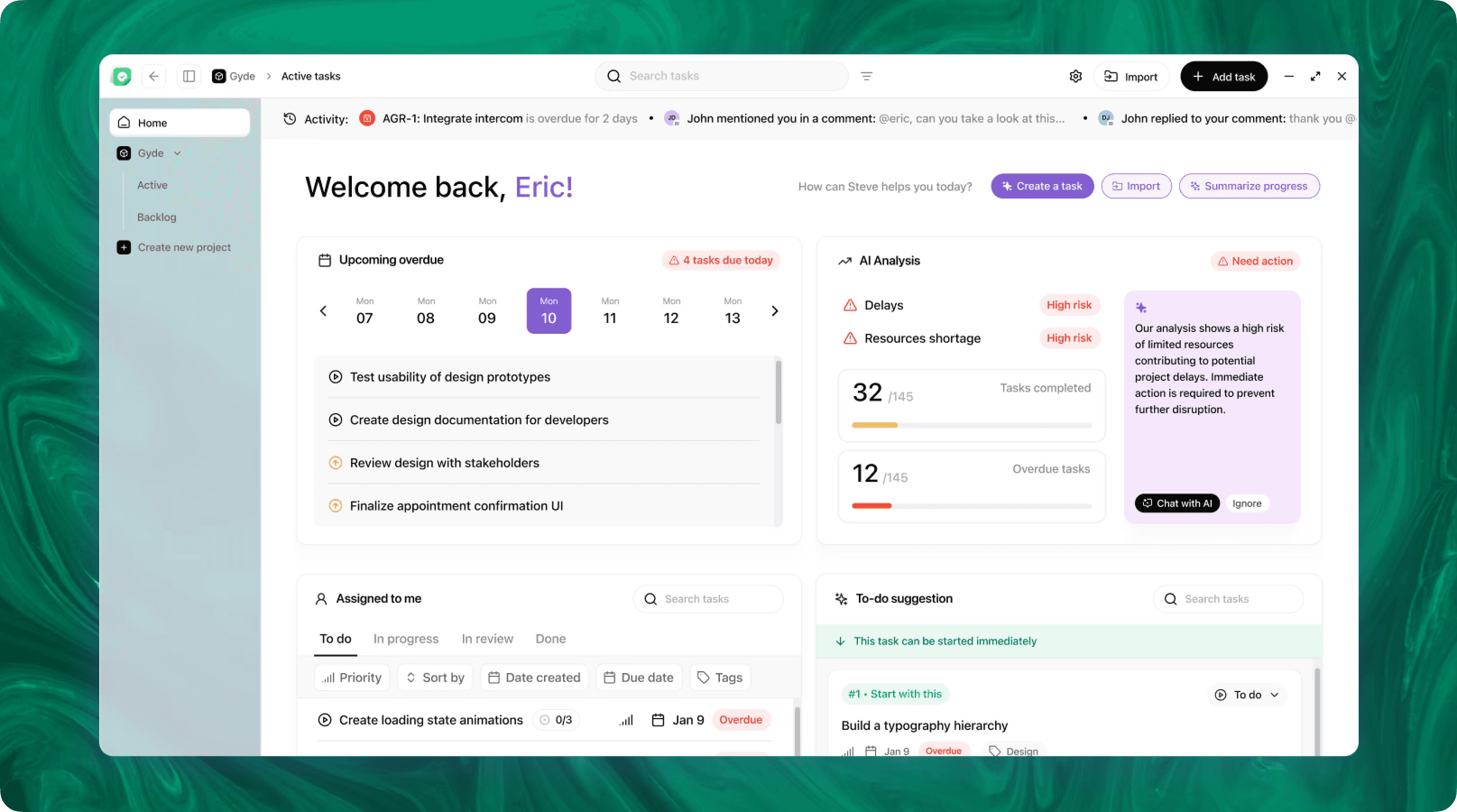
Steve is an AI-native operating system designed to streamline business operations through intelligent automation. Leveraging advanced AI agents, Steve enables users to manage tasks, generate content, and optimize workflows using natural language commands. Its proactive approach anticipates user needs, facilitating seamless collaboration across various domains, including app development, content creation, and social media management.
Conclusion
Vendor risk and compliance tracking requires persistent context, fast evidence synthesis, and coordinated follow-through. As an AI OS, Steve consolidates vendor documents into a conversational knowledge base, summarizes and surfaces risk signals from email and web sources, converts findings into tracked remediation tasks, and preserves an auditable collaboration trail. Procurement teams that adopt Steve reduce review overhead, close issues faster, and maintain clearer records—turning vendor risk management from manual triage into an orchestrated, evidence-driven process.