Steve For Marketing Agencies: Campaign Progress Tracking
Nov 24, 2025

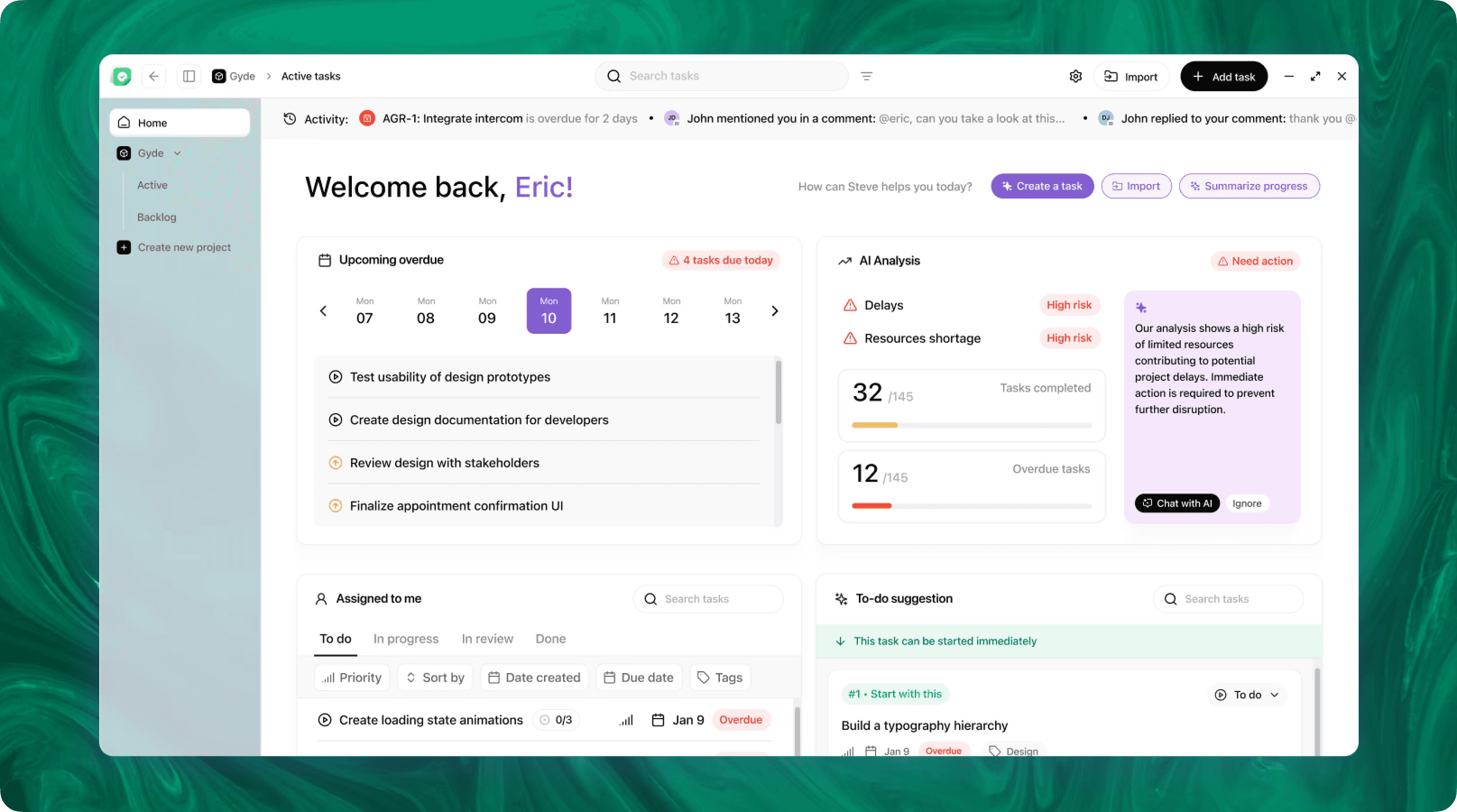
Centralized Progress Boards And Automated Sprints: AI-powered task boards unify tasks, import from Linear, and propose sprints so campaign work is tracked and actionable.
Real-Time Coordination Through Conversational Integrations: Steve’s chat links calendars and documents, enabling schedule changes and asset retrieval without context switching.
Email-Driven Status And Client-Facing Summaries: Smart inbox features auto-tag threads, summarize long exchanges, and generate on-brand progress updates tied to task status.
Persistent Context With Shared Memory: A shared memory system ensures all agents and modules reference the same campaign facts, reducing contradictions and repeated status queries.
Workflow Benefit: Combining boards, conversations, email automation, and persistent context reduces manual reporting, accelerates decisions, and keeps campaigns on schedule.
Introduction
Marketing campaigns live or die on momentum: timely creative, coordinated tasks, clear ownership, and crisp client communication. For agencies, tracking that momentum across channels and stakeholders is a constant operational burden. Steve, an AI Operating System built to streamline business operations through intelligent automation, centralizes the pieces that matter so teams see true campaign progress in actionable terms. This article shows how Steve combines AI-powered task boards, conversational integrations, smart email handling, and shared memory to make campaign tracking verifiable, collaborative, and fast.
Centralized Progress Boards And Automated Sprints
Campaign status is only meaningful when tasks, owners, and deadlines are unified. Steve’s Task Management boards provide a single workspace where creative deliverables, media buys, analytics pulls, and client approvals live together. The boards import and sync tasks from Linear or create new ones from AI prompts, so work that begins in conversation converts to tracked items automatically.
Practically, a campaign PM can ask Steve to “create a pre-launch sprint with assets, media buys, and a QA pass,” and the AI proposes a sprint plan with timelines and assigned owners. As assets move from brief to review to publish, the board updates progress bars and flags blocked items. That visibility reduces status meetings: stakeholders open one view, see execution percentages, and identify bottlenecks by task rather than guessing from fragmented messages.
Real-Time Coordination Through Conversational Integrations
Campaigns depend on synchronous coordination across calendars, documents, and asset stores. Steve’s conversational interface connects to Google Calendar, Gmail, Drive, Sheets, Notion, and other tools so teams can surface dates, files, and notes without context switching. Because Steve is an AI OS, those integrations are conversational—ask to reschedule a shoot, fetch the latest creative brief, or pull last week’s performance sheet and receive immediate, context-rich responses.
In a realistic scenario, the media planner finds that a key creative is delayed; they ask Steve in chat to reschedule the launch and notify stakeholders. Steve reads calendar conflicts, suggests new dates, and drafts update messages tied to the task board. This reduces friction: decisions happen in one thread and propagate to calendars and task statuses, keeping the campaign timeline coherent.
Email-Driven Status And Client-Facing Summaries
Client communication is often the most visible indicator of progress—and the most time-consuming to prepare. Steve’s AI Email capabilities bring a smart inbox into the same ecosystem: emails are auto-tagged, long threads receive concise summaries, and context-aware reply suggestions align messaging with ongoing campaign tasks.
For agency account leads, this matters on two fronts. Internally, AI-generated summaries extract action items and deadlines from client threads and link them to tasks on the board so nothing falls through the cracks. Externally, Steve can draft crisp, on-brand progress updates that reference current sprint milestones and specific deliverables, enabling faster, more accurate client reporting. The result is fewer manual status compilations and more predictable client experiences.
Persistent Context With Shared Memory
Accurate progress tracking requires consistent context across tools and conversations. Steve’s shared memory system ensures AI agents and modules retain campaign context—briefs, approvals, creative versions, performance baselines—so every query and automated action draws from the same factual record. That reduces repetitive status checks and contradictory outputs when different team members or AI agents act on campaign data.
Imagine a new member joining mid-campaign: rather than digging through disparate docs and threads, they query Steve and receive a synthesized timeline, active tasks, open approvals, and links to the latest assets. Because memory persists across chat, email summaries, and task boards, updates made in one surface reflect in others, preserving a single source of truth for progress reporting.
Steve
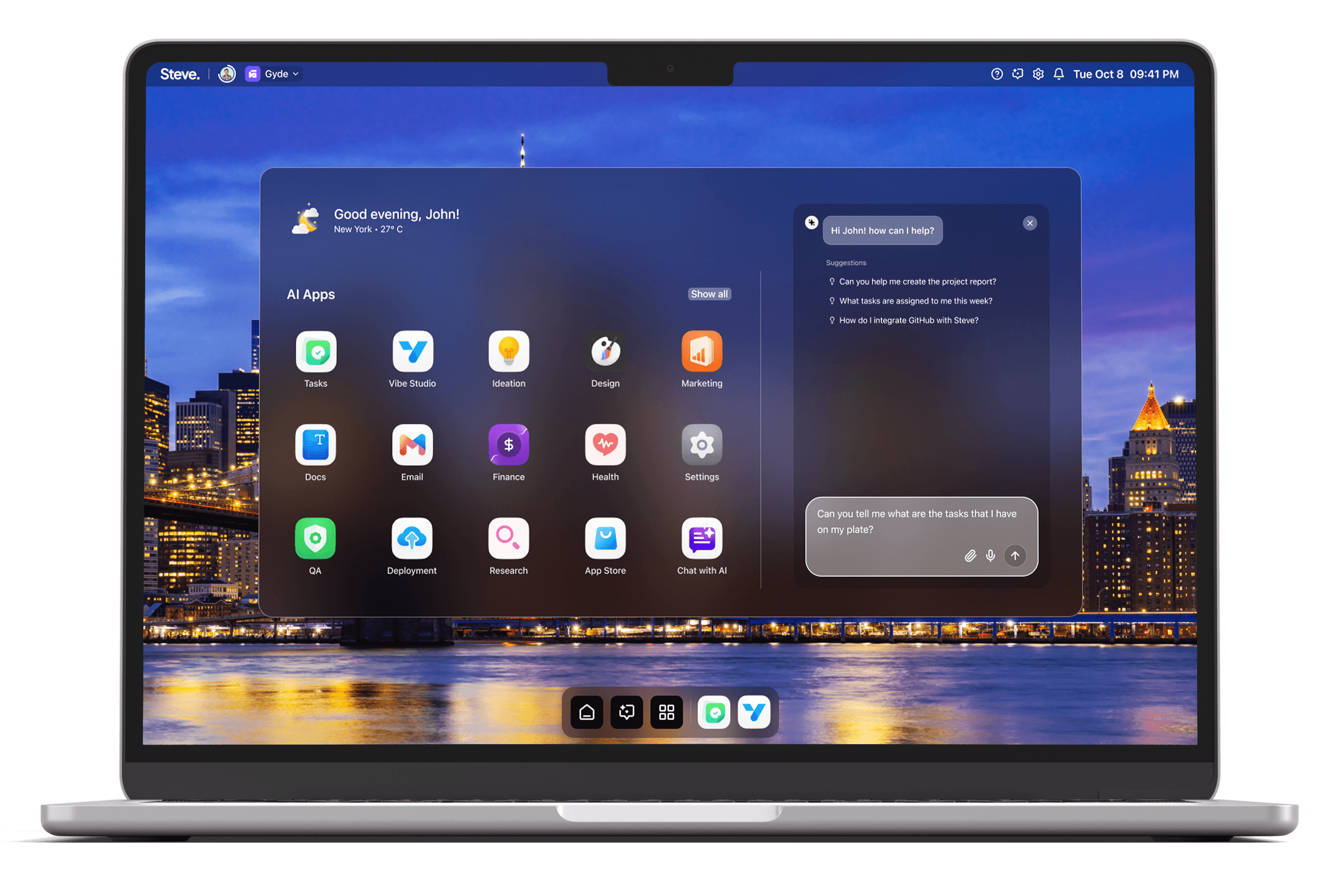
Steve is an AI-native operating system designed to streamline business operations through intelligent automation. Leveraging advanced AI agents, Steve enables users to manage tasks, generate content, and optimize workflows using natural language commands. Its proactive approach anticipates user needs, facilitating seamless collaboration across various domains, including app development, content creation, and social media management.
Conclusion
Tracking campaign progress in an agency requires more than dashboards; it requires the orchestration of tasks, communication, and context. As an AI OS, Steve ties those layers together: AI-powered task boards keep execution visible and suggest sprints; conversational integrations accelerate coordination across calendars and files; AI Email automates summaries and client updates; and shared memory preserves consistent context across agents. The combined effect is faster decisions, fewer status meetings, and clearer client communication—so agencies can focus effort on creative execution rather than manual tracking.