Steve For Logistics Firms: Shipment Coordination Automation
Dec 3, 2025

Conversational Orchestration With Integrations: Natural-language chat plus integrations (Calendar, Gmail, Sheets) lets planners coordinate manifests and schedule changes from one interface.
Shared Memory And Agent Collaboration: Persistent memory aligns multiple AI agents so recommendations and communications stay consistent across the shipment lifecycle.
AI Email For Exception Management: Smart inbox tagging, thread summaries, and context-aware reply drafts speed exception resolution and reduce manual drafting.
Task Management For Execution And Visibility: AI-driven boards and Linear integration convert plans into tracked tasks with linked context and proposed sprints.
Operational Impact: Combining conversation, memory, email, and task automation compresses coordination loops and improves on-time delivery performance.
Introduction
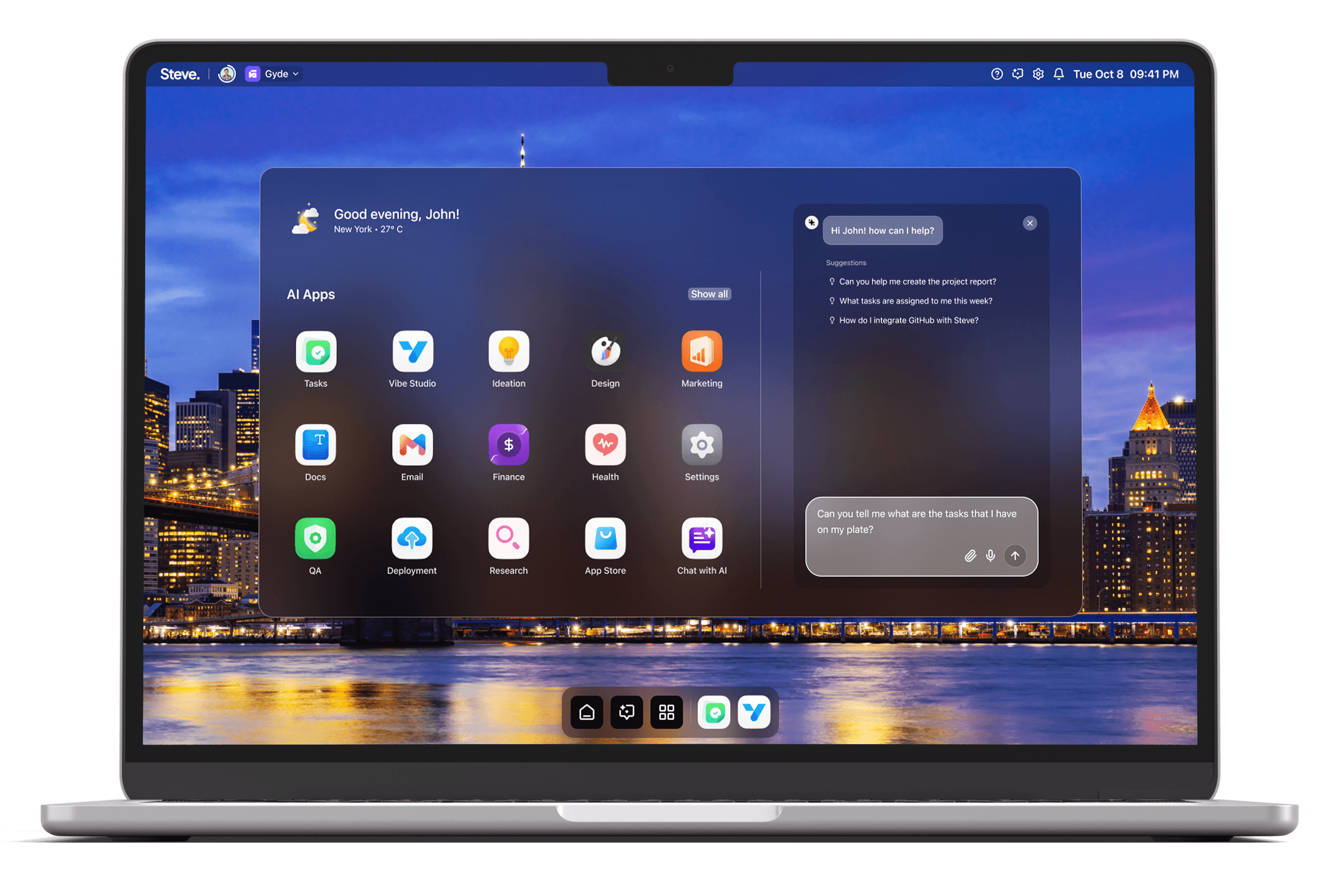
Shipment coordination is the operational backbone of any logistics firm: aligning carriers, schedules, inventories, and exceptions determines on-time performance and margins. Steve, an AI Operating System, accelerates and tightens that coordination by combining conversational AI, persistent agent memory, intelligent email handling, and AI-driven task management into a single workflow layer. As an AI OS, Steve reduces manual handoffs, speeds decision cycles, and keeps every stakeholder aligned through context-aware automation.
Conversational Orchestration With Integrations
Steve’s conversational interface connects planners, carriers, and operations through natural-language workflows that run on top of existing tools. By integrating with Google Calendar, Gmail, Sheets, and other services, Steve can surface manifests, check slot availability, or read a routing spreadsheet from a single chat. A dispatcher can ask Steve to “find today’s late inbound shipments, summarize root causes, and propose reassignments,” and Steve will gather calendar windows, spreadsheet ETAs, and recent email threads to produce an action plan.
Practical scenario: a last-minute port delay threatens multiple deliveries. Rather than calling and copying teams across channels, a logistics manager queries Steve in chat; Steve synthesizes calendar conflicts, carrier emails, and spreadsheet ETAs, then proposes revised pickup windows and tentative carrier swaps. The conversational layer lets teams accept, refine, or push those changes through follow-up prompts, collapsing a multi-hour coordination loop into minutes.
Shared Memory and Agent Collaboration
Steve’s shared memory system lets multiple AI agents retain and surface evolving shipment context so decisions remain consistent across interactions. Memory stores shipment histories, exception rationales, and stakeholder preferences so follow-up questions don’t require repeating details. Agents use that shared context to collaborate—one agent analyzes ETA trends while another drafts stakeholder messages—producing coordinated outputs that reflect the same operational picture.
Practical scenario: a high-priority pallet moves between cross-docks. An operations agent records the transfer and updated ETA to shared memory; the scheduling agent then detects a downstream conflict and suggests a contingency route, while the communications agent prepares an owner-facing update. Because agents operate on the same memory, recommendations remain aligned and traceable, reducing contradictory instructions and finger-pointing during escalations.
AI Email For Exception Management And Stakeholder Communication
AI Email centralizes and accelerates the most communication-heavy part of logistics: exception handling. Steve’s smart inbox tags critical threads, generates concise summaries of long chains, and offers context-aware reply drafts that reference manifest details or schedule windows from shared memory. This reduces time spent composing emails and ensures responses reflect the latest operational data.
Practical scenario: a carrier provides a late-notice POD (proof of delivery) discrepancy in a long thread. AI Email extracts the salient facts, tags the message as an exception, and generates a draft that references exact line items from a recently uploaded spreadsheet. The operations lead can edit or send the draft directly, while Steve records the response and outcome in shared memory so downstream teams see the resolution.
Task Management For Execution And Visibility
Steve’s AI-powered task boards translate conversational plans and email actions into tracked work items. With Linear integration and native planning features, Steve can create tasks from prompts, propose execution sprints for recovery plans, and track progress against KPIs. Tasks include linked context—emails, calendar slots, and spreadsheet rows—so teams have the evidence they need to act quickly.
Practical scenario: after accepting Steve’s contingency plan for delayed shipments, the system spins up a task board with assigned owners, deadlines, and linked carrier contacts. Steve proposes a prioritized sprint to clear the backlog and updates status as tasks complete, keeping leadership informed through summary messages or calendar snapshots.
Steve
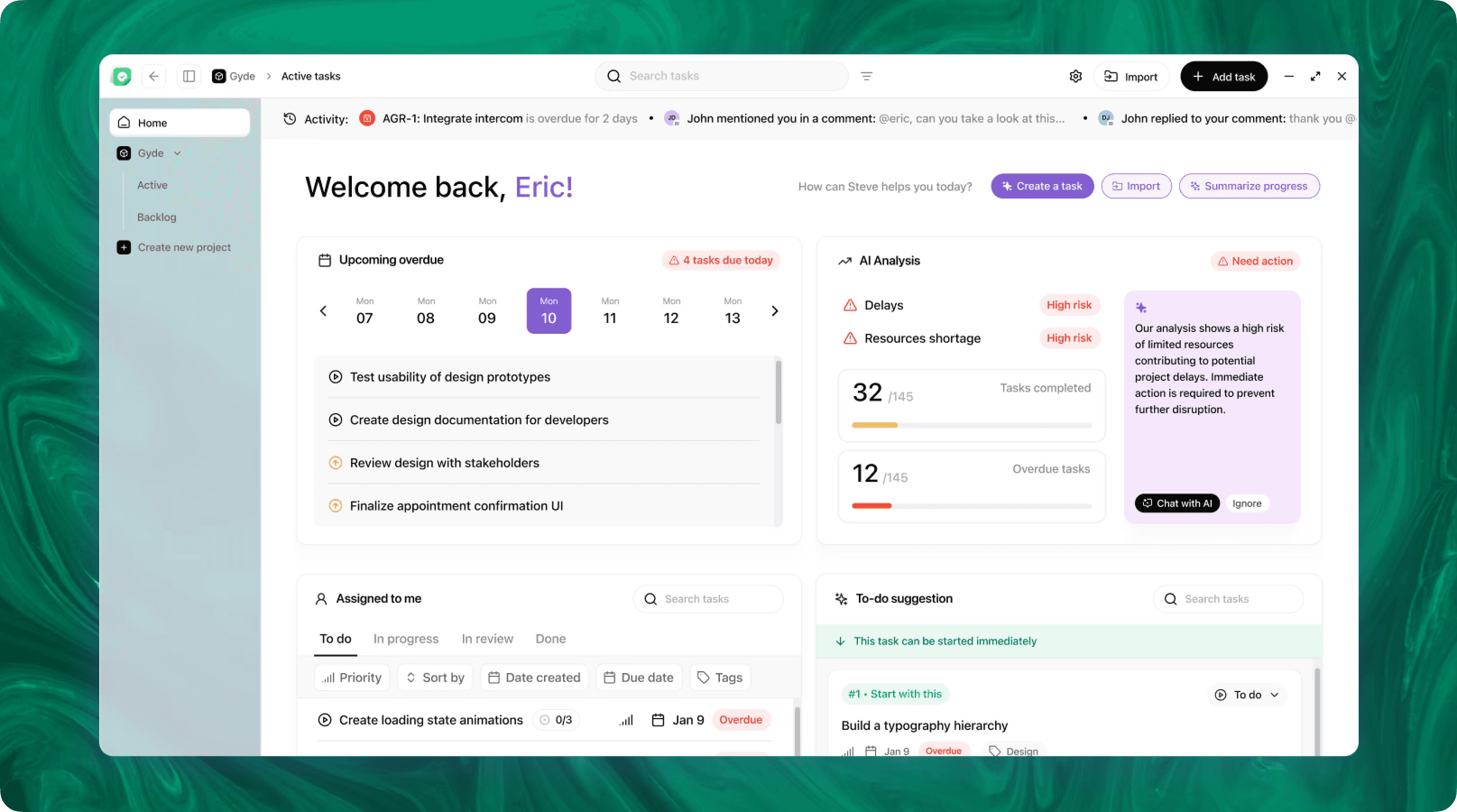
Steve is an AI-native operating system designed to streamline business operations through intelligent automation. Leveraging advanced AI agents, Steve enables users to manage tasks, generate content, and optimize workflows using natural language commands. Its proactive approach anticipates user needs, facilitating seamless collaboration across various domains, including app development, content creation, and social media management.
Conclusion
For logistics firms focused on shipment coordination automation, Steve combines conversational orchestration, shared agent memory, intelligent email handling, and AI task management to shrink coordination cycles and improve reliability. As an AI Operating System, Steve turns scattered schedules, long email threads, and spreadsheet-based planning into a cohesive, actionable workflow—so teams spend less time reconciling information and more time executing deliveries on time.