Steve for IT Admins: Automated Access Control Requests
Dec 5, 2025

Conversational Intake And Triage: Natural-language capture turns free-form requests into complete, structured access tickets that minimize clarification cycles.
Policy-Aware Decisioning With Shared Memory: Persistent policy context lets agents validate requests against current rules and recommend compliant scopes.
Orchestration Of Approvals And Task Automation: Integrations plus Task Management automate routing, assignment, and provisioning handoffs while preserving human oversight where required.
Auditing, Logging, And Continuous Improvement: File-aware chat logging and LangFuse provide detailed audit trails and metrics for process optimization and compliance.
Operational Benefit: Combined, these capabilities reduce manual effort, shorten approval times, and create a repeatable, auditable access-control lifecycle.
Introduction
IT administrators face repetitive, risk-prone access control requests that tie up ops teams and slow onboarding. Steve, an AI Operating System, streamlines those flows by converting conversational requests into policy-checked, auditable outcomes—reducing manual steps while preserving security and oversight. This article explains how Steve uses conversational AI, shared memory, integrations, and task automation to accelerate access-control request lifecycles for IT teams.
Conversational Intake And Triage
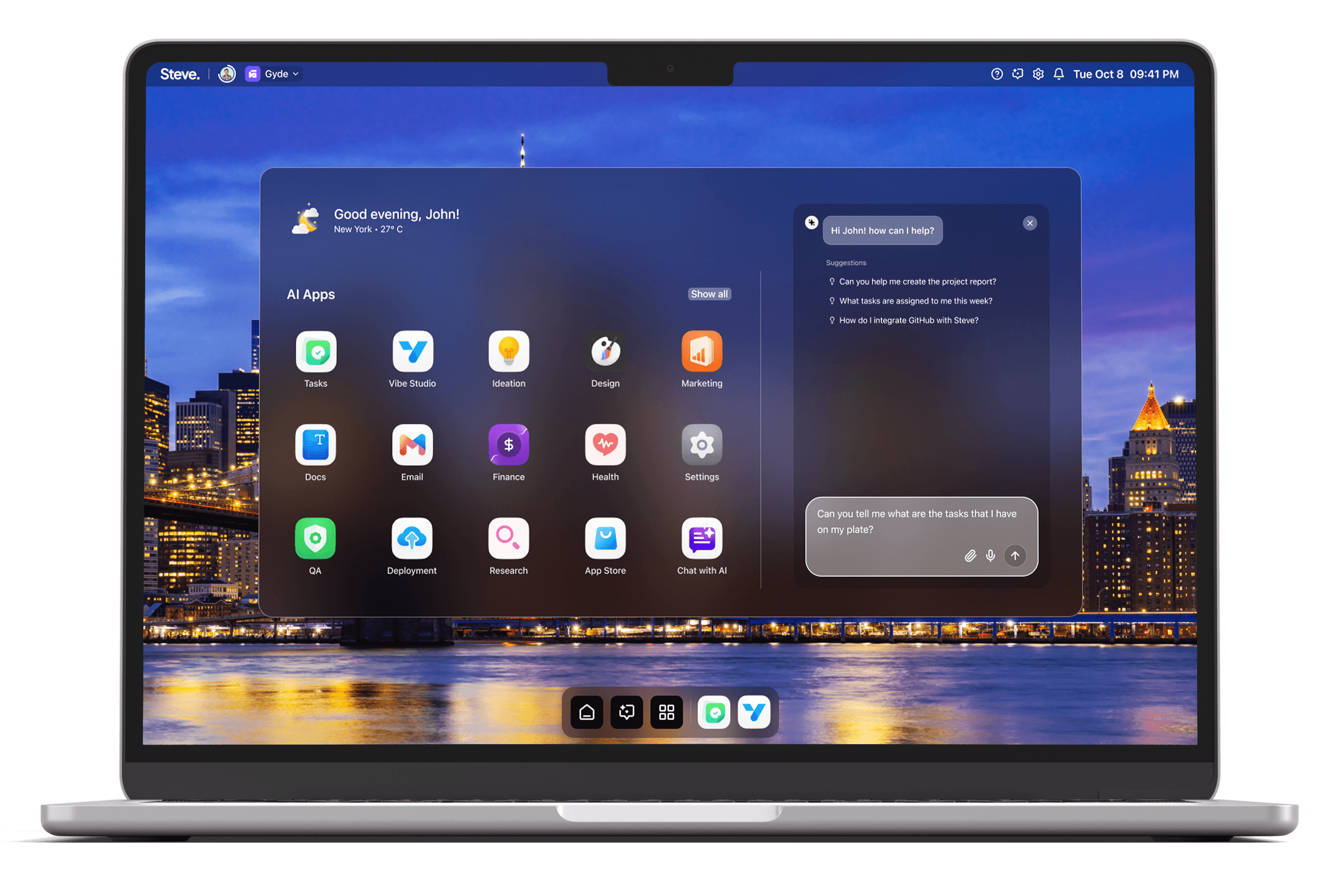
Steve’s conversational interface, driven by advanced AI agents and LLMs, captures access requests naturally from employees, managers, or ticketing systems and converts them into structured requests that IT can act on. Instead of a static form, a user describes needs in plain language—"Grant marketing@company.com edit access to the campaign drive folder until June"—and Steve extracts role, resource, scope, and duration. That structured payload reduces back-and-forth: missing details are identified automatically and the agent asks targeted clarifying questions, enabling first-contact completeness and faster resolution.
Practical scenario: a hiring manager opens Steve Chat and types a role-based request; Steve prompts for required systems, duration, and justification, then saves the normalized request for downstream decisioning. The conversational layer preserves context and makes requests accessible to non-technical requesters while producing the data formats admins expect.
Policy-Aware Decisioning With Shared Memory
Steve’s shared memory system supplies persistent policy and context to AI agents so decisions reflect current rules and past actions. Policies stored in shared memory—role definitions, temporary-access windows, separation-of-duty constraints—are available to the agent that triages the request. The agent verifies whether the requested access aligns with policy, flags anomalies, and recommends granular scopes (for example, recommending viewer instead of editor where appropriate).
In practice, the agent checks Notion or Sheets documentation referenced in shared memory to confirm approval chains or existing role assignments before suggesting auto-approval or escalation. This reduces subjective judgment calls and ensures consistent enforcement of access governance.
Orchestration Of Approvals And Task Automation
Steve connects to productivity and collaboration tools through Steve Chat integrations and uses its Task Management capabilities to orchestrate approvals and follow-up work. When policy permits, the agent can create a tracked task for IT with prefilled request metadata, attach supporting files, and assign approvers according to stored approval matrices. Where manual approval is required, Steve routes an approval request conversationally to the right approver and captures their decision inline.
For systems that allow automation via connectors, Steve can hand off the validated request to integrated tooling (or generate the precise runbook for an operator) so provisioning is repeatable and deterministic. For example, a validated GitHub access change can be created as a task with the exact repository, role, and expiration timestamp so an engineer executes with minimal context switching.
Auditing, Logging, And Continuous Improvement
Every conversational exchange and action is file-aware and logged, creating an auditable trail of who requested what, what checks ran, and what decision followed. Steve Chat’s LangFuse integration gives detailed logging for retrospectives and compliance reviews, while shared memory preserves historical policy-state at decision time. That combination supports forensic review and demonstrates that approvals adhered to the rules enforced when the request was evaluated.
The Task Management board surfaces metrics—time-to-approval, common exemption reasons, repeated manual escalations—so IT can turn operational bottlenecks into policy updates or automation targets. Over time, the agents learn recurring patterns and propose workflow automations that progressively reduce human handoffs.
Steve
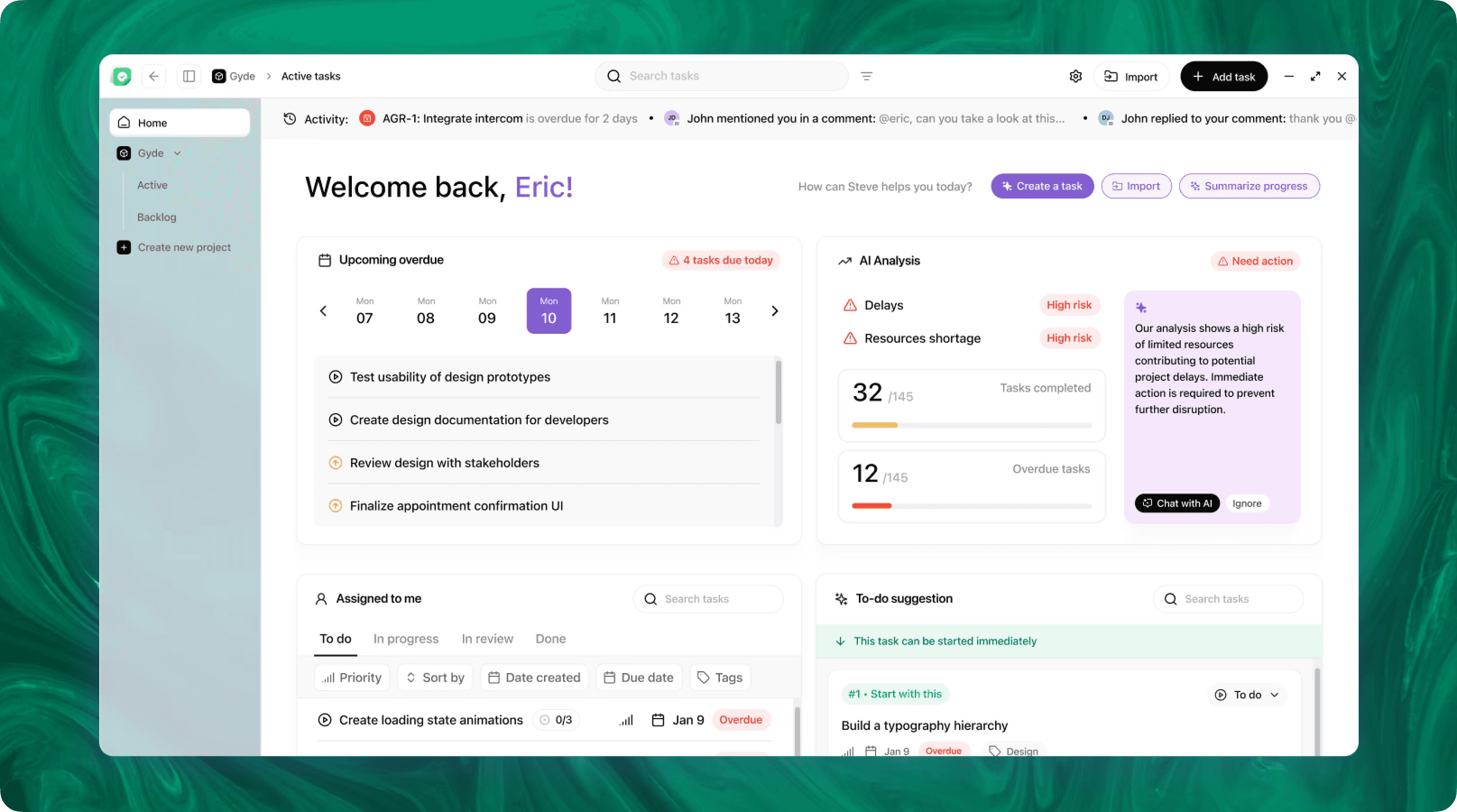
Steve is an AI-native operating system designed to streamline business operations through intelligent automation. Leveraging advanced AI agents, Steve enables users to manage tasks, generate content, and optimize workflows using natural language commands. Its proactive approach anticipates user needs, facilitating seamless collaboration across various domains, including app development, content creation, and social media management.
Conclusion
For IT admins, Steve as an AI OS turns access-control requests from a high-friction process into a repeatable, auditable workflow. Conversational intake lowers the barrier for requesters and increases first-pass accuracy; shared memory brings policy and context to every decision; integrations and Task Management orchestrate approvals and provisioning; and robust logging enables compliance and continuous improvement. The result: fewer back-and-forths, faster, safer access changes, and a traceable record that keeps security teams confident while scaling operations.