Steve for Insurance Teams: Claims Triage and Summary Automation
Dec 9, 2025

Streamlined Claims Intake And Triage: AI Email auto-tags and digests incoming claim threads so adjusters prioritize high-risk files immediately.
Automated Summaries And Decision-Ready Outputs: Steve generates concise, context-aware summaries from multi-file submissions for fast managerial review.
Collaborative Handoffs And Task Management: Task Management converts triage results into assigned tasks with attached context for seamless ownership transfer.
Contextual Memory Across Agents: The shared memory system preserves claim context across chats and summaries, preventing redundant rework.
Auditability And Continuous Improvement: Chat logging and file-aware trails create an auditable record that supports compliance and model tuning.
Introduction
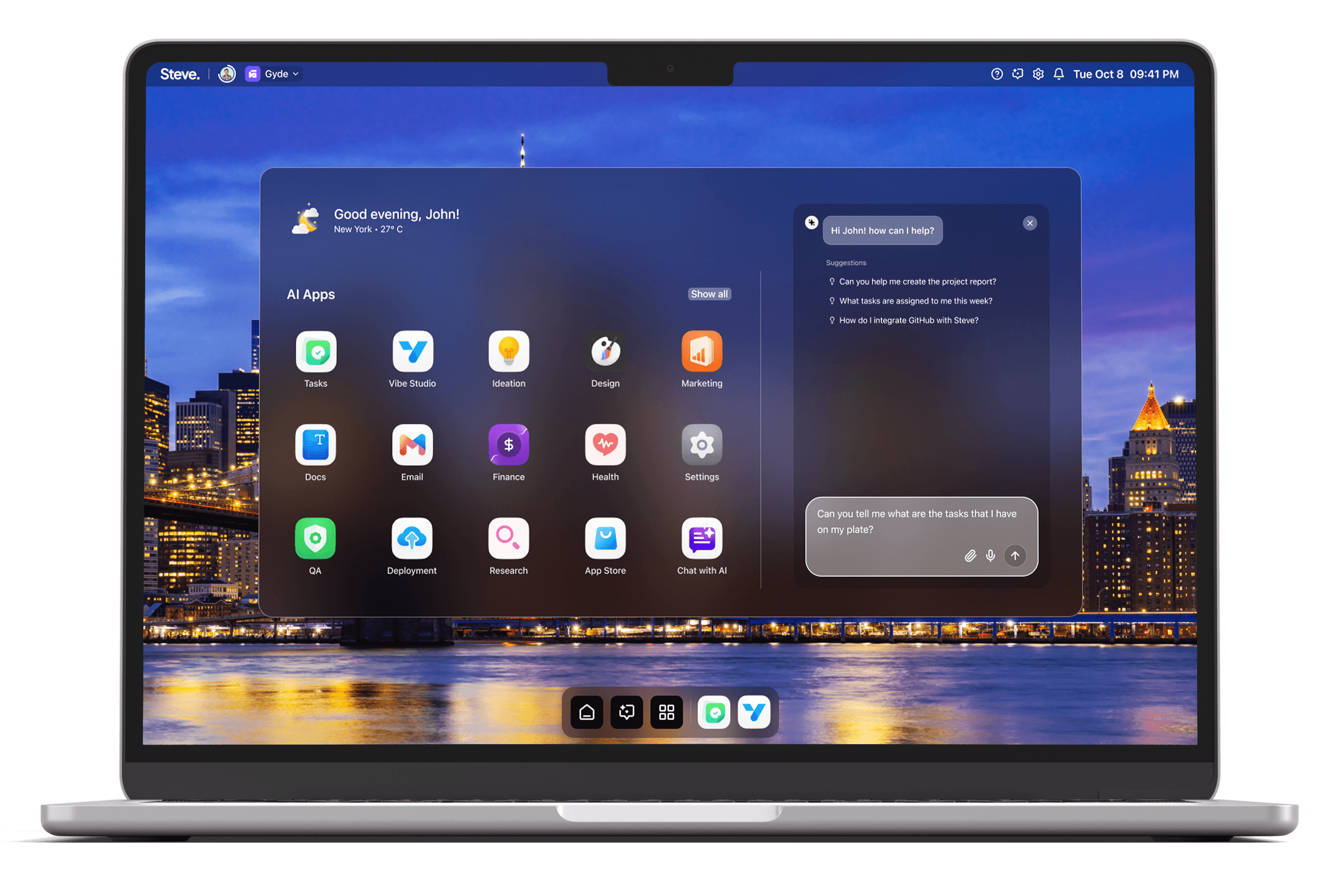
Insurance teams handle high volumes of incoming claims and fragmented documentation while under strict SLAs. Steve, an AI Operating System, reduces time-to-first-action and cognitive load by combining AI Email, Steve Chat, a shared memory system, and Task Management to automate triage and generate concise summaries. This article explains how those capabilities work together to accelerate adjuster decisioning, improve handoffs, and maintain auditable context.
Streamlined Claims Intake And Triage
Incoming claim submissions arrive as emails, attachments, photos, and uploaded files. Steve’s AI Email tags and categorizes messages automatically, surfacing high-priority threads and flagging missing information so adjusters focus where value is highest. When a complex thread lands in an inbox, AI Email generates an instant digest that highlights claimant details, loss type, dates, and open questions — enabling a first-pass triage in minutes instead of hours.
Steve Chat extends that intake by letting adjusters interact conversationally with a claim record. The chat is file-aware: adjusters can upload photos, PDFs, or spreadsheets and ask the AI to extract policy numbers, identify damaged items, or call out inconsistencies. Because Steve is an AI OS, these channels operate together: a tagged email can spawn a chat session that pre-populates with the message thread and attachments so triage work starts with full context.
Practical scenario: a field rep uploads images and a short note. AI Email tags the case as urgent, the adjuster opens Steve Chat, and the system preloads the thread and files — the adjuster immediately receives a prioritized checklist of missing statements, potential fraud indicators, and the next recommended action.
Automated Summaries And Decision-Ready Outputs
Clear, standardized summaries reduce rework and speed approvals. Steve produces concise claim summaries from long email threads and multi-file submissions, extracting the facts adjusters need: incident timeline, policy coverage indicators, claimant contact points, and outstanding evidence. These summaries are context-aware and formatted for quick review by underwriters or claims managers.
Because Steve Chat supports integrations and real-time web lookups, an adjuster can ask follow-up questions inside the same workspace and refine a summary iteratively. The shared memory system preserves the evolving context so subsequent summaries reflect prior decisions, agent notes, and newly uploaded documents without repeating manual reconciliation.
Practical scenario: before a managerial review, an adjuster uses Steve to generate a one-paragraph executive summary plus a bulleted action list. The manager approves or requests more info directly in chat, and Steve updates the running summary to reflect that guidance.
Collaborative Handoffs And Task Management
Triage rarely ends at a single person — it requires clear handoffs. Steve’s Task Management converts triage outcomes into actionable tasks, assigns owners, and suggests follow-up timelines. Integration with existing workflows (import or export from common task systems is supported) means teams keep a single source of truth while steering work with AI-suggested priorities.
Because the shared memory system keeps claim context across tools, tasks created from a summary automatically attach the relevant conversation snippets and file references. This preserves narrative continuity: the next owner sees why a task exists, what was already requested, and which documents support the decision.
Practical scenario: a triage AI marks a case for engineering inspection and creates a task with attached summary, photos, and a recommended inspection window — the inspector receives a compact brief ready for field action.
Compliance, Audit Trail, And Continuous Improvement
Operational risk and auditability matter for claims. Steve Chat logs interactions through LangFuse-style chat logging and records file-aware exchanges, creating an auditable trail that links summaries, triage decisions, and task updates. That trail supports compliance reviews and lets teams measure where AI-assisted triage improves throughput or needs human calibration.
The shared memory system also enables iterative improvement: agents retain contextual threads so model prompts and decision templates evolve alongside real-world cases, reducing repeated clarifications and improving summary quality over time.
Steve
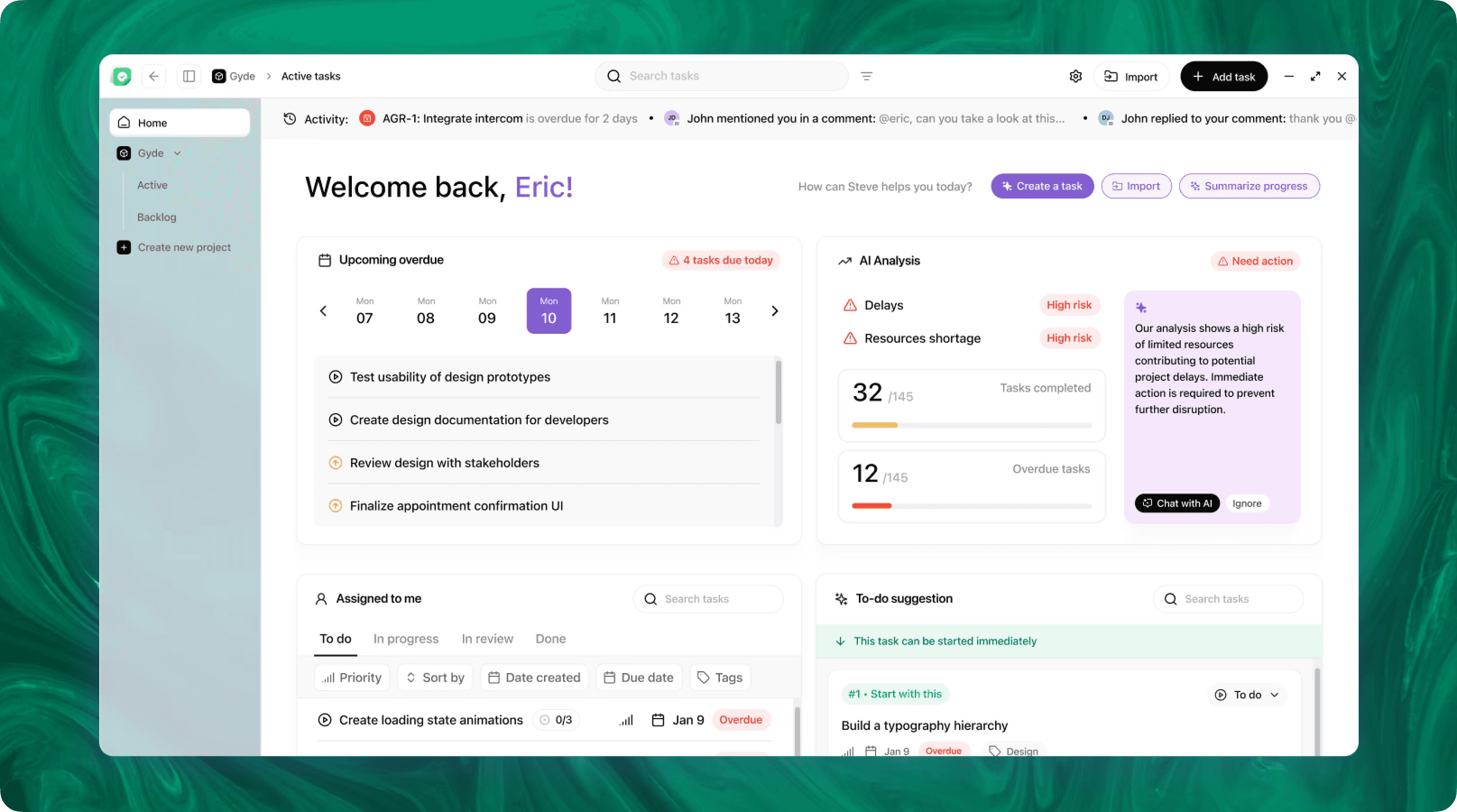
Steve is an AI-native operating system designed to streamline business operations through intelligent automation. Leveraging advanced AI agents, Steve enables users to manage tasks, generate content, and optimize workflows using natural language commands. Its proactive approach anticipates user needs, facilitating seamless collaboration across various domains, including app development, content creation, and social media management.
Conclusion
For insurance teams, Steve as an AI Operating System and AI OS platform streamlines claims triage by combining AI Email tagging and summarization, conversational file-aware analysis via Steve Chat, shared memory for persistent context, and Task Management to convert decisions into tracked work. The result is faster first actions, clearer handoffs, and auditable summaries that keep adjusters focused on the exceptions that require human judgment.