Steve for Digital Agencies: Cross-Account Performance Insights
Jan 15, 2026

Shared Memory For Cross-Account Context: Persistent memory preserves client history and KPIs so context follows analysts across accounts.
Unified Data Surface Via Steve Chat: File-aware chat and integrations let teams query and combine spreadsheets, drive files, and tool data conversationally.
AI Email For Prioritized Client Communication: Smart inbox summaries and context-aware drafts keep messaging consistent and reduce consolidation time.
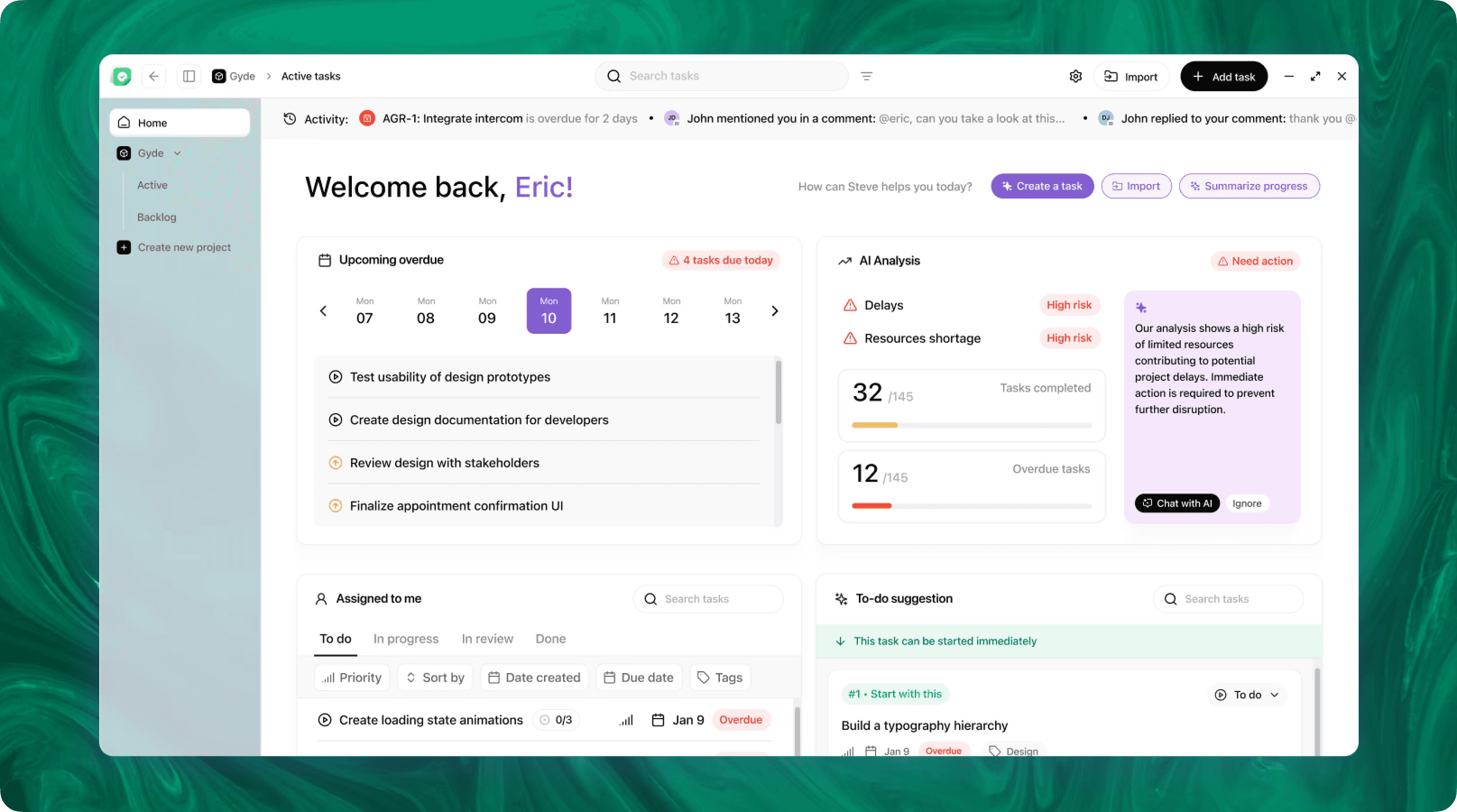
AI-Powered Task Management For Cross-Account Execution: Integrated boards and sprint suggestions turn insights into assigned tasks and measurable progress.
Workflow Benefit: Combining memory, conversational data access, prioritized email, and task automation shortens the path from cross-account insight to delivery.
Introduction
Digital agencies manage multiple client accounts, fragmented data sources, and time-sensitive performance metrics. Steve streamlines cross-account performance insights by consolidating context, surfacing prioritized communication, and aligning execution across teams. As an AI Operating System, Steve reduces the manual overhead of stitching reports together and gives agency leaders timely, actionable visibility across portfolios.
Shared Memory For Cross-Account Context
Agencies lose time recreating context when analysts jump between client accounts; Steve’s shared memory system preserves and threads that context across conversations and workflows. The shared memory enables AI agents to recall client-specific goals, historical campaign notes, and recurring KPIs so performance signals carry forward across sessions and users. In practice, a strategist comparing conversion trends for three clients can rely on the shared memory to surface prior optimization experiments, attribution windows, and agreed benchmarks without re-uploading briefs or repeating background. That continuity speeds cross-account analysis and reduces errors caused by fragmented institutional knowledge.
Unified Data Surface Via Steve Chat
Steve Chat centralizes integrations and lets teams query cross-account data conversationally—pulling from spreadsheets, drive folders, and connected tools without switching tabs. Because Steve Chat is file-aware and integrates with Google Drive, Sheets, Notion, and dozens of services, analysts can upload campaign exports or ask for a consolidated table that compares spend, CPA, and ROAS across accounts. The chat’s ability to ingest PDFs and spreadsheets makes one-off audits faster: ask a question like “Show last quarter’s top landing pages by conversion rate across Clients A, B, and C,” and Steve surfaces the combined view, highlights anomalies, and links back to source files. For agencies, this turns ad-hoc reporting into repeatable prompts and shortens the time from observation to decision.
AI Email For Prioritized Client Communication
Client-facing communication is a primary source of cross-account friction; Steve’s AI Email gives teams prioritized summaries and context-aware drafts to keep stakeholders aligned. The smart inbox tags and categorizes threads, summarizes long discussions into concise points, and suggests replies that reference the current account context stored in shared memory. A project lead managing monthly recaps across ten clients can use AI Email to generate tailored executive summaries, extract action items for each account, and queue follow-ups—reducing the cognitive load of manual consolidation. This preserves consistent messaging across accounts and ensures performance insights translate into accountable next steps.
AI-Powered Task Management For Cross-Account Execution
Insights are valuable only when converted into execution; Steve’s AI-driven task management boards bring cross-account plans into a single, actionable workspace. Integrations with Linear and the platform’s sprint suggestions let agencies convert identified optimizations into tasks, assign owners, and track progress across client projects. For example, when Steve Chat flags a recurring drop in retention across multiple clients, a strategist can spawn sprint tasks that prioritize A/B tests, assign engineers or creatives, and set timelines—while the shared memory keeps the rationale and test history visible to assignees. This closes the loop from insight to delivery and reduces both coordination lag and duplicated work across accounts.
Steve
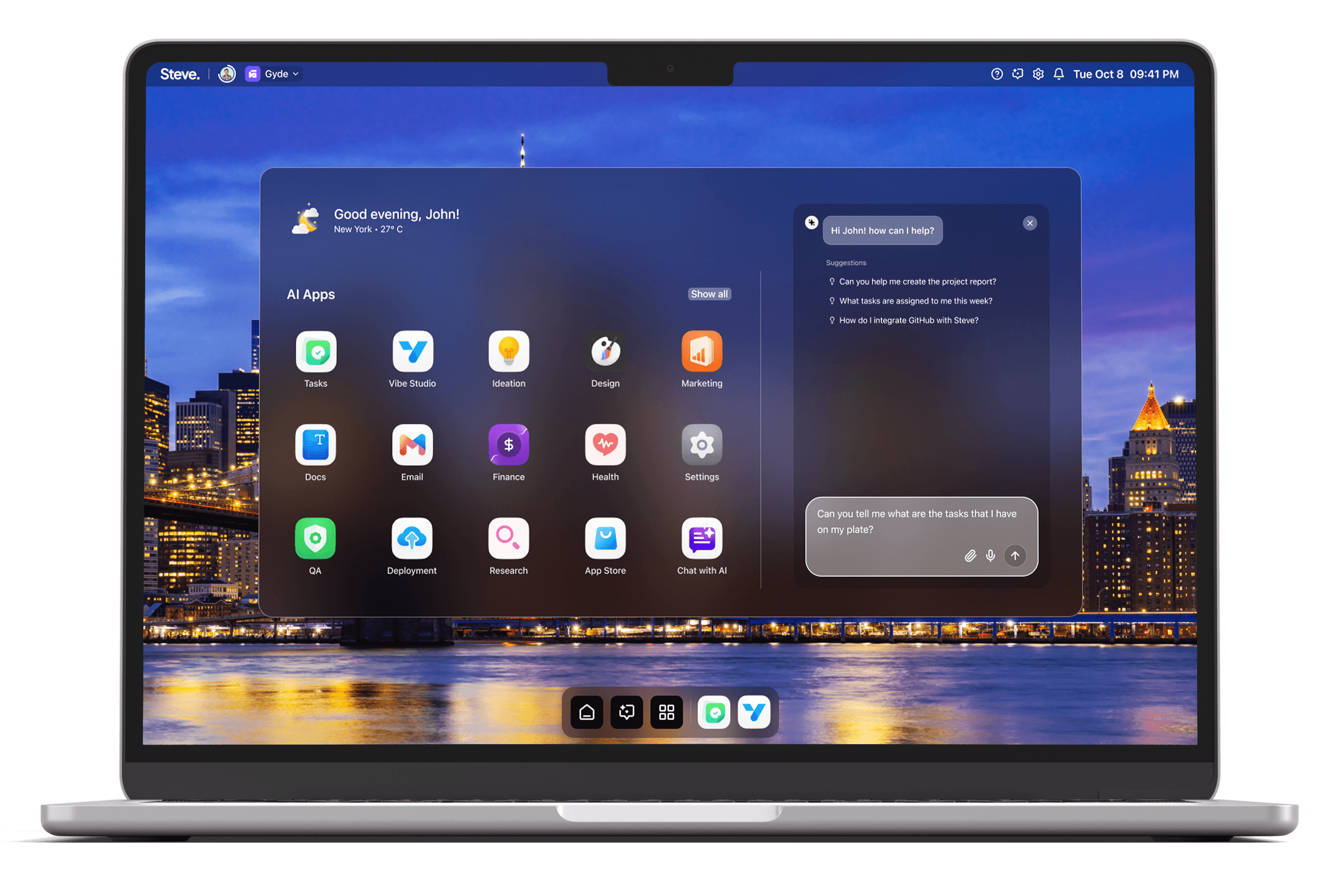
Steve is an AI-native operating system designed to streamline business operations through intelligent automation. Leveraging advanced AI agents, Steve enables users to manage tasks, generate content, and optimize workflows using natural language commands. Its proactive approach anticipates user needs, facilitating seamless collaboration across various domains, including app development, content creation, and social media management.
Conclusion
Steve combines shared memory, conversational integrations, intelligent email, and AI-driven task management to create a coherent cross-account performance workflow for digital agencies. As an AI OS, Steve turns dispersed data and scattered communication into a single operating surface where insights persist, context travels with the work, and execution follows directly from analysis. Agencies that adopt Steve reduce reporting friction, accelerate decision cycles, and maintain consistent, accountable client communications—delivering measurable improvements in both speed and quality of performance management.