Steve For Banking: Automating Transaction Summaries
Nov 18, 2025

Conversational Capture and Data Ingestion: Interactive chat lets teams upload and refine transaction inputs with natural language, eliminating manual transfers between tools.
Shared Memory for Contextual Accuracy: Persistent memory stores merchant aliases, flags, and historical notes so summaries remain consistent and cumulative.
Integrated Access and File-Aware Reasoning: File-aware chat and integrations enable Steve to reconcile spreadsheets, PDFs, and emails into source-linked narratives.
Instant Summaries and Inbox Automation: AI Email produces tailored, review-ready summaries and delivers them within the inbox to preserve context and timestamps.
Task-Oriented Follow-Up and Auditability: Summaries can auto-generate tracked tasks with links to evidence and decision history, converting insights into accountable workflows.
Introduction
Steve addresses a persistent operational bottleneck for financial teams: turning raw transaction data into concise, accurate narratives that power reconciliation, customer support, and compliance. As an AI Operating System, Steve centralizes conversational workflows, context-aware memory, and inbox-native summarization to reduce manual triage, speed decision-making, and preserve audit trails. This article shows how Steve uses conversational capture, shared memory, integrated data access, and email automation to create reliable transaction summaries at scale.
Conversational Capture and Data Ingestion
Banks and fintech teams often work from exported CSVs, customer emails, and notes in disparate systems; the first step to automation is capturing that input in a single, interactive channel. Steve’s conversational interface lets analysts, customer service reps, and compliance officers upload statements, paste ledger extracts, or chat with the AI to clarify ambiguous entries. Because Steve is an AI OS built for conversational workflows, users can iterate on extraction rules with natural language — for example, asking the system to “group card transactions by merchant and flag anything above $1,000” — and immediately see refined results.
Practical scenario: a customer disputes a weekend set of charges. An agent uploads the exported transactions and asks Steve to summarize disputed items, attach original descriptions, and note potential merchant categories. The agent edits the summary conversationally and saves the resolved narrative for audit, all without exporting to separate tools.
Shared Memory for Contextual Accuracy
Accurate transaction summaries require persistent context: recurring payments, merchant aliases, customer relationship notes, and previous dispute outcomes. Steve’s shared memory system ensures that agents and AI assistants reference the same context when producing narrative summaries. Memory holds mappings (e.g., “ACME*SHOP” = Acme Retail), merchant risk profiles, and customer dispute histories so subsequent summaries are consistent and cumulative rather than reinvented each session.
Practical scenario: compliance reviews a merchant flagged last quarter. Because shared memory retains the flag and prior notes, Steve auto-includes historical context in any new summary and highlights deviations, saving reviewers from manually correlating past reports.
Integrated Access and File-Aware Reasoning
Transaction automation succeeds when AI can combine structured and unstructured sources. Steve’s chat is file-aware and integrates with common storage and productivity tools, allowing the AI to parse spreadsheets, PDFs, and email threads alongside conversational prompts. That capability lets Steve reconcile rows in a ledger with receipt images or contract PDFs, transforming columnar debit-credit data into human-readable explanations that reference source documents.
Practical scenario: an operations analyst asks Steve to reconcile a month’s payments with uploaded invoices. Steve parses the spreadsheet, matches invoice totals to transaction IDs, and generates a summarized report that links each narrative line to the original invoice or receipt, making downstream review faster and defensible.
Instant Summaries and Inbox Automation
Producing a clean summary is only half the work; delivering it to the right stakeholder on time closes the loop. Steve’s integrated AI Email creates instant, context-aware summaries of long threads and draft-ready messages for recipients across teams. Transaction summaries can be pushed as concise emails to accounting, as annotated threads to support queues, or as compliance-ready notes with suggested next steps. Because Steve operates within the inbox, teams avoid context loss from copy-paste workflows and preserve a timestamped record of AI-generated findings.
Practical scenario: nightly batch jobs produce summarized transaction digests. Steve packages these into targeted emails: a short reconciliation summary for accounting, a flagged-items list for fraud ops, and a customer-facing explanation draft for support, each tailored to the recipient and ready for human review before send.
Task-Oriented Follow-Up and Auditability
Summaries must trigger actions. Steve’s task-oriented capabilities convert summaries into tracked work items — for example, creating follow-ups for disputed transactions or scheduling deeper audits. Tasks include links back to the underlying summaries and source files preserved in shared memory, which preserves continuity across the lifecycle of a case. That combination turns passive summaries into accountable workflows with clear owners and measurable SLAs.
Practical scenario: when Steve identifies an outlier pattern, it creates a task assigned to fraud operations, populates the ticket with the AI summary and linked evidence, and records the decision history in memory so auditors can replay the rationale.
Steve
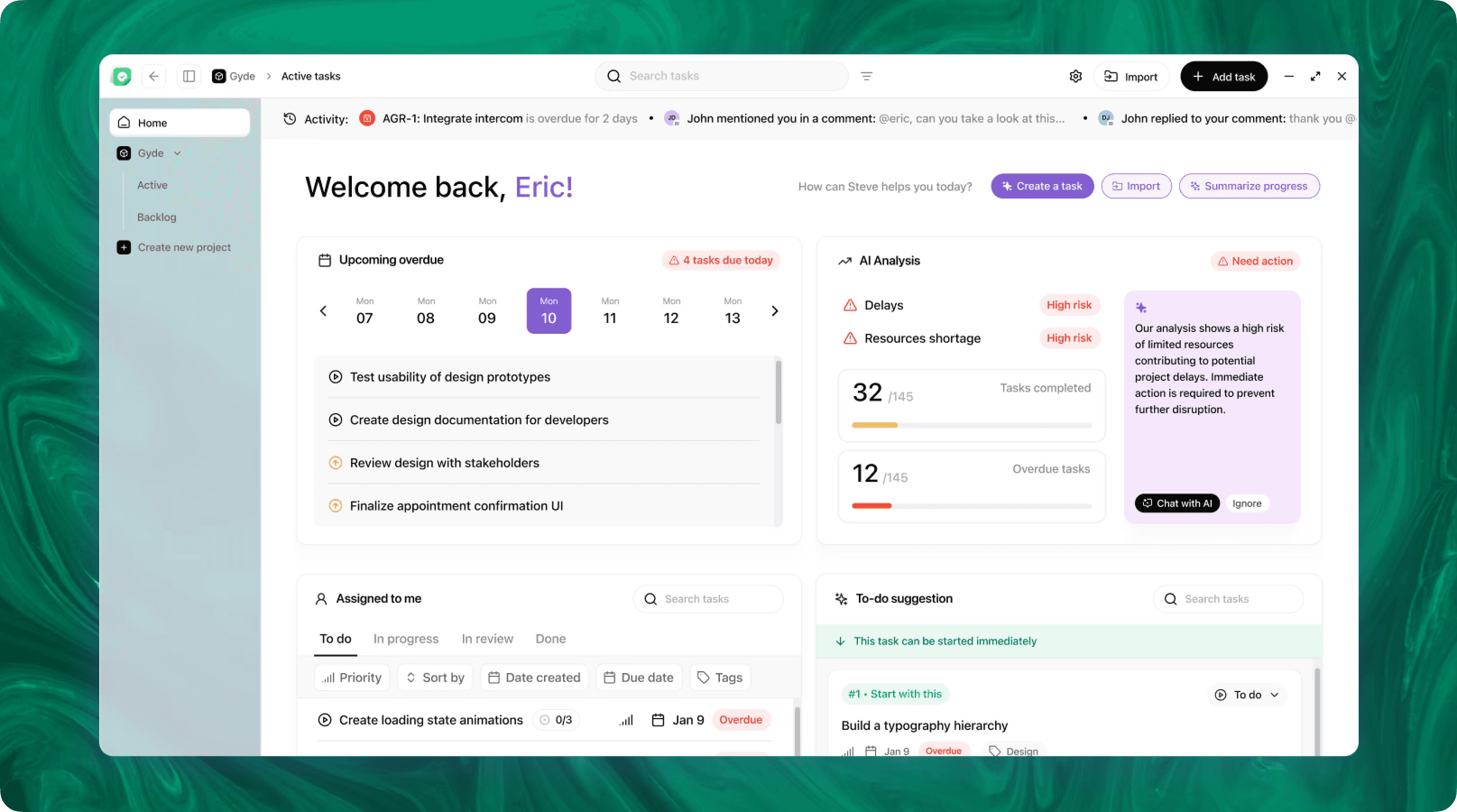
Steve is an AI-native operating system designed to streamline business operations through intelligent automation. Leveraging advanced AI agents, Steve enables users to manage tasks, generate content, and optimize workflows using natural language commands. Its proactive approach anticipates user needs, facilitating seamless collaboration across various domains, including app development, content creation, and social media management.
Conclusion
Automating transaction summaries with Steve reduces manual reconciliation time, improves narrative consistency, and creates auditable links between raw data and human decisions. As an AI Operating System, Steve combines conversational capture, shared memory, integrated file reasoning, and inbox-native summarization to turn disparate transaction inputs into actionable, reviewable summaries — accelerating operations while preserving traceability.