Reimagining Business Operations Around Conversation
Oct 7, 2026

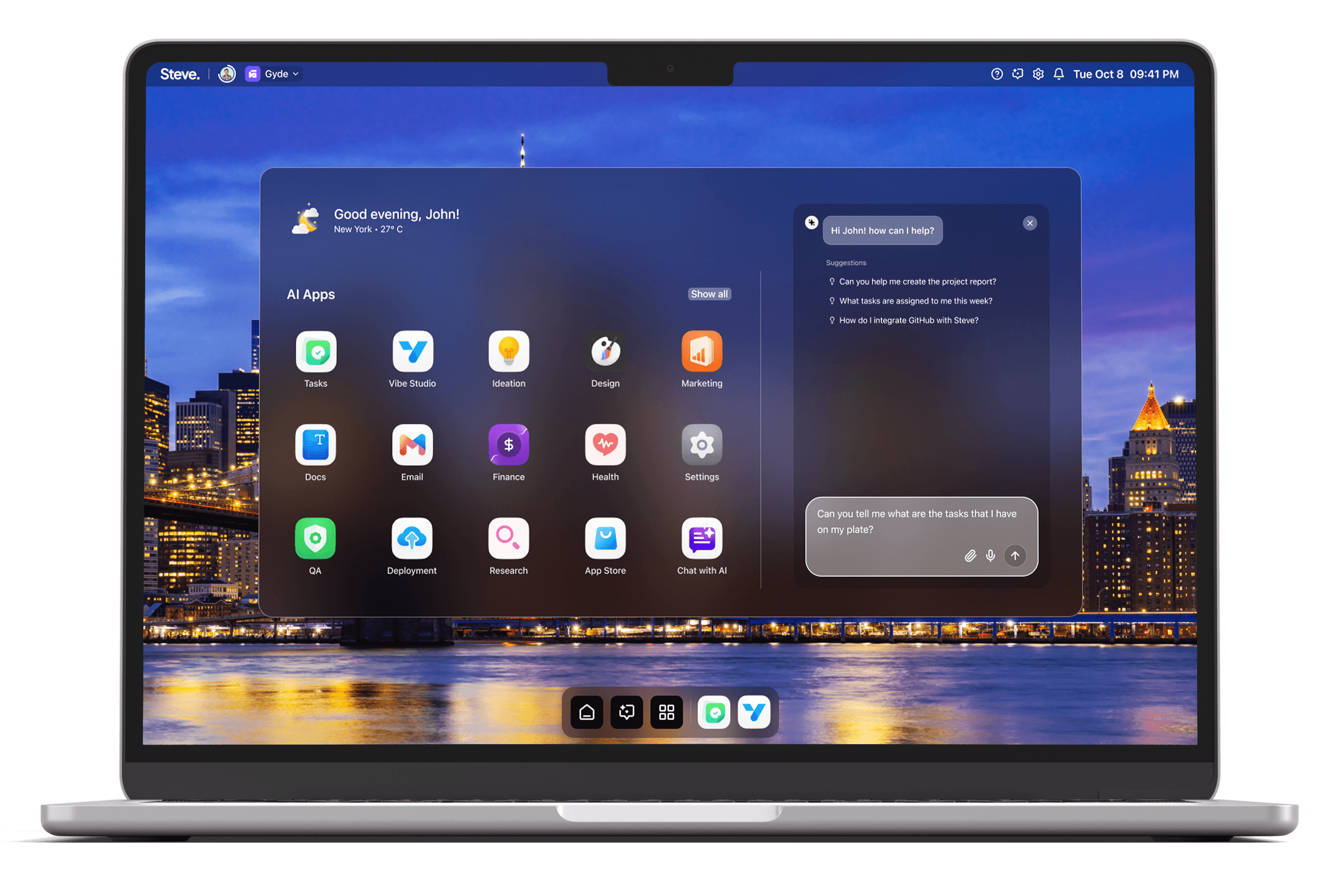
Conversation as Interface: Steve Chat turns plain-language requests into cross-system actions by integrating calendars, documents, and repos into a single conversational workflow.
Inbox as a Conversational Hub: AI Email summarizes threads and drafts context-aware replies so teams act on critical messages faster and with consistent tone.
Conversational Task Orchestration: Task Management converts decisions made in chat into prioritized, assignable work items, reducing coordination overhead.
Shared Memory For Persistent Context: Shared memory preserves history and preferences so subsequent conversations build on prior decisions rather than restarting context.
Operational Impact: Combining chat, email, task boards, and memory reduces tool switching, accelerates execution, and centralizes institutional knowledge in conversational workflows.
Introduction
Reimagining business operations around conversation flips the model from task-centric tools to a human-first interaction layer where language drives outcomes. As an AI Operating System, Steve makes conversational workflows practical: it unifies communication, task orchestration, and contextual memory so teams can act directly from dialogue rather than switching tools or rebuilding context. This article explains how conversational patterns—when implemented through Steve—streamline decision making, preserve continuity, and accelerate execution.
Conversation as Interface
Treating conversation as the primary interface reduces friction: instead of navigating menus, stakeholders ask for decisions, updates, or artifacts in plain language and receive actionable responses. Steve Chat powers these interactions with deep integrations (calendar, email, Drive, Sheets, Notion, GitHub, and 40+ services), so a single query—"Show this quarter's open product issues and propose a three-week sprint"—returns a prioritized list and concrete next steps drawn from live systems. That capability matters because it collapses analysis and coordination into one step; leaders spend less time assembling context and more time deciding.
Practical scenario: a product lead asks Steve to reconcile roadmap notes, open PRs, and customer feedback. Steve Chat surfaces the relevant documents, schedules a follow-up, and drafts the kickoff agenda—all from the same conversational thread—so the team moves from insight to plan without manual handoffs.
Inbox as a Conversational Hub
Email becomes an active collaboration surface when conversation drives how messages are triaged, summarized, and acted on. Steve’s AI Email integrates a smart inbox with real-time sync and expands capacity to handle growing message volumes while tagging and categorizing conversations for priority. Instant summaries of long threads and context-aware reply suggestions let recipients understand stakes and respond with fewer edits.
Practical scenario: an account manager receives a ten-message escalation thread. Steve’s summary highlights the ask, outstanding blockers, and proposed remedies; it then drafts a response aligned to the account plan. The manager fine-tunes one generated reply and sends—cutting a 20–30 minute task to a few minutes and maintaining consistent messaging across stakeholders.
Conversational Task Orchestration
When planning and execution live inside dialogue, task management stops being a separate chore and becomes a natural extension of decisions. Steve’s Task Management boards, integrated with Linear and supported by AI-driven sprint proposals, let teams convert conversational outcomes into tracked work items automatically. The system recommends sprint scopes, assigns owners, and keeps execution visible—all from follow-up prompts or meeting summaries.
Practical scenario: after a roadmap discussion in Steve Chat, a product manager asks the AI to create a sprint focused on performance improvements. Steve proposes a prioritized backlog, maps tasks to engineers, and opens the board—so what began as a conversation translates into an executable plan with minimal overhead.
Shared Memory For Persistent Context
A shared memory system gives conversational agents continuity across interactions, enabling contextually relevant outputs and multi-agent collaboration. Steve’s memory lets different AI assistants recall project history, past decisions, and user preferences so subsequent conversations build on prior work instead of restarting each time. That persistence reduces repetitive clarifications and preserves institutional knowledge.
Practical scenario: a support lead asks for the history of a long-running customer issue; Steve retrieves past exchanges, related tickets, and the prior remediation steps, then recommends next actions that reflect earlier constraints. The team gains a working brief instantly, avoiding the time sink of re-collecting background info.
Steve
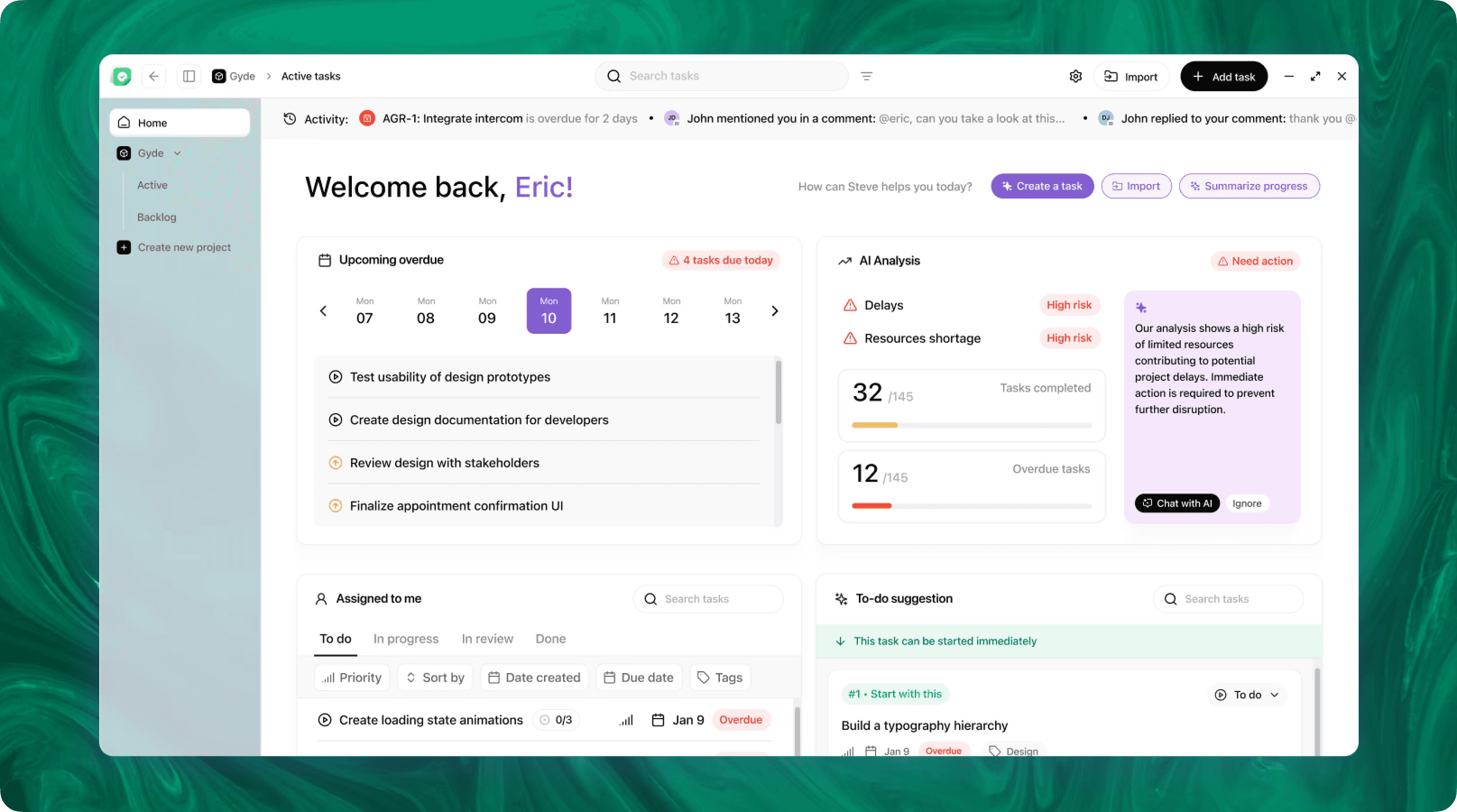
Steve is an AI-native operating system designed to streamline business operations through intelligent automation. Leveraging advanced AI agents, Steve enables users to manage tasks, generate content, and optimize workflows using natural language commands. Its proactive approach anticipates user needs, facilitating seamless collaboration across various domains, including app development, content creation, and social media management.
Conclusion
Reimagining operations around conversation streamlines work by turning language into action: Steve, as an AI OS, combines integrated conversational interfaces, an inbox that acts like a collaborator, AI-driven task orchestration, and shared memory to preserve context across interactions. The result is faster decisions, fewer tool handoffs, and repeatable execution paths—so teams focus on outcomes instead of managing information. Adopting conversation as the operating paradigm makes business processes more fluid, resilient, and human-centered.