Predictive Project Timeline Adjustments With AI
Jan 23, 2026

Continuous Context Through Shared Memory: Persistent project context ensures timeline suggestions reflect the latest status and decisions.
Real-Time Schedule Intelligence via Conversational Integrations: Calendar and file-aware chat integrations let Steve correlate availability and artifacts with schedule impact.
Automated Task Boards and Sprint Predictions: AI-driven boards translate velocity and dependency signals into concrete timeline and scope recommendations.
Signal Extraction From Communications: Email and chat summarization surfaces early warnings and directly links them to mitigation tasks.
Actionable, Explainable Adjustments: By combining context, integrations, and task intelligence, Steve produces timeline changes that include rationale and next steps.
Introduction
Predictive project timeline adjustments with AI are about anticipating delays, quantifying impact, and recommending course corrections before risks compound. For product leaders and program managers, this reduces firefighting and preserves delivery commitments. As an AI Operating System, Steve brings conversational agents, shared context, integrated communications, and task intelligence together so teams receive timely, actionable timeline adjustments grounded in real work data.
Continuous Context Through Shared Memory
Accurate timeline prediction depends on clean, persistent context. Steve’s shared memory system lets AI agents retain and surface project state—milestones, recent blocker notes, scope changes—so timeline recommendations reflect the latest reality rather than fragmented status updates. When an engineer reports a dependency issue in chat or uploads a revised spec, that event is stored and becomes a signal across Steve’s agents.
Practical scenario: during a feature build, a QA blocker is logged in Steve Chat and linked to the task board. The shared memory records severity, owner, and elapsed time; agents reference that record when estimating downstream impact. Because context persists across conversations, subsequent schedule adjustments are consistent whether the request comes from a PM in chat or an update on the task board.
Real-Time Schedule Intelligence via Conversational Integrations
Steve Chat’s deep integrations with calendars, Gmail, Drive, Sheets, and external tools let conversational agents pull the exact inputs needed for timely forecasts. Rather than switching tools to gather data, a PM asks Steve, “How does Lisa’s calendar and the current task backlog affect the release date?” and the AI OS evaluates availability, critical path tasks, and recent updates to suggest a revised timeline.
In practice, this means adjusting expectations around resource constraints: if a key designer’s calendar shows a week of travel overlapping a design sprint, Steve surfaces that conflict and proposes a phased delivery or resource reallocation. Because Steve is file-aware, it can also examine uploaded specs and release plans to align its adjustment with documented scope changes, keeping recommendations grounded in artifacts rather than assumptions.
Automated Task Boards and Sprint Predictions
Steve’s AI-powered task management boards synthesize task status, velocity, and dependency structure to propose sprints and timeline adjustments. The system imports tasks, suggests prioritization, and tracks execution progress; those same signals drive predictive adjustments when velocity shifts or blockers accumulate.
A concrete use case: after three sprints of historical velocity, Steve identifies a downward trend tied to frequent bug reopenings. The task board proposes a revised sprint plan—shortening scope for the next release and reallocating engineering capacity to stabilization. Because Steve links tasks to owners and deadlines, the proposed timeline update includes actionable recommendations (e.g., move noncritical tasks to the next cycle, increase testing coverage) rather than a vague new date.
Signal Extraction From Communications
Email threads and chat logs often contain the earliest warnings of slippage. Steve’s AI Email and chat capabilities extract and summarize signals—late approvals, vendor delays, or shifting requirements—and tag them for relevance to project timelines. Summaries are concise and context-aware so stakeholders can assess impact quickly and accept or refine proposed adjustments.
Example: a long supplier thread flags a delayed API delivery. Steve’s inbox AI tags the thread as high priority, summarizes the delay and likely technical impacts, and creates a linked task with recommended contingency steps. That task feeds back into sprint projections and triggers a timeline suggestion from Steve’s predictive agents.
Steve
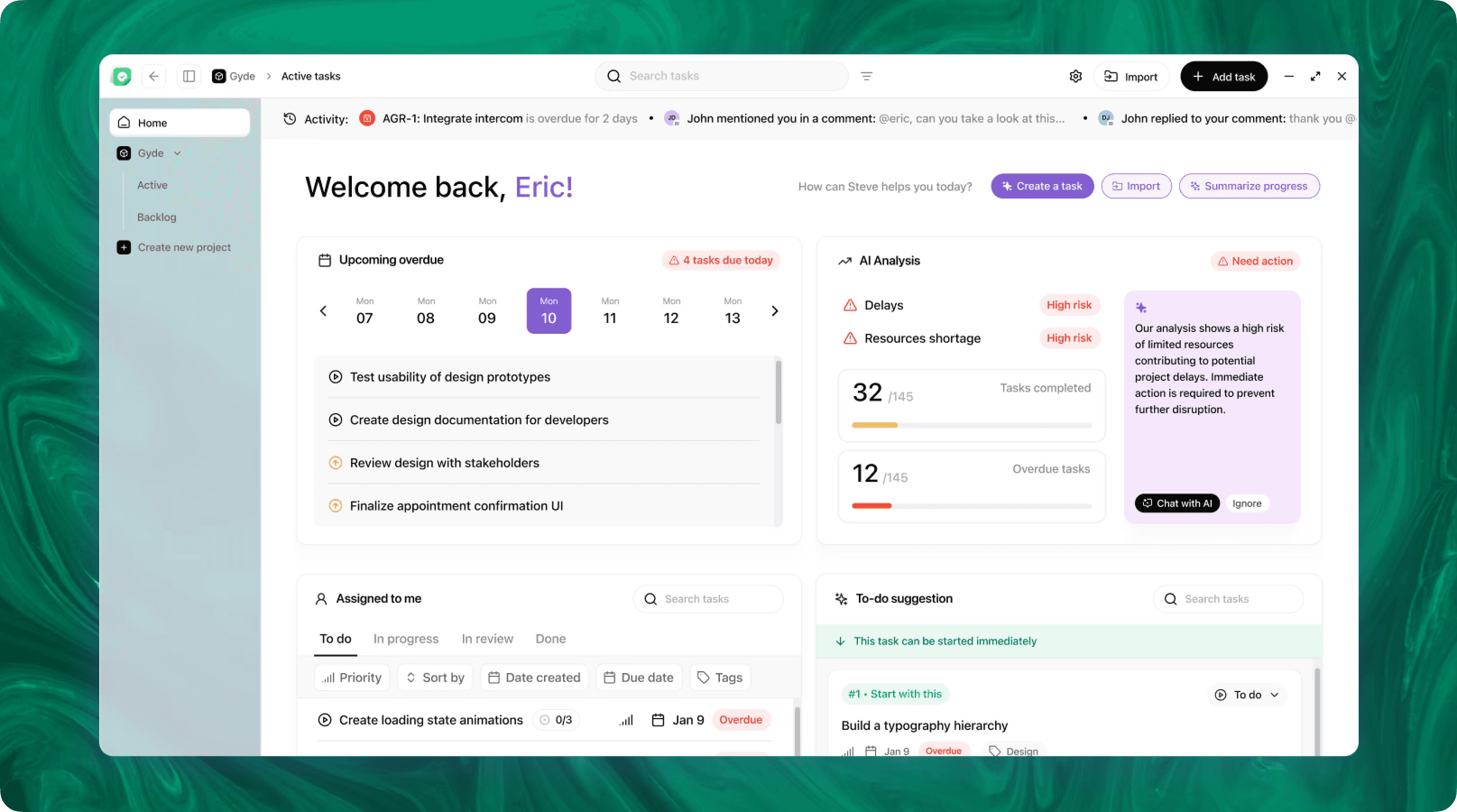
Steve is an AI-native operating system designed to streamline business operations through intelligent automation. Leveraging advanced AI agents, Steve enables users to manage tasks, generate content, and optimize workflows using natural language commands. Its proactive approach anticipates user needs, facilitating seamless collaboration across various domains, including app development, content creation, and social media management.
Conclusion
Predictive timeline adjustments stop being a manual guesswork exercise when your tooling combines persistent context, conversational integrations, task intelligence, and communication signal extraction. As an AI OS, Steve connects these capabilities so schedule changes are timely, explainable, and tied to concrete actions. Teams gain earlier warnings, prioritized mitigations, and clear next steps—reducing slippage and preserving delivery confidence.