Making Sense Of Company Data With Conversational Queries
Nov 4, 2026

Conversational Access To Distributed Sources: File-aware chat and direct integrations let Steve synthesize spreadsheets, docs, and tickets in response to natural questions.
Persistent Context With Shared Memory: A shared memory system preserves filters and entity context so follow-up queries build on prior work without re-specification.
In-Context Email Intelligence: AI Email summarizes and tags threads, surfacing customer commitments and outstanding deliverables directly from the inbox.
Turning Insights Into Work: Conversation-derived findings can be converted into tasks and sprints, keeping execution aligned with the original analysis.
Workflow Benefit: Combining chat, memory, email intelligence, and task management reduces tool switching and turns insights into verifiable action quickly.
Introduction
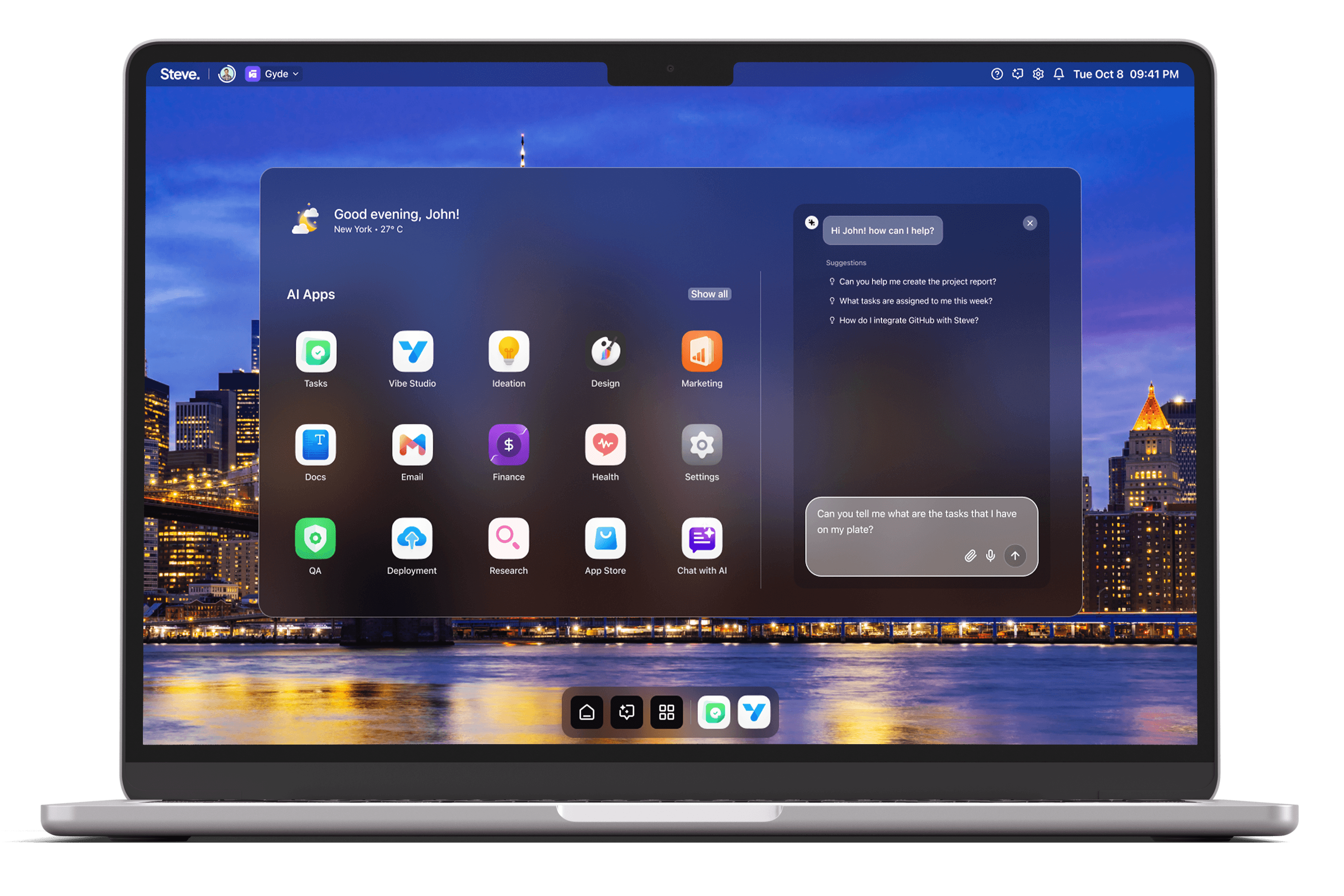
Making sense of company data is no longer just a reporting exercise — it's a conversational workflow. Teams need to ask natural questions across spreadsheets, docs, tickets, and email and get precise, actionable answers in minutes. Steve, an AI Operating System, turns conversational queries into integrated data discovery by combining a file-aware chat, persistent cross-agent memory, intelligent inbox summarization, and automated task follow-up. The result: context-rich answers that connect signals across sources without manual data hunting.
Conversational Access To Distributed Sources
Asking questions in natural language should surface the right records, not a stack of irrelevant files. Steve's conversational interface integrates directly with Google Drive, Sheets, Gmail, Notion, GitHub, and other services, and it accepts uploaded PDFs, spreadsheets, and images for immediate context. That file-aware capability means you can ask: "Which customers increased ARR over Q3 and have unresolved support tickets?" and Steve will synthesize spreadsheet figures, recent ticket activity, and relevant docs into one response.
In practice, a product manager can paste a sales spreadsheet and a support export, then chat: "Show the top five accounts by net new ARR and list open GitHub issues affecting them." Steve resolves references inside each file, cross-references identifiers, and returns ranked results with links to the original documents. Because the system supports real-time web queries, it can also enrich on-the-fly with external benchmarks or public status updates when needed, keeping insights current without manual lookups.
Persistent Context With Shared Memory
One-off answers are useful; persistent understanding is transformative. Steve's shared memory system lets AI agents retain and reuse context so conversational queries build on prior work. Memory keeps track of named entities, project timelines, and recurring filters (for example, "exclude sandbox accounts"), so follow-up questions are faster and more accurate.
Concrete scenario: during a quarterly review the team asks about churn drivers. Over a sequence of chats, Steve captures that "pricing change in April" and a specific product flag are relevant. Later, a salesperson asks, "Which customers did we notify about the April change and who responded negatively?" Because that context is stored, Steve correlates notification logs, email replies, and support tickets without re-specifying constraints. The shared memory also helps multiple agents collaborate — one agent can fetch numbers, another can draft a summary — producing coherent, interleaved outputs that reflect the same organizational context.
In-Context Email Intelligence
Email often contains customer cues and commitments, but inboxes are noisy. Steve's AI Email module tags and categorizes messages, generates instant thread summaries, and supports direct conversational drafting inside the inbox. Instead of scanning long threads for the key ask, you can ask Steve: "Summarize the actions agreed with Acme Corp and list outstanding deliverables." The system returns a concise action list and links to the original messages.
This email-aware workflow reduces friction for account reviews and incident postmortems. For example, support leads can surface missed SLAs by asking for threads that mention "priority outage" and then request a summary of promised timelines. Because Steve both summarizes and preserves links to the source emails, teams get verifiable evidence alongside synthesized insights — speeding decision-making and stakeholder updates.
Turning Insights Into Work
Insights must lead to action. Steve connects conversational findings to task-driven workflows: queries that reveal follow-ups can become tasks or sprints, assigned and tracked through the platform's task management features. After identifying top accounts at risk, a manager can instruct Steve to create outreach tasks, propose a sprint to fix a top issue, or assign investigation tickets — all from the same conversation that produced the data.
This tight loop — discover, summarize, act — preserves context because tasks inherit the same memory and document links, reducing repeat explanations and keeping execution aligned with the original insights.
Steve
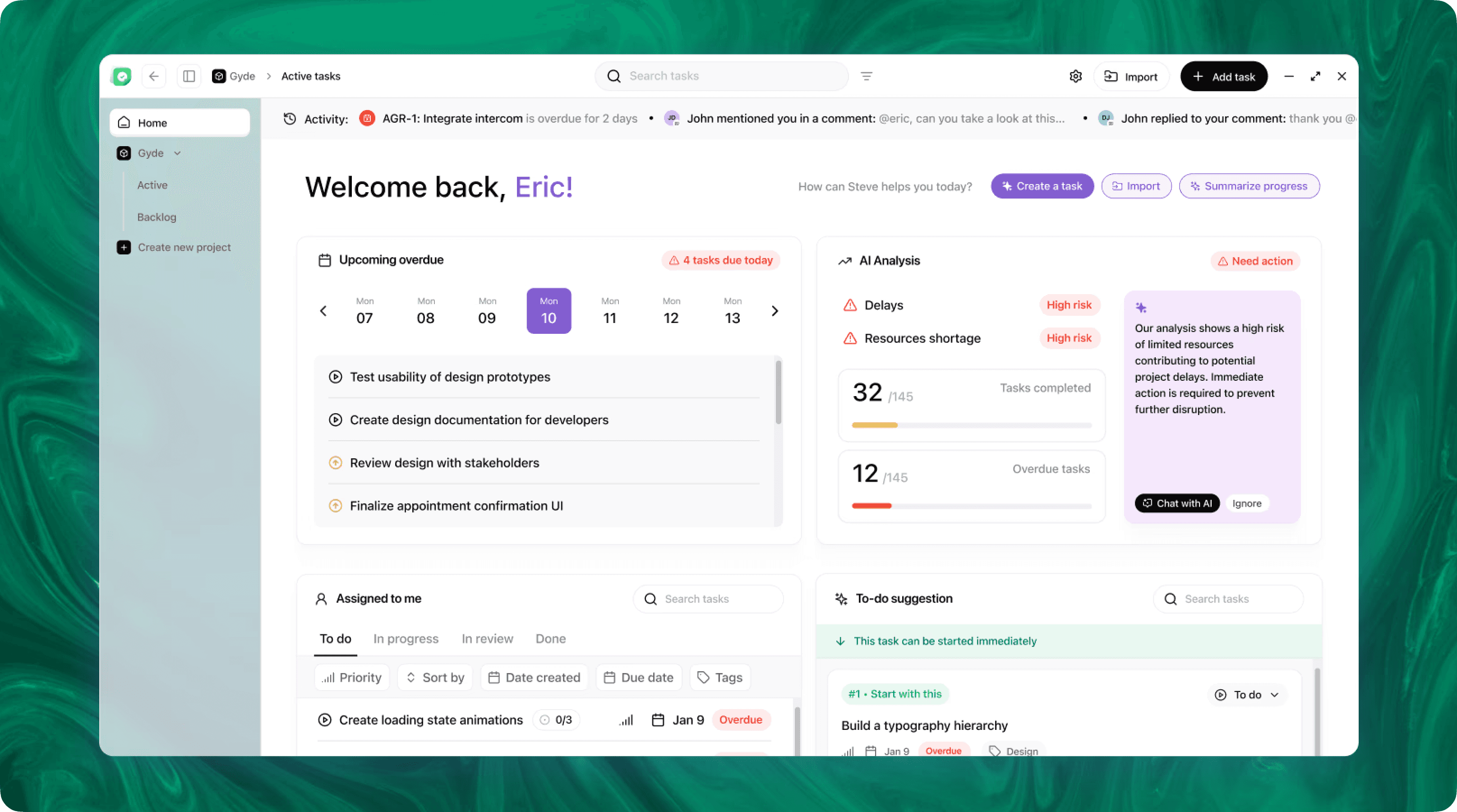
Steve is an AI-native operating system designed to streamline business operations through intelligent automation. Leveraging advanced AI agents, Steve enables users to manage tasks, generate content, and optimize workflows using natural language commands. Its proactive approach anticipates user needs, facilitating seamless collaboration across various domains, including app development, content creation, and social media management.
Conclusion
Getting meaningful answers from scattered company data requires more than search: it requires a conversational surface that understands files, remembers organizational context, extracts signals from email, and turns findings into tracked work. As an AI OS, Steve combines these elements to make conversational queries reliably useful: users ask natural questions, receive synthesized evidence-backed answers, and move directly to action without switching tools. That makes data not just visible but operational.