How To Transition From Legacy Software To AI OS
Nov 24, 2025

Discovery And Extraction Using Steve Chat: Integration-aware chat and file-aware analysis convert scattered artifacts into a prioritized migration inventory.
Plan And Coordinate With Task Management: AI-suggested sprints and contextual tasks turn migration scope into executable, traceable work.
Rebuild Incrementally With Vibe Studio: Prompt-driven Flutter scaffolds enable module-by-module UI replacement behind feature flags to reduce risk.
Orchestrate Agents Via Shared Memory: Shared memory lets agents exchange state and validation results, automating checks and reducing manual handoffs.
Introduction
Transitioning from legacy software to an AI Operating System requires more than lift-and-shift: it demands discovery, incremental replacement, and orchestration of automation so business continuity is preserved. Steve is an AI OS designed to accelerate that transition by combining integration-aware conversational tools, production-ready app generation, agent collaboration, and AI-driven project coordination. This article outlines a practical path to migrate systems with minimal disruption using Steve.
Discovery And Extraction Using Steve Chat
Start by inventorying the artifacts and workflows that matter: documents, spreadsheets, code repositories, and process descriptions. Steve Chat connects to Google Drive, Sheets, GitHub, Notion and other services, and is file-aware—so teams can surface documents and spreadsheets directly inside conversational threads. Use conversational prompts to tag, summarize, and prioritize assets: ask Steve to summarize long threads, extract key fields from spreadsheets, or pull recent commits and issues from repositories. Practical scenario: a migration lead uploads a legacy system spec and several CSV exports, then asks Steve to list data tables, map column meanings, and produce a short migration checklist—turning scattered artifacts into a single, actionable source of truth.
Plan And Coordinate With Task Management
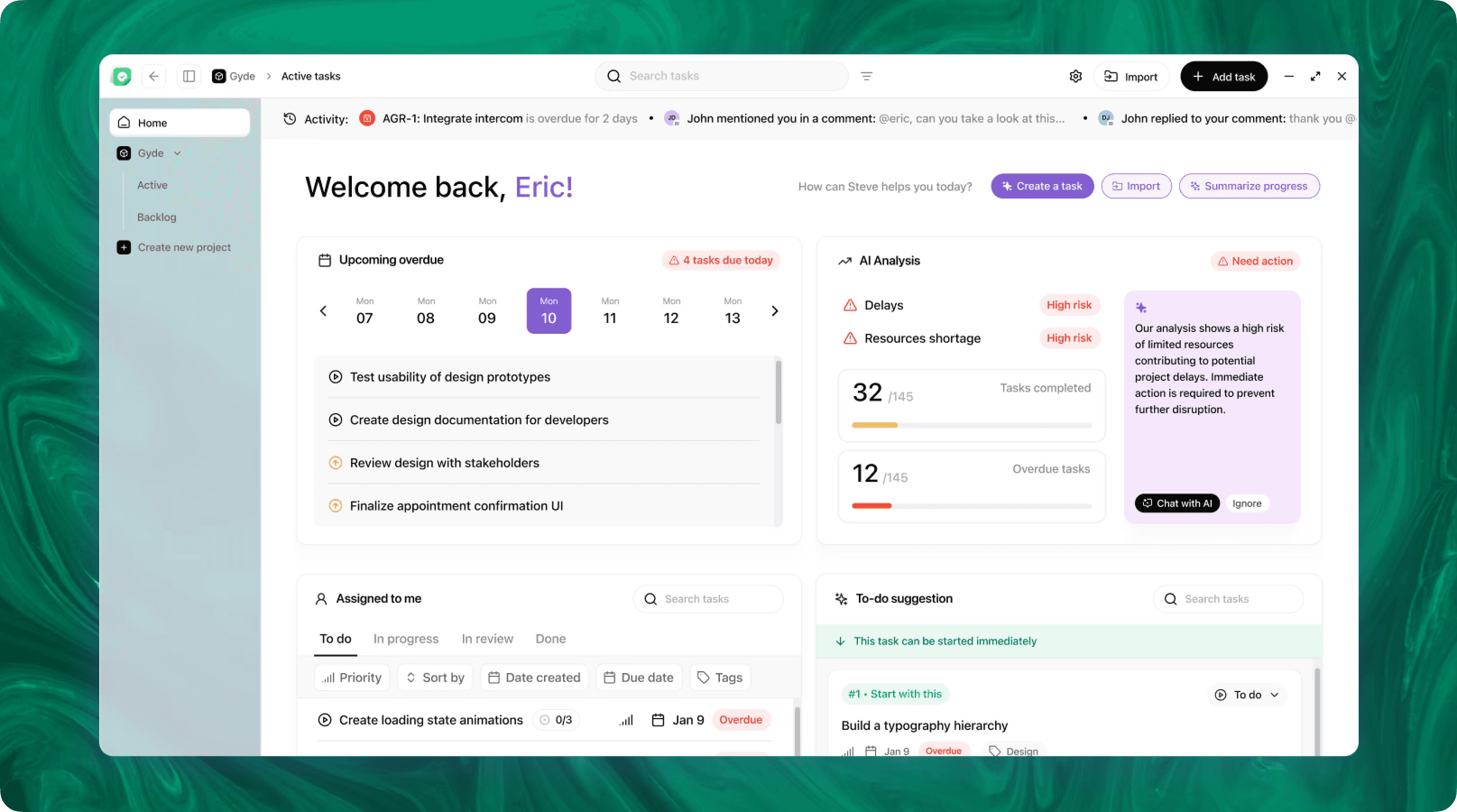
Translate discovery into execution with Steve’s Task Management. Create migration epics, import or link existing tickets from issue trackers, and use AI-suggested sprints to phase work: isolate data migration, UI replacement, integration adapters, and cutover validation. The system proposes sprint boundaries and organizes tasks into a single workspace, keeping planning and execution aligned with contextual artifacts gathered via Steve Chat. Practical scenario: the product manager runs a planning prompt that generates a three-sprint migration plan; Steve converts it into tasks, assigns owners, and keeps the team’s context—documents, code references, and chat threads—attached to each task for traceable progress.
Rebuild Incrementally With Vibe Studio
Replace legacy front ends and components incrementally using Vibe Studio’s prompt-driven app generation. Describe a screen or feature in natural language and Vibe Studio generates production-ready Flutter scaffolding that your engineers can preview and iterate on. This reduces the risk of a big-bang rewrite: teams can replace one module at a time, test it against legacy backends, and validate UX before fully switching traffic. Practical scenario: a team needs a modern user settings page to replace a bulky legacy UI; they prompt Vibe Studio for an accessible, responsive settings screen—receive a working Flutter scaffold, preview it, and deploy it behind a feature flag while the backend remains unchanged.
Orchestrate Agents Via Shared Memory
Coordinate migration subtasks and automated checks using Steve’s shared memory system, which lets AI agents collaborate and hold contextual state. Agents can share discovered schemas, migration progress, and validation results so the system reasons across tasks rather than in isolated silos. Practical scenario: a data-extraction agent writes table mappings into shared memory; a validation agent reads those mappings, runs checks against imported test data, and posts a summary back into the migration task—enabling immediate remediation without manual handoffs.
Steve
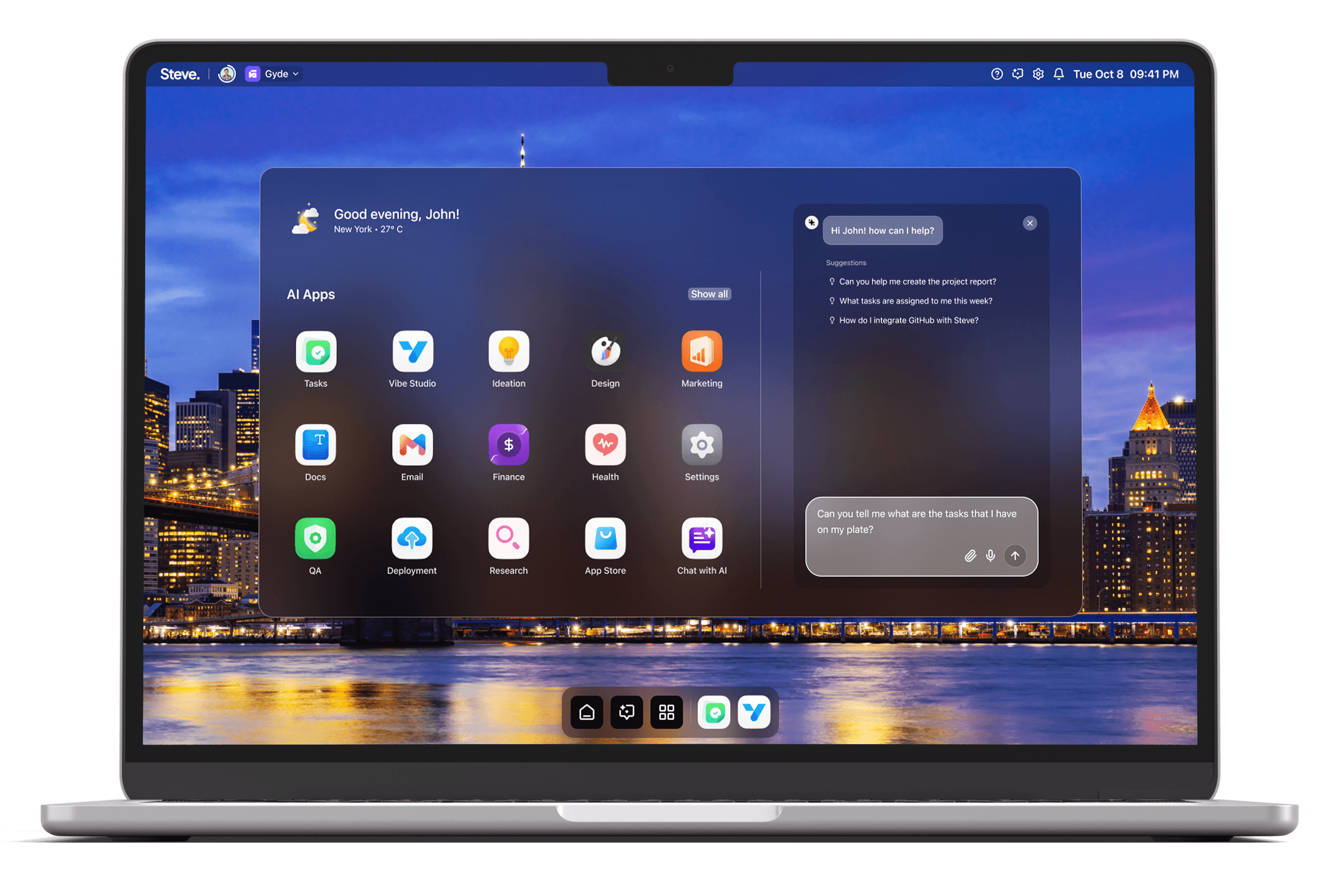
Steve is an AI-native operating system designed to streamline business operations through intelligent automation. Leveraging advanced AI agents, Steve enables users to manage tasks, generate content, and optimize workflows using natural language commands. Its proactive approach anticipates user needs, facilitating seamless collaboration across various domains, including app development, content creation, and social media management.
Conclusion
Migrating from legacy software to an AI OS is manageable when discovery, planning, rebuild, and orchestration are treated as connected activities. Steve accelerates each step: Steve Chat centralizes and summarizes artifacts, Task Management turns plans into executable sprints, Vibe Studio produces incremental replacement apps from prompts, and shared memory lets agents coordinate validation and progress. The result is a phased, auditable migration that preserves business continuity while unlocking AI-native workflows on the new platform.