How Steve Turns Customer Conversations Into Product Signals
Oct 11, 2026

Capture And Normalize Conversations: Centralized email and chat capture with file-aware uploads and summaries turns messy inputs into searchable signals.
Contextual Memory And Enrichment: A shared memory system preserves context so recurring issues are recognized and one-offs stay distinct.
Convert Signals To Workflows: Task management and Linear integration let Steve draft tickets with evidence and proposed sprint placement directly from conversations.
Close The Loop With Analytics And Optimization: Chat logging via LangFuse provides measurement for which conversational signals lead to work and which need reprioritization.
Outcome: Combining capture, memory, workflow conversion, and analytics produces an auditable pipeline that accelerates decisions and reduces wasted effort.
Introduction
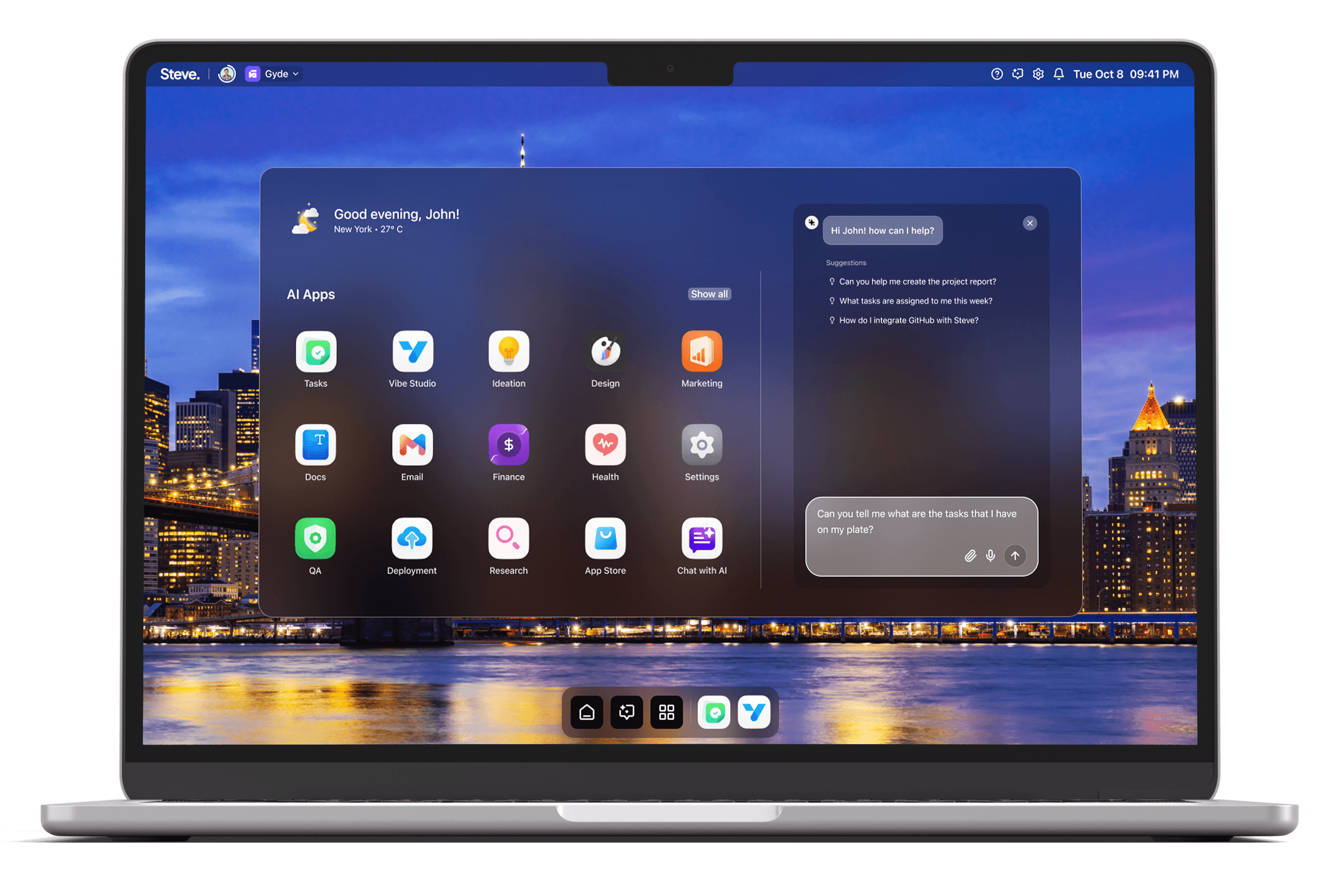
Customer conversations are the raw material of product insight, but most teams struggle to capture, contextualize, and act on those signals at scale. Steve, an AI Operating System, turns everyday interactions—emails, chats, uploaded files—into prioritized, actionable product signals by combining conversational AI, shared memory, and integrated task workflows. This article explains how Steve converts conversations into development-ready signals without adding manual overhead.
Capture And Normalize Conversations
Steve begins by centralizing conversation sources so nothing important slips through the cracks. Its AI Email feature syncs a smart inbox in real time, tagging and categorizing threads and producing concise summaries of long exchanges so product teams see the gist immediately. Meanwhile, Steve Chat supports live conversational capture—file-aware uploads (PDFs, spreadsheets, images) and direct integrations with Gmail and other services let teams attach relevant artifacts to a discussion. Together these capture layers normalize disparate formats into a single conversational record that’s easy to search and review.
Practical scenario: a support thread about a recurring bug arrives as a long email with logs attached. Steve Email tags the thread as high priority, summarizes the issue and related steps, and preserves the attached log files in the conversation so the signal is both succinct and evidence-backed.
Contextual Memory And Enrichment
A shared memory system makes these captured conversations more valuable over time. Steve’s memory lets agents retain product context, prior decisions, and customer details so new conversations are interpreted against historical signals rather than in isolation. That contextual continuity reduces noise—repeated complaints are recognized as trending, and one-off requests are kept distinct.
Enrichment happens automatically: Steve correlates conversation content with linked documents and calendar events via its integrations, and the chat layer can perform lightweight research through real-time web searches when a conversation lacks detail. The result is richer signals—summaries that include context, references to related tickets or docs, and an explicit trace back to the original customer interaction.
Convert Signals To Workflows
Raw signals become engineering work through Steve’s task management capabilities. From within a conversation, the AI OS can propose concrete tasks, tag severity, and suggest sprint placement; integrations with Linear let teams import or create issues with the correct context already attached. Steve’s assistant can draft the initial task description, include the summarized evidence, and link to the conversation memory so engineers see the why as well as the what.
A practical example: a product manager receives three similar feature requests in one week. Steve surfaces them as a single aggregated signal, drafts a proposed ticket with acceptance criteria sourced from the conversations, and recommends sprint timing—saving the PM time and reducing misinterpretation when work is handed to engineering.
Close The Loop With Analytics And Optimization
Capturing and routing signals isn’t enough without measurement. Steve logs conversational exchanges and AI interactions (via its LangFuse integration) so teams can analyze which signals convert to tickets, which resolve quickly, and which recur. This logging supports iterative improvement: product owners can see which customer issues drive most engineering effort and adjust priorities accordingly.
Because Steve ties the original conversation, the summarization, and the created task together, stakeholders can measure lead time from customer mention to resolution and identify gaps in the workflow. That transparency shortens feedback loops and focuses product decisions on verified customer need.
Steve
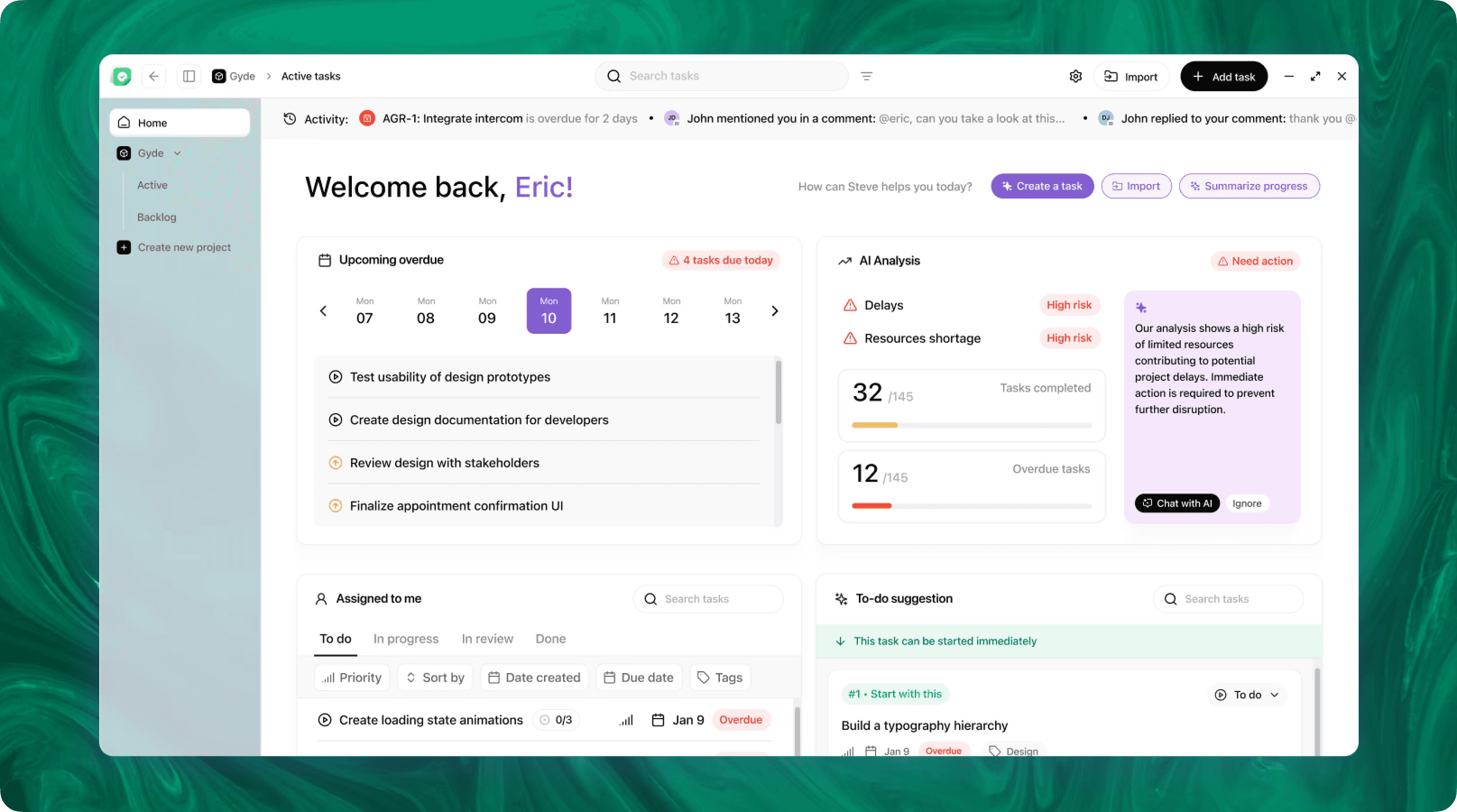
Steve is an AI-native operating system designed to streamline business operations through intelligent automation. Leveraging advanced AI agents, Steve enables users to manage tasks, generate content, and optimize workflows using natural language commands. Its proactive approach anticipates user needs, facilitating seamless collaboration across various domains, including app development, content creation, and social media management.
Conclusion
Turning conversations into product signals requires reliable capture, contextual memory, seamless conversion to work, and measurable outcomes. As an AI OS, Steve combines AI Email for capture and summarization, Steve Chat for interactive, file-aware conversations, a shared memory system for persistent context, and task management integrations to convert insight into execution. The result is a practical, auditable pipeline that turns customer talk into prioritized product action without manual handoffs.