How Steve Transforms Conversations Into Business Outputs
Feb 9, 2026

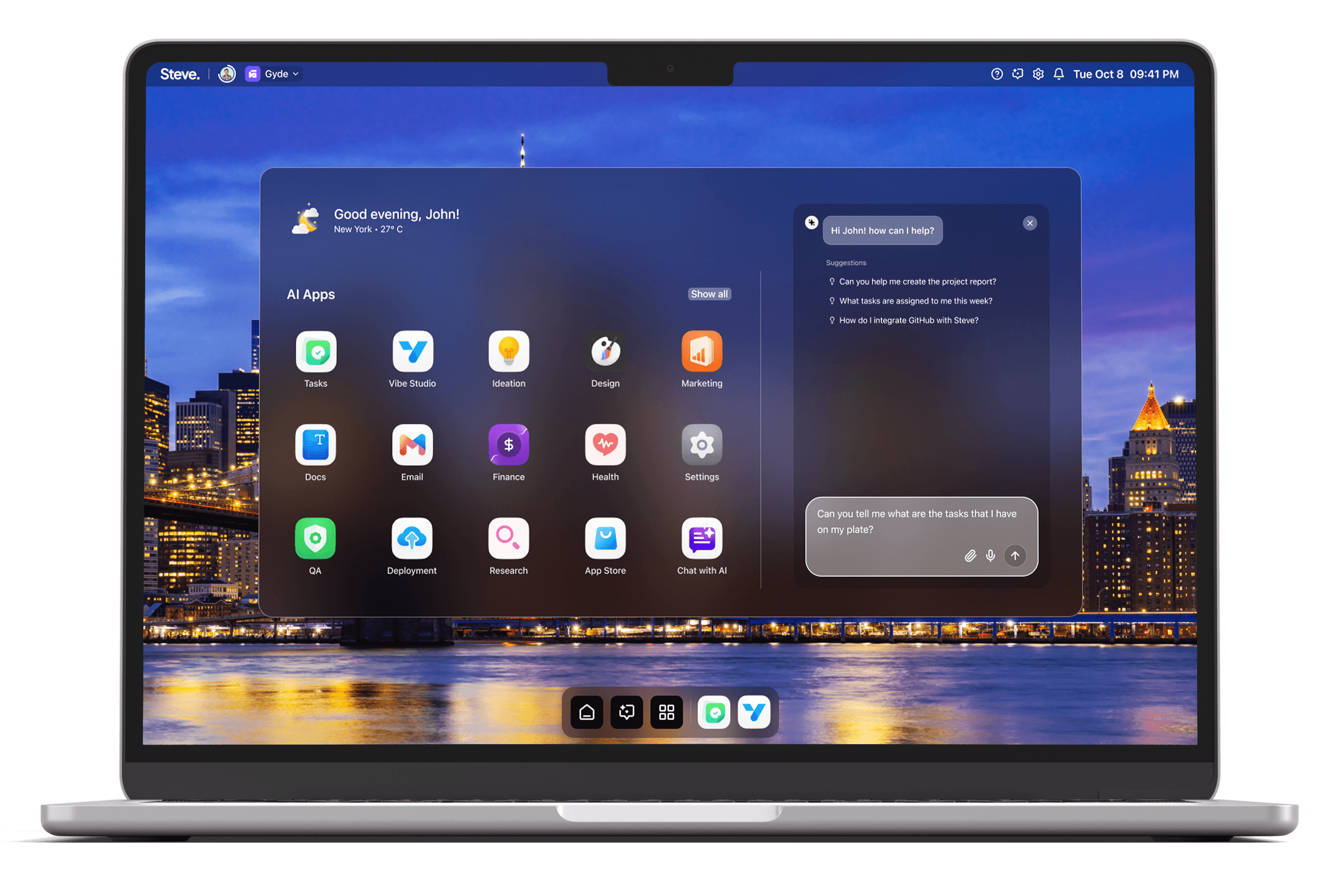
From Chat To Contextual Decisions: Steve Chat preserves context and links dialogue to files, schedules, and next steps so decisions become immediate actions.
Email Threads Into Actionable Work: AI Email summarizes threads, highlights action items, and drafts replies that convert correspondence into commitments.
Turning Conversation Into Tasks And Sprints: Task Management automates backlog creation and sprint proposals, bridging meetings with execution tracked in integrated workflows.
Prototypes And Deliverables From Prompts: Vibe Studio generates production-ready app scaffolds and previews from conversation, turning requirements into tangible artifacts.
Operational Velocity: Combining chat, inbox intelligence, task automation, and prompt-to-code reduces handoffs, preserves intent, and accelerates delivery.
Introduction
Conversations are where strategy, context, and decisions originate; turning those exchanges into measurable business outputs determines how fast teams execute. Steve, an AI Operating System (AI OS), converts natural dialogue into deliverables by combining a conversational interface, inbox intelligence, automated task workflows, and prompt-driven prototyping. This article explains how Steve turns talk into action—shortening cycles from decision to delivery while preserving context and ownership.
From Chat To Contextual Decisions
Steve Chat captures intent the moment it appears and turns it into concrete actions. Because the chat is file-aware, integrates with calendars and repositories, and retains conversational memory, a single interaction can surface the right document, schedule a follow-up, or create a draft plan without manual lookup. In practice, a product lead can ask Steve to "summarize last week's research and suggest next steps," and the assistant returns a prioritized list tied to specific files, people, and dates. That contextual continuity keeps decisions grounded in evidence and prevents the common loss of nuance that happens when conversations are copied into isolated tools.
Email Threads Into Actionable Work
Long email threads become a source of structured outputs rather than cognitive overhead when Steve Email sits between conversation and execution. Steve automatically tags and summarizes threads, highlights action items, and generates context-aware reply drafts aligned with ongoing initiatives. A stakeholder can hand an ambiguous thread to Steve and receive a concise brief plus suggested calendar slots and a task list that reflects the thread's commitments. By surfacing the obligations hidden in inbox noise, Steve shortens the path from agreement to assignment and reduces missed commitments.
Turning Conversation Into Tasks And Sprints
Steve converts conversational outcomes into tracked work through its AI-powered task management boards and integrations. After a meeting or chat, Steve can create tasks, group them into a proposed sprint, and link each item to the original conversation and supporting documents. With Linear integration, those tasks become actionable tickets in development workflows, preserving the trace from decision to implementation. For example, a cross-functional planning session yields an organized backlog: prioritized tasks, owners, and due dates appear automatically, enabling teams to begin execution at the end of the meeting rather than after hours of manual triage.
Prototypes And Deliverables From Prompts
When outputs require artifacts—not just tasks—Vibe Studio converts product conversations into tangible prototypes and code. A PM or designer describes requirements conversationally and receives a production-ready Flutter scaffold, device-specific previews, and a bundle ready to push to GitHub. This makes ideation sessions directly productive: design intent becomes a runnable artifact that stakeholders can preview and developers can iterate on. By generating code and previews from the same conversation that produced the requirements, Steve preserves context and reduces translation errors between teams.
Steve
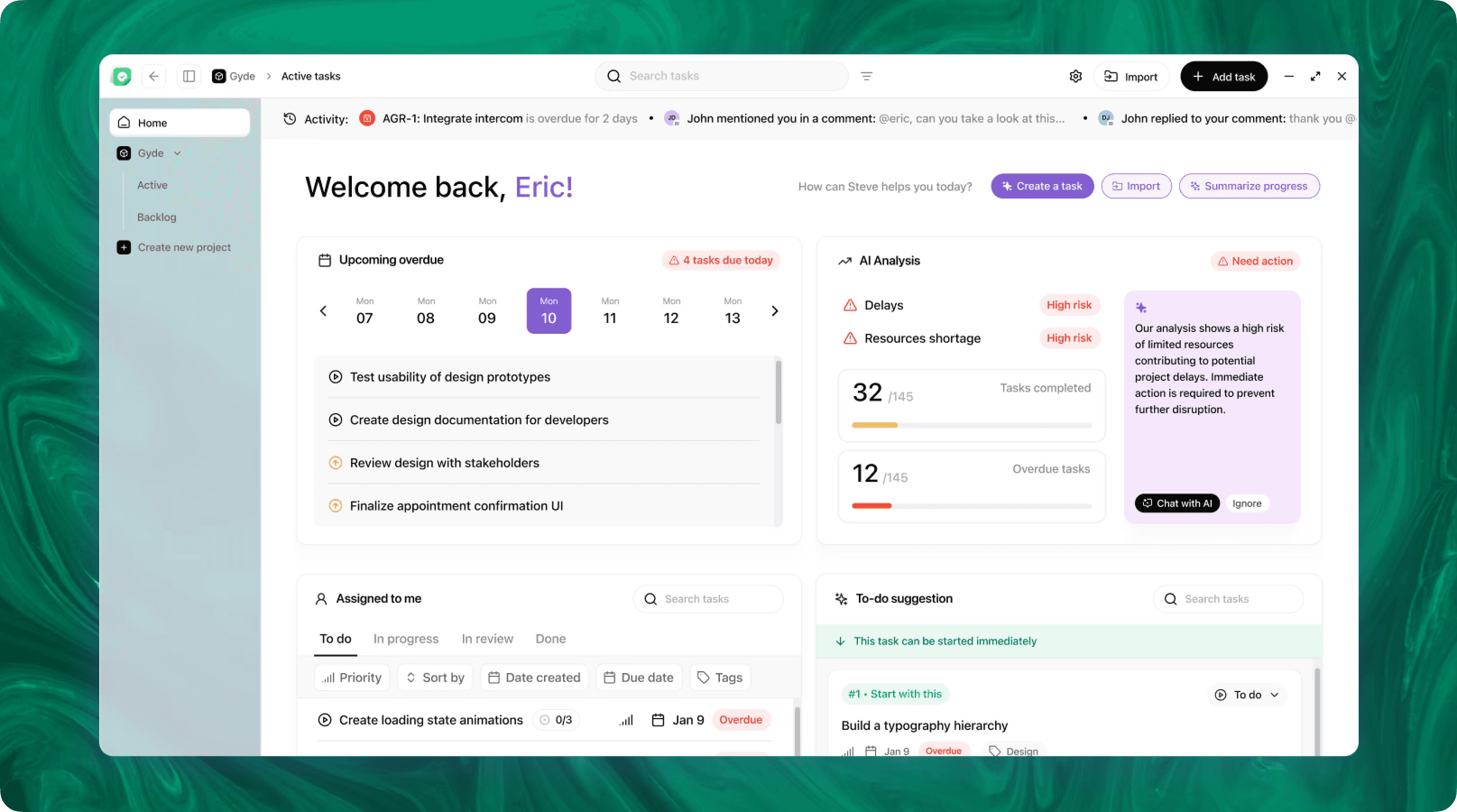
Steve is an AI-native operating system designed to streamline business operations through intelligent automation. Leveraging advanced AI agents, Steve enables users to manage tasks, generate content, and optimize workflows using natural language commands. Its proactive approach anticipates user needs, facilitating seamless collaboration across various domains, including app development, content creation, and social media management.
Conclusion
Steve, as an AI Operating System, collapses the gap between dialogue and delivery by capturing conversational context, surfacing commitments from email, converting decisions into tracked tasks, and producing prototypes from prompts. That end-to-end linkage—conversation to document, task, calendar event, or codebase—reduces handoff friction, accelerates time to value, and keeps accountability visible. Teams that treat Steve as an operational layer transform routine conversations into repeatable business outputs without adding process overhead.