How Steve Supports Long-Range Planning Without Rigid Processes
Oct 11, 2026

Shared Memory Enables Coherent Long-Term Context: Persistent memory preserves decisions and assumptions so plans evolve without losing institutional knowledge.
Task Management That Proposes Sprints, Not Prescriptions: AI-driven boards and Linear integration translate objectives into adaptable milestones instead of enforcing fixed processes.
Steve Chat Keeps Plans Synchronized and Actionable: Conversational orchestration ties milestones to calendars, documents, and issues while carrying context forward.
AI Email Keeps Strategic Threads Visible and Prioritized: Summaries and intelligent categorization surface decisions and action items needed for long-range adjustments.
Workflow Benefit: Combining memory, adaptive tasking, conversational sync, and prioritized inboxes makes long-range planning resilient and responsive.
Introduction
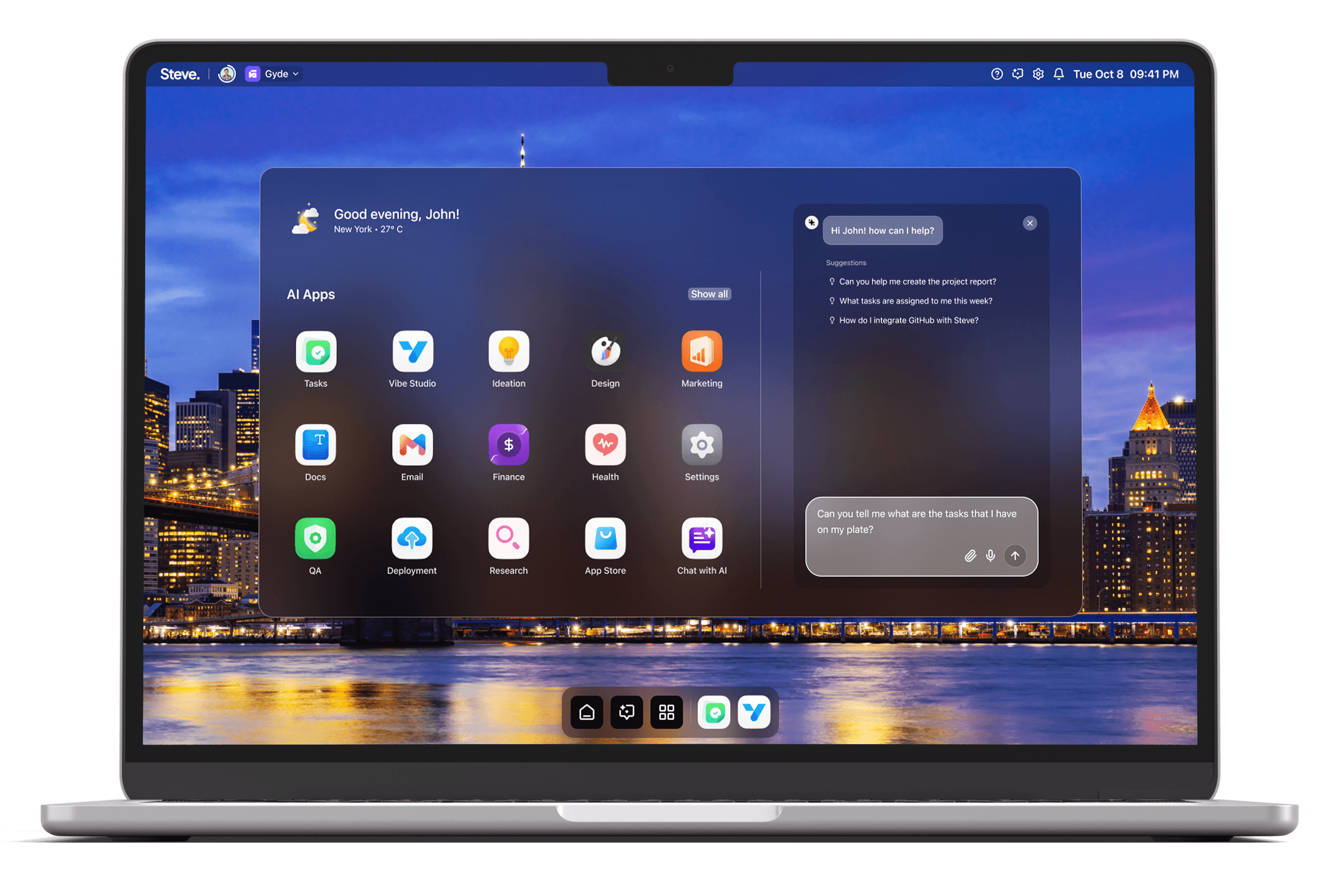
Long-range planning succeeds when teams keep direction without being chained to inflexible processes. Steve, an AI Operating System, supports strategic horizons by preserving context, proposing adaptable plans, and keeping execution aligned across time and tools. As an AI OS designed for conversational interaction and integrated automation, Steve helps organizations plan multiple quarters ahead while staying responsive to change.
Shared Memory Enables Coherent Long-Term Context
Steve's shared memory system lets AI agents retain and surface planning context across conversations and tools, so strategic assumptions and historical decisions stay available as teams iterate. Rather than restarting discussions each quarter, product leaders can reference the shared memory to recall earlier prioritization trade-offs, user-research highlights, and risk tolerances. In practice, a head of product can ask Steve to summarize the rationale behind last year’s roadmap decisions, then use that summary to test whether new feature requests align with long-range goals. This continuity reduces rework, preserves institutional knowledge, and lets teams evolve plans without rigid documentation rituals.
Task Management That Proposes Sprints, Not Prescriptions
Steve’s AI-powered task management boards and Linear integration generate sprint suggestions and translate strategic goals into prioritized work without enforcing a single process. Planners can describe outcome-focused objectives, and Steve will propose a sequence of milestones, recommended sprint scope, and dependency notes that adapt as priorities shift. For example, a growth team aiming for a 20% conversion lift can feed objectives into Steve; it will create a tentative roadmap, map tasks to engineers or designers, and surface when scope changes invalidate prior assumptions. This approach keeps long-range intent intact while treating execution timelines as living plans rather than fixed mandates.
Steve Chat Keeps Plans Synchronized and Actionable
Steve Chat provides a conversational layer that binds planning artifacts to calendars, documents, and code, making long-range plans actionable at the team level. With integrations across Google Calendar, Drive, Sheets, Notion, and GitHub, Steve translates strategic milestones into scheduled reviews, shared briefs, and issue trackers—then updates them conversationally as conditions change. A product manager can ask Steve to schedule quarterly roadmap reviews, attach relevant research files, and create a tracking board that auto-syncs with ongoing development. Because Steve Chat is file-aware and maintains memory, every update carries the relevant context forward, reducing brittle handoffs between strategy and execution.
AI Email Keeps Strategic Threads Visible and Prioritized
High-level planning depends on keeping strategic conversations visible over time; Steve's AI Email reduces noise and preserves signal by categorizing threads, summarizing long exchanges, and highlighting action items. Executives and cross-functional leads receive concise thread summaries that reference prior decisions stored in Steve’s memory, enabling faster judgment on whether new requests require roadmap changes. In a scenario where a major partner proposes a scope change mid-quarter, Steve’s inbox summary surfaces the relevant historical rationale, helping leaders decide quickly whether to reallocate resources or defer the request—without convening an ad hoc committee.
Steve
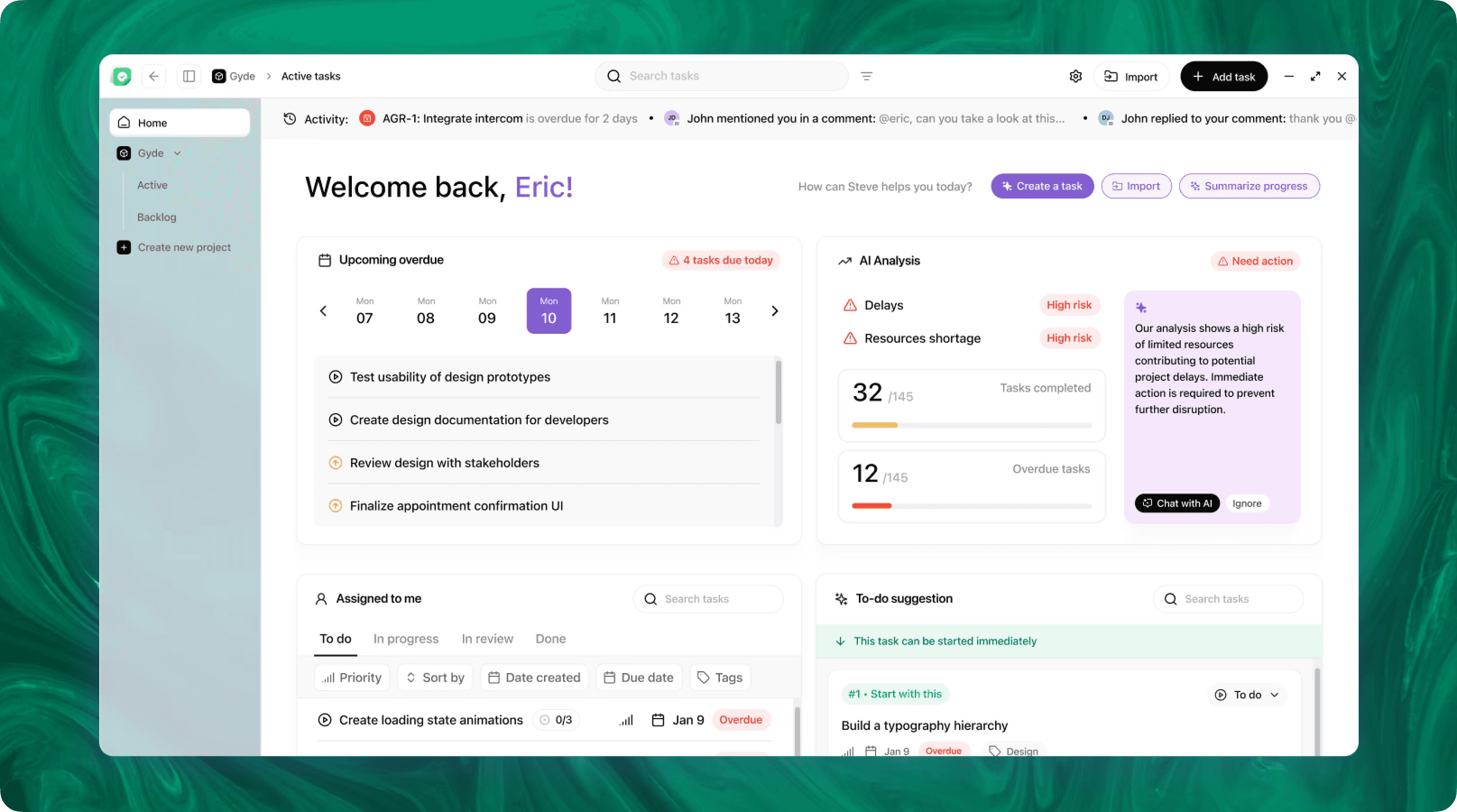
Steve is an AI-native operating system designed to streamline business operations through intelligent automation. Leveraging advanced AI agents, Steve enables users to manage tasks, generate content, and optimize workflows using natural language commands. Its proactive approach anticipates user needs, facilitating seamless collaboration across various domains, including app development, content creation, and social media management.
Conclusion
Long-range planning that eschews rigid processes depends on three capabilities: persistent context, adaptive task orchestration, and seamless synchronization across people and tools. Steve combines a shared memory system, task management that proposes flexible sprints, conversational orchestration via Steve Chat, and AI Email that preserves strategic threads. As an AI Operating System, Steve preserves intent while enabling teams to iterate, reprioritize, and execute—so planning becomes a dynamic asset, not a document that ages the moment it’s published.