How Steve Replaces Manual Status Reporting
Feb 19, 2026

Real-Time Status From Integrated Data: Integrations with calendars, email, docs, and GitHub let Steve report live progress instead of relying on manual check-ins.
Automated Summaries And Prioritization: AI Email and chat produce short, prioritized updates and suggested replies that cut interpretation time.
Context-Preserving Shared Memory: A shared memory system keeps historical context so status focuses on deltas and decisions, not repetition.
Actionable Task Management And Sync: Task boards and Linear integration let Steve convert reported issues into tracked tasks and sprint items quickly.
Workflow Benefit: Combining live signals, concise summaries, memory, and task sync moves teams from status-as-ritual to status-as-coordination.
Introduction
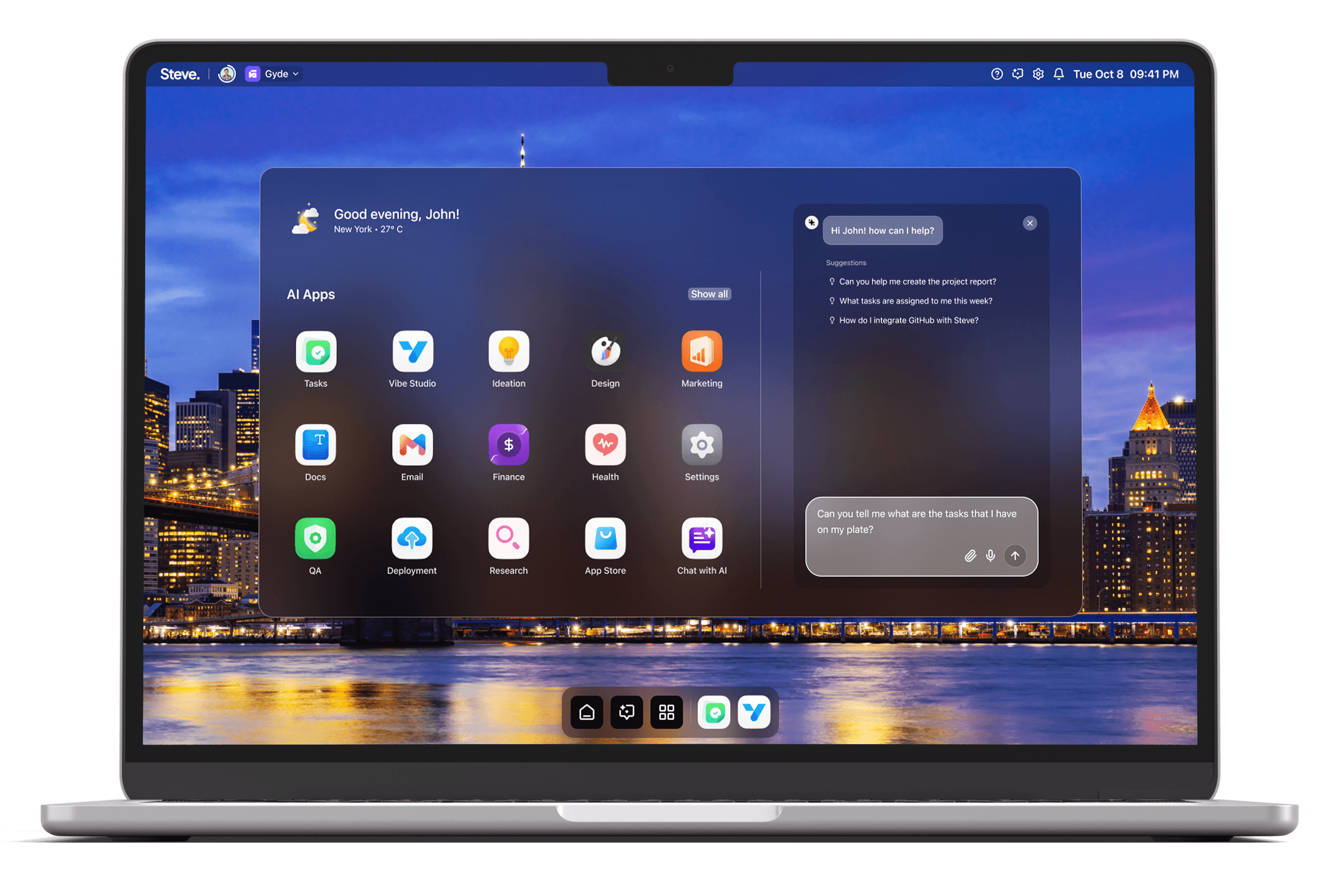
Manual status reporting consumes time, fragments context, and delays decisions. Steve replaces routine status updates by consolidating signals, drafting concise summaries, and turning conversational inputs into tracked actions—so teams spend less time reporting and more time moving work forward. As an AI Operating System, Steve centralizes inboxes, meetings, documents, and task boards into a single conversational surface that produces real-time, actionable status information.
Real-Time Status From Integrated Data
Steve pulls status from connected sources instead of waiting for manual updates. With direct integrations to Google Calendar, Gmail, Google Drive, Sheets, Notion, GitHub, and 40+ services, Steve reads meeting notes, pull requests, calendar blocks, and document edits to present current progress without interrupting contributors. In practice, a program manager can ask Steve for the current sprint health and receive a synthesis that reflects last-night CI runs, open PRs in GitHub, and calendar availability for critical reviewers.
This live visibility eliminates stale status snapshots and reduces the need for daily standup recaps. Because Steve is file-aware, it can reference uploaded PDFs or spreadsheets to surface numbers or quote documents verbatim, so the reported status links directly to evidence rather than to recollection.
Automated Summaries And Prioritization
Steve transforms long threads and scattered notes into short, prioritized updates. The integrated AI Email inbox generates instant summaries of long email threads and tags critical conversations automatically; Steve Chat offers context-aware reply suggestions that align with ongoing work. Together these capabilities let the AI OS produce one-paragraph status updates with a clear next-step recommendation.
For example, after a stakeholder thread runs lengthy for several days, Steve creates a concise summary: current decision points, blocked items, and recommended owners—then surfaces a suggested response or a calendar slot to resolve the block. This both reduces cognitive load and accelerates resolution, because teams receive prioritized, action-oriented status rather than raw conversations that require interpretation.
Context-Preserving Shared Memory
Steve’s shared memory system preserves context across interactions so status updates remain consistent and traceable over time. Agents and LLMs remember past decisions, accepted assumptions, and prior summaries, enabling follow-up queries like “What changed since last Friday’s update?” to produce an immediately coherent delta report.
A delivery lead can query Steve in natural language—“Show changes on the release plan since last update and list new blockers”—and receive a response that ties new facts to previous status, with links to the underlying artifacts. This continuity prevents redundant reporting and ensures that updates focus on deltas and decisions rather than repeating known information.
Actionable Task Management And Sync
Steve closes the loop between reporting and execution by converting status items into tasks and synchronizing them across planning tools. Its task management boards integrate with Linear and other systems, letting Steve propose sprints, create issues, and track execution based on conversational inputs and discovered blockers. That means a status report produced in Steve can become a sprint backlog item within minutes.
Consider a QA report that identifies three regressions: Steve can summarize the findings, tag severity, create tasks in the team board, assign owners, and schedule follow-up—either via chat or by drafting messages in the integrated AI Email. This reduces friction between awareness and action and keeps reporting tightly coupled to outcomes.
Steve
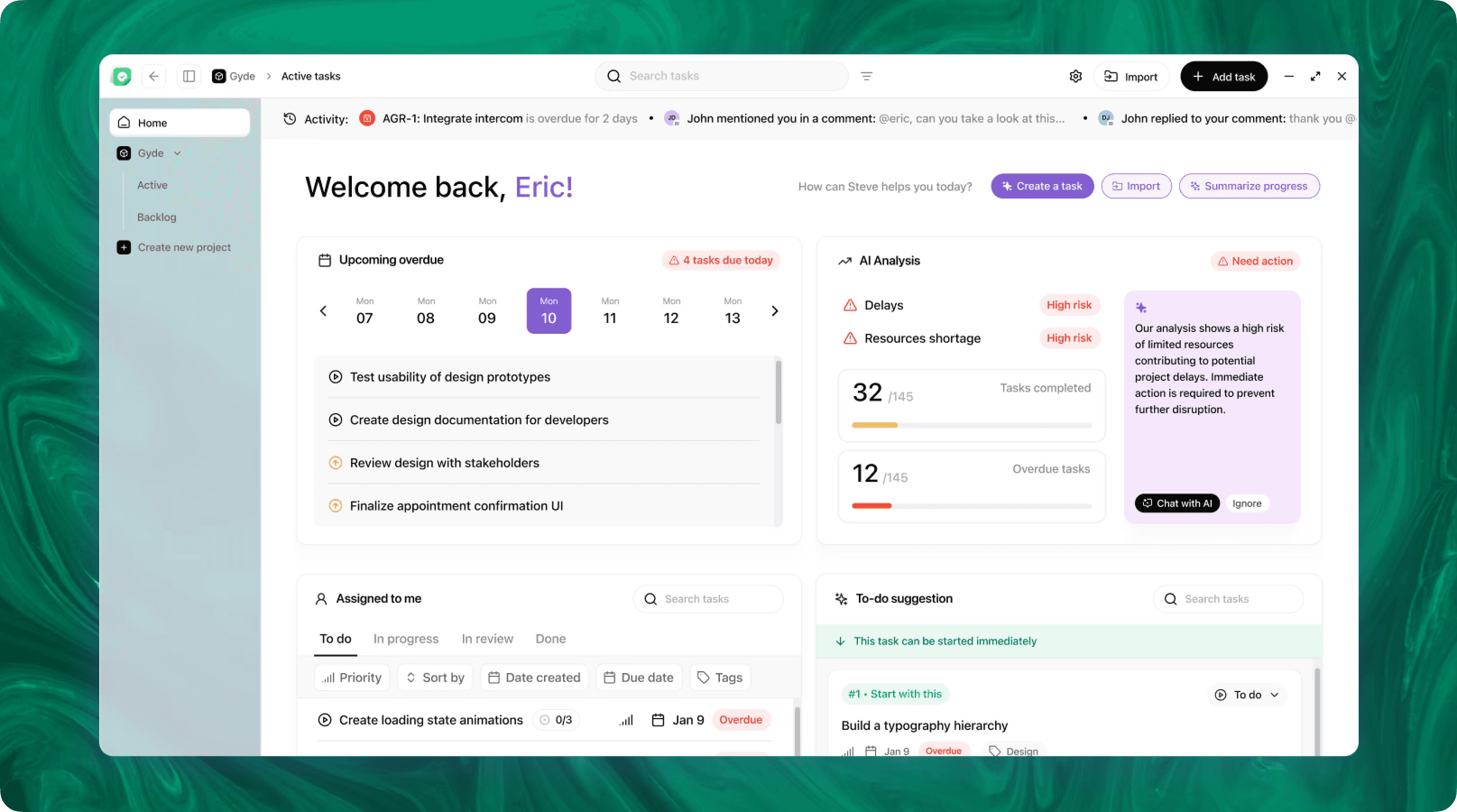
Steve is an AI-native operating system designed to streamline business operations through intelligent automation. Leveraging advanced AI agents, Steve enables users to manage tasks, generate content, and optimize workflows using natural language commands. Its proactive approach anticipates user needs, facilitating seamless collaboration across various domains, including app development, content creation, and social media management.
Conclusion
Replacing manual status reporting requires more than automation—it requires contextual understanding, reliable integrations, and an ability to translate updates into action. Steve combines connected data sources, AI-driven summaries, a shared memory for continuity, and integrated task management so teams receive concise, evidence-backed status and immediate pathways to resolution. As an AI OS, Steve turns reporting from a ritual into a real-time coordination system that reduces noise, surfaces priorities, and accelerates decisions.