How Steve Reduces The Hidden Cost Of Business Complexity
Oct 11, 2026

Centralized Knowledge With Shared Memory: Persistent context prevents repeated explanations and accelerates troubleshooting.
Simplified Decision-Making With AI Email: Thread summarization and context-aware drafts convert noise into rapid decisions.
Real-Time Coordination Through Task Boards: AI-driven task creation and sprint suggestions reduce status meetings and ambiguous ownership.
Conversational Integration With Steve Chat: A file-aware conversational layer eliminates tool-switching and preserves action-context linkage.
Operational Impact: Combined, these features cut redundant labor, speed decisions, and lower coordination overhead.
Introduction
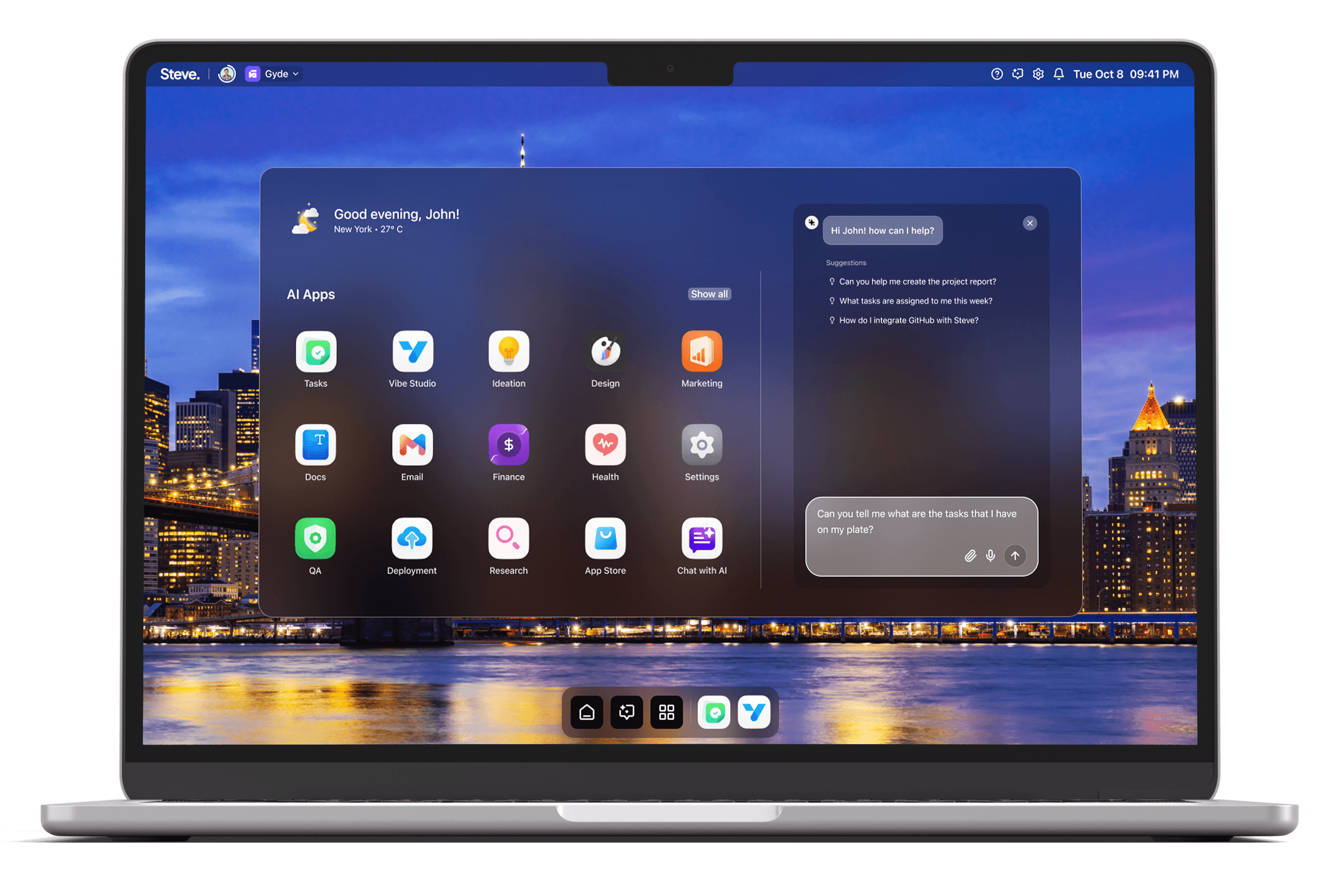
Hidden costs from business complexity—misaligned context, duplicated work, slow decisions, and fragmented communications—erode margins and slow growth. Steve, an AI Operating System, reduces those costs by centralizing context, automating coordination, and surfacing concise actions so teams can focus on impact. This article explains four practical ways Steve cuts complexity using its shared memory system, conversational Steve Chat, AI Email, and AI-powered task management.
Centralized Knowledge With Shared Memory
Complex organizations pay for lost context: every handoff requires re-explaining assumptions, priorities, and constraints. Steve’s shared memory system gives AI agents a persistent, cross-tool context store so information travels with the work instead of getting stuck in meetings or threads. In practice, when a customer issue surfaces in email or chat, the shared memory records the problem statement, previous triage steps, and related docs; subsequent agent actions—whether drafting a reply, creating a ticket, or suggesting next steps—inherit that exact context.
The result is fewer redundant investigations and faster troubleshooting: engineers don’t rebuild timelines from scratch, product managers see prior decisions, and stakeholders receive consistent updates. That continuity directly reduces the hidden labor hours that accumulate when teams recreate context or repeat clarification cycles.
Simplified Decision-Making With AI Email
Inbox noise and long threads hide the decisions organizations need to move forward. Steve’s AI Email reduces friction by auto-tagging, summarizing threads, and providing context-aware reply suggestions so busy leaders can make or delegate decisions without re-reading entire exchanges. For example, a long vendor negotiation thread can be condensed into a short executive summary with identified action items and recommended responses; a one-click draft aligns tone and facts with the ongoing project context.
By turning hours of email triage into minutes of focused review, Steve shrinks delays and prevents stalled initiatives. Priorities surface faster, important commitments are less likely to slip, and distributed teams maintain momentum without scheduling extra alignment meetings—lowering both direct labor and coordination overhead.
Real-Time Coordination Through Task Boards
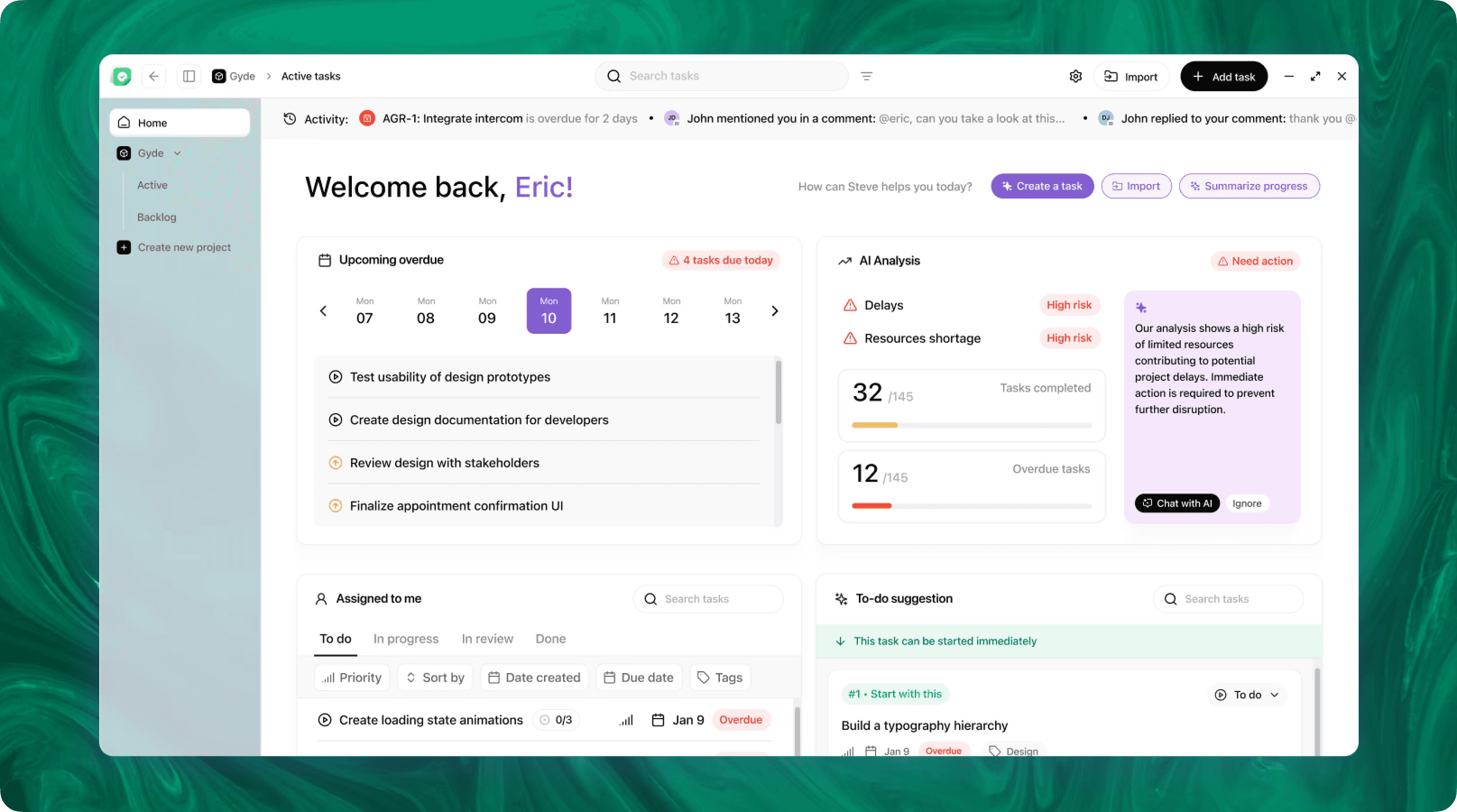
Execution cost hides in untracked work and ambiguous ownership. Steve’s AI-powered task management boards centralize planning and automate routine project hygiene: importing and syncing tasks, proposing sprint scopes, and updating boards based on conversational inputs. That means when a customer request arrives through chat or email, Steve can create a prioritized task, assign it to the right owner, and propose a timeboxed sprint—keeping planning and execution aligned.
Practical gains include fewer status-sync meetings, faster handoffs between design and engineering, and clearer accountability. Because Steve ties task updates to the same contextual memory and communication channels, teams spend less time reconciling what changed and more time shipping outcomes, trimming the intangible cost of scattered responsibilities.
Conversational Integration With Steve Chat
Complexity often spikes when teams switch tools to schedule, search documents, or reconcile data. Steve Chat acts as a conversational control plane that talks to calendars, drives, and other services while remaining file-aware and context-rich. Teams can ask Steve to find the latest spec, pull meeting notes, schedule a follow-up, or surface related decisions—without leaving the same conversational thread.
This reduces workflow fragmentation: instead of juggling multiple tabs and copy-pasting context, users keep a single dialogue that executes actions and returns precise outputs. For example, a product lead can ask Steve to summarize a design doc and create an associated task while referencing the relevant email conversation—preserving linkage between knowledge, action, and accountability. That tight integration prevents context loss and reduces the hidden rework that follows disconnected workflows.
Steve
Steve is an AI-native operating system designed to streamline business operations through intelligent automation. Leveraging advanced AI agents, Steve enables users to manage tasks, generate content, and optimize workflows using natural language commands. Its proactive approach anticipates user needs, facilitating seamless collaboration across various domains, including app development, content creation, and social media management.
Conclusion
Business complexity is costly when context is fragmented, decisions are delayed, and execution is opaque. Steve, as an AI OS, addresses these sources directly: shared memory preserves institutional context, AI Email turns threads into decisions, task boards automate coordination, and Steve Chat keeps actions and knowledge accessible in one conversational fabric. Together these capabilities shrink hidden operational costs—reducing redundant work, accelerating decisions, and keeping teams aligned—so organizations move faster with fewer overheads.