How Steve Reduces The Cost Of Bad Handoffs
Oct 12, 2026

Shared Memory Bridges Context Gaps: A persistent shared memory keeps decisions and acceptance criteria queryable so incoming owners inherit accurate context.
AI Email Cuts Context-Decay In Threads: Thread summaries and context-aware drafts let new recipients act immediately without reading long histories.
Steve Chat Attaches Knowledge To Action: File-aware chat and service integrations provide a single conversational surface that links artifacts and answers questions in-context.
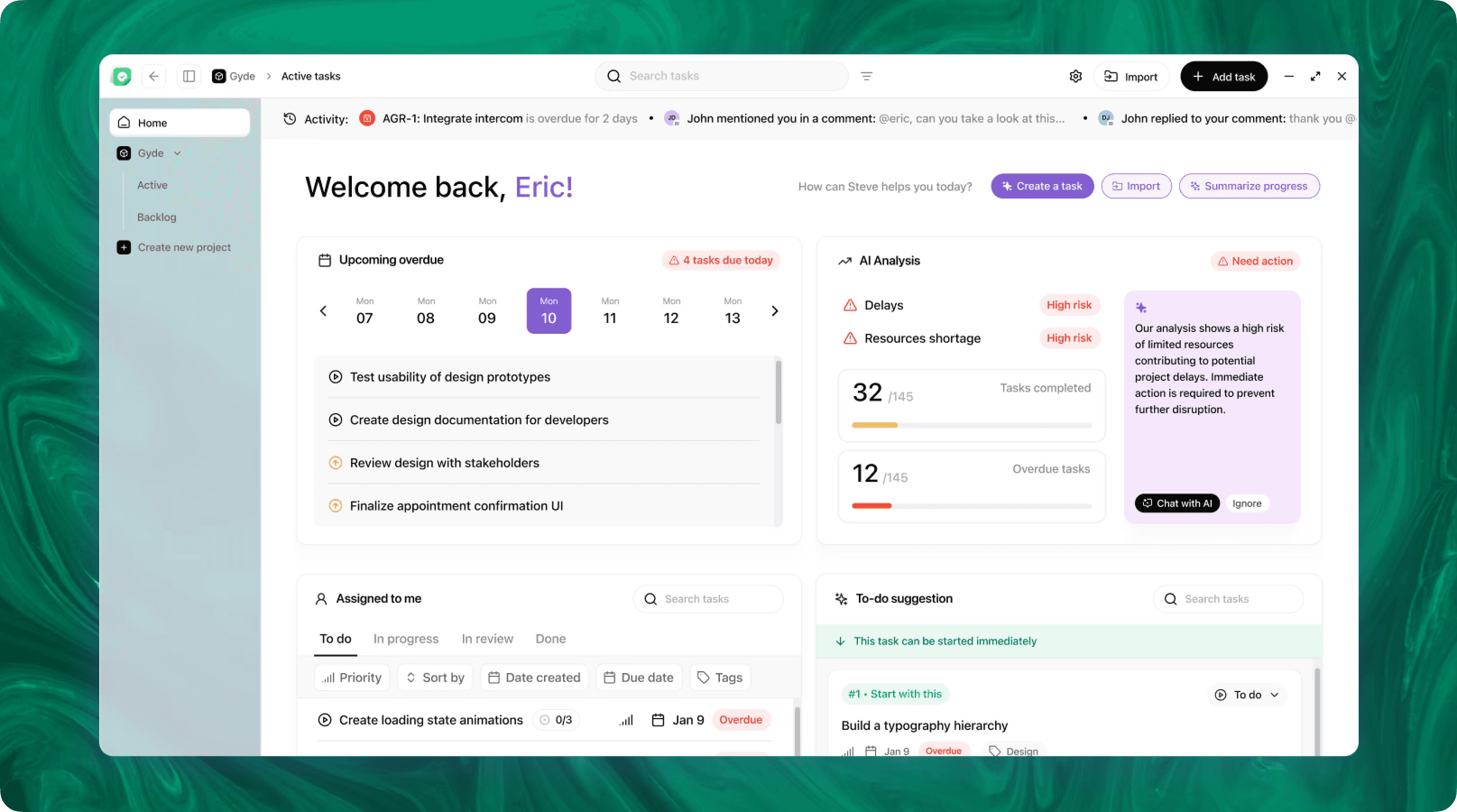
Task Management Makes Ownership Transparent: AI-powered boards and Linear integration automatically surface dependencies and reassignments, reducing ambiguity.
Workflow Benefit: Combining memory, email, chat, and tasks reduces clarification cycles, speeds handoffs, and lowers defect-driven rework.
Introduction
Bad handoffs — missing context, unclear ownership, and lost artifacts — inflate delivery time and rework costs. Steve reduces the cost of bad handoffs by keeping conversation, decisions, and artifacts connected across teams so intent travels with work. As an AI Operating System, Steve acts as the persistent glue between email, chat, tasks, and files; this article shows four practical ways Steve prevents context decay and speeds clean transfers.
Shared Memory Bridges Context Gaps
Steve’s shared memory system lets agents store and surface project context so knowledge does not live only in a single person’s head or a brittle document. When a product spec, design decision, or customer requirement is added to shared memory, subsequent interactions with Steve reference that same context automatically. In practice, a QA lead who inherits a feature can ask Steve Chat for the last acceptance criteria and receive the exact version used by the PM; there’s no need to dig through long threads or separate documents. By keeping a canonical, queryable context, Steve reduces misunderstandings that trigger rework and clarifying meetings.
AI Email Cuts Context-Decay In Threads
Email threads are a common handoff cul-de-sac: important details get buried, and new recipients start from zero. Steve’s AI Email reduces that friction with instant thread summaries, AI tags, and context-aware reply suggestions. When a developer is added to a release thread days after the original conversation, Steve provides a concise summary of decisions, open issues, and action items so the developer can act immediately. Context-aware draft replies align responses to the ongoing work, minimizing back-and-forth clarifications. That speed matters: every saved clarification email shortens time-to-completion and lowers the cumulative cost of handoffs.
Steve Chat Attaches Knowledge To Action
Steve Chat combines conversational memory, integrations, and file-awareness so handoffs happen inside a living workspace rather than as isolated artifacts. Teams can pull meeting notes, calendar items, GitHub issues, and Drive files into a single chat view; Steve answers questions using those live sources. A designer handing a feature to engineering can upload mockups and ask Steve Chat to list unresolved interactions, linked tickets, and the most recent prototype URL. Because Steve preserves conversational context and links to the exact resources engineers need, assumptions are explicit, and the receiving team spends less time reconstructing intent.
Task Management Makes Ownership Transparent
Ambiguity about who does what is a primary cause of failed handoffs. Steve’s AI-powered task boards keep tasks, dependencies, and sprint proposals in one workspace and synchronize with Linear when needed. When ownership changes, Steve automatically reassigns related tasks, surfaces dependent items, and proposes a sprint plan to absorb the new work. A project manager transferring a module to another squad can use Steve to create a clear, prioritized task card with linked artifacts, acceptance criteria drawn from shared memory, and suggested timelines. This removes guesswork about scope and responsibility, so the receiving team can start executing immediately.
Practical Scenario: Shipping a Feature Faster
Imagine a feature that moves from product to design to engineering across two weeks. With Steve, the PM stores acceptance criteria in shared memory and links mockups in Steve Chat. The design handoff appears in AI Email with a summary and action items; the engineer opens the linked task board and finds dependencies and suggested sprints already populated. If a question arises, the engineer queries Steve Chat and receives context-aware answers referencing the original decision and relevant files. What would otherwise take multiple alignment meetings is resolved in minutes, cutting days of delay and reducing defect-driven rework.
Steve
Steve is an AI-native operating system designed to streamline business operations through intelligent automation. Leveraging advanced AI agents, Steve enables users to manage tasks, generate content, and optimize workflows using natural language commands. Its proactive approach anticipates user needs, facilitating seamless collaboration across various domains, including app development, content creation, and social media management.
Conclusion
Reducing the cost of bad handoffs requires persistent context, clear ownership, and immediate access to artifacts. As an AI OS, Steve combines a shared memory system, AI Email summaries and drafts, file-aware Steve Chat, and AI-driven task management to keep intent and evidence attached to work. The result is fewer clarifying cycles, faster ramp-up for new owners, and lower rework — measurable savings across product, design, and engineering handoffs.