How Steve Reduces Meeting Overload Through Shared Context
Oct 11, 2026

Shared Memory As A Single Source Of Truth: Persistent memory prevents repeated context-setting by storing decisions, files, and conversation history for agent access.
Pre-Meeting Compression With Contextual Briefs: AI-generated summaries and suggested agendas let attendees prepare quickly, shortening meeting time to decision-focused discussion.
Replace Recurring Status Meetings With Asynchronous Updates: Task Management centralizes progress and proposes sprints so routine stand-ups become asynchronous reviews.
Capture Actions And Automate Follow-Up: Notes become tracked tasks and drafted replies, converting meeting decisions directly into execution items.
Practical Decision Cycle: Combining shared memory, conversational sync, email summaries, and task orchestration shortens the end-to-end decision-to-delivery loop.
Introduction
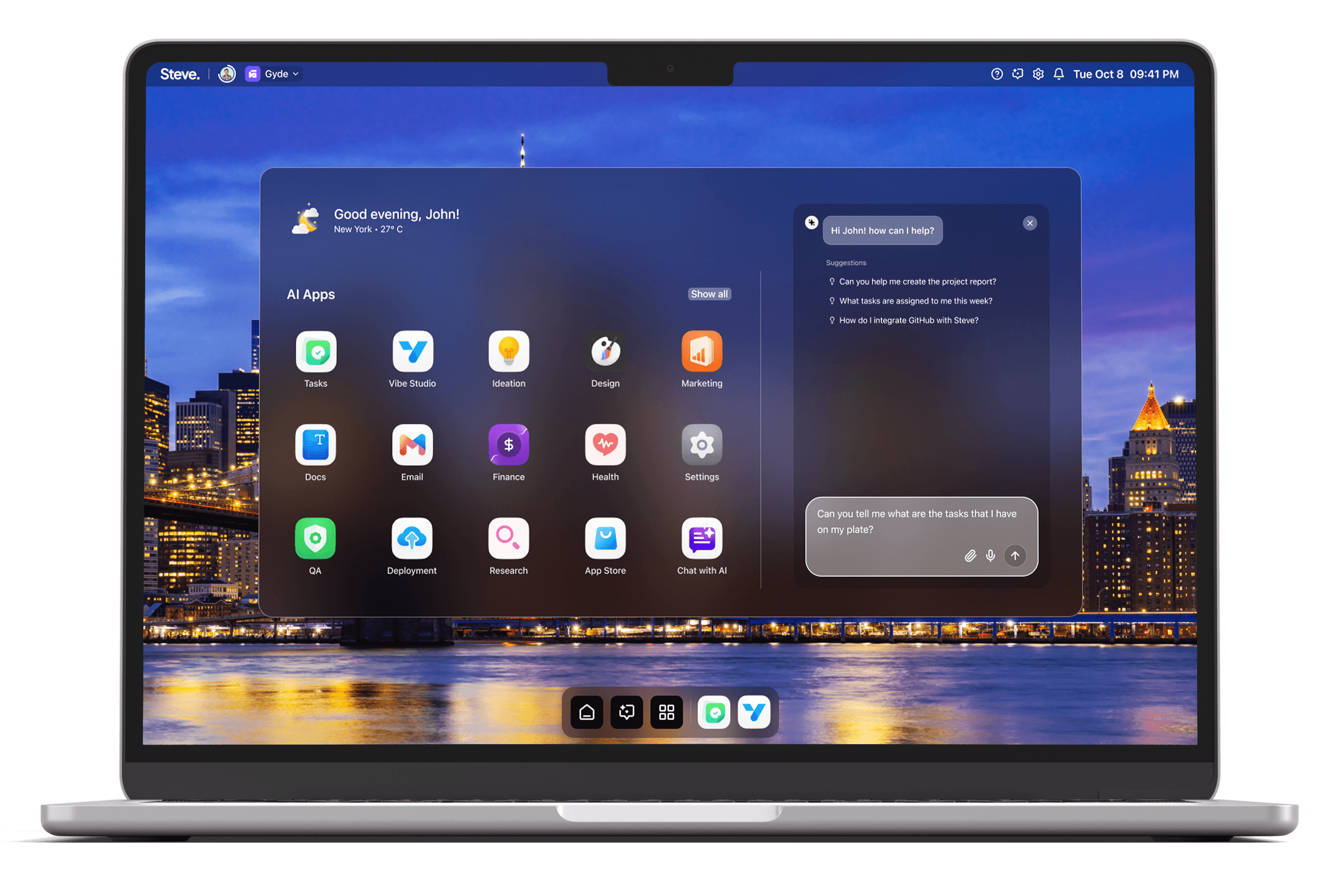
Meeting overload costs time and clarity: long threads, repeated context-setting, and loosely tracked decisions turn synchronous meetings into expensive rituals. Steve reduces meeting overload through shared context by combining a persistent memory for AI agents, an integrated conversational assistant, contextual email capabilities, and task management that links decisions to execution. As an AI Operating System, Steve centralizes what teams already know, surfaces what matters before people gather, and automates the follow-through that typically extends meetings into more meetings.
Shared Memory As A Single Source Of Truth
Steve’s shared memory system lets AI agents preserve conversation history, file references, and decision context so teams stop rebuilding context at the start of every meeting. Instead of rehashing prior threads, participants rely on a living repository that captures background, past proposals, and constraints encountered across Steve Chat and AI Email. In practice, a program manager preparing for a design review can ask Steve to surface the latest requirements, prior trade-offs, and related design files—eliminating the ten-minute catch-up and keeping the meeting focused on unresolved questions.
Pre-Meeting Compression With Contextual Briefs
Steve compresses meeting time by delivering concise, context-aware pre-reads and suggested agendas derived from the shared memory. AI Email generates instant summaries of long threads and highlights open decisions; Steve Chat synthesizes related documents, calendar items, and notes so attendees arrive aligned. A typical workflow: before a sprint planning, Steve drafts a one-page brief listing key decisions, outstanding blockers, and proposed agenda items; attendees scan the brief instead of consuming full threads, shortening the meeting to decision-making and clarifying trade-offs.
Replace Recurring Status Meetings With Asynchronous Updates
Task Management in Steve converts steady-status chatter into structured, asynchronous updates that reduce the need for recurring check-ins. Tasks imported or created from chat and email live in a single workspace with context-aware automation; Steve proposes sprint groupings and surfaces progress so stakeholders can review updates on demand. Teams that adopt this pattern reserve synchronous time only for exceptions—complex decisions or impediments—rather than routine status, cutting meeting frequency while preserving visibility into execution.
Capture Actions And Automate Follow-Up
When meetings do happen, Steve shortens their lifecycle by turning notes into actionable work and automating follow-up communications. Steve Chat supports syncing notes and managing issues; combined with Task Management’s ability to create tasks from prompts and AI Email’s context-aware draft suggestions, the platform converts agreed actions into assigned tasks, timelines, and suggested replies. For example, after a roadmap discussion, Steve can extract action items, map them to Linear imports, propose sprint slots, and draft notification emails for stakeholders—so the momentum created in the meeting translates immediately into tracked execution rather than drifting into forgotten to-dos.
Practical Scenario: A Faster Decision Cycle
Imagine a product-team cadence retooled around Steve. Prior to a cross-functional review, AI Email delivers a summarized thread and Steve Chat compiles relevant docs from shared memory. The meeting focuses on three unresolved trade-offs; Steve captures each decision and creates corresponding tasks with owners and due dates. Post-meeting, Steve drafts follow-up messages and updates the shared workspace. The result: fewer meetings, shorter meetings, and a tighter link between decisions and delivery.
Steve
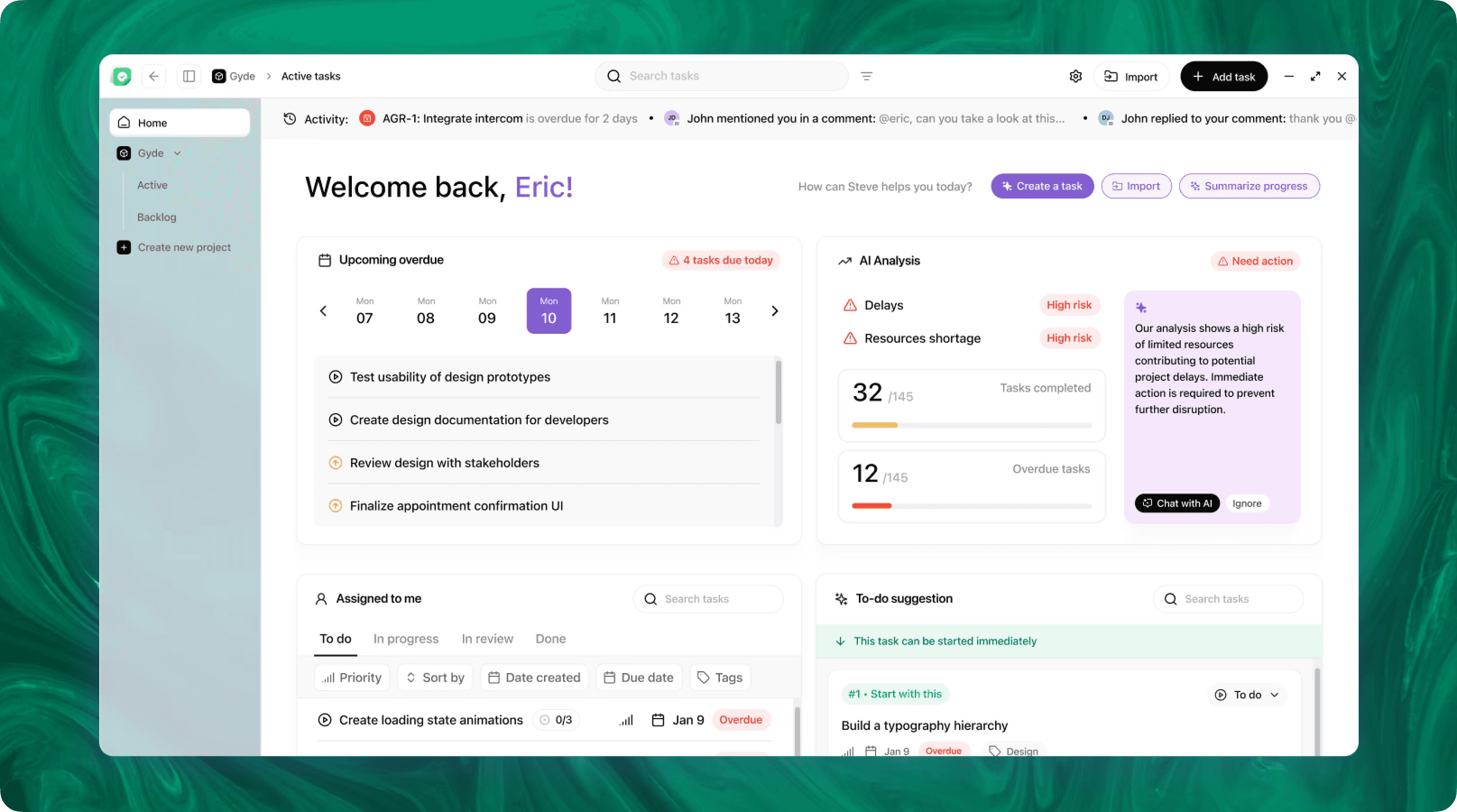
Steve is an AI-native operating system designed to streamline business operations through intelligent automation. Leveraging advanced AI agents, Steve enables users to manage tasks, generate content, and optimize workflows using natural language commands. Its proactive approach anticipates user needs, facilitating seamless collaboration across various domains, including app development, content creation, and social media management.
Conclusion
Reducing meeting overload requires shredding friction at every phase: pre-meeting alignment, focused discussion, and reliable follow-through. As an AI OS, Steve applies shared memory, conversational intelligence, contextual email, and task orchestration to keep context alive across tools and time. The outcome is practical—less synchronous time spent re-establishing context and more time devoted to decision-making and execution.