How Steve Reduces Coordination Costs In Growing Teams
Feb 9, 2026

Centralized Context With Shared Memory: Persistent shared memory preserves decisions and artifacts so teams avoid repetitive status updates and lost context.
Asynchronous Coordination Through AI Email: AI Email condenses long threads into prioritized summaries and reply suggestions, cutting back-and-forth and clarifying next steps.
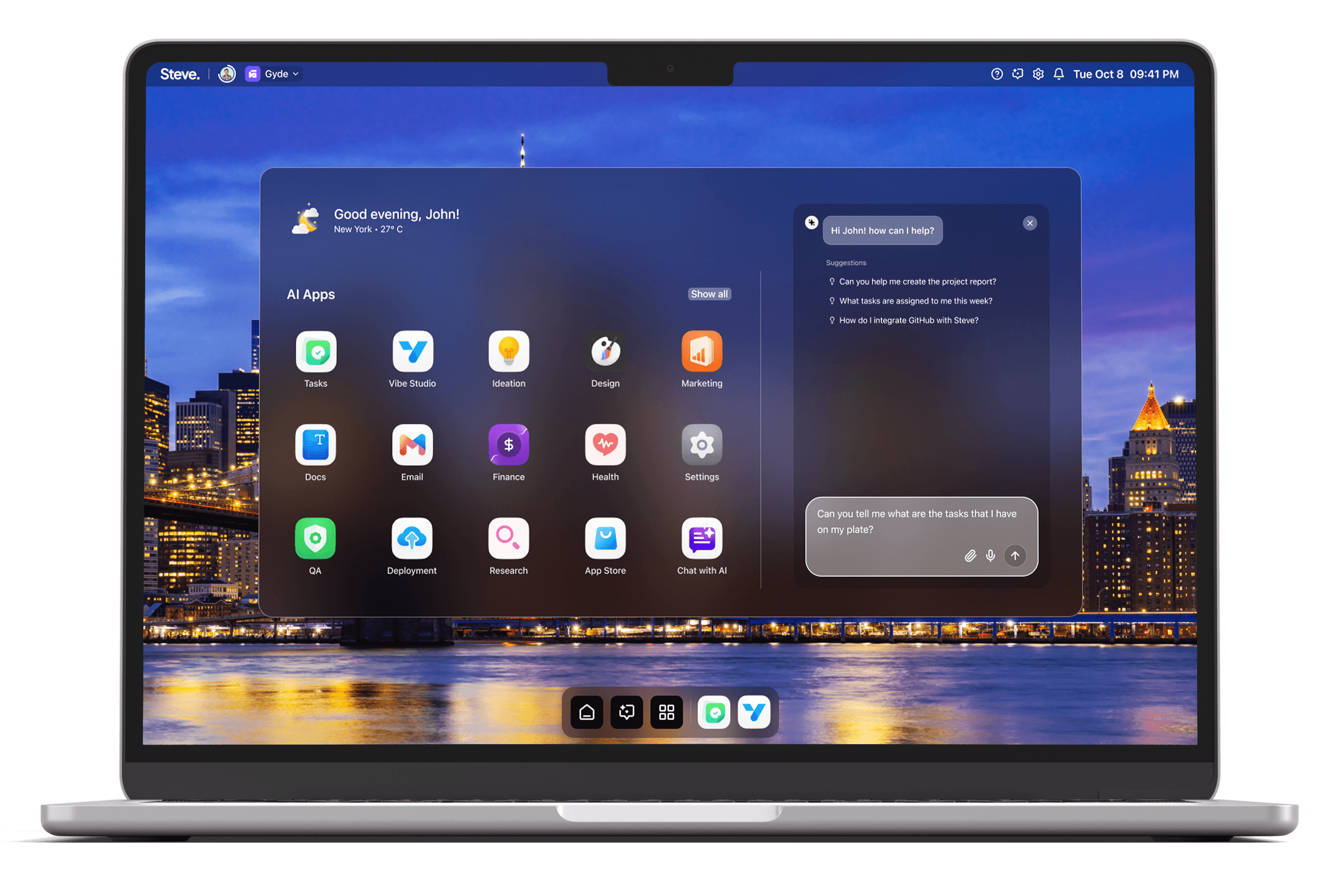
Conversational Orchestration With Steve Chat: Steve Chat unifies scheduling, document retrieval, and integrations into a single conversational flow, reducing tool switching and manual coordination.
AI-Powered Task Management For Clear Ownership: AI-assisted boards generate prioritized sprints, suggest assignees, and keep execution visible, lowering planning time and confusion over responsibilities.
Combined Effect: Together these features reduce meetings, interruptions, and rework by making context portable, communication actionable, and planning automated.
Introduction
Coordination costs rise fast as teams scale: more handoffs, more context loss, and more time spent aligning rather than building. Steve reduces those costs by combining conversational orchestration, persistent shared memory, intelligent inboxing, and AI-assisted task management. As an AI Operating System, Steve acts as a single contextual layer that preserves decisions, routes work, and minimizes unnecessary meetings so teams can focus on delivery.
Centralized Context With Shared Memory
A persistent shared memory keeps context continuous across conversations, tasks, and documents so teams stop repeating the same background. Steve’s shared memory records agent interactions and relevant artifacts, enabling AI agents to reference earlier decisions when generating summaries, drafting messages, or proposing next steps. In practice, a product manager can ask Steve for the latest spec decisions and receive an answer that reflects prior chats, uploaded documents, and task history—eliminating tedious status recaps in meetings. That continuity reduces synchronous coordination because engineers, designers, and PMs can trust the same, up-to-date context without re-running discovery calls.
Asynchronous Coordination Through AI Email
Email remains a primary coordination channel; Steve reduces friction by turning threads into actionable, summarized inputs. Its AI Email features tag and categorize incoming messages, generate concise thread summaries, and produce context-aware reply suggestions tied to ongoing work. For example, when a vendor thread contains deployment requirements, Steve summarizes the obligations, highlights blockers, and suggests a concise response aligned with current sprint priorities. Teams receive fewer clarifying follow-ups and can triage decisions faster—reducing the back-and-forth that drives coordination costs up.
Conversational Orchestration With Steve Chat
Steve Chat provides a conversational interface that consolidates scheduling, document lookup, and integrations into a single flow, letting teammates coordinate without switching tools. Because Steve connects to calendars, drives, GitHub, and more, you can ask it to find the right artifact, propose meeting times that respect attendees’ availability, or surface an open pull request tied to a task. A common scenario: a designer asks Steve Chat for the latest customer feedback, a linked spec, and proposes a 30-minute alignment slot; Steve resolves document links, checks calendars, and returns a draft invite—avoiding manual coordination across three apps. This reduces context-switching and prevents momentum loss from fragmented toolchains.
AI-Powered Task Management For Clear Ownership
Steve’s AI-assisted task boards keep plans, execution, and updates in one place and propose work slices that match team capacity. By importing or generating tasks from prompts, integrating with tools like Linear, and suggesting sprint boundaries, Steve reduces ambiguity about who owns next steps and when they’re expected. In a practical example, Steve translates a product goal into a prioritized sprint with suggested assignees and delivery checkpoints; the team reviews and accepts or refines the plan. That AI scaffolding shortens planning cycles, reduces planning meetings, and decreases the coordination overhead of manually reconciling dependencies.
Steve
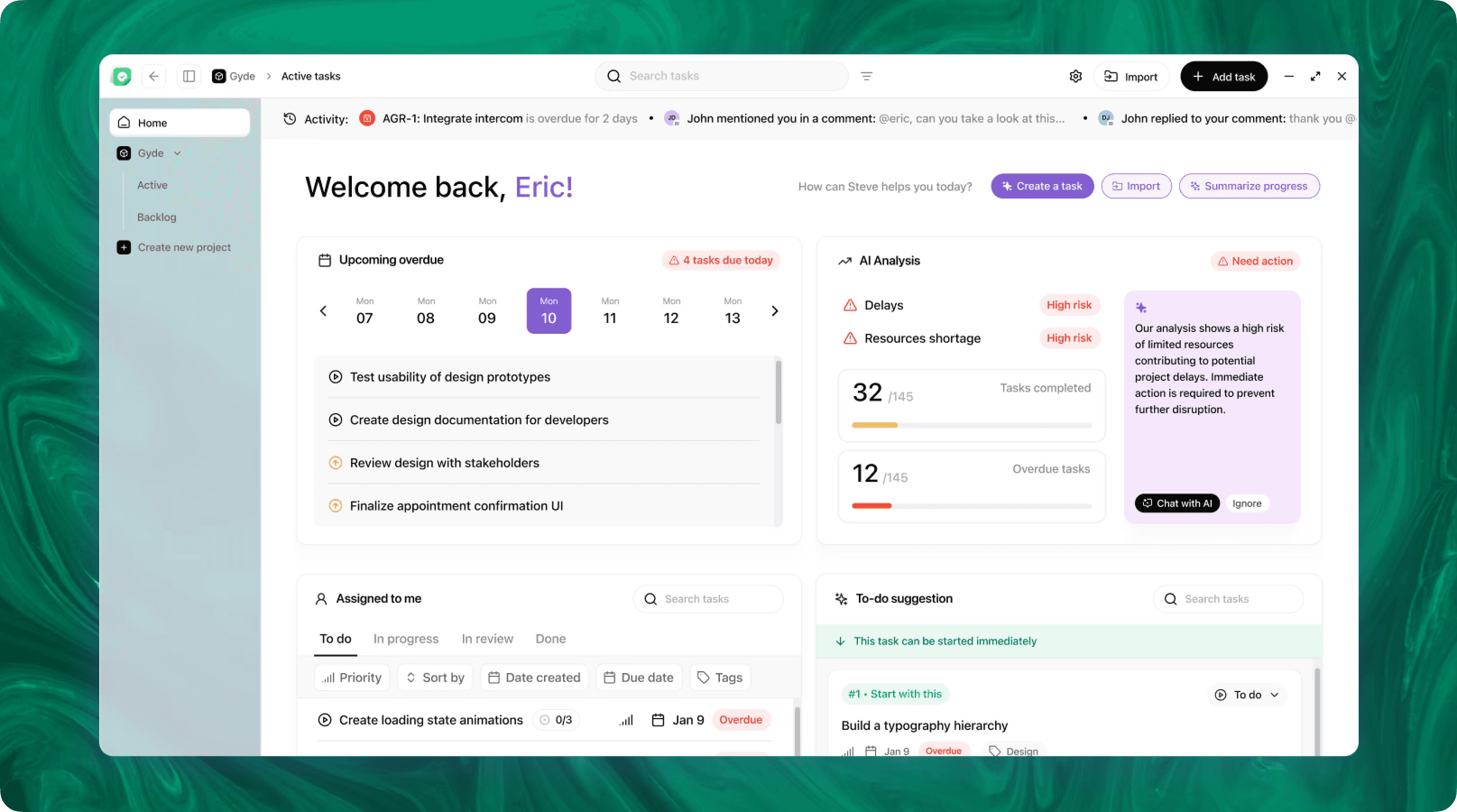
Steve is an AI-native operating system designed to streamline business operations through intelligent automation. Leveraging advanced AI agents, Steve enables users to manage tasks, generate content, and optimize workflows using natural language commands. Its proactive approach anticipates user needs, facilitating seamless collaboration across various domains, including app development, content creation, and social media management.
Conclusion
Growing teams lower coordination costs when context travels with work, communication becomes actionable, and planning is automated. Steve, as an AI OS, achieves this through a shared memory that preserves decisions, an AI Email layer that compresses threads into action, Steve Chat that orchestrates across tools conversationally, and task management that aligns work to capacity. The result: fewer interrupts, clearer ownership, and faster execution—so teams spend less time coordinating and more time delivering.